 0
0
 0
0
Say the words “thief on the cross” and most of us picture a small-time crook. Someone who lifted a purse at the market, got caught, and ended up in the wrong place on the wrong day. A sad story, but a safe one.
That picture is comfortable for a reason. If the man Jesus promised paradise to was only a petty thief, then his story is about small mistakes. And if you carry something heavier than a stolen purse, a quiet voice says the story isn’t about you.
So who was the thief on the cross, really? The Gospels tell us more than most people notice, and almost every detail makes the story bigger, not smaller.
Who Was the Thief on the Cross?
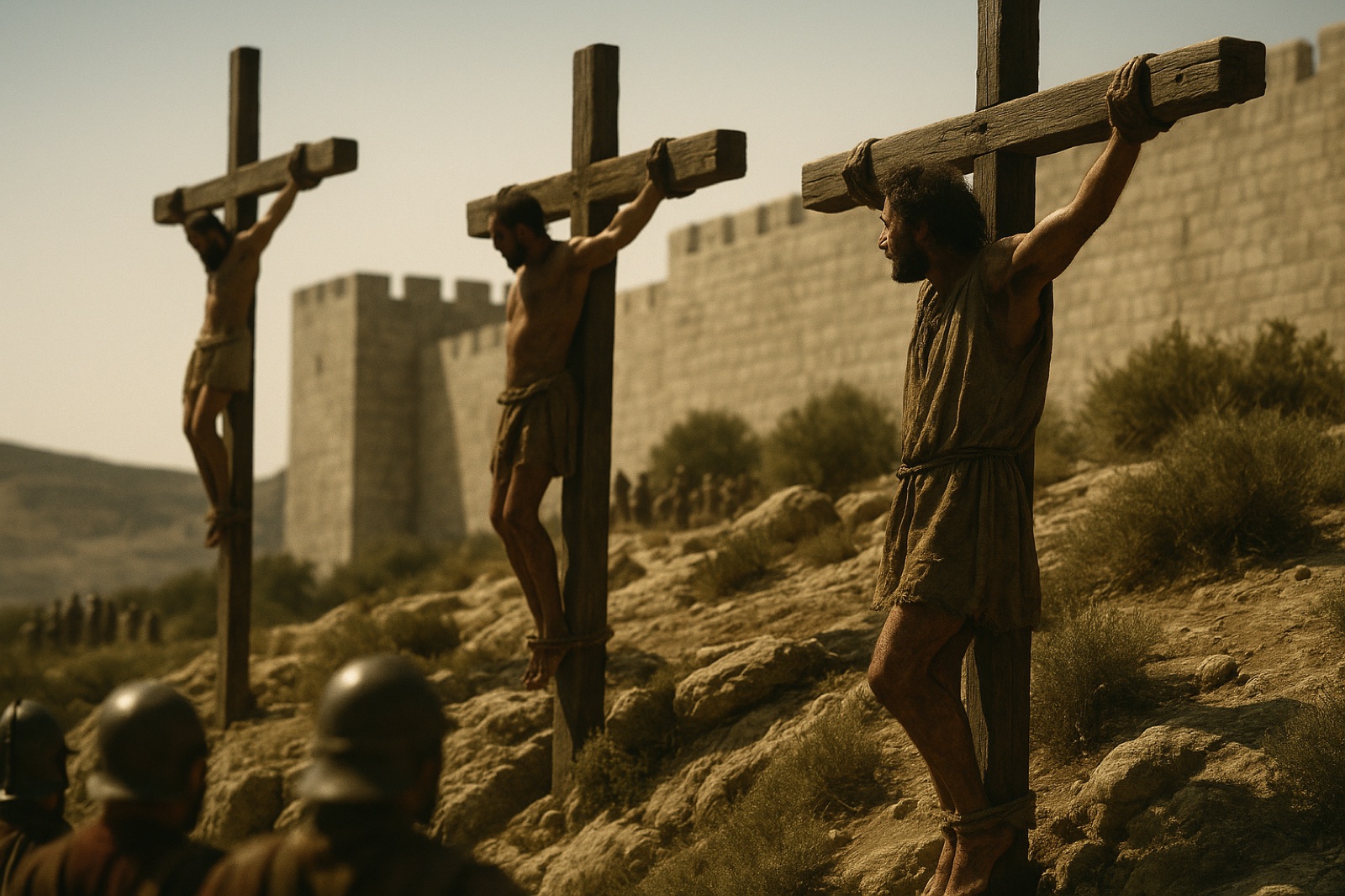
All four Gospels say Jesus was not crucified alone. Luke puts it plainly: “And when they were come to the place, which is called Calvary, there they crucified him, and the malefactors, one on the right hand, and the other on the left” (Luke 23:33). John adds that Jesus hung “in the midst” (John 19:18).
That is nearly everything the Bible says about who these two men were. No names. No hometowns. No list of charges.
You may have heard the man who turned to Jesus called Dismas. That name does not come from the Bible. It comes from a later writing called the Gospel of Nicodemus (also known as the Acts of Pilate), which names the two men Dysmas and Gestas. Other later traditions gave them different names altogether. The Gospels leave him unnamed, and there is something fitting about that. He could be almost anyone.
The Word Behind “Thief” Doesn’t Mean Pickpocket
Here is the detail most readers never see. Greek, the language the New Testament was written in, had two different words for people who take what isn’t theirs.
Kleptēs is a thief: someone who steals quietly, by sneaking. It’s where English gets the word “kleptomaniac.” Lēstēs is something else: a robber or bandit who takes by force.
Jesus used both words side by side, which shows they did not mean the same thing: “the same is a thief and a robber” (John 10:1). In Greek, that is kleptēs and lēstēs.
So which word do Matthew and Mark use for the two men crucified with Jesus? Not kleptēs. Matthew 27:38 calls them lēstai, the plural of lēstēs. The old English translators wrote “thieves,” and the name stuck. “Bandits” or “robbers” is closer.
It is the same word John uses for Barabbas, the prisoner the crowd asked to have released instead of Jesus: “Now Barabbas was a robber” (John 18:40). Mark says Barabbas was held with rebels “who had committed murder in the insurrection” (Mark 15:7). It is even the word Jesus used when the crowd came to arrest him at night: “Are ye come out as against a thief with swords and staves for to take me?” (Matthew 26:55). Nobody brings swords to arrest a pickpocket.
Luke uses a third word, kakourgoi, which simply means “evildoers.” The King James Version translates it “malefactors.”
We should be careful here. The Bible does not tell us exactly what this man did. Lēstēs points to robbery with force, but it doesn’t hand us his crime sheet. What we can say is that nothing in the text describes a small offence. Rome used crucifixion as a slow, public warning. And the man himself never claimed to be innocent. He said the opposite: “we indeed justly; for we receive the due reward of our deeds” (Luke 23:41).
He Was Mocking Jesus Earlier That Same Day
There is a second detail that surprises people. Luke is the only Gospel that shows one of the men change his mind. Matthew and Mark describe the two together, and neither account is kind.
“The thieves also, which were crucified with him, cast the same in his teeth” (Matthew 27:44). “And they that were crucified with him reviled him” (Mark 15:32).
Many readers over the centuries have set these side by side and concluded that both men mocked Jesus at first, and one of them turned during the hours they hung there. Others read Matthew and Mark as speaking about the group in general terms. The Gospels never explain how the accounts fit together, so it is honest to hold this loosely. But if the common reading is right, the man who asked to be remembered had been joining in the insults only hours before. (We walked through what that kind of turning looks like in how to accept Jesus with empty hands.)
What He Said When Everything Changed
Mark says Jesus was crucified at “the third hour” (Mark 15:25) and cried out at “the ninth hour” (Mark 15:34). That is several hours on a cross, side by side, close enough to hear every word.
We are not told what changed him. Luke does place some things within earshot: Jesus praying, “Father, forgive them; for they know not what they do” (Luke 23:34), and a sign above his head that read “THIS IS THE KING OF THE JEWS” (Luke 23:38).
Then the other man tried one more insult: “If thou be Christ, save thyself and us” (Luke 23:39).
This time, the bandit answered him.
“Dost not thou fear God, seeing thou art in the same condemnation? And we indeed justly; for we receive the due reward of our deeds: but this man hath done nothing amiss. And he said unto Jesus, Lord, remember me when thou comest into thy kingdom.” (Luke 23:40-42)
Look at how little is in it. He tells the truth about himself. He tells the truth about Jesus. And he asks to be remembered. He doesn’t promise to do better. He has no time left to do better.
Jesus answered: “Verily I say unto thee, To day shalt thou be with me in paradise” (Luke 23:43). (The word “today” in that promise deserves its own slow look, and we took one in what happens the moment after you die.)
The Detail Almost Everyone Reads Past
Most retellings end there, with the promise. But John records what happened next, and it changes how the whole story feels.
Because the next day was a special Sabbath, the religious leaders asked Pilate to have the men’s legs broken so the bodies could be taken away before it began (John 19:31). “Then came the soldiers, and brake the legs of the first, and of the other which was crucified with him. But when they came to Jesus, and saw that he was dead already, they brake not his legs” (John 19:32-33).
Read that slowly. Jesus died first.
The man who had just been promised paradise watched the one who made the promise die beside him. For whatever time was left, he hung there with nothing to see, nothing to feel but pain, and one sentence to hold on to. Then the soldiers came to him.
He didn’t get a sign. He didn’t get a warm feeling of peace. He got a promise from a man who was now dead, and he had to decide whether it was still true.
Why the Real Story Is Better News
This is why the word “thief” matters. When we shrink him down to a pickpocket, we shrink grace down with him. We tell ourselves, without ever saying it out loud, that Jesus forgave a man with a small past.
But the Gospels don’t give us a small past. They give us a man condemned for something serious, who admitted he deserved it, who may have spent that morning mocking Jesus, and who had no time left to fix any of it. He is not in the story as the easy case. He is the hardest case on the hill, and he is the one person in the Gospels Jesus told, “To day shalt thou be with me in paradise.”
If you’ve ever thought, “My story is too much,” this man is for you. Jesus didn’t ask him about his past. His whole turning was one honest sentence about himself, one honest sentence about Jesus, and one request.
And if you’ve ever believed but felt nothing afterward, he is for you too. His last hours were not full of good feelings. They were full of holding on to what Jesus had said, after Jesus had gone silent. Faith, for him, was trusting the words when he could no longer see the one who spoke them.
If you’re standing near that same turning point yourself, our free How to Become a Christian guide walks through the first steps simply, with no pressure.
Actions to Take
- Read Luke 23:39-43 out loud. It takes under a minute. When you reach “Lord, remember me,” stop and say it again slowly, as your own words.
- Write your own three sentences. On your phone or a scrap of paper: one true sentence about yourself, one true sentence about Jesus, and one request. Just three lines. That’s all the bandit had.
- Name the thing you think is too much. Write down, only for yourself, the part of your past you assume puts you outside this story. Then read Luke 23:41-43 next to it. Notice that his confession came first, and the promise came anyway.
Journaling Prompts
- When you picture the kind of people Jesus forgives, who do you picture? Who do you quietly leave out, and why?
- The man on the cross had nothing to offer but honesty. What would you have to stop pretending about to speak to Jesus that plainly?
- Is there a promise from God you are holding on to right now without being able to feel it? What would it look like to keep holding it?
A Prayer for Today
Jesus, I don’t have a clean record to bring you, and I’m tired of pretending I do. Some of what I’ve done, I really did. But I believe you are who you said you are, and I believe you still keep your promises to people like me. Remember me. And on the days I can’t feel anything, help me hold on to what you have already said. Amen.
Discussion Question
Do you think calling him “the thief on the cross” has made his story easier for people to relate to, or easier to shrug off? Share your thoughts in the comments below. We’d love to hear from you.
One honest sentence, one honest request, and Jesus said: today.
Share This
- “The ‘thief on the cross’ wasn’t a pickpocket. The Greek word means bandit. He was the hardest case on the hill, and Jesus still said: today.”
- “Jesus died first. The man promised paradise watched him die, then held on to one sentence until the end. That’s faith with nothing left to see.”
- “I always assumed my past was too much. Then I read who the thief on the cross actually was. One honest sentence. One request. ‘To day shalt thou be with me in paradise.'”
Questions People Ask About the Thief on the Cross
Who was the thief on the cross?
The thief on the cross was one of two men crucified beside Jesus, described in Matthew 27, Mark 15, Luke 23 and John 19. The Bible does not give his name, hometown or exact crime. In Luke 23:40-42, one of the two men admitted he deserved his punishment, said Jesus had done nothing wrong, and asked, “Lord, remember me when thou comest into thy kingdom.” Jesus replied, “To day shalt thou be with me in paradise” (Luke 23:43).
What was the name of the thief on the cross?
The Bible never names either man crucified with Jesus. The name Dismas (or Dysmas) for the repentant man, and Gestas for the other, comes from a later non-biblical writing called the Gospel of Nicodemus, also known as the Acts of Pilate. Other later traditions used different names. These names are church tradition, not scripture.
Was the thief on the cross really a thief?
Not in the sense of a petty thief. Matthew 27:38 and Mark 15:27 use the Greek word lēstēs, which means a robber or bandit who takes by force, rather than kleptēs, the word for a sneak thief. The same word lēstēs describes Barabbas in John 18:40. Luke 23:32 calls the two men kakourgoi, meaning “evildoers.” The Bible does not name the man’s specific crime, but in Luke 23:41 he said he was being punished justly.
Did both thieves mock Jesus?
Matthew 27:44 says “the thieves also, which were crucified with him, cast the same in his teeth,” and Mark 15:32 says “they that were crucified with him reviled him.” Luke 23:39-42 shows only one man mocking Jesus while the other defended him. A common reading is that both men mocked Jesus at first and one later changed his mind. Some interpreters instead read Matthew and Mark as speaking about the group in general. The Gospels do not say which reading is correct.
Did the thief on the cross die before or after Jesus?
According to John 19:31-33, Jesus died before the two men crucified with him. Soldiers came to break the legs of the crucified men so the bodies could be removed before the Sabbath. They broke the legs of both men beside Jesus, “but when they came to Jesus, and saw that he was dead already, they brake not his legs.” That means the man Jesus promised paradise to was still alive after Jesus had died.