 0
 0
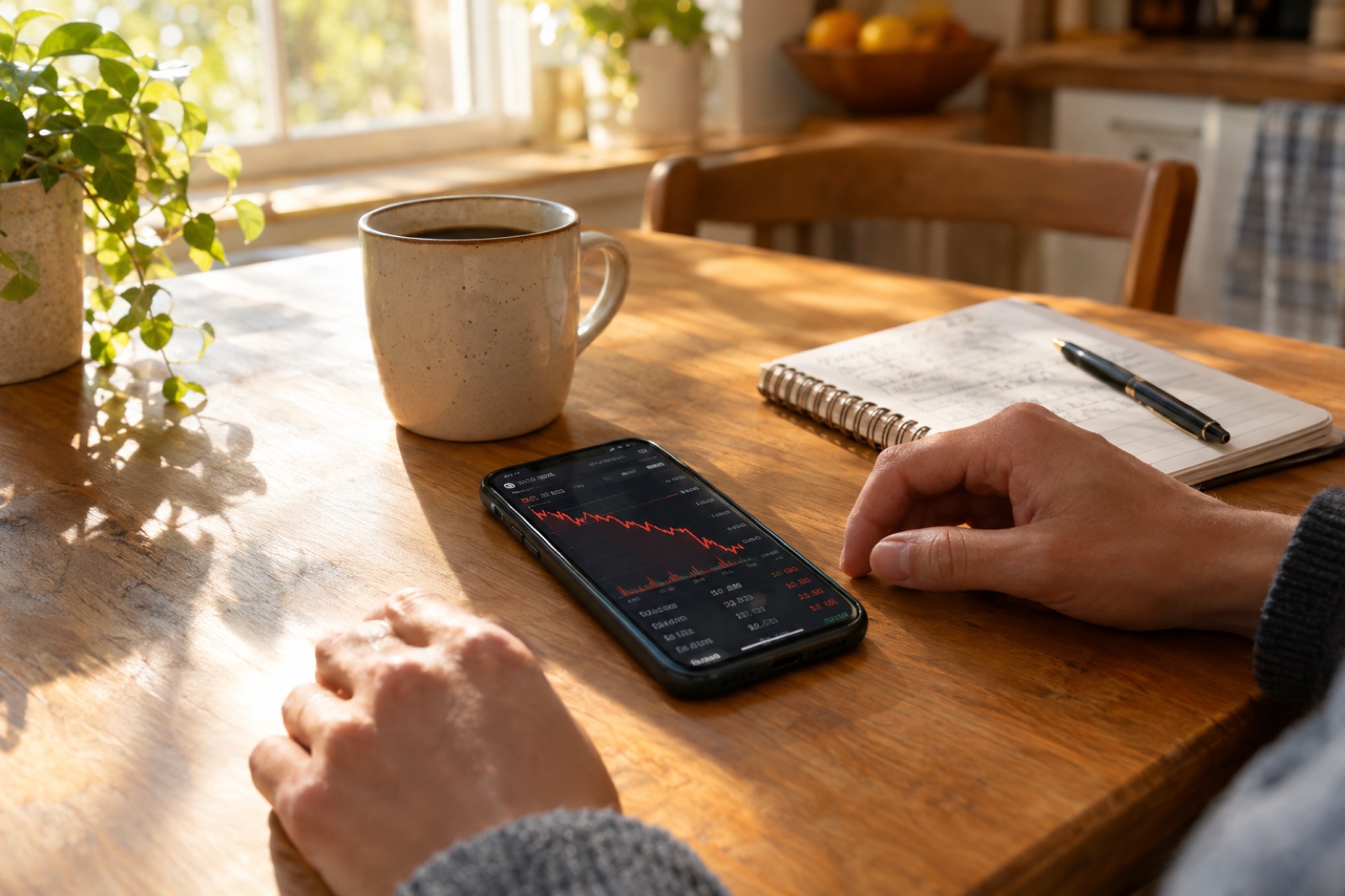
It is Sunday night. You open the retirement account on your phone. You look at the screen for about one second. Then you close it without reading the total.
Then you do something odd. You open a search box and type two words: market crash.
You are not alone. Through the autumn of 2026, a third-party trends analysis found that market-crash searches kept climbing, along with searches for gold and for “stock market.” (That figure comes from a trends vendor, not from Google itself, so we will not quote a number.) A great many people are doing the same two-step: look away from their own money, then look hard at everyone else’s.
Here is the strange part. A search for “market crash” does not mean a crash happened. It means a lot of people are afraid of one. Those are two different things. This article is about the second one.
Why We Look Away From Our Own Account
Researchers have a name for the Sunday-night habit. They call it the ostrich effect. In a well-known 2009 study of investors, Karlsson, Loewenstein and Seppi found that people checked their holdings less often after the market fell, and more often after it rose. Bad news gets avoided. Good news gets visited.
That makes sense. A number you cannot change feels like a verdict. So you stay away from it.
But notice what the searching is doing. You avoid your own number, yet you read about the whole market. You are not trying to learn anything new. You are trying to feel less alone with the fear. If everyone is scared, then maybe you are not foolish for being scared.
That is not a money problem. It is a floor problem. People are not really searching for a price. They are searching for something solid to stand on.
What a Market Crash Search Is Really Asking
When you type those two words, the question underneath is usually one of these:
- Will I be okay if this gets worse?
- Did I do something wrong?
- Is anyone in charge of this?
Search engines cannot answer any of them. They can show you charts. They cannot tell you what holds when the charts fall. And no honest writer can tell you where prices are going. Nobody knows. We will not guess here, and we will not name a single stock.
What we can do is sort things. When the ground moves, a useful question is: what in my life does not depend on this number?
A Floor You Can Build in Ten Minutes (For Free)
You do not need money, a planner, or a lot of time for this. You need one sheet of paper and a pen. Write three short lists:
- What is covered this week. Food, a place to sleep, the next bill that is due. Just this week, not this decade.
- Who I would call. Two or three names. People who would pick up if things went wrong.
- What I can still do. Skills, work, favours people owe you, things you know how to fix or cook or teach.
Most people find the lists are longer than their fear told them. Fear is good at shrinking what you have. The paper is good at telling the truth.
Notice what is not on the page: the market. The market matters, and it may hurt. But it is one beam in the house, not the whole foundation. A shaking market can feel like a shaking life only when the market is the only thing you have named as solid.
If you want to go further, our piece on doom spending looks at what fear of the future does to our choices, and playing it safe with money helps tell wise caution from the kind that freezes you.
The Oldest Answer to “Is Anything Solid?”
People have asked the floor question for a very long time, long before screens. One old piece of writing gives an answer that surprised us. It does not promise the shaking will stop. It admits the shaking is coming. Then it says the shaking has a job to do: it separates what was never really holding weight from what is. Whatever cannot be shaken is what is left standing.
That is an unusual kind of comfort. It does not say “do not worry.” It says the shaking is not the end of the story, and that something sits underneath it that moves for nobody. Many people over the centuries have decided that something is God, and that a life built there does not fall when prices do.
You do not have to settle that tonight. It is just worth noticing that the question you typed into a search box is one of the oldest questions people have asked.
Plain Ways to Steady Yourself This Week
- Look once, on purpose. Pick one calm hour in the week to open the account. Read the total. Then close it. A planned look is smaller than a dreaded one.
- Cut the feed, not the facts. Constant market news is built to keep you checking. Choose one trusted summary a day, or none.
- Say it to a person. Fear that stays inside grows. Tell one real person, out loud, what you are worried about.
- Do one small useful thing. Pay a bill, cook a meal, fix something. Small finished tasks tell your body the ground is still there.
Prices go up and down. Some of what you lean on can move. Part of growing up is learning which of the things you lean on cannot. That is a better use of a Sunday night than another search.
Discussion Question
When markets get scary, which is harder for you: looking at your own numbers, or not looking at all? Tell us in the comments. There is no wrong answer.
Share This
- “Market crash” searches keep climbing, and the weird part is that many people won’t even open their own account. Worth a read: https://bgodinspired.com/?p=120775
- Made a one-page “floor” list tonight: what’s covered this week, who I’d call, what I can still do. Longer than I expected. https://bgodinspired.com/?p=120775
Q&A
Why do people search “market crash” when there hasn’t been one?
A search for “market crash” measures fear of a crash, not a crash itself. When uncertainty rises, people look for company in their worry. Rising searches tell you how many people feel unsafe, not where prices are going.
What is the ostrich effect in investing?
The ostrich effect is the tendency to avoid information that might be bad news. In a 2009 study of investors, Karlsson, Loewenstein and Seppi found people looked at their holdings less after markets fell and more after they rose.
How do I stop panicking about my savings during a downturn?
Look at your account once, at a planned time, instead of checking and dreading it all week. Write down what is covered this week and who you could call. Mark which parts of your life do not depend on the market. This is general encouragement, not financial advice.
Does the Bible say anything about financial uncertainty?
Yes. Ancient writings in the Bible admit that things get shaken, and say the shaking sorts what is truly solid from what is not. They treat God as the part that stays steady, and they do not promise that faith protects a portfolio.