 0
0
 0
0
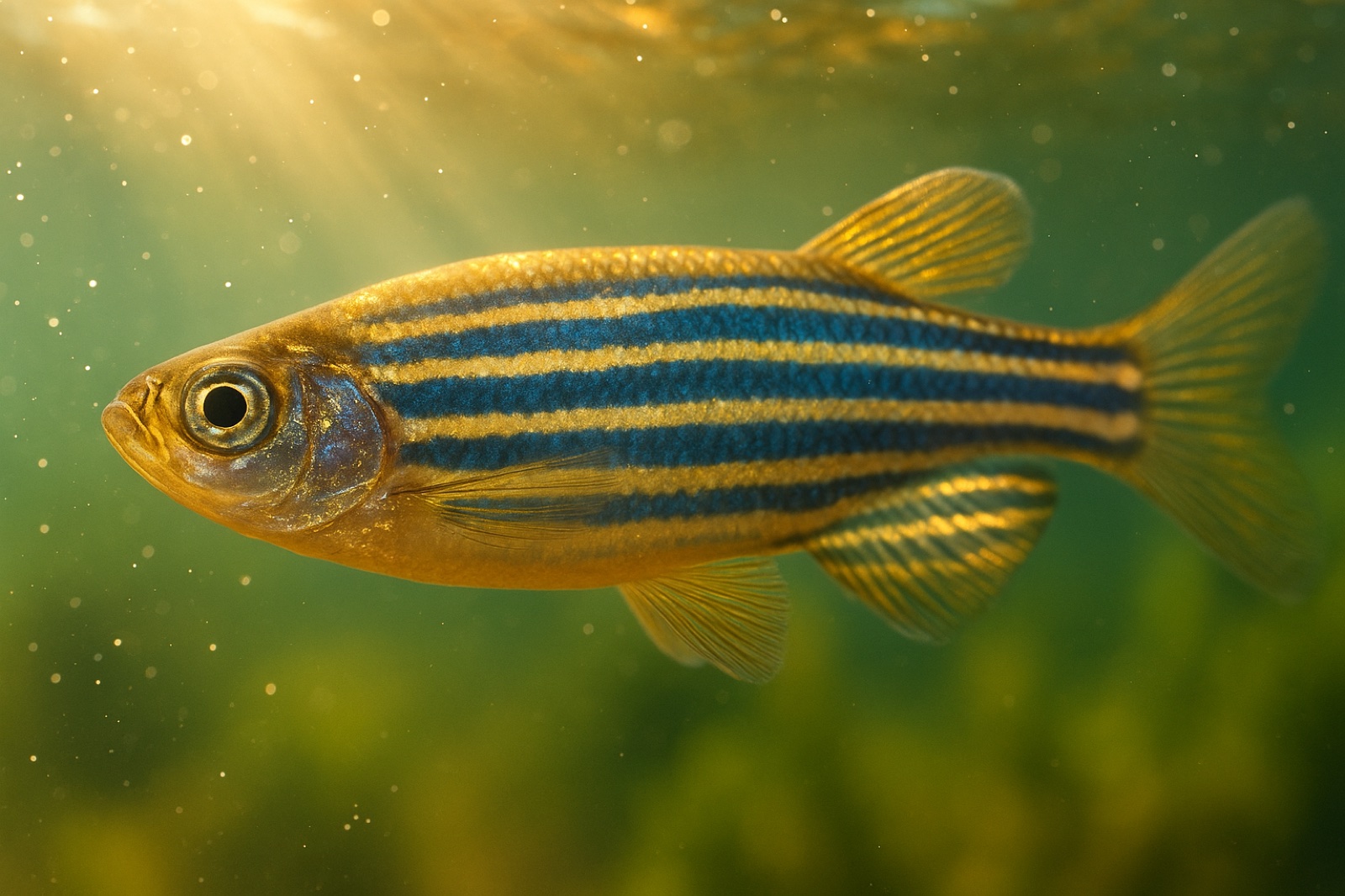
Cut a zebrafish’s spinal cord and it swims again within weeks. Not partially. Not with assistance. It swims.
Do the same to a person and the damage is usually permanent. That gap is why spinal cord regeneration is one of the most stubborn problems in medicine — and why a striped fish roughly the length of your thumb has become one of the most closely watched animals in any laboratory.
The easy explanation is that a fish is simpler than we are. The easy explanation is wrong. Zebrafish have a backbone, a spinal cord, nerve fibres and an immune system that behaves a great deal like ours. When they are injured, the same alarm goes off. The same emergency crews arrive.
Something different happens after they arrive. In September 2026, a team at the Center for Regenerative Therapies Dresden published work in the Journal of Neuroinflammation that gets closer than anyone has to naming what.
The crew nobody expected to be the good news
When any animal takes a serious wound, the first immune cells to arrive are neutrophils. They are the fast ones. They are also the ones with the worst reputation — in nervous-system injury they are usually discussed as part of the problem, the crew whose enthusiasm does extra damage on the way in.
So the Dresden team did the obvious experiment. They removed the neutrophils from injured zebrafish larvae and watched what happened.
Healing got worse. Recovery — both the physical rebuilding and the return of function — was delayed.
That alone is interesting. What made it a finding was the reason. With the neutrophils gone, levels of an inflammatory signal called Il-1β climbed, mostly inside a different set of immune cells. The fire did not go out when the first responders left. It got hotter.
Then the team found the specific thing that had gone missing: a small subgroup of those neutrophils releases a signal called Il-4, and Il-4 is what brings Il-1β back down. Take the neutrophils away and nothing tells the fire to settle. Supply Il-4 on its own — no neutrophils at all — and, in the researchers’ description, inflammation subsided and the spinal cords regenerated perfectly.
The part that turns the story around
Here is where it stops being a story about good cells and bad cells.
You would assume, reading this far, that inflammation is the villain and Il-4 is the hero that switches it off. That is not what the wider body of work on these fish says, and the earlier evidence is the most useful thing in the whole subject.
Work published in 2018 on the same animal tested what happens when Il-1β — the exact signal that does the damage later — is blocked early. Regeneration got slightly worse, not better. The researchers’ own summary of it is blunt: early inflammation and Il-1β promote regeneration, but Il-1β must be turned down at later phases.
Read that twice, because it inverts the usual advice. The swelling is not a malfunction to be suppressed. It is the first phase of the repair. Block it at the start and you have not protected the tissue — you have cancelled the opening move.
The damage comes from the same signal staying loud after its job is finished. Not the fire. The fire that will not go out.
That reframes the 2026 result entirely. The neutrophils are not the healers, and Il-4 is not a cure. Il-4 is a stand-down order. The whole difference between a fish that walks away from this and a person who does not may come down to whether anything in the wound is capable of saying enough now at the right moment.
Bridges, not walls
There is a second half to why spinal cord regeneration works in these fish, and it shows up in the shape of what gets built.
In mammals, the site of a spinal injury fills with what is called a glial scar — a dense mass of reactive support cells, fibroblasts and immune cells. It seals the wound. It also forms a physical barrier that nerve fibres cannot grow through. The repair and the obstruction are the same object.
In zebrafish, the support cells do something else. They stretch. They change shape, elongate, and reach across the gap from both cut ends until they meet, forming a living scaffold that new nerve fibres then grow along.
A 2020 review of this field gave it a title that is hard to improve on: building bridges, not walls.
Same injury. Same alarm. Same cells showing up. One body decides the correct response to a gap is to seal it off. The other decides the correct response to a gap is to cross it.
What this does and does not mean for people
It would be easy, and dishonest, to end that last section and let you assume a treatment is coming. The researchers are careful here and it is worth matching them.
This work was done in zebrafish larvae. Whether Il-4 plays a similar balancing role in human injury is, in the team’s own words, something that remains to be seen. They call it a promising avenue for future studies in humans. That is a question, not a result, and the distance between the two is where most medical hope goes to die.
What is genuinely established is smaller and still worth having: the difference between healing and permanent damage, in at least one animal, is not the size of the injury or the strength of the immune response. It is the timing of the stand-down.
Researchers have been finding versions of this shape in other places too. When a stroke leaves a hole in brain tissue, the problem is partly that there is nothing left for new tissue to grow along — and the immune cells behaved unexpectedly there as well. And in a study of rattlesnake venom, the most powerful blocking agents turned out to be sitting in the snake’s own blood the whole time. The answer keeps being inside the thing that caused the harm.
The old idea underneath it
There is a much older thought running under all of this, and it has nothing to do with fish.
People have been writing about suffering for thousands of years, and the wisdom that lasted is oddly consistent on one point: it never promises you will be spared the tearing. It also never treats the tearing as the thing that heals you — a distinction that gets lost constantly, including in the way people quote Viktor Frankl on suffering. What that old wisdom keeps insisting is that the wound is not the last thing built in that place. Something comes and crosses the gap. Plenty of people have found God in exactly that space, in the quiet after the alarm, when the thing that was screaming finally goes still and it turns out there is still construction going on.
The fish proves none of that. It is not evidence for anything except itself. It is just a strange little echo of a very old idea, turning up in a tank in Dresden.
Where that leaves you
Most of us are not dealing with a severed spinal cord. But nearly everyone is carrying something that flared once and never fully quieted — a grief, an argument, a fear that made complete sense at the time and has stayed switched on long past its usefulness.
The instinct is to be angry at the flare. To wish the alarm had never gone off. What the fish quietly suggests is that the alarm was never the problem, and that trying to skip it would have made things worse. The question worth asking is not why did this hurt so much. It is: what in my life is capable of saying enough now — and have I let it near the wound?
That might be a person. It might be sleep, or time, or an honest conversation you have been avoiding, or the practice of putting the thing down for one hour a day. It costs nothing to ask. And it is a better question than the one most of us are actually asking, which is why the gap has not closed on its own.
Gaps do not close on their own. Something has to cross them.
A question worth arguing about
Modern life treats inflammation — physical and emotional — as something to shut down as quickly as possible. This research suggests the early flare is doing necessary work and only becomes harmful when it will not stop. Do you think we have that backwards in ordinary life too: are we too quick to suppress the first reaction to something painful? Tell us where you land in the comments.
Share this
- A zebrafish can regrow a severed spinal cord. We can’t — and the reason isn’t that fish are simpler. It’s that our bodies build a wall across the gap and theirs build a bridge. https://bgodinspired.com/index.php/health-and-wellness/zebrafish-spinal-cord-regeneration/
- Scientists blocked the inflammation early in a spinal injury, expecting to protect the tissue. Healing got worse. The swelling wasn’t the malfunction — it was the first phase of the repair. https://bgodinspired.com/index.php/health-and-wellness/zebrafish-spinal-cord-regeneration/
- I keep thinking about this: the difference between healing and permanent damage, in at least one animal, isn’t the size of the injury. It’s whether anything in the wound can say “enough now” at the right moment. https://bgodinspired.com/index.php/health-and-wellness/zebrafish-spinal-cord-regeneration/
Questions people ask about spinal cord regeneration
Can zebrafish really regrow a severed spinal cord?
Yes. Zebrafish can regenerate a fully severed spinal cord and recover swimming function within weeks, which is why they are used so heavily in regeneration research. Mammals, including humans, cannot do this. The difference is not that zebrafish are anatomically simple — they have a backbone, a spinal cord and an immune system broadly comparable to a mammal’s — but that their tissue responds to the injury differently in the days that follow it.
Why can’t humans regenerate a damaged spinal cord?
In mammals, a spinal injury fills with a glial scar: a dense mass of reactive support cells, fibroblasts and immune cells. The scar seals the wound but also forms a physical barrier that regrowing nerve fibres cannot pass through. In zebrafish, the equivalent support cells instead elongate and stretch across the gap, forming a living scaffold that new nerve fibres grow along. A 2020 review of the field summarised the contrast as building bridges rather than walls.
What did the 2026 zebrafish spinal cord study find?
A team at the Center for Regenerative Therapies Dresden, publishing in the Journal of Neuroinflammation in September 2026, found that a subgroup of neutrophils — normally considered damaging in nervous-system injury — releases a signal called Il-4 that keeps inflammation in check after a spinal injury. Removing those neutrophils caused levels of the inflammatory signal Il-1β to rise and delayed recovery. Supplying Il-4 on its own restored regeneration even with the neutrophils absent.
Is inflammation good or bad for healing?
Both, depending on timing. Research published in 2018 on zebrafish showed that blocking the inflammatory signal Il-1β early made regeneration slightly worse, because early inflammation actively promotes repair. The same signal becomes harmful when it stays elevated during later phases of healing. The damage is caused not by the inflammatory response itself but by its failure to resolve on schedule.
Could this lead to a treatment for human spinal cord injury?
Not yet, and the researchers are explicit about that. The work was carried out in zebrafish larvae, and whether Il-4 performs a similar balancing role in human injury remains an open question that the team describes as a promising avenue for future study. No human treatment currently follows from this finding. It is a mechanism identified in one animal, not a therapy.