 0
0
 0
0
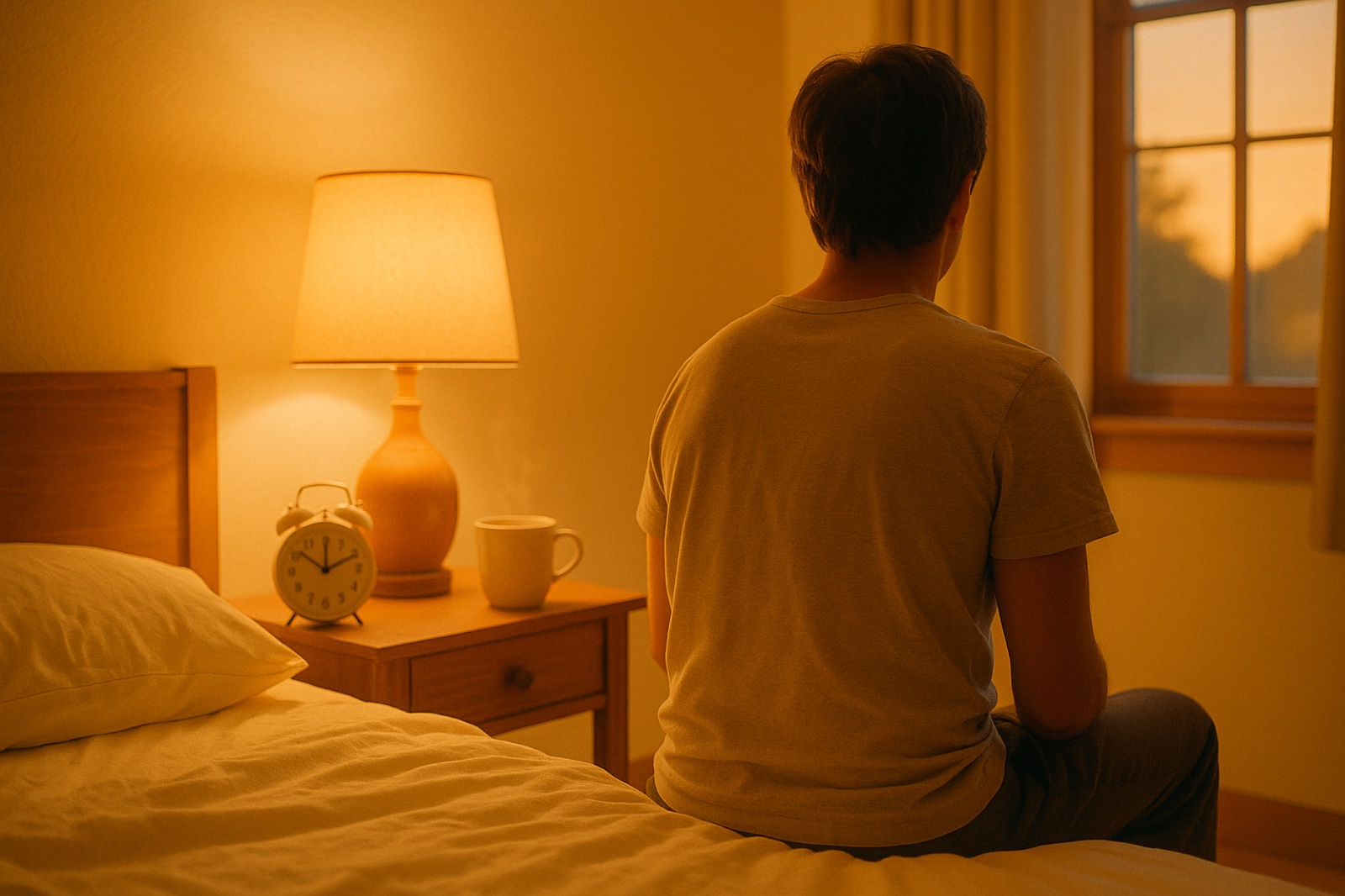
You are awake again. The room is dark, the house is quiet, and the clock says something close to three. Not five, when you could give up and start the day. Not one, when there are still hours left. Three.
And because it has happened more than once now, you did what everybody does. You reached for your phone and typed the question.
The internet gave you two answers, and neither one helped. One was a wall of sleep science written for somebody calm. The other was worse: pages telling a frightened person, alone, in the dark, at three in the morning, that the hour itself belongs to something evil.
So here is the short version first, because you can go back to sleep on it. Waking in the night is one of the most ordinary things a human body does. The hour it happens at is not a message. Nobody is standing over you.
The longer version is more interesting than either of those two camps lets on — and the part that surprised me most was not in the sleep science at all. It was in the history.
Why Do I Wake Up at 3am? What Your Body Is Actually Doing
Sleep is not one long block. It runs in cycles of roughly ninety minutes to just under two hours, and most adults go through four or five of them a night. At the seam between cycles, you surface. Your brain shifts briefly toward waking, then drops back down.
This happens to everyone, every night, several times. Researchers who watch brain activity during sleep call these brief arousals, and the key detail is that they are normal and you almost never remember them. You might roll over, pull up the blanket, and be gone again.
Two things make the small hours the most likely place to surface all the way into full, staring, wide-awake consciousness.
- Your deep sleep is front-loaded. The heavy, hard-to-wake sleep happens mostly in the first half of the night. As the night goes on, the balance tips toward lighter stages and toward dreaming sleep. By the small hours you are simply floating closer to the surface.
- Your body starts getting ready for morning early. Cortisol, the hormone that helps get you up and moving, begins climbing in the second half of the night — well before your alarm. If it rises a little early or a little steeply, you wake, and your body is genuinely convinced it is nearly morning.
Then there are the plain, boring culprits that nobody wants to hear: a room that is too warm, a full bladder, a noise outside, alcohol in the evening, a heavy meal late, or simply a body that has learned a wake-up time and is keeping to it.
But here is the part worth carrying away, and it is the reason “every night at 3am” feels so uncanny.
Almost everyone wakes around that hour. The difference between people who say they wake at 3am every night and people who say they sleep straight through is very often not the waking. It is the remembering.
A worried mind is alert enough, at the moment of surfacing, to reach for the clock. And once you have read the clock, you have made a memory. Now it is a pattern. Now it is a thing that happens to you. Your neighbour surfaced at the same moment, grunted, and rolled over — and has no idea it happened.
Where the “Devil’s Hour” Idea Actually Comes From
You would expect something this widespread to be ancient. It is worth actually checking, so I did, and the trail is much shorter and much stranger than you would guess.
The old phrase is not “devil’s hour” at all. It is “witching hour,” and it turns up in print at least as early as the 1760s, in a book of poems. Behind that sits a line from Shakespeare’s Hamlet about “the very witching time of night” — which names no hour whatsoever. And where older uses do name a time, they point at midnight at least as often as they point at three.
The reasoning you will see offered for three in particular is that Jesus died at three in the afternoon, so three in the morning is its mirror, and that three mocks the Trinity. That is folklore reasoning — the kind of tidy symmetry people build after the fact. It is not a doctrine. No major church teaches that a particular hour on the clock is handed over to evil.
You will also see a very specific claim repeated across a lot of sites: that in 1535 the Church forbade people to pray between three and four in the morning, which is supposedly why the hour became dangerous. I went looking for the document behind that. I could not find one, and it does not appear in the standard reference accounts of the phrase. That does not prove it never happened — but a claim that specific, repeated that confidently, with no source anyone can point to, is worth treating with suspicion rather than fear.
What did far more to pin the fear to that exact number is much more recent, and much more obvious: horror films. The Conjuring calls three in the morning the devil’s hour outright. Once a genre does that repeatedly, the association stops feeling like a plot device and starts feeling like something everybody has always known.
There is one more piece, and it is oddly comforting. Researchers who study “sensed presence” experiences — that feeling of something else being in the room — find them clustering in the small hours, roughly between two and four. That is a fact about what human brains do at that point in the night, half in and half out of dreaming sleep. It is not a fact about what is in your bedroom.
None of this proves nothing spiritual ever happens at night. It shows something narrower, and still worth having at three in the morning: the specific idea that this hour is a scheduled slot for evil has no old pedigree at all. It is a modern story wearing a very old coat.
For Most of History, Being Awake at 3am Was Just the Night
This is the part I did not expect, and it turns the whole question inside out.
The historian A. Roger Ekirch spent years collecting references to how people actually slept before artificial light was cheap. He found something that had been sitting in plain sight in diaries, court records, medical books and novels: people routinely slept in two shifts. There was a “first sleep” and a “second sleep,” with an hour or two of quiet wakefulness in between. The gap even had a name — the watch.
And people did things in it. They lay and talked. They got up and saw to the animals. They read. They made love. They prayed. A medical text could tell you to take a remedy “after the first sleep” and expect every reader to know exactly when that was. Ekirch has gathered upwards of two thousand references, running from the ancient world to the early twentieth century, and the pattern only really collapses as lighting and industrial working hours reshape the night.
There is even laboratory support: when the sleep researcher Thomas Wehr gave people long stretches of darkness each night, their sleep drifted apart into two blocks with a wakeful gap between.
Now, the honest caveat, because this idea has become popular enough to get sloppy. Not everyone accepts the picture as a universal rule. In a 2023 paper in Medical History, Niall Boyce argued that reading old texts with segmented sleep already assumed can make you misread them, and that the sources may show a much greater variety of sleeping habits than one neat two-part model. He also points out that Wehr’s volunteers were in windowless rooms, which is not the same as a farmhouse.
Fair enough. But notice what is not in that argument. Nobody on either side is claiming that people in 1650 lay awake in the middle of the night and assumed something was hunting them. The disagreement is about how organised the waking was — not about whether it was frightening. On that, the record is quiet in a way that says a great deal. Being awake at that hour was so unremarkable that people scheduled medicine around it.
The dread is the new part. Not the waking.
What to Do When You Wake Up at 3am
None of this costs anything, and none of it needs a gadget.
- Don’t look at the clock. Turn it away from the bed, or face your phone down. Reading the number is what turns a shrug into an omen — and it is what builds the pattern you are now worried about.
- Don’t do the arithmetic. Working out how many hours are left before you have to get up is a guaranteed way to make sure you use none of them.
- If you are still awake after about twenty minutes, get up. Lying in bed frightened teaches your body that bed is where the fear lives. Sit somewhere else, in low light, and do something genuinely dull until you feel heavy again.
- Keep it dim and boring. No bright screens, no news, no messages. This is the one hour where nothing needs your opinion.
- Test the boring causes first. A cooler room, no alcohol in the evening, a lighter meal earlier. These are unglamorous and they are free, and for a lot of people one of them is the whole answer.
If it is happening most nights and you cannot tell which of these is yours, our free Why Can’t I Sleep? assessment walks you through the usual causes in a couple of minutes. And if the problem is less about waking and more about never dropping off in the first place, that is a different mechanism entirely — we pulled it apart in why you can’t fall asleep even when you’re exhausted.
Worth naming plainly: the waking itself lasts about three minutes. The fear is what takes the other two hours.
The Oldest Thing People Did With That Hour
Go back to that gap between the two sleeps for a moment — the watch. Of everything people did with it, one habit shows up again and again across centuries and across cultures that had nothing else in common.
They prayed.
Not because the hour was dangerous. Because it was quiet. Nothing was being asked of them. Nobody was at the door. For most of human history, the middle of the night was the only stretch of time a person reliably had that belonged to nobody else — and there is a very old idea running underneath that habit, older than any of this witching-hour folklore, that whatever made the world does not sleep. That the dark is not a gap in the watching. It is only a gap in ours.
Which makes for a strange reversal. The hour the internet insists you are most alone with something hostile is, historically, the hour human beings have most consistently used to talk to God.
So, Three in the Morning
You are not being singled out. You are awake at the point in the night where human sleep has always been thinnest, in a house that finally went quiet, with a body doing exactly what bodies have always done — and with a mind alert enough to notice, which is the only unusual part.
And you are in company. Not just the millions of people awake at this moment somewhere in the world, but centuries of people before you who woke at the same hour, sat up, and thought absolutely nothing of it.
Turn the clock away. Let the hour just be an hour.
Questions People Ask About Waking Up at 3am
Why do I wake up at 3am every night?
Human sleep runs in cycles of roughly ninety minutes to two hours, and everyone briefly surfaces between them. Deep sleep is concentrated in the first half of the night, so by the small hours you are in lighter stages and much more likely to wake fully. Cortisol, the hormone that prepares the body for morning, also begins rising in the second half of the night. Most people have these wakings and never remember them; an anxious mind checks the clock, which creates the memory and the sense of a nightly pattern.
Is 3am really the devil’s hour?
There is no historical or religious basis for treating three in the morning as a designated hour for evil. The older phrase is “witching hour,” which appears in print at least as early as the 1760s and often referred to midnight rather than three. The idea that 3am mirrors the 3pm crucifixion is folklore reasoning, not the teaching of any major church, and the fixation on that exact hour was spread largely by modern horror films.
Is waking up in the middle of the night normal?
Yes. Brief awakenings between sleep cycles are a standard feature of healthy sleep and usually go unremembered. Historians have also documented that before cheap artificial lighting, many people in Europe and North America slept in two segments — a “first sleep” and a “second sleep” — with an hour or two of wakefulness in between that they used for praying, reading, talking or chores. How universal that pattern was is debated among historians, but nobody disputes that night-time waking was treated as ordinary rather than alarming.
What should I do when I wake up at 3am and can’t get back to sleep?
Avoid looking at the clock and avoid calculating how much sleep you have left, since both intensify alertness. If you are still awake after about twenty minutes, get out of bed, stay in dim light, and do something undemanding until you feel sleepy, so your body does not learn to associate bed with anxiety. Then check the ordinary causes: a room that is too warm, alcohol in the evening, a late heavy meal, or caffeine too far into the day.
What does the Bible say about waking up at 3am?
The Bible does not assign meaning to any specific hour on the clock and never designates 3am as a dangerous or demonic time. Where scripture deals with the middle of the night at all, it tends to treat it as a time of watchfulness, prayer and being heard, rather than a time of threat. The “devil’s hour” concept comes from later folklore and modern popular culture, not from the biblical text.
What Do You Think?
Here is the question we are genuinely curious about: do you think the 3am story spreads because people really believe it, or simply because a frightening explanation is more interesting than a boring true one? Tell us what you think in the comments.
Share This
- Waking at 3am is not a message. Nearly everyone surfaces around that hour — anxious people just remember it. That is the whole difference. https://bgodinspired.com/index.php/health-and-wellness/why-do-i-wake-up-at-3am/
- I always assumed “3am is the devil’s hour” was ancient. It turns out the old phrase is from the 1760s and usually meant midnight. Horror films did the rest. https://bgodinspired.com/index.php/health-and-wellness/why-do-i-wake-up-at-3am/
- Before cheap lighting, people slept in two shifts and spent the gap in between reading, talking and praying. The middle of the night used to be completely ordinary. The dread is the new part, not the waking. https://bgodinspired.com/index.php/health-and-wellness/why-do-i-wake-up-at-3am/