 0
0
 0
0
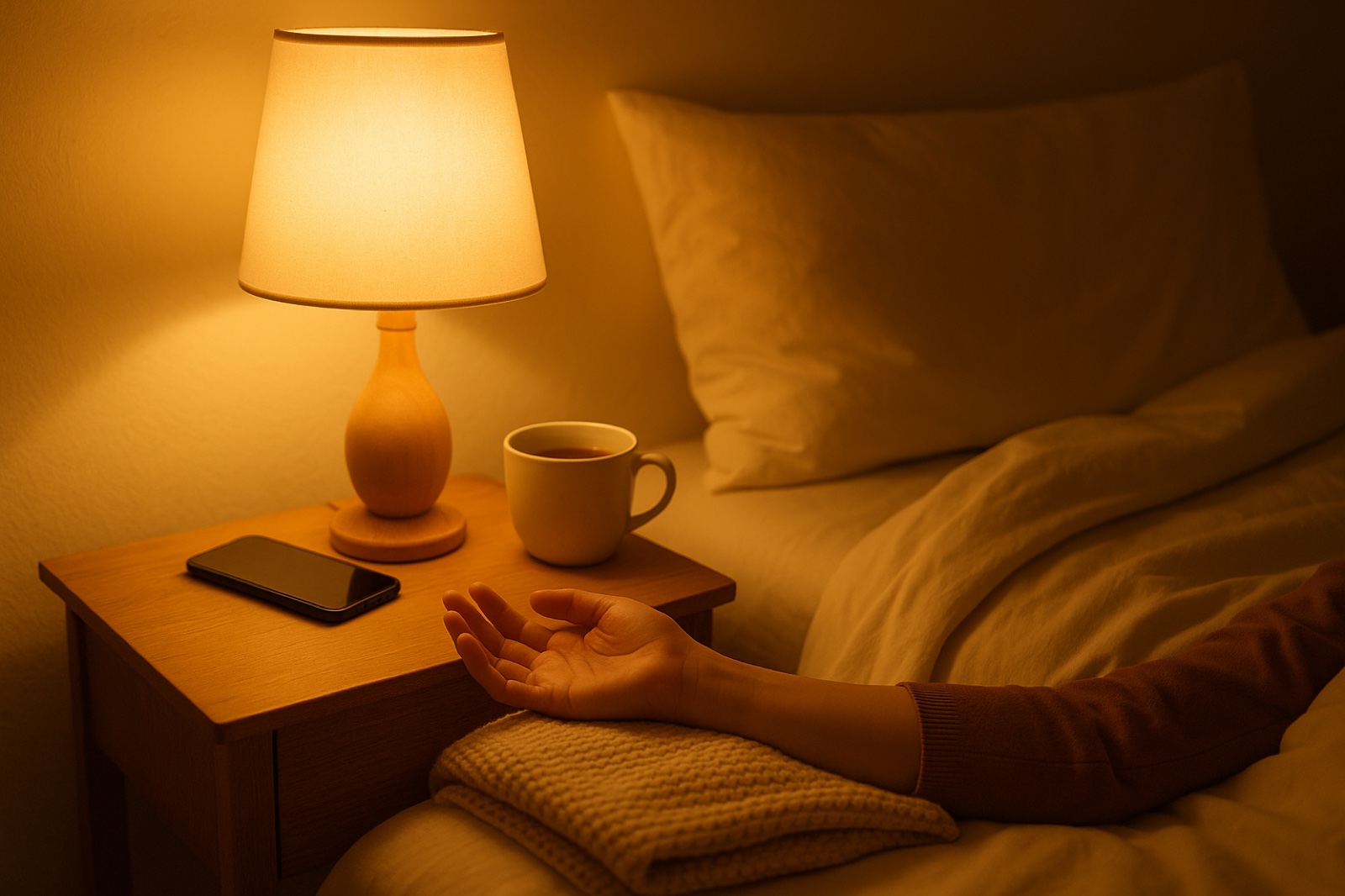
It’s 11:47 p.m. and you’re lying in bed with two fingers pressed to your wrist, counting. Your heart is fine — a little fast, maybe, but fine. You already know that, because you checked it four minutes ago. And you’ll check it again in four more.
Or maybe it’s not your pulse. Maybe it’s a spot on your arm you’ve looked at eleven times today, a headache you’ve been quietly rating on a scale of one to ten since breakfast, or a search bar that’s seen “is it normal to feel” typed into it more times this month than you’d ever admit out loud.
You’re not being dramatic. You’re not “just anxious,” as if that makes it smaller. What you’re living with has a real name — health anxiety — and it’s far more common than the quiet way most people carry it alone. You’re doing something your brain is convinced is keeping you safe — and the strange part is, it never actually feels like it worked. Ten minutes after the checking, the doubt is already creeping back in.
Why Checking Never Actually Calms Health Anxiety
Here’s the part almost nobody tells you: checking doesn’t fail because you’re not checking carefully enough. It fails because checking is the mechanism keeping the anxiety alive in the first place.
Your brain has a threat-detection system that’s supposed to notice real danger fast — a snake in the grass, a car swerving toward you. It’s not built to sit calmly with an ambiguous sensation and wait for more information. Ambiguity itself reads as danger. So the moment you feel an odd twinge, your brain treats “unknown” the same way it would treat “unsafe,” and checking becomes the fastest way to get relief from that alarm.
And for about ninety seconds, it works. You check, you find nothing catastrophic, your body downshifts out of alert. That relief feels like proof the checking helped. But what your brain actually learned in that moment is: checking is what makes the fear go away. Which means the next twinge — and there’s always a next twinge — gets treated as another emergency that needs another check. The loop doesn’t get smaller. It gets more efficient at recruiting you back into it.
Researchers who study this pattern have a name for the online version of it: cyberchondria. Typing symptoms into a search bar feels like gathering information, but search results are sorted by what gets clicked — and the scariest possibilities get clicked the most. So the “research” that’s supposed to calm you down is, by design, stacked with worst-case scenarios. You didn’t imagine that the internet makes this worse. It’s genuinely built to.
Your Body Isn’t Lying to You — It’s Just Answering the Wrong Question
This is the part worth saying plainly: the racing heart, the tight chest, the dizziness — those are real. You’re not making them up, and you’re not “crazy” for noticing them. Adrenaline genuinely does speed up your pulse and tighten your muscles. Your body is responding exactly the way it’s designed to respond to a threat.
The problem isn’t that your body is malfunctioning. It’s that the alarm is answering a question you didn’t actually ask. You wanted to know “is this dangerous?” Your body answered “prepare for danger” — which then produces the very sensations (racing heart, breathlessness, a wave of dread) that get read as further evidence something is wrong. It’s a closed loop with no exit built in, because the “exit” you keep reaching for — one more check — is the on-ramp back into it.
If this sounds close to what happens during a panic attack, that’s not a coincidence — it’s the same alarm system, running the same script, just at a different volume. And if the checking has quietly widened into a pattern of overthinking everything, not just your health, that’s often the same underlying wiring asking to be believed instead of managed.
Two Things That Actually Interrupt the Loop
You can’t out-logic a threat-detection system. But you can change what it’s allowed to do with its energy.
- Give the checking a window, not a ban. Instead of fighting every urge to check, pick one ten-minute window a day — after dinner, say — where checking is fully allowed. When the urge hits outside that window, tell yourself, “I can check at 7:00.” Most of the time, by 7:00, the urgency has already faded on its own. You’re not suppressing the worry. You’re just refusing to let it set the schedule.
- Describe the sensation instead of diagnosing it. “My chest feels tight and my heart is fast” is a description. “This could be my heart failing” is a diagnosis your brain has no real authority to make in the moment — and it’s the diagnosis, not the sensation, that spikes the fear. Naming what you actually feel, in plain physical terms, keeps you one step removed from the catastrophic story your mind wants to write next.
If you want a clearer read on where your own anxiety tends to sit — and what actually eases it for you specifically — our free How Anxious Am I? assessment walks through it in a few minutes.
Neither of these tricks the alarm system into going quiet forever. What they do is take away the thing the loop needs most: your full, immediate compliance every single time it rings.
What This Loop Is Actually Asking For
Underneath the checking, the googling, the pulse-counting, there’s a real ache — not really for a clean bill of health, but for certainty. For some kind of proof, right now, that nothing bad is coming. And the uncomfortable truth is that no amount of checking has ever actually delivered that. It delivers relief for ninety seconds and then hands the question right back to you, slightly heavier than before.
There’s an old idea, older than any of this, that speaks straight into that exact ache — not by promising the unknown will go away, but by describing a different kind of peace altogether: one that isn’t the absence of an unanswered question, but a steadiness that holds even while the question stays open. The Bible describes it as a peace that doesn’t come from having things figured out — the kind that “guards” a person’s inner life, not because every threat has been ruled out, but because something bigger than vigilance is already holding it.
That’s a strange kind of relief to consider, if you’ve spent months trying to out-check your own fear. It doesn’t ask you to stop caring about your body. It just quietly suggests that certainty was never actually the thing that was going to fix this.
You Don’t Have to Win the Loop Tonight
You probably still felt that twinge today. You might check one more time before you’re done reading this. That’s fine — old loops don’t close on command.
But maybe tonight, the check is just a check — a plain fact about your body, gathered and set down — instead of a verdict you’re waiting, breath held, for the universe to hand you. That shift alone, repeated enough times, is usually where the loop actually starts to loosen. Not because you found the answer. Because you stopped needing one quite so badly.
Discussion Question: Do you think constant access to instant health information — Google, symptom checkers, smartwatches tracking every heartbeat — has made health anxiety worse for people who never used to struggle with it? Tell us what you think in the comments below.
Frequently Asked Questions
What is health anxiety?
Health anxiety (sometimes called illness anxiety) is a pattern of excessive worry about having or developing a serious physical illness, often driven by misreading normal body sensations as signs of danger. It commonly includes frequent body-checking, repeated symptom searches online, and seeking reassurance from doctors or loved ones that provides only brief relief.
Why does googling symptoms make anxiety worse instead of better?
Search engines rank results by what people click, and the most alarming possibilities tend to get clicked the most. So a search that feels like careful research is, in practice, weighted toward worst-case scenarios — which is why symptom-googling reliably increases anxiety rather than resolving it. Researchers call this pattern “cyberchondria.”
Is constantly checking your body for symptoms a form of OCD?
It shares the same basic structure as obsessive-compulsive patterns: an intrusive fear, followed by a checking behavior meant to relieve that fear, followed by short-term relief that reinforces the cycle. It doesn’t have to meet a clinical OCD diagnosis to run on that same loop, and the same interruption strategies — delaying the checking, naming rather than diagnosing sensations — tend to help either way.
How do you stop obsessively checking your body for symptoms?
Rather than trying to stop the urge outright, set a specific daily window when checking is allowed, and delay every other urge until that window arrives. Pair that with describing sensations in plain physical terms instead of jumping straight to a diagnosis. Both techniques reduce how much power the urge has without requiring you to win an argument with your own fear.
Can anxiety actually cause real physical symptoms, or is it “all in your head”?
Anxiety produces real, measurable physical effects — a faster heartbeat, tighter muscles, shallow breathing, dizziness — because adrenaline is genuinely being released into your body. The sensations aren’t imagined. What’s often mistaken is the interpretation: the body is reacting to a perceived threat, not necessarily to an actual physical illness.
Share this if it named something you’ve never said out loud:
“I check my pulse at night more than I’d ever admit. Turns out there’s a real reason checking never actually calms it down — and it’s not that I’m not checking hard enough. https://bgodinspired.com/index.php/health-and-wellness/why-do-i-keep-checking-my-body-for-symptoms/”
“Googling your symptoms feels like research. It’s actually stacked against you — search results are ranked by clicks, and the scariest ones get clicked the most. This explains so much. https://bgodinspired.com/index.php/health-and-wellness/why-do-i-keep-checking-my-body-for-symptoms/”
“Been telling myself for months that I just need to check ‘one more time’ to feel okay. Read something today that finally explained why that never actually works — and what to do instead of just white-knuckling it. https://bgodinspired.com/index.php/health-and-wellness/why-do-i-keep-checking-my-body-for-symptoms/”