 0
0
 0
0
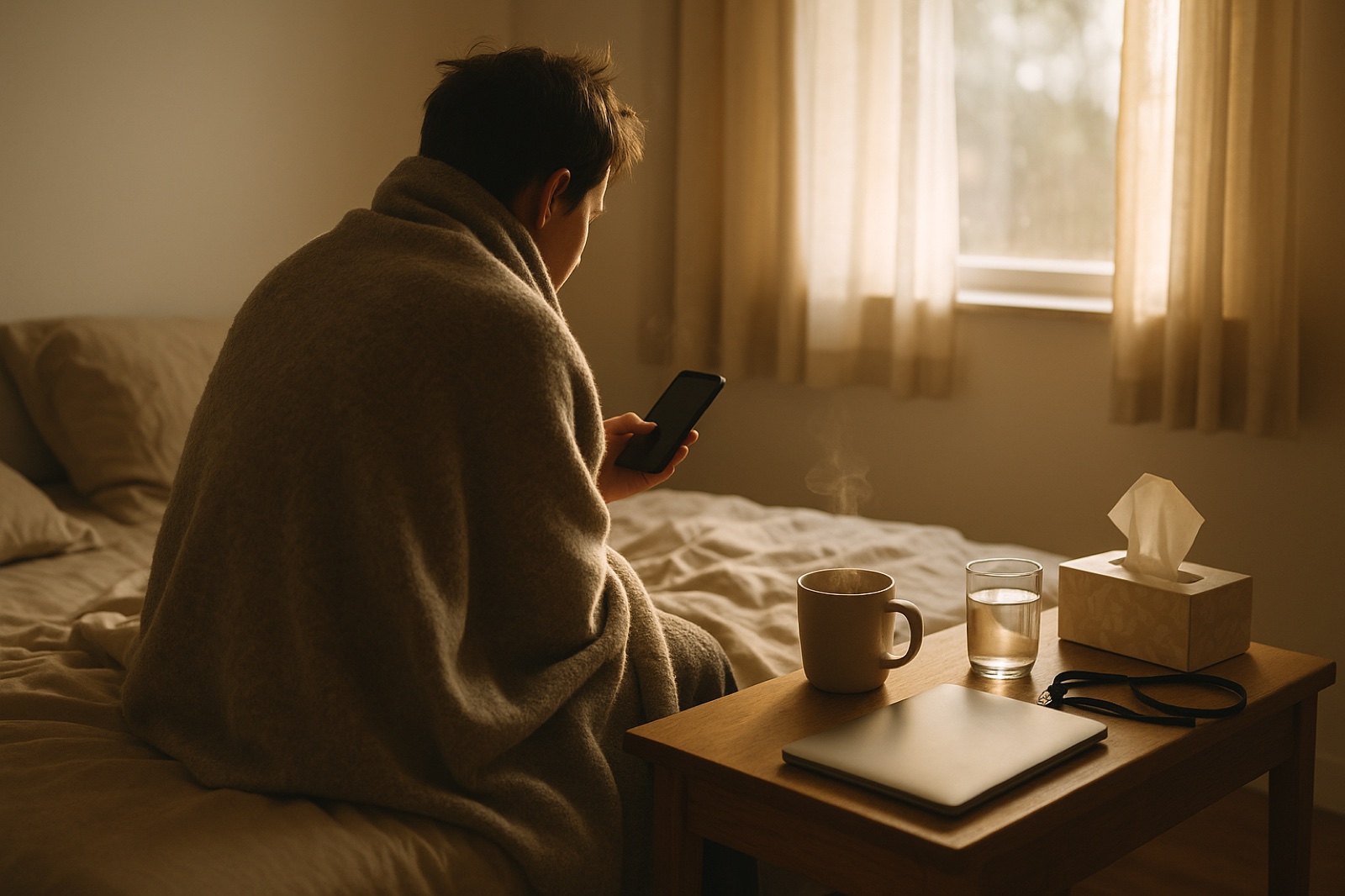
You’re awake before the alarm. Your throat is on fire, or your head is pounding, or you simply know that today your body has nothing left to give.
The message to your manager is already half-written in your head. And yet your thumb just hovers there.
Because the moment you send it, the guilt arrives. They’ll think I’m faking. Someone else will have to cover. It’s not that bad. I could probably push through.
If you’ve ever asked yourself why you feel guilty for calling out of work, even when you’re genuinely ill, you’re not strange and you’re not weak. You are in very large company. And the reason for the guilt is more interesting, and more hopeful, than it feels at six in the morning.
Why Do I Feel Guilty for Calling Out of Work?
Here’s the short answer. The guilt almost never measures how sick you are. It measures how much you care, and how badly you’ve come to believe that stopping has to wait until the need goes away.
But the need never goes away. There will always be emails. There will always be a shift to fill, a customer waiting, a deadline, a colleague who’s already stretched. So if you wait for the work to be quiet before you let yourself rest, you’ll be waiting forever.
That’s the trap. It isn’t laziness pulling at you. It’s a rule that says rest is only allowed once nobody needs you. And that moment doesn’t come.
The Guilt Hits Hardest in the People Who Need the Day Most
Researchers have a name for going to work when you’re ill: presenteeism. And when they look at why people do it, the reasons are rarely about money alone.
A review of the research by the British Psychological Society lists the drivers plainly: fear of letting colleagues down, a strong sense of duty, and feeling responsible, irreplaceable and indispensable. It also names workplaces that treat sickness as a sign of weakness, or as a burden on everyone else.
Here’s the part that surprised me. A large 2016 analysis of the research by Mariella Miraglia and Gary Johns found that presenteeism runs on two tracks at once. One is pressure and stress. The other is commitment. People who are deeply devoted to their work are more inclined to go the extra mile, and that includes dragging themselves in sick.
Read that again, slowly. The guilt you feel isn’t evidence that you’re a bad worker. It’s often a side effect of being a good one.
Which means the people with the loudest guilt are usually the last people anyone should worry about. The one agonising over a single sick day is almost never the one taking advantage.
What Going In Sick Actually Costs
Most of us assume the “responsible” choice is to show up. The research mostly points the other way.
A study led by psychologist Claire Smith at the University of South Florida, across nearly 1,600 working adults, looked at the pressure people feel to work while sick. Where that pressure was high, people felt worse about their workplace, were less satisfied, and were more likely to want to leave. Her own conclusion was blunt: working while sick is usually more costly over the long run than staying home.
Think about what actually happens when you push through:
- You do slower, sloppier work that someone often has to fix later.
- If you’re contagious, you can hand the illness to the very colleagues you were trying to protect.
- You stretch one sick day into a week of half-recovery.
The day off you were afraid would let people down is often the thing that protects them.
Your Coworkers Are Real, Too
None of this means your responsibilities are imaginary. Someone may genuinely have to cover for you. Some jobs have no one else. And not everyone has paid sick days; for many people a day off is a day’s pay gone, and that fear is not silly at all.
So the goal isn’t to stop caring. It’s to care well. Caring well looks like this:
- Tell them early. A message at dawn is a kindness. A message at start time is a scramble.
- Hand over the one thing that matters. If there’s a task that can’t wait, name it and say where it’s kept. One line, not an essay.
- Keep it short and honest. “I’m unwell and won’t be in today. I’ll update you tomorrow.” You don’t owe anyone a list of symptoms to prove it.
- Then put the phone down. Answering emails from bed isn’t a sick day. It’s working without the pay or the desk.
That’s responsibility. Dragging a fever into a room full of people isn’t.
How to Stop the Guilt From Stealing the Day
Sending the message is half the battle. The other half is the voice that keeps talking for the next eight hours. A few things help, and none of them cost anything:
- Name the rule out loud. “I’m allowed to stop even though the work isn’t finished.” Saying it plainly takes away some of its power.
- Ask the friend question. If a colleague sent you the message you just sent, would you think they were faking? Almost certainly not. Give yourself the same grace.
- Remember the work will still be there. That sounds grim, but it’s actually freeing. You aren’t losing your place in the line. The line will wait.
- Rest on purpose. Sleep, drink water, stay somewhere you can’t see your work bag. Let the day do its job.
If this guilt shows up far more often than the occasional sick day, it might be pointing at something bigger. Our free Am I Burned Out at Work? assessment takes a couple of minutes and gives you a straight answer. It’s also worth knowing that for many people, the workload has quietly grown, not shrunk, which makes stepping away feel even harder than it used to.
The Line Was Still Long When He Left
There’s a very old story I keep coming back to on mornings like this.
It’s about the most famous healer in history. Word about him had spread, and crowds kept coming from everywhere to be made well. Sick people. Desperate people. People who had walked a long way.
And right there, while the line was still long, he slipped away to a quiet, empty place to pray.
Not after everyone was healed. Not once the crowds thinned out. While they were still coming.
What most people read past is that it wasn’t a one-time thing. The way the original account is written suggests a habit, closer to “he would often slip away.” Leaving while the need was still there was part of his rhythm, not a single emergency.
Another account adds a detail I love. His friends were so busy, with so many people coming and going, that they didn’t even have time to eat. So he told them to come away with him to a quiet place and rest for a while. Notice the reason. The busyness wasn’t the reason they couldn’t rest. It was the reason they needed to.
If the one person who could actually meet every need still stepped away while the need was right in front of him, then maybe your one sick day isn’t the betrayal it feels like. Maybe rest was never meant to wait until the work runs out. Maybe God built it into us for exactly the days when it doesn’t.
You’re Allowed to Stop Today
The emails will still be there tomorrow. So will the shift, the customers and the colleagues you care about.
You’ll serve all of them better as someone who got well than as someone who pushed through and fell apart on Thursday.
Send the message. Put the phone face down. Drink some water and go back to sleep. You’ve done the responsible thing. It just happens to look like rest.
And if the guilt was ever about how deeply you wanted to rest, you might also like why so many of us feel guilty when we rest at all.
What Do You Think?
Do you think sick-day guilt comes mostly from our workplaces, or from inside ourselves? A workplace can make it worse, but plenty of people feel it even with a kind manager. Tell us which one you think does more damage in the comments below.
Share This
- Researchers found that commitment to your job is one of the things that pushes people to drag themselves in sick. So the guilt isn’t proof you’re a bad worker. It’s often proof you’re a good one. https://bgodinspired.com/index.php/health-and-wellness/why-do-i-feel-guilty-for-calling-out-of-work/
- “If you wait for the work to be quiet before you let yourself rest, you’ll be waiting forever.” Needed this at 6am with a fever and my thumb hovering over the message to my manager. https://bgodinspired.com/index.php/health-and-wellness/why-do-i-feel-guilty-for-calling-out-of-work/
- For anyone sick today and feeling awful about calling in: the busyness isn’t the reason you can’t rest. It’s the reason you need to. https://bgodinspired.com/index.php/health-and-wellness/why-do-i-feel-guilty-for-calling-out-of-work/
Questions People Ask
Why do I feel guilty for calling out of work when I’m actually sick?
Guilt about calling in sick usually comes from an unspoken belief that rest is only allowed once nobody needs you. Because work never truly runs out, that moment never arrives, so any sick day feels like letting people down. Research on presenteeism also links working while sick to a strong sense of duty and commitment, so the feeling often reflects how much a person cares rather than whether the sick day is justified.
Is it better to go to work sick or stay home?
Research generally finds that working while sick is more costly in the long run than staying home. People who work while ill tend to be less productive, can spread contagious illness to colleagues, and often take longer to recover. A study led by Claire Smith at the University of South Florida, covering nearly 1,600 working adults, also found that pressure to work while sick lowered job satisfaction and increased the wish to leave the job.
What should I say when I call in sick?
A short, honest message sent as early as possible is enough, for example: “I’m unwell and won’t be in today. I’ll update you tomorrow.” If one urgent task cannot wait, name it and say where the information is kept. There is no need to list symptoms or over-explain, and it helps recovery to stop checking work messages after sending the notice.
What is presenteeism?
Presenteeism means going to work while sick or otherwise unable to function well. Common drivers identified in workplace research include fear of letting colleagues down, a strong sense of duty, feeling irreplaceable, job insecurity, and workplace cultures that treat illness as weakness. Studies suggest presenteeism frequently costs employers more than the absences it replaces.
Did Jesus take time to rest when people still needed him?
Yes. The Gospel of Luke (Luke 5:15-16) describes great crowds gathering to be healed, and says Jesus withdrew into the wilderness and prayed, with the original Greek suggesting this was a regular habit rather than a single event. The Gospel of Mark (Mark 6:31) records Jesus telling his disciples, “Come ye yourselves apart into a desert place, and rest a while,” because so many people were coming and going that they had no time even to eat.