 0
0
 0
0
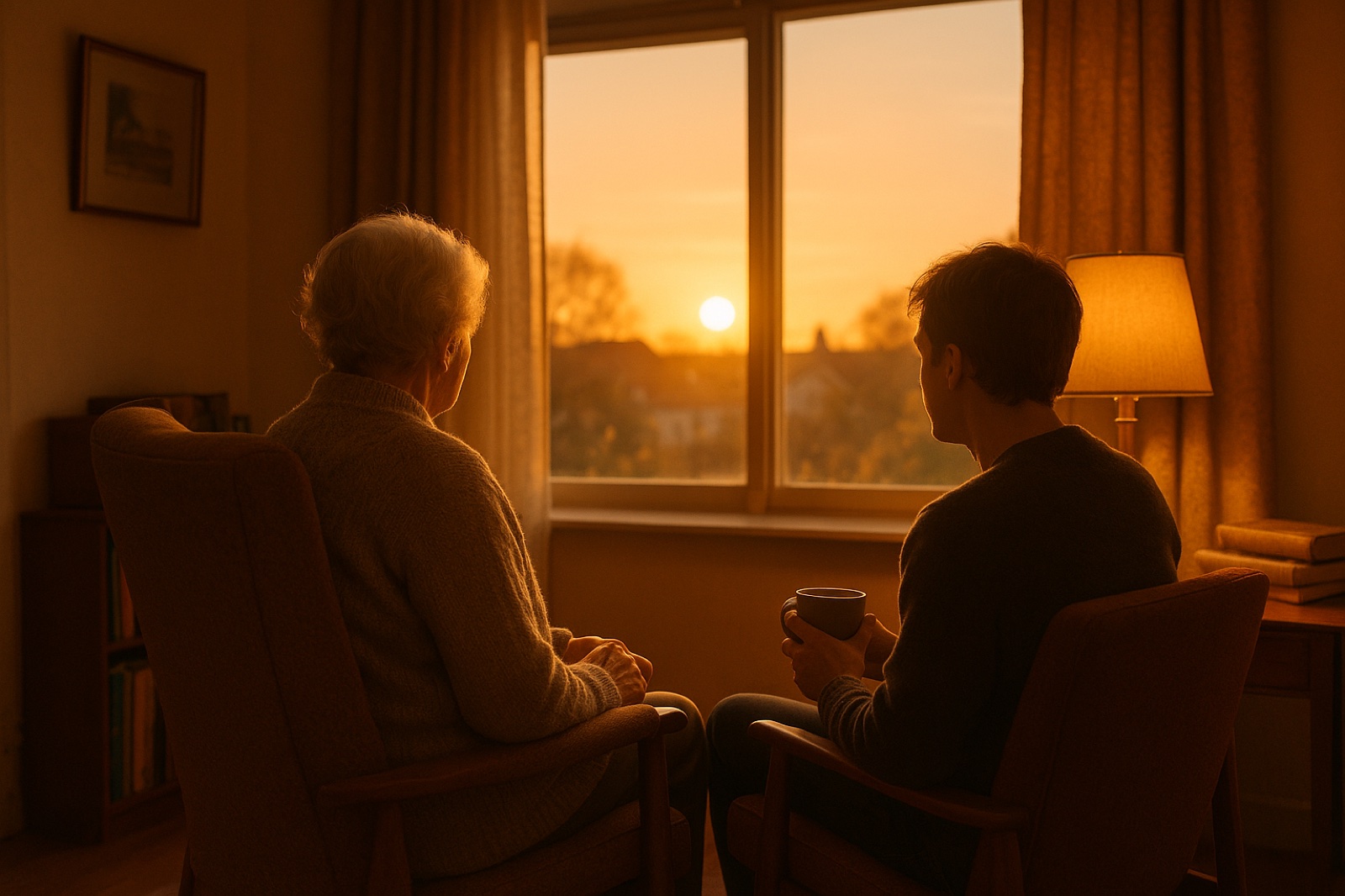
It is late afternoon. The day has gone fairly well. Then the light starts to fade, and the person you care for starts to change.
They pace. They ask the same thing again and again. They want to go home when they are already home. They may get angry, or scared, or sure that someone else is in the room. An hour ago they were calm.
If this is your evening, you are not imagining it, and you did not cause it. It has a name. It is called sundowning, and it is one of the hardest parts of caring for someone with dementia.
What is sundowning?
Sundowning is a rise in confusion, restlessness and upset that comes late in the day in people living with dementia. The US National Institute on Aging describes it as restlessness, agitation, irritability and confusion that happen “as daylight begins to fade.” You can read its short guide to coping with agitation and sundowning.
The Alzheimer’s Association says it can run “from dusk through night.” It can include trouble sleeping, worry, pacing, seeing things that are not there, and not knowing where they are.
One thing matters a lot here. Sundowning is not a disease of its own. It is a pattern: a group of behaviours that tend to show up at a certain time of day. It is not a sign that you got something wrong at lunchtime.
Why sundowning happens as the light fades
Nobody knows the full cause. But the main dementia organisations point to the same short list.
- Tiredness. A whole day uses up a brain that is already working hard. Being overly tired can make late-day restlessness worse.
- A body clock that has slipped. Dementia can damage the small part of the brain that keeps time, the part that tells the body when it is day and when it is night.
- Shadows. Low light means more shadows, and shadows are easy to misread. A coat on a chair can look like a person.
- A need they cannot name. Hunger, thirst, pain, a full bladder, boredom, loneliness. When words are hard to find, a need can come out as pacing or anger.
- The mood in the room. People with dementia can pick up on stress around them, even when nothing is said out loud.
That last one is worth a closer look, and we will come back to it. First, the part most articles leave out.
What the research on sundowning has not proven
You might expect a problem this common to be well understood. It is not.
In 2016, a team of researchers led by Marco Canevelli reviewed the science in the journal Frontiers in Medicine. Their review of sundowning in dementia found three things a tired carer deserves to know.
- There is no agreed definition. Sundowning is not listed in the main manual doctors use to diagnose mental conditions. Experts do not fully agree on which behaviours count, or which hours.
- Nobody knows how common it is. Studies have put it anywhere between 2.5% and 66% of people with dementia. A range that wide means the studies were not measuring the same thing.
- No treatment had been properly tested. At the time of the review, not one randomised trial had tested any treatment, drug or non-drug, on sundowning itself. Bright light and melatonin had been tried in small studies with mixed results.
That was the picture in 2016, and newer work may add to it. But read it one more time, because there is something kind hidden in it.
If the experts do not have a proven fix, then a bad evening is not proof that you missed one. You are not failing a test that everyone else is passing. There is no secret method. There is only what tends to help.
What helps with sundowning tonight
None of these cost money. They draw on guidance from the National Institute on Aging and the Alzheimer’s Association, whose page on sleep issues and sundowning is worth saving.
Earlier in the day:
- Get some daylight. Go outside, or sit by a window, every day.
- Keep the day the same shape. Meals, washing and bed at the same times.
- Do the hard things early. Bathing, visitors and outings go better in the morning.
- Move, but do not overfill the day. A walk helps. A packed schedule does not.
- Make the midday meal the big one. Keep the evening meal light.
- Skip long late naps, and skip coffee, cola and alcohol late in the day.
As the light starts to go:
- Turn the lights on early. Do it before the room gets dim, not after. Close the curtains so the windows do not turn into dark mirrors.
- Turn the noise down. Television off. Fewer people. One voice at a time.
- Give the hands a small job. Folding towels, a snack, a warm drink, a song they know.
If it is already happening:
- Come close slowly and speak calmly.
- Check for a need: toilet, food, water, pain, too hot, too cold.
- Do not argue about what is real. You will not win, and it will not help.
- Tell them they are safe and that you are here.
- If they need to walk, let them walk, and stay nearby. Never hold them down.
When to call a doctor
This article is general information, not medical advice. Please talk to a doctor or nurse if you can, and do it soon if:
- The change is sudden. Confusion that gets much worse over a day or two, not over months, can come from an infection, pain or a medicine. Those can be treated.
- Sleep has fallen apart. A doctor can look for causes and check whether the timing of medicines is part of the problem.
- Someone could get hurt. If you or they are in danger, step back to a safe distance and call your local emergency number. Tell them the person has dementia.
The other tired person in the room
Now back to the mood in the room.
The person you care for has been awake since morning. So have you. By late afternoon you are both running on very little. The Alzheimer’s Association notes that seeing stress or frustration in the people around them can make a person with dementia more stressed too. The 2016 review found the same link from the other side: sundowning and carer stress tend to rise together.
Please do not hear that as blame. It is not saying you cause the evening. It is saying the evening is hard on two people, not one, and at the same hour.
So your rest is not a luxury. It is part of the care. If you can hand over even twenty minutes in the afternoon to sit down, eat something and breathe, that is not selfish. It may be the most useful thing you do all day. If you are not sure how worn down you are, this free two-minute check may help: Am I Burned Out From Caregiving?
There is a quieter weight too. You may be missing someone who is sitting right in front of you. That has a name as well. It is called ambiguous loss, grief for someone who is gone but not gone. And if the evenings have begun to feel like a room with no door, here is what helps when you are feeling trapped in a life you cannot leave.
A song that was written for this hour
In the summer of 1847, an English minister named Henry Francis Lyte was dying of tuberculosis. He was 54. He wrote a short poem about evening and put it in a letter to a friend, dated 25 August. On 4 September he preached for the last time, and that night he handed a copy to a relative. He died on 20 November, less than three months later. The Hymnology Archive has the letters and dates.
You may know how it starts, even if you have never been inside a church. It has been sung before football cup finals in England since 1927, and at funerals and remembrance services in many countries.
Abide with me; fast falls the eventide;
The darkness deepens; Lord, with me abide.
“Abide” is an old word for stay.
Look at what he does not ask for. He does not ask for the dark to stop. He does not ask to be made well. A man who knew he was not going to get better asked for one thing. Do not leave me alone in this.
There is a second story about the song. A magazine article in 1925 said Lyte first wrote the words back in 1820, after sitting with a dying friend who kept repeating one phrase over and over: abide with me. The 1847 letter is the firmer evidence, and nobody can prove the older story. But anyone who has sat beside someone saying the same few words again and again as the day ends will know that scene.
Lyte did not invent the line. He borrowed it from a much older story. Two friends are walking home at dusk, heavy with grief. A stranger has walked the road with them. When they reach the door, they ask him to stay, because it is nearly evening and the day is almost gone. He stays. People have been praying that same small request ever since. Not “God, fix the evening.” Just “God, be in it with us.”
I did not expect to find that inside a medical topic. But look at where the care advice lands when the science runs out. Stay calm. Stay close. Tell them they are safe and that you are here. That is very near to what a dying man asked for in 1847. The evening still needs the lamps, the routine and the doctor. It also needs company.
A good place to start:
The Beginner’s Guide to Feeling God’s Presence Every Day
A simple guide to noticing God in the ordinary moments of a day, even when life feels chaotic.
Free.
So tonight, before the light goes, turn on the lamps. Close the curtains. Make something warm to drink. Then, if you can, sit down next to them.
You may not be able to answer the question they ask for the tenth time. You cannot stop the sun from going down. But you can be the one who stays. On the nights when that feels like nothing, remember that it is the very thing people have asked for at this hour for a very long time. And you are allowed to ask for it too.
Discussion question
When someone you love is confused and upset, which matters more: gently correcting what they have wrong, or keeping them calm even if it means going along with it? Tell us what you think in the comments.
Share this
If someone with dementia gets more confused and upset every evening, it has a name: sundowning. This explains why, and what helps tonight. https://bgodinspired.com/index.php/health-and-wellness/what-is-sundowning/
I did not know this: studies cannot even agree how common sundowning is (2.5% to 66%), and no treatment had been properly tested. So a bad evening is not proof you missed something. https://bgodinspired.com/index.php/health-and-wellness/what-is-sundowning/
“You cannot stop the sun from going down. But you can be the one who stays.” For anyone caring for a parent with dementia. https://bgodinspired.com/index.php/health-and-wellness/what-is-sundowning/
Questions and answers about sundowning
What is sundowning?
Sundowning is a rise in confusion, restlessness, agitation and irritability that happens in the late afternoon, evening or night in people living with Alzheimer’s disease or another dementia. Sundowning is not a disease of its own. It is a pattern of behaviours that tends to appear as daylight fades, and it can include pacing, anxiety, trouble sleeping, seeing things that are not there and not knowing where they are.
What causes sundowning in dementia?
The exact cause of sundowning is not known. Dementia organisations point to several things that can add to it: tiredness at the end of the day, damage to the part of the brain that keeps the body clock, low light and shadows that are easy to misread, needs such as hunger, thirst or pain that the person cannot explain, and stress picked up from the people around them.
What time of day does sundowning start?
Sundowning usually starts in the late afternoon or early evening, as daylight begins to fade. The US National Institute on Aging describes it as starting or worsening in the late afternoon or early evening, and the Alzheimer’s Association says it can continue from dusk through the night. The exact hours differ from person to person.
How do you calm someone who is sundowning?
To calm someone who is sundowning, come close slowly and speak in a calm voice. Check whether they need the toilet, food, water or pain relief. Do not argue about what is real. Tell them they are safe and that you are with them. Turn on the lights, reduce noise, and let them walk if they need to while you stay nearby. Never use physical restraint. If anyone is in danger, call your local emergency number.
How common is sundowning?
Nobody knows exactly how common sundowning is. A 2016 review in the journal Frontiers in Medicine found that studies have estimated it at anywhere between 2.5% and 66% of people with dementia. The range is so wide because there is no agreed definition of sundowning, and different studies measured it in different ways and in different settings.