 0
0
 0
0
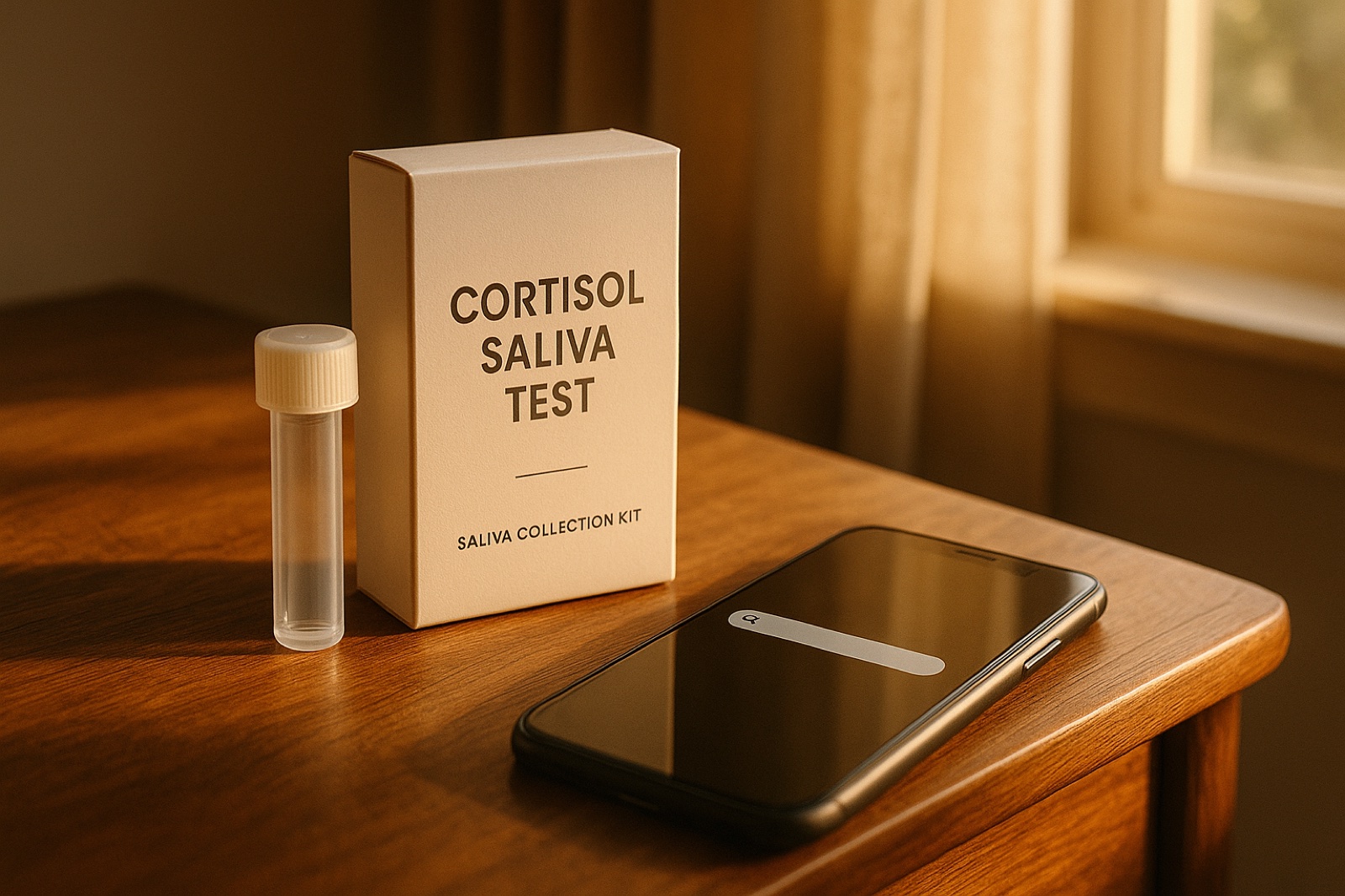
Somewhere on your phone, tucked between the coupon apps and the group chat you can’t quite leave, there’s an ad now for something almost nobody had a name for a few years ago: an at-home cortisol test.
You spit into a tube, mail it off, and a few days later you get a number. High cortisol. Low cortisol. “Cortisol face.” “Cortisol belly.” There are supplements built to lower it, morning routines designed to “reset” it, and a small industry of creators walking you through their cortisol-friendly breakfast before they’ve even had coffee.
Interest in cortisol and anxiety has climbed for months now, hitting new highs three times in a row this year. That’s not a small trend. That’s a lot of people, late at night, typing a hormone’s name into a search bar instead of the question they’re actually asking.
What Cortisol Actually Is (and Why Everyone’s Suddenly Testing It)
Cortisol isn’t the enemy. It’s a hormone your adrenal glands release to help you handle stress — it’s the reason you can wake up, get out of bed, and function under pressure at all. Levels naturally rise in the early morning to get you moving, then taper off through the day. Every person alive has cortisol working in the background right now, and that’s a good thing.
What’s changed isn’t the hormone. It’s the visibility. Wearable trackers, direct-to-lab test kits, and a wave of wellness content have turned something that used to be invisible into something you can supposedly measure, rank, and optimize. If you can put a number on it, it starts to feel like something you can fix — which is part of why “how to lower cortisol” has become such a popular thing to search. It feels more solvable than “why do I feel like this.”
What Chronically High Cortisol Actually Does
To be fair, the concern isn’t imaginary. When cortisol stays elevated for long stretches — not the normal daily rise and fall, but a body stuck in “on” — it can disrupt sleep, nudge blood sugar around, make it harder to keep weight off around the midsection, and leave your immune system running a little less sharp than usual. Chronic stress is real, and it does show up in the body, not just the mood.
But here’s the part that gets lost in the supplement ads: cortisol rises in response to a threat your mind perceives, whether that threat is a bear in the woods or an unanswered text message. The hormone is just doing its job. The question worth asking isn’t really “how do I lower my cortisol.” It’s “what does my mind keep treating as a threat.”
If You Actually Want to Feel Calmer Tonight
Before reaching for another supplement, a few things that genuinely help regulate a stressed-out body — and they’re free:
- Get morning light early. Sunlight in the first hour after waking helps set a healthier cortisol rhythm for the whole day.
- Move, even briefly. A short walk burns off stress hormones the body was never meant to just sit with.
- Cut caffeine earlier than you think you need to. Afternoon caffeine keeps cortisol (and cortisol-driven anxiety) elevated longer than most people realize.
- Say the actual feeling out loud. Not “I’m stressed” in the abstract — the real sentence. “I’m scared I’m going to lose this job.” “I’m worried about my kid.” Naming it does something a supplement can’t.
The Question Behind the Test
Most people who order an at-home cortisol test are physically fine. Their levels come back well within normal range. What they usually have isn’t a hormone problem — it’s worry with nowhere to go. A mind running the same loop long enough that the body starts running it too.
There’s something almost tender about that, once you see it clearly. People trying every biological hack available to calm a number on a lab report, when what’s actually happening underneath is one of the oldest, most human things there is: fear about tomorrow, dressed up in a spreadsheet.
And here’s the part that tends to surprise people. This idea — that the body and the inner life are wired together this tightly, that unresolved worry doesn’t just sit in your head but actually settles into your shoulders, your gut, your sleep — isn’t a new discovery. Ancient wisdom made this same connection thousands of years before anyone had ever heard of a hormone. The old texts didn’t have a word for cortisol. They just noticed, with striking precision, that anxiety lives in the body — and that real peace, the kind worth chasing, actually settles something physical, not only emotional. One of the oldest descriptions of peace out there says it “guards” the heart and mind, the way a wall guards a city under siege. That’s an oddly physical way to describe a feeling — unless whoever wrote it already understood that worry does something to the body worth guarding against, long before science had a way to measure it.
What the Test Can’t Actually Tell You
A cortisol test can tell you a number. It can’t tell you what you’re afraid of, what you’re carrying alone, or what you’ve been avoiding saying out loud. That part was never going to show up on a lab report — it shows up when you finally stop measuring and start naming.
So test the cortisol if you want to. It’s not a bad idea, and for a small number of people it does catch something worth a doctor’s attention. But maybe treat the number as a nudge rather than the whole answer. Maybe the real question isn’t what your levels are — it’s what you’re actually worried about, and whether you’ve told anyone yet.
If health anxiety in general is something you recognize in yourself, it’s worth reading about why checking your body for symptoms usually makes it worse, not better — and if mornings are when the worry hits hardest, here’s what’s actually happening with your cortisol the moment you wake up. If you want a clearer read on where you actually stand, our free “How Anxious Am I?” assessment only takes a couple of minutes.
Discussion Question
Do you think people trust a lab number more than their own gut feeling these days — and if so, why? Drop your take in the comments.
Share This
- “Everyone’s testing their cortisol. Nobody’s asking if they’re just anxious. Wild article on this: https://bgodinspired.com/index.php/health-and-wellness/cortisol-test-or-just-anxious/”
- “Turns out the ‘cortisol test’ craze might just be a fancy way of asking ‘am I okay.’ Worth a read. https://bgodinspired.com/index.php/health-and-wellness/cortisol-test-or-just-anxious/”
- “Cortisol face, cortisol belly, cortisol detox… or maybe we’re all just stressed and looking for a number to blame. https://bgodinspired.com/index.php/health-and-wellness/cortisol-test-or-just-anxious/”
Questions People Ask
Is testing your cortisol levels actually worth it?
For most healthy people, an at-home cortisol test isn’t necessary — daily cortisol naturally rises and falls and a single reading rarely tells the full story. It can be useful if a doctor suspects a specific medical condition, but for everyday stress and anxiety, the number usually comes back normal even when someone feels far from fine.
What are the signs your cortisol is too high?
Common signs linked to chronically elevated cortisol include trouble sleeping, weight gain around the midsection, feeling wired but exhausted, getting sick more often, and irritability. These same signs overlap heavily with plain everyday anxiety, which is part of why the two get confused.
Why do people search their cortisol levels instead of just saying they’re anxious?
A number feels more solvable than a feeling. Searching “how to lower cortisol” feels like taking action, while admitting “I’m anxious” can feel vulnerable or vague. Chasing the measurable version of the problem is often easier than naming the emotional one underneath it.
Does the Bible talk about anxiety and the body being connected?
Yes — long before modern science described the stress response, ancient wisdom described peace as something that “guards” the heart and mind, treating anxiety and physical well-being as connected rather than separate. It’s one of the earliest recorded observations that worry isn’t just a feeling, but something the body carries.
What actually helps lower cortisol naturally?
Consistent sleep, morning sunlight, regular movement, cutting back afternoon caffeine, and — often overlooked — actually naming and talking through what’s worrying you. The nervous system responds to feeling safe, not just to supplements.