 0
0
 0
0
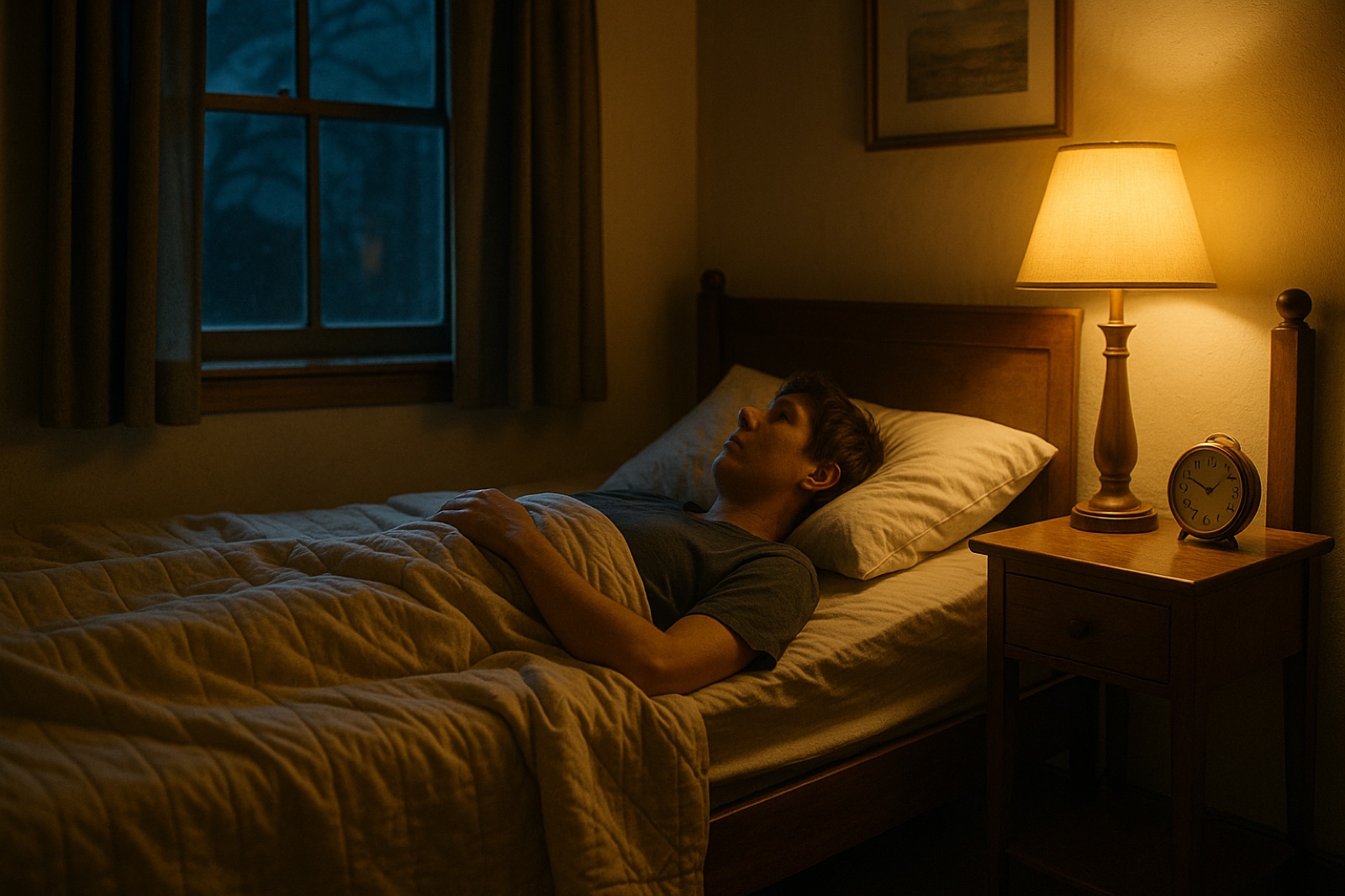
It’s 11:47 p.m. You did everything right today. No fight with anyone. No crisis at work. The bills are paid, the kids are asleep, the doors are locked. By every normal measure, nothing is wrong. And yet you’re lying in the dark, wide awake, running a mental inventory of things that could go wrong tomorrow — like your brain doesn’t believe you when you tell it there’s nothing to fix right now.
You’ve tried the sleep hygiene checklist. No screens an hour before bed. Cooler room. Magnesium. White noise. Some nights it helps a little. Most nights you’re still there at midnight, still awake, still not sure why. If you’ve ever asked can’t sleep even though nothing is wrong and felt a little crazy for asking it, you’re not broken and you’re not alone — you’re just missing one ingredient that no sleep app has ever put in a checklist.
What Every Sleep Hygiene List Quietly Assumes
Here’s the thing almost every sleep article gets slightly wrong: they treat insomnia like a body problem. Wrong temperature. Wrong light. Wrong caffeine cutoff. Fix the inputs, get the output — sleep, like a formula.
But your body isn’t actually confused about how to sleep. It knows how. Toddlers who’ve never read a wellness blog fall asleep the second they stop moving. Sleep is not a skill you’re missing. It’s a state your body won’t let you enter until it decides it’s safe to.
That’s the piece the checklists skip. Your nervous system isn’t asking “is it dark enough?” It’s asking a much older, much blunter question: is it safe to stop watching right now? And as long as some part of you is still on guard — still running the tab of unfinished things, still bracing for tomorrow — the answer stays no, no matter how good your sheets are.
The King Who Slept With Enemies at the Door
Psalm 4 was written by David during a season with real threats circling him — people actively working against him, spreading lies about him, wanting him gone. This isn’t a psalm written from a place of comfort. He opens it in genuine distress, asking God to hear him because he’s cornered (Psalm 4:1). He calls out the people slandering his name and turning his honor into shame (Psalm 4:2).
Then, partway through, something shifts. He mentions others around him who are anxious too — people asking “who will show us any good?” — chasing after some kind of relief, some kind of proof things will be okay (Psalm 4:6). But instead of joining that search, David says God has put a gladness in his heart that has nothing to do with his circumstances actually resolving (Psalm 4:7). The threat is still there. The slander hasn’t stopped. Nothing external has changed.
And then comes the verse this whole article is built on:
“I will both lay me down in peace, and sleep: for thou, LORD, only makest me dwell in safety.” (Psalm 4:8, KJV)
Read that again slowly. He doesn’t say “I’ll sleep once this is resolved.” He doesn’t say “I’ll sleep once I stop worrying.” He says he can lie down in peace — not despite the danger being unresolved, but because his safety was never actually dependent on the danger going away. It was dependent on who was keeping watch.
The Turn: Insomnia Isn’t a Sleep Problem, It’s a Safety Question
Here’s what I never saw in this verse until I stopped reading it as a bedtime platitude and started reading it as a diagnosis. David wasn’t sleeping because his problems were gone. He was sleeping because he had transferred the job of watching from himself to God — and once someone else was on watch, his own nervous system was finally allowed to stand down.
That’s the missing ingredient. You can optimize your room temperature perfectly and still lie awake, because the real question your body is asking at 11:47 p.m. isn’t about the room. It’s “if I stop watching, will everything fall apart?” Sleep hygiene can’t answer that question. Only something — or Someone — bigger than you standing watch in your place can.
This is why “just relax” never works as advice. You can’t relax your way into a felt sense of safety by trying harder to relax. Relaxation is the output of feeling safe, not the input that creates it. David didn’t try to relax his way to sleep. He handed the watch to Someone else, and the relaxation followed on its own.
3 Things You Can Actually Do Tonight
- Name the specific thing you’re guarding. Not “I’m anxious” — that’s too vague to hand off. Say it out loud or write it on paper next to your bed: “I’m afraid I’ll forget to follow up on that email” or “I’m scared about the appointment Thursday.” You can’t consciously release a job you haven’t named.
- Say the handoff out loud, specifically. After naming it, say this sentence, filling in the blank: “God, You’re on watch for ___ tonight. I’m off duty.” This isn’t a magic phrase — it’s you consciously doing what David did: transferring the watch instead of just trying to think about something else.
- Read Psalm 4:8 out loud before you turn off the light. Not silently in your head — out loud, even quietly. Hearing your own voice say “for thou, LORD, only makest me dwell in safety” engages your brain differently than reading it does. Make it the literal last thing you do before the lamp goes off.
A Prayer for the Nights You Can’t Turn Your Mind Off
God, I’m tired but I can’t stop watching everything. You know exactly what I’m running through my head right now — You don’t need me to explain it. I’m handing You the watch tonight. Not because the situation is fixed, but because You don’t need me awake to take care of it. Let me actually lay down in peace, the way David did, because You’re the one making this room safe — not my racing mind. Amen.
One Question Worth Sitting With
If you actually believed, the way David seemed to, that Someone else was awake and watching so you didn’t have to be — what’s the one thing tonight you’d finally let yourself stop guarding?
Share This
- “I’m not bad at sleeping. I’m just bad at handing off the watch.” — Psalm 4:8
- David had real enemies at the door and still slept in peace. Not because the threat left — because he stopped being the one on guard.
- Sleep hygiene checklists forgot one line item: felt safety. Psalm 4:8 remembered it 3,000 years ago.
Questions People Ask
Why can’t I sleep even though nothing is technically wrong in my life?
Because your nervous system doesn’t sleep based on whether your life is objectively fine — it sleeps based on whether it feels safe enough to stop watching. You can have a good life on paper and still feel unwatched at night, which keeps your body in a low-grade alert state that blocks real rest.
What does Psalm 4:8 actually mean?
David wrote it while facing real enemies and slander, not from a place of ease. He says he can lie down in peace and sleep specifically because God — not his circumstances — is what makes him safe. The verse separates felt safety from resolved problems; you can have the first without the second.
Is anxiety at night different from anxiety during the day?
The anxiety itself is often the same worry — it just has nowhere to go at night. During the day you can act on a concern: send the email, make the call. At night there’s nothing to do but hold it, which is exactly why naming it and consciously handing it off matters more after dark than during daylight hours.
Does praying before bed actually help you fall asleep faster?
It can, but not as a relaxation trick — it works because naming a specific worry out loud and consciously transferring it interrupts the mental loop of silently guarding it. The mechanism isn’t magic; it’s the same relief you feel telling a trusted friend “can you keep an eye on this for me” so you can finally stop watching it yourself.
What’s one thing I can do tonight if I’ve already tried everything else for sleep?
Before you try one more supplement or app, try naming the one specific thing you’re bracing for tomorrow and saying out loud, “God, You’re on watch for this tonight. I’m off duty.” It costs nothing, takes ten seconds, and addresses the actual question your body is asking that no sleep hygiene tip touches.
If tonight is another one of those nights, you’re not failing at sleep. You’re just still holding the watch. If racing thoughts for no clear reason sound familiar, that ache isn’t random, and it isn’t just yours to manage alone. Some nights the real fix isn’t a new routine — it’s finally naming what’s keeping you up in the first place. And if you’ve wondered whether faith is even supposed to make the anxious nights easier, it’s worth asking why the worry hasn’t lifted yet — because peace was never about having no storm. It was about who’s in the boat with you.