 0
0
 0
0
The Unexpected Journey of Barakamon: Discovering Grace in Unlikely Places
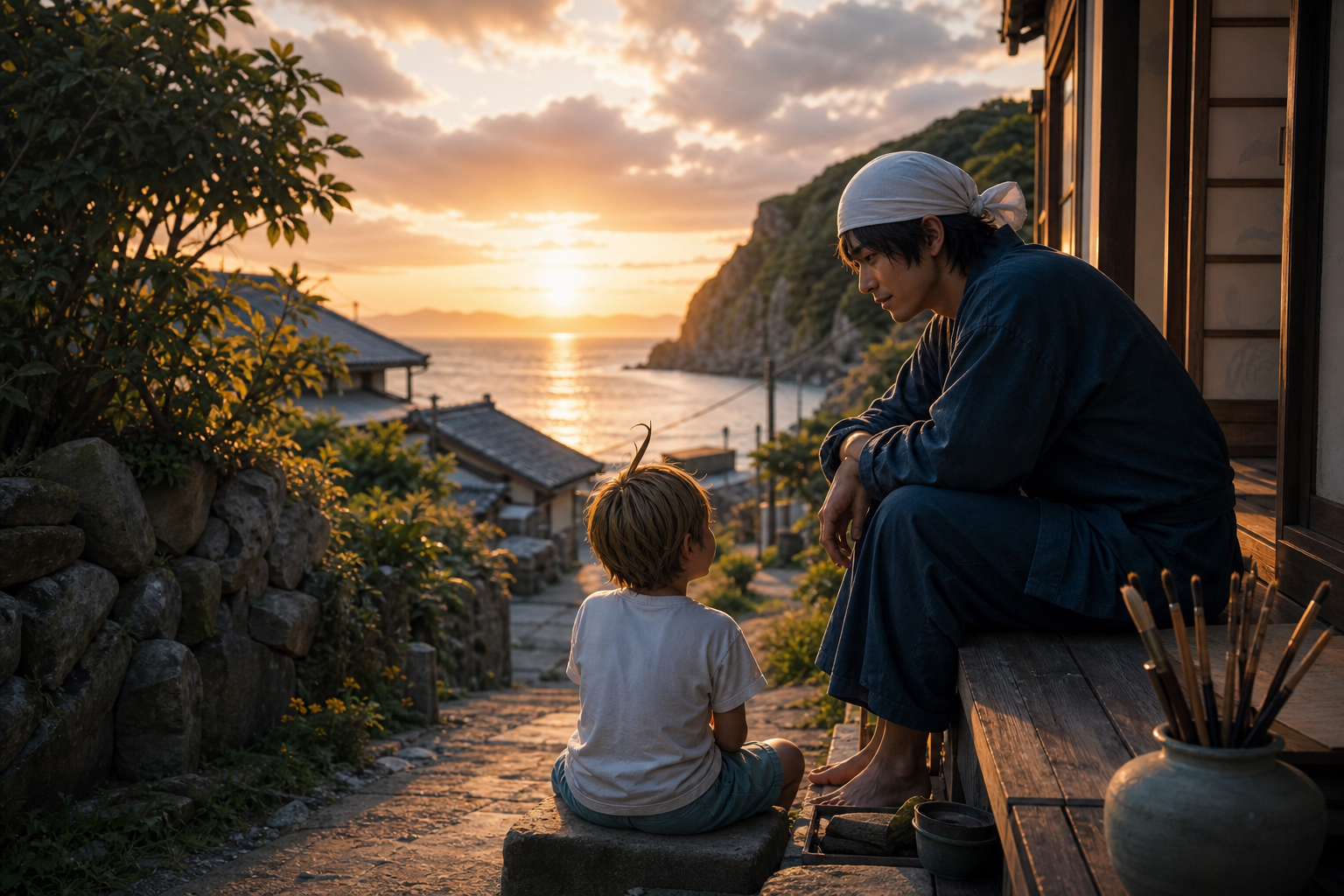
There’s this wonderful moment in Barakamon where Seishu Handa, after his literal fall from grace, finds himself living on the remote Goto Islands. The serenity is a drastic change from his tumultuous life in Tokyo, and while initially resistant, he slowly starts to mold into the community. In one scene, after a messy day of learning calligraphy surrounded by the cheerful chaos of the village children, Handa pauses to watch the sunset with Naru. The simplicity and beauty of that moment become a canvas where the strokes of his life start to make a different kind of sense.
Watching Handa’s journey, you can’t help but notice how, despite his reluctance, the community draws him out, reshaping him. The islanders, each with their quirks, teach him about humility, connection, and ultimately, grace. It’s not showcased loudly; it’s whispered in the laughs, gestures, and shared silences. Handa moves from the isolation of self-imposed perfection to a life filled with imperfect people, whose very imperfections breathe life and color into his own journey. It’s a transformation that feels effortless and profound.
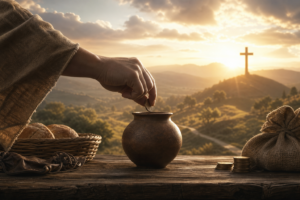
As I thought about Handa sitting there with Naru, embracing the moment, I was reminded of how the Apostle Paul, while discussing his own struggles, encountered grace. There’s this pivotal verse, “My grace is sufficient for you, for my power is made perfect in weakness” (2 Corinthians 12:9). Just like Handa, who finds unexpected strength in his vulnerability, Paul recognizes that it is in our weaknesses that grace truly transforms and defines us.
What’s surprising here is the realization that Barakamon doesn’t just echo this scriptural truth — it actively reveals it in a tangible way. The show doesn’t preach a message; instead, it presents a living, breathing parable of what it means to be reshaped by grace. Handa’s journey isn’t merely about artistic growth but about redefining what success and fulfillment mean when grounded in community and authentic living.
So, as Handa finds joy in the messy, unplanned moments, we see a reflection of this scriptural grace — not as a distant, abstract concept, but something alive and dynamic, altering the very fabric of our existence. Suddenly, Paul’s words aren’t just a comforting truth to be read, but a lived experience we witness in a small island community through Handa’s eyes.
Perhaps what Barakamon gently teaches us is this: Grace finds us not in perfection but in the imperfection of community. Through the collective laughter and shared sorrows, we are reminded that we are never alone in our journeys. It’s in these unpolished, human moments that grace’s power truly holds us.
So, whether you’re on a small, fictional island or navigating your own story in real life, remember: grace is waiting in places we least expect. It transforms not with grandeur, but with quiet persistence, drawing us into deeper connection with both people and ourselves.
Discussion Question
How do you see the theme of community as a form of grace playing out in Barakamon, and how might this change how you understand grace in your own life? Let me know in the comments.
Social Share Post
Surprised by how Barakamon (2014) mirrors biblical grace? It’s in the island moments that Handa truly finds connection. 🌿✨ Dive into the unexpected parallels with me at [URL] #Barakamon #GraceInCommunity
If positive Biblical wisdom matters to you, I’d love your support of the mission
Q&A about Barakamon (2014)
Is it okay for Christians to watch Barakamon (2014)?
Watching Barakamon can be okay if viewed discerningly. The series focuses on personal growth and community, aligning with Philippians 2:4, which encourages looking to the interests of others. It’s important to ensure that any media consumed doesn’t contradict Christian values.
How does Barakamon (2014) reflect the idea of humility in the Bible?
Seishuu’s journey reflects biblical humility as he learns to value others’ perspectives. This mirrors Philippians 2:3, which advises believers to do nothing out of selfish ambition and to consider others better than themselves. His growth shows the importance of humility in strengthening relationships.
What does the Bible say about creativity as shown in Barakamon (2014)?
Barakamon highlights creativity in Seishuu’s calligraphy, reminding us of God’s creative nature seen in Genesis 1. We are encouraged to use our gifts wisely, as in 1 Peter 4:10, serving others as faithful stewards of God’s grace.
Can the themes of friendship in Barakamon (2014) relate to Christian teachings?
Yes, the friendships in Barakamon reflect the biblical principle of loving one another. John 15:12 emphasizes Jesus’ command to love each other, which is evident when the characters support and learn from each other, fostering community and personal growth.