 0
0
 0
0
Today, in select theaters across the U.S. and Canada, a movie that came out a decade ago is filling seats again. For one night only, Train to Busan — the 2016 South Korean thriller that changed what a zombie movie could be — is back on the big screen, remastered in 4K, to mark its 10th anniversary.
If you’ve never seen it, here’s the pitch that sounded unlikely in 2016 and still sounds unlikely now: a two-hour action movie set almost entirely on a high-speed train, made on a budget of roughly $8.5 million, became one of the most emotionally devastating films of the decade. It went on to earn more than $98 million worldwide. Ten years later, it’s still the movie people bring up when they want to argue that a “genre film” can also be a great one.
Why Train to Busan Broke the Rules of Zombie Movies
By 2016, the zombie genre had said almost everything it had to say. Train to Busan found something new to say by doing what almost nobody had tried: trapping its characters in one enclosed, moving space — a bullet train racing from Seoul to the coastal city of Busan — and never letting them, or the audience, catch their breath.
Director Yeon Sang-ho, who spent years making animated films before this one, built the outbreak in something close to real time. A normal commuter train pulls out of Seoul Station. Somewhere around the first stop, one infected passenger gets on. What follows isn’t jump scare after jump scare — it’s claustrophobia, math, and the terrible speed of a crowd realizing, car by car, exactly what’s happening to them.
Critics who would normally skip a zombie movie showed up anyway. It became the highest-grossing Korean film of 2016 and one of the best-reviewed horror films of its decade — not because the zombies were scarier than usual, but because the people running from them felt like actual people.
The Story Underneath the Story
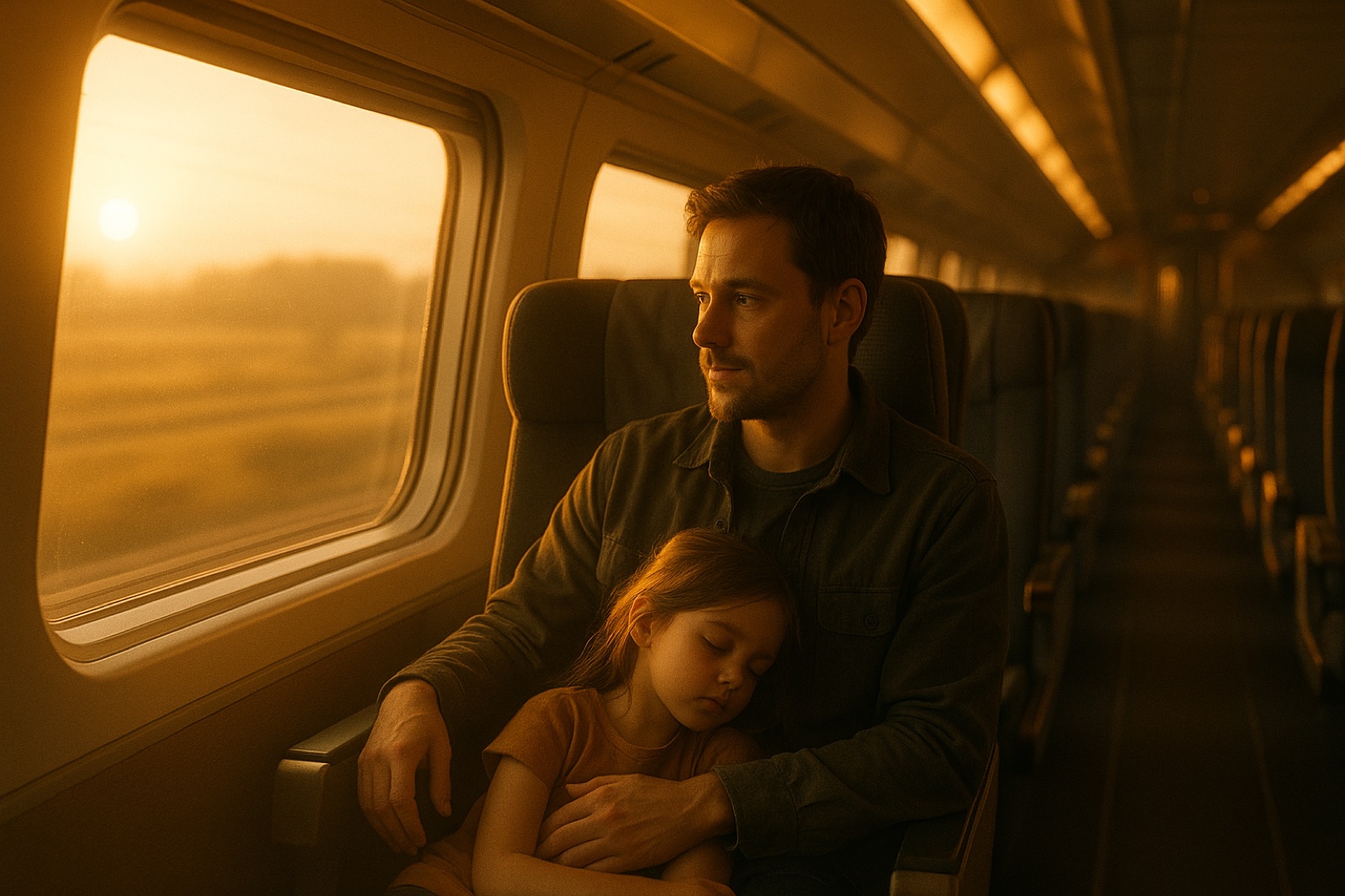
At the center of it is Seok-woo, a fund manager so consumed by work he’s forgotten how to be present for his own daughter, Su-an. It’s her birthday, and all she wants is to see her mother in Busan. He agrees, mostly to get it over with. They board the train together — and within the first thirty minutes, the outbreak begins.
It’s a different kind of father story than something like Taken, where a father’s love shows up as force, chasing down anyone who threatens his family. In Train to Busan, love shows up slower — car by car, choice by choice — as a man who spent years optimizing for himself has to relearn what he actually owes the people next to him.
What makes the film different from most disaster movies in its genre is where the camera keeps looking. It’s less interested in the zombies than in what desperate people do to each other and for each other — who gives up a seat, who blocks a door, who lies about what they saw. It’s a far cry from the outbreak comedies like Zombieland, which plays the apocalypse for laughs. This one plays it for everything it’s actually worth.
The Scene Everyone Still Talks About, Ten Years Later
You don’t need spoiler etiquette to guess that a movie about surviving a train doesn’t end with everyone walking away untouched. What people actually talk about — a decade later, in reviews, in retrospectives, in the comments under this week’s anniversary trailer — isn’t the outbreak. It’s the ending. It’s what Seok-woo chooses to do, in the film’s final minutes, once he understands exactly what it will cost him to get his daughter safely to Busan.
It’s a two-minute scene. People who watched this movie once, a decade ago, can still describe it shot for shot.
There’s an old teaching, far older than this movie, that says the greatest love a person can show is to lay down their life for someone else. You don’t have to know where that idea comes from to feel it land in that train car. It’s probably why a ten-year-old zombie movie is still selling out one-night theatrical showings today — not because the ending is shocking, but because everyone in that theater already understands, somewhere, exactly what real love actually costs sometimes. The movie didn’t invent that idea. It just gave it a train, a countdown, and a father who finally understood what mattered in time to do something about it.
What a Decade Hasn’t Changed About This Movie
Ten years is a long time for any movie to still matter. Franchises get forgotten faster than that. But Train to Busan spawned an animated prequel (Seoul Station), a 2020 sequel (Peninsula), and now a full theatrical re-release built entirely around the fact that people still want to feel this story on the biggest screen they can find.
Maybe that’s the real anniversary story. Not that a zombie movie held up — plenty of good horror films hold up. It’s that a story about a father who nearly ran out of time to be the person his daughter needed, and spent his last minutes being exactly that person anyway, doesn’t get old. Ten years from now, it probably still won’t.
If this kind of quiet thread running through a movie is the kind of thing you like noticing, our free Movies & the Bible assistant digs up that same thread in whatever you’re currently watching — it opens right in ChatGPT.
What do you think?
Train to Busan’s ending is still what people talk about ten years later — not the zombies, but what one father chose to do for his daughter in the time he had left. What’s a story — a movie, a book, a moment from your own life — where someone’s love for another person showed up loudest right when it cost them the most?
Share This
- Train to Busan turns 10 today, and it’s back in theaters for one night in 4K. I forgot how hard that ending hits. https://bgodinspired.com/index.php/entertainment/movies/train-to-busan-10th-anniversary-rerelease/
- An $8.5 million zombie movie made $98 million worldwide and still has one of the most quietly devastating endings I’ve ever watched. It’s back in theaters tonight for its 10th anniversary. https://bgodinspired.com/index.php/entertainment/movies/train-to-busan-10th-anniversary-rerelease/
- Ten years later and I still think about that last scene on the train. https://bgodinspired.com/index.php/entertainment/movies/train-to-busan-10th-anniversary-rerelease/
Questions People Are Asking
When did Train to Busan come out?
Train to Busan premiered at the Cannes Film Festival on May 13, 2016, and was directed by Yeon Sang-ho. It went on to become the highest-grossing Korean film of 2016.
Is Train to Busan back in theaters for its 10th anniversary?
Yes. On August 14, 2026, Well Go USA re-released Train to Busan in select theaters across the U.S. and Canada for a one-night, 4K-remastered 10th anniversary screening.
What is Train to Busan about?
The film follows Seok-woo, a workaholic fund manager, and his young daughter Su-an as they travel by high-speed train from Seoul to Busan during a sudden zombie outbreak, forcing Seok-woo to choose between his old, self-focused life and the people around him.
How much money did Train to Busan make at the box office?
Train to Busan was made on a budget of roughly $8.5 million and went on to earn more than $98 million worldwide, making it one of the most profitable Korean films ever released.
Is there a sequel to Train to Busan?
Yes. Train to Busan was followed by an animated prequel, Seoul Station (2016), and a live-action sequel, Peninsula (2020).