 0
0
 0
0
You’ve probably seen the numbers by now. Project Hail Mary has quietly become one of the biggest movies of 2026, pulling in hundreds of millions worldwide and holding strong week after week when most blockbusters fade after their opening weekend. That kind of staying power doesn’t happen by accident. It happens because audiences keep leaving theaters and telling their friends: you have to see this one.
So what is it about a movie centered on a lone astronaut, a failing sun, and a species-ending crisis that has people this hooked? It’s not the space effects, even though they’re stunning. It’s not the alien buddy comedy, even though that’s the part everyone quotes on the way out. It’s something underneath all of that — a question the film keeps asking without ever saying it out loud: what would you actually give up for people you will never meet?
Project Hail Mary’s Premise: A Mission Built on a One-Way Ticket
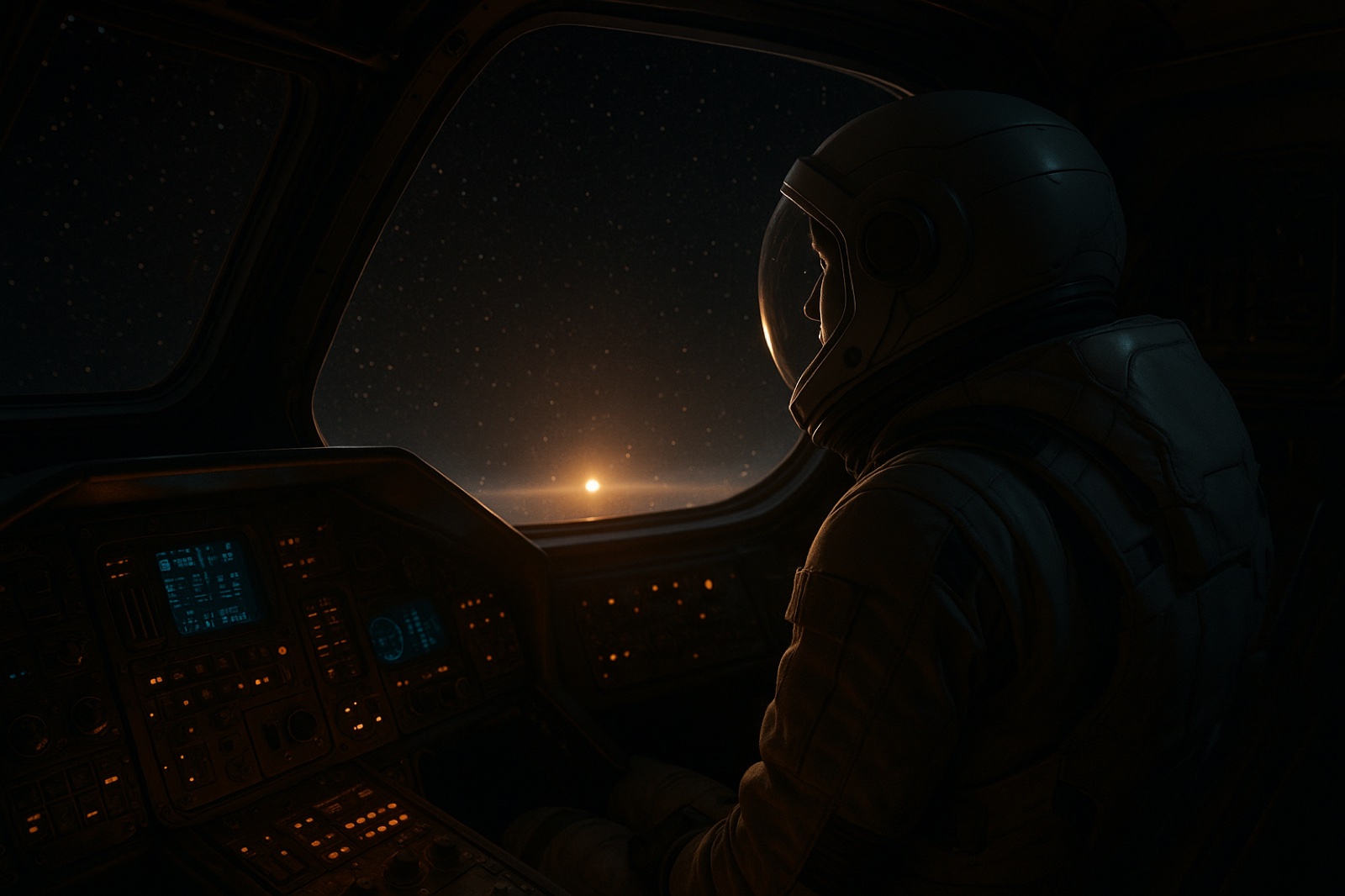
Without spoiling the parts worth discovering yourself, here’s the shape of it. A man wakes up on a spacecraft with no memory of how he got there. Piece by piece, he realizes he’s the last surviving member of a crew sent on a desperate mission to save Earth from an extinction-level threat — a microscopic organism quietly dimming the sun. He is, as far as he knows, humanity’s last shot.
Here’s the detail that makes the whole film land differently than a standard disaster movie: he volunteered for this. Not for glory. Not for a reward waiting for him back home. He knew, going in, that the mission was almost certainly one-way. He would likely die alone, light-years from anyone who knew his name, having erased pieces of his own memory in the process — and the billions of people his sacrifice might save would never know he existed.
That’s the engine of the whole story. Not “will he survive,” but “why would anyone choose this.”
Why This Story Is Landing Right Now
Part of what’s driving Project Hail Mary‘s box office run is timing. We’re living through a stretch where a lot of people feel small — like the big problems (climate, politics, the economy, whatever keeps you up at night) are too large for any one person to actually matter. A story about one ordinary, flawed, funny, scared human being who ends up mattering more than he ever imagined scratches an itch a lot of us didn’t know we had.
There’s also the alien. Much of the film’s second act is built around an unlikely friendship between the astronaut and a creature that doesn’t share his language, his biology, or his home planet — and yet becomes the one relationship that keeps him going. Critics have called it the emotional core of the movie, and audiences agree. It’s proof, wrapped in science fiction, that connection can form in the most unlikely places, between the most unlikely characters, when both sides are simply willing to try.
Strip away the space suits and the alien and the countdown clock, and you’re left with a very old story: someone chooses to spend himself for people he’ll never know, motivated by nothing but love for a world he won’t be around to see saved.
The Part of the Story People Keep Talking About
If you’ve walked out of the theater still thinking about this movie a few days later, you’re not alone. Message boards and reviews keep circling back to the same scene: the moment the character fully understands what he’s actually agreed to, and chooses to keep going anyway. Not because he’s forced to. Because somewhere along the way, saving people he’d never meet stopped being a mission and started being who he is.
That’s a rare thing for a blockbuster to pull off — making self-sacrifice feel less like a plot device and more like a mirror. Most of us will never be asked to fly to another star system. But most of us have, at some point, wondered whether our life actually adds up to anything bigger than our own comfort. This film doesn’t answer that question for you. It just makes you sit with it for two and a half hours, which might be exactly why it’s working.
An Old Story, Wearing New Clothes
Here’s the thing that struck me watching the reaction to this movie roll in: audiences aren’t just enjoying it, they’re moved by it. Cheering for a hero who gives everything for strangers isn’t a new impulse — it’s one of the oldest stories humans tell each other, dressed up this time in a space suit instead of armor or a uniform. Something in us recognizes that kind of love the moment we see it, even in fiction, even from a character who doesn’t exist.
Ancient wisdom has a name for that recognition. It says there’s no greater love than laying down your life for someone else — and it doesn’t limit that love to people you already know. The oldest version of that story is about a love reaching toward people who hadn’t even asked for it yet, extended first, before it was earned or understood. A movie theater full of strangers cheering for a stranger’s sacrifice isn’t an accident. It’s a very human response to something we were built to recognize as true, even when we can’t name where the feeling comes from.
You don’t need to believe in anything in particular to feel that pull. You just have to be human.
What You Carry Out of the Theater
Maybe that’s the real reason Project Hail Mary is still selling out shows months into its run. It’s a genuinely great piece of science fiction — the kind with real stakes, real heart, and a friendship that earns every bit of the emotion it asks from you. But it’s also holding up a question most of us don’t get asked often enough: who are the people you’ll never meet that your life is quietly, invisibly built for?
You don’t have to answer that on your way to the parking lot. Some questions are worth just letting sit for a while, the way you let a good movie sit with you on the drive home.
Discussion Question
If you’ve seen Project Hail Mary — what did the friendship between the two lead characters teach you about connection across every kind of difference? And if you haven’t seen it yet, what’s a story (movie, book, or otherwise) that made you think differently about sacrifice? Drop your thoughts in the comments — I’d love to hear them.
Share This
- “Project Hail Mary is one of 2026’s biggest movies for a reason — it’s not really about space, it’s about what you’d give up for people you’ll never meet.” Read more →
- “The reason everyone’s still talking about Project Hail Mary weeks later: it made a whole theater of strangers cheer for a stranger’s sacrifice.” Read more →
- “Who are the people you’ll never meet that your life is quietly built for? Project Hail Mary asks a question worth sitting with.” Read more →
Curious how this theme of sacrificial love shows up across scripture and story? Our free Movies & the Bible AI assistant explores faith themes hidden in films like this one — it opens right in ChatGPT and a free account works.
If you’re wrestling with whether your own life adds up to something bigger, our piece on who you are when the thing that defined you ends digs into that same question from a very different angle. And if unlikely friendship is what stuck with you most, this look at connection across differences is worth a read too.
Frequently Asked Questions
What is Project Hail Mary about?
Project Hail Mary is a 2026 science fiction film about an astronaut who wakes up with no memory on a solo mission to save Earth from an extinction-level threat to the sun. He gradually recalls that he volunteered for what was likely a one-way trip, and along the way forms an unlikely friendship with an alien he encounters in deep space.
Why is Project Hail Mary so popular in 2026?
The film has become one of 2026’s highest-grossing releases, driven by strong word of mouth around its emotional core: a story of genuine self-sacrifice and an unlikely friendship, paired with grounded, high-stakes science fiction. Audiences have responded especially strongly to the bond between the two lead characters.
Is Project Hail Mary based on a book?
Yes. The film is based on the novel by Andy Weir, the author also known for The Martian. The book was widely praised for grounding a survival story in real science while keeping its emotional stakes front and center.
What does the astronaut sacrifice in Project Hail Mary?
Without spoiling key plot details, the character knowingly accepts a mission with little chance of return — including the likelihood of dying alone, far from home, in order to save people on Earth who will never know his name or what he gave up for them.
What is the deeper meaning behind Project Hail Mary’s sacrifice theme?
Beneath the science fiction, the film explores the idea that the deepest kind of love isn’t transactional — it’s given to people who can’t repay it, sometimes to people who will never even know it happened. That theme echoes one of the oldest ideas in human storytelling: that love reaching toward strangers, offered before it’s earned, is the most meaningful kind there is.