 0
0
 0
0
He woke before dawn to catch it.
That was the routine at his farmhouse in Normandy. He would set up his iPad — this giant man in his late 80s, the most celebrated British artist of his generation — and paint the light coming over the horizon at 5am, 6am, whenever it arrived.
“I wake at first light,” he once said. “I don’t want to miss it.”
David Hockney died on June 12, 2026, at age 88. And the thing the obituaries kept coming back to — through all the swimming pools and Yorkshire fields and celebrity portraits and decades of impossible productivity — was the light. Always the light.
It was the thing he never got tired of.
A Bigger Splash, and a Bigger Question
Most people know Hockney from A Bigger Splash, the 1967 painting of a California swimming pool in the moment after someone has dived in. The water is arrested mid-explosion. The sun is hammering down. The blue of the pool is almost violent.
What makes that painting worth talking about 60 years later isn’t the splash. It’s the light.
The way California midday light flattens everything into shape and color, with almost no shadow where you’d expect shadow. Hockney was obsessed with it. He moved to Los Angeles partly for it. He painted dozens of pools not because pools are interesting but because of what sunlight does to water — the fracture patterns, the way still water becomes a mirror and moving water becomes something else entirely.
He talked about light the way other artists talked about technique or theory. As if it were the subject, always the subject, and everything else — the pools, the trees, the people — were just the surfaces it happened to land on.
The Yorkshire Fields
He went home to Yorkshire in the 2000s, and people expected the work to darken. The north of England in winter is not California. But Hockney painted it in more color than his California work — the hedgerows in electric greens, the fields in yellows so saturated they look like a child’s painting of joy.
He wasn’t making things up. He was seeing.
“In winter you can see the structure of the trees,” he said. “Without the leaves, you see what’s holding everything up.”
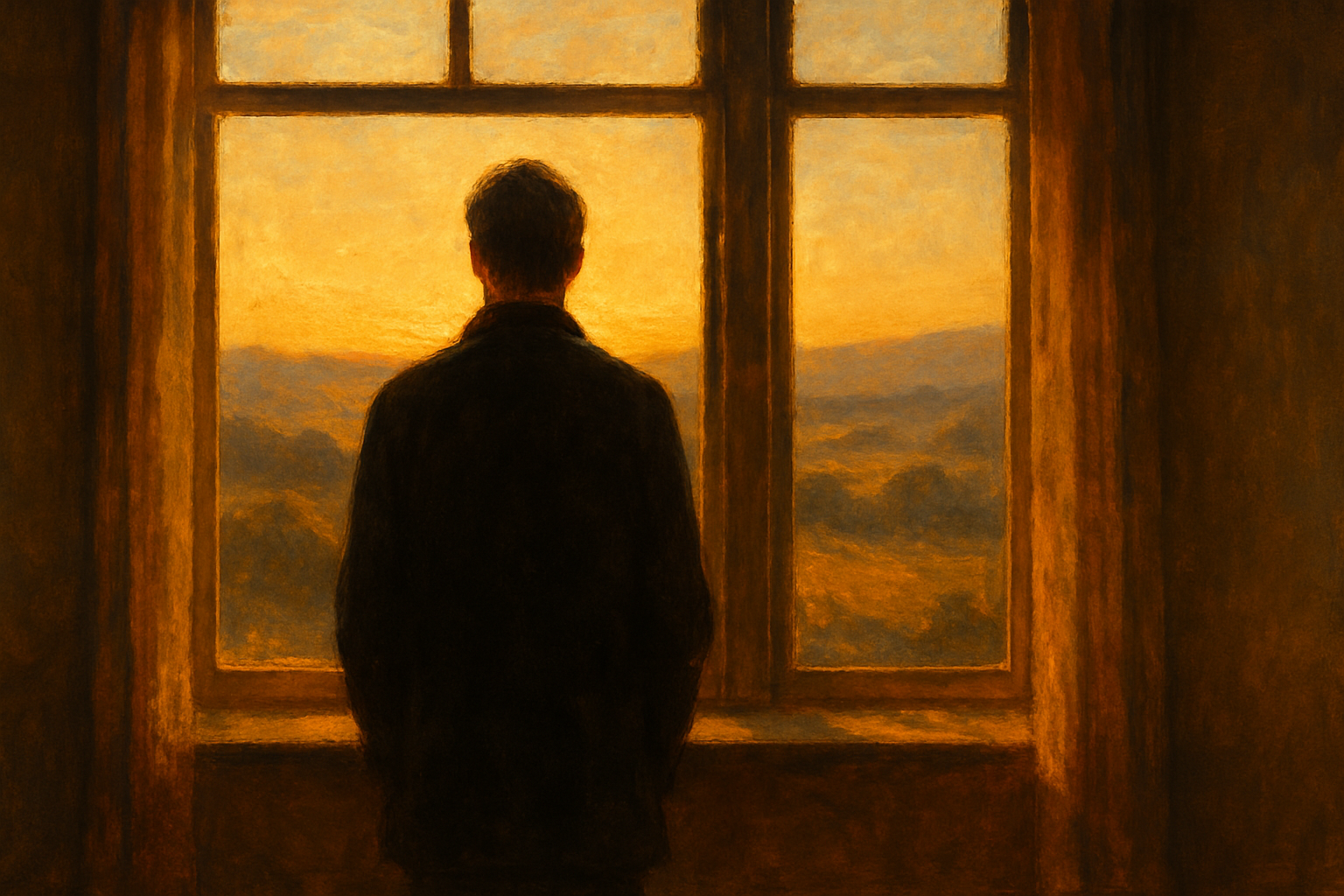
In his 70s and 80s, he started using his iPhone and iPad to paint. The critics laughed at first. Then they saw the work. At 82, at 84, at 86, he was waking before dawn to paint the light coming through his window over the Norman landscape. One exhibition showed 52 of these paintings side by side — 52 mornings across one year, in the same spot, through the same window.
The light was different every single time. He never ran out of things to see.
There’s a parallel here that scientists have found underground, of all places. Researchers mapping the hidden fungal networks beneath forests have discovered something that looks less like a system and more like a web of attention — millions of connections running through the soil, routing resources toward whatever needs them most. The whole system operates below what we can see, doing something it was built to do, without anyone noticing. Hockney would have painted it if he could.
The Last Decade
By his final years, the dawn routine had become something close to a practice. Not a spiritual practice — Hockney wasn’t given to speaking in religious terms. But a practice of attention. Of refusing to take for granted the thing most people sleep through.
The iPhone paintings from his last decade are small and intimate and full of joy. You can feel the speed of making them — he had to work fast, before the light moved. There’s no hedging in them. Just the thing he saw and the moment of seeing it, fixed in color.
“I’ve never been bored by nature,” he said near the end of his life. “There’s too much to see.”
He meant it. 88 years, and the light never got ordinary.
It raises a real question. What does it take to look at the same thing every morning for eight decades and still find it worth painting? Most of us stop seeing things we see every day — the commute, the same faces, the same coffee, the same morning. Hockney, somehow, never stopped. Scientists who study how the brain processes the world have found that attention itself changes what we perceive — the mind that is paying attention is doing something fundamentally different than the mind that is simply receiving. Hockney’s eye never went passive.
The Oldest Observation
Here’s something worth sitting with.
The very first chapter of the very first book in the Bible describes the act of creation. And the first thing that gets made is not the earth, not the sky, not the sea. It’s light.
“Let there be light,” the text says. And then — before anything else happens — it says: “And God saw that the light was good.”
The sun doesn’t show up until day four. The stars, the moon — day four. But the light comes first, three days before its most obvious source, and the first thing called good in the entire story is that light.
Not life. Not order. Not beauty in general.
Light.
Most people read right past this. It doesn’t fit any obvious theological category. But it fits perfectly with something that anyone who has ever sat in a field at sunrise and felt something they couldn’t name — it fits with the instinct that light is not incidental. That there’s something in its quality, especially the early morning kind, that reaches for you.
Hockney built a life on that instinct. 88 years of watching light, naming it good, going back the next morning to see it again.
There’s a word in an ancient psalm — rafah — that means something like “let go of straining and look.” It’s usually translated “be still.” The same posture Hockney took every morning at the window.
After the Light
The obituaries will focus on his career — the Royal Academy, the Tate, the museum retrospectives, the celebrity portraits, the decades in Los Angeles. All of it is worth celebrating.
But the thing that outlasts the career, the thing that makes his final iPad paintings feel like documents of something real, is simpler than any of that.
He kept looking. He didn’t stop looking when the world told him he’d already seen enough, or achieved enough, or earned the right to stop waking at 5am.
Light is patient. It comes back every morning. It doesn’t care if you’re 28 or 86. It just does what it has always done — arriving before anything else, before the day has a chance to get ordinary.
Hockney knew that. Somewhere very old, something noticed it first.
Discussion Question
Hockney once said he’d ‘never been bored by nature — there’s too much to see.’ Is there something in your own life that you’ve never gotten tired of looking at — something that keeps revealing itself differently? I’d love to hear what it is.
Share This Article
- David Hockney woke before dawn until the end of his life — at 86, 87, 88 — to paint the light coming over the horizon. He said he’d ‘never been bored by nature. There’s too much to see.’ This article is worth a few minutes. [URL]
- The Bible’s first act of creation is light — not the sun, not the stars, those come three days later. Just light. And the first thing called ‘good’ in the entire text is that light. Hockney spent 88 years painting the same thing. [URL]
- He was in his 80s, waking at 5am with an iPad to paint the morning light through his window. 52 mornings, same spot, different every time. Whatever he was looking at, he never got tired of it. [URL]
Common Questions
When did David Hockney die?
David Hockney died on June 12, 2026, at the age of 88. He was widely regarded as one of the most important British artists of the 20th and 21st centuries, known for his California swimming pool paintings, his Yorkshire landscape series, and his late iPad paintings of dawn.
What was David Hockney’s obsession with light about?
Throughout his career — from the California swimming pool paintings of the 1960s and 70s to his iPad paintings of dawn landscapes in his late 80s — Hockney was obsessed with how light transforms everything it touches. He once said he woke at first light because he didn’t want to miss it, and that he had ‘never been bored by nature.’ Light was never just a subject for him; it was the subject, and everything else was simply the surface light landed on.
What was unusual about David Hockney’s final decade of art?
In his 80s, Hockney painted primarily on iPhone and iPad, often starting before dawn to capture morning light from his farmhouse window in Normandy, France. One of his final major exhibitions featured 52 paintings of the same view — 52 different mornings across a single year, same spot, same window. The light was different every time. Critics who had initially dismissed the digital medium were surprised by the intimacy and joy of the late work.
Why does Genesis 1 mention light before the sun?
In the Genesis 1 creation account, light is created on the first day — ‘Let there be light’ — but the sun, moon, and stars don’t appear until the fourth day. The text specifically says God ‘saw that the light was good’ before any of the conventional light sources existed. Many readers pass right by this detail, but it has been noted by scholars as one of the most unusual and overlooked features of the creation account: the first thing created, and the first thing called ‘good,’ is light itself — independent of its most obvious source.
What were David Hockney’s most famous paintings?
Hockney’s best known works include A Bigger Splash (1967), Portrait of an Artist (Pool with Two Figures) (1972), and his massive Yorkshire landscape series from the 2000s. In his final decade he became known for intimate iPhone and iPad paintings of dawn landscapes, which surprised critics with their warmth and attention.