 0
0
 0
0
There is a kind of tired that does not come from working too hard. It comes from working hard and not being able to say what the work was actually for.
A lot of men are carrying that right now. Not a dramatic collapse. Just a flat, low hum that the thing they were supposed to be doing has quietly stopped existing, and nobody sent a notice.
The phrase people reach for is the masculinity crisis, and it is usually explained by someone who decided the answer before they looked. Which is why it is worth slowing down when a writer spends years actually going and looking, and comes back with something that fits neither of the usual answers.
What the Masculinity Crisis Looks Like Up Close
Jon Ronson released a new book on 1 September 2026 called The Castle: Adventures in a World of Unraveling Men. It is his first book in eleven years, from the writer behind The Psychopath Test, and he spent it among men who had come apart.
Here is the part worth stopping on. Almost every take on this subject says men are confused about who they are. Ronson’s own summary of what he found says something else:
There are suddenly lots of things that men have been used to doing that they can’t do any more — and are, as a consequence, unraveling, creating fake realities, strange worlds for themselves.
Read it twice and notice what is missing. That is not a sentence about identity. It is a sentence about doing. The loss he names is not a loss of self-image. It is a loss of activity: things a man did, that were his to do, that are no longer there to be done.
The strange worlds come second. They are not the illness. They are what a person builds when the real thing has gone and the hands still want a job.
Two Answers Are on Offer. Both Are About Being Seen.
If you have looked into this at all, you have met the two available answers.
The first says the problem is that men stopped being dominant, and the cure is to win: get harder, get richer, get admired, take up more room.
The second says the problem is men themselves, and the cure is to take up less room.
They sound like enemies. Look at what each one actually measures and they turn out to be the same kind of instruction. Both are about how a man appears — bigger or smaller, louder or quieter, more or less. Neither of them tells a man what to do on an ordinary Tuesday afternoon.
Ronson describes men “feeling tossed around in a sea of conflicting ideologies about what being a man actually means.” The book’s own description talks about a world drained of purpose and of collapsing institutions. That is a fair summary of the argument as it currently stands: enormous volume about what men should be, near silence on what men should do.
The Two Ends of the Range Are the Same Broken Promise
The thing that stayed with me is the span the book covers. Ronson’s territory runs, in his own framing, from the death of utopian factory towns to the false promise of influencer culture online.
Those look like opposites. One is industrial and finished. The other is digital and very much alive. That range is his; what follows is my reading of it — but set them side by side and they are the same promise arriving from two directions.
The factory town told a man that his work would visibly matter to people who lived nearby. For a while that was true, and then those towns died.
The influencer economy tells a man that his work will visibly matter to millions. The word attached to that one, in the book’s own description, is false.
So one promise was real and ended. The other was never real to begin with. What sits in the gap between them is a man with genuine capacity and nowhere credible to point it. That is a much more solvable problem than a broken identity, and it is also a much less flattering one, because it does not let anybody blame a whole gender for it in either direction.
Why Doing Holds a Person Up
Purpose is a big word and it is the wrong size for daily use. The kind that actually holds a person up tends to be small, repeatable, and owed to somebody specific. Not a mission statement. A thing that has to happen by Thursday, that somebody will notice if you skip.
That is also why the advice to “find your passion” so often lands with a thud on a man who is already flat. Passion is a feeling, and feelings are exactly what has gone quiet. Obligation to a named person is not a feeling. It works even on days when nothing is felt at all, which is the only kind of thing worth having during a season you cannot fix. If you are in one of those seasons right now, it is worth reading about how to get through a hard season of life you cannot fix — the daily re-attempt is usually what exhausts people, not the situation itself.
Notice that the men in Ronson’s account were not idle. They were extremely busy. They were building elaborate worlds. The energy was never the missing part.
The Older Question Underneath the Argument
Strip all of it back and the question underneath is very old: what is a man for?
The oldest answers to that were not about how a man was perceived. They were about where his strength was aimed. And they aimed it, almost without exception, at the people least able to pay him back — the widow, the stranger, the child, the neighbour with no leverage over him at all. Strength was not the measure. Direction was. It is an unfashionable idea in both of the modern camps, and the God at the centre of it never once graded a man by the size of his audience.
Which is a strange thing to notice while reading a modern book about men building castles nobody asked them to build. Those men had strength. What they did not have was anywhere honest to point it.
What This Looks Like on a Tuesday
None of this requires money, a therapist, or spare time you do not have. It mostly requires picking something real and small and then not negotiating with yourself about it.
- Find one person who is genuinely worse off than you and do one specific, boring thing for them this week. Not a gesture. A task. Something they would otherwise have to do alone.
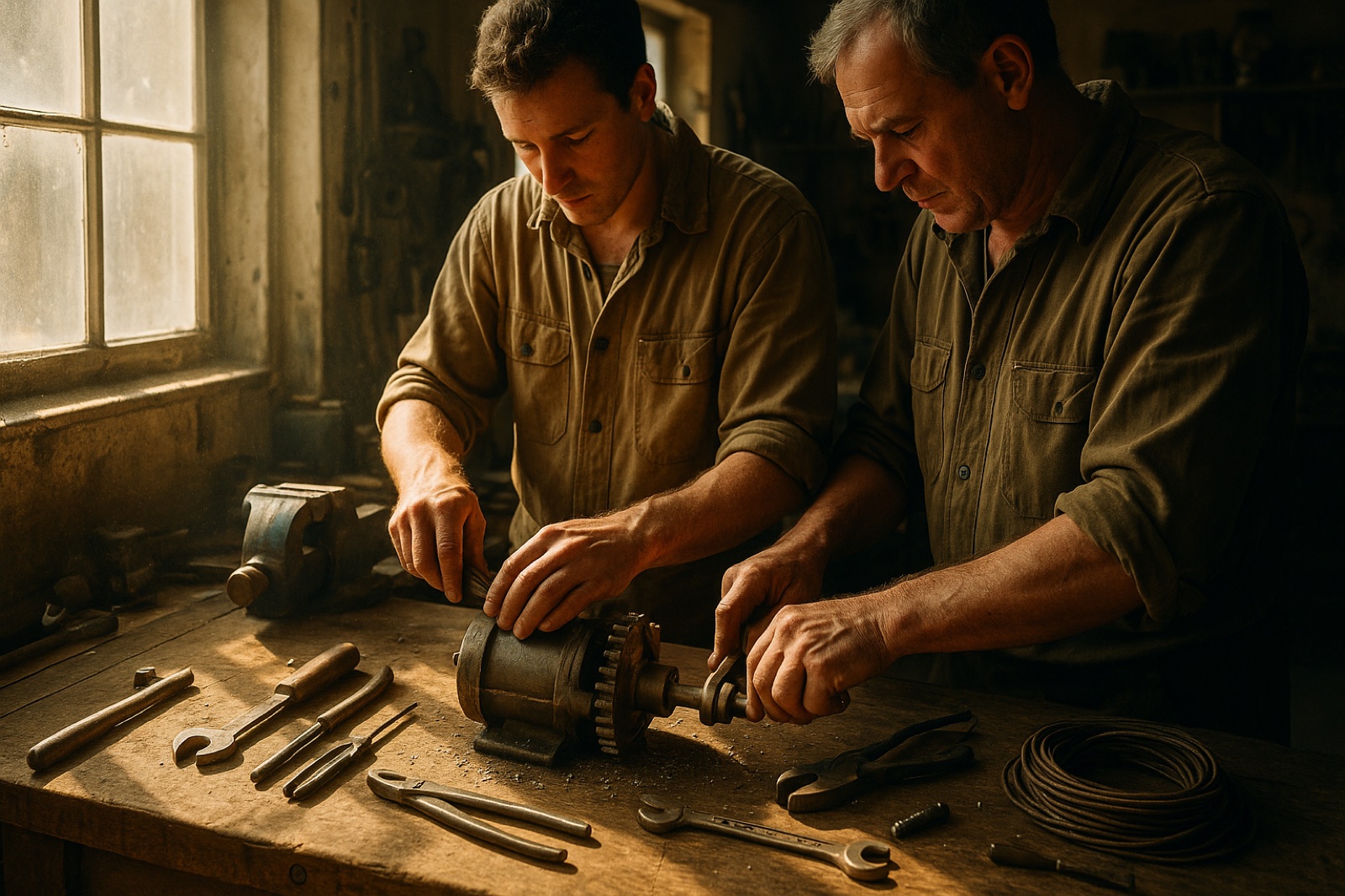
- Pick a job that stays done. Fix the door, clear the drain, mend the thing in the cupboard. Work that leaves a visible result is doing something for you that scrolling never will.
- Reduce the number of worlds you are maintaining. Every constructed version of yourself has to be fed. Retiring one frees more than it costs.
- Say the flat feeling out loud once, to one person, without dressing it up. This is the hardest item and the only one that reliably breaks the loop.
- Do not wait to feel like it. The feeling is downstream of the doing, in that order, nearly always.
If you genuinely have no idea where to aim, our free What Is My Purpose? assessment is a short, no-signup way to get a starting direction rather than a verdict. And if you have ever been handed a personality type and felt it explained nothing useful about your life, there is a reason for that — what the oldest texts do instead of assigning types is more interesting than the tests are.
The masculinity crisis will keep being argued about by people who are not going to look. Meanwhile the actual way out has been sitting in plain view the whole time, and it is embarrassingly ordinary: find something that needs doing, for someone who cannot do it themselves, and go and do it. Nobody has to watch.
What Do You Think?
Which do you think is doing more damage to men right now — the pressure to be dominant, or the pressure to be smaller? Or is it neither, and the real problem is that both sides are arguing about how men should appear instead of what men should actually do with a given afternoon? Tell us where you land in the comments. We read them.
Share This
- Everyone says the masculinity crisis is men being confused about who they are. A new book spent years looking and found something different: men lost things they used to do. The fake worlds came after. https://bgodinspired.com/index.php/entertainment/books-entertainment/masculinity-crisis-what-men-lost/
- Both sides of the men debate are arguing about how a man should appear. Neither one tells him what to do on a Tuesday. That gap is the whole problem. https://bgodinspired.com/index.php/entertainment/books-entertainment/masculinity-crisis-what-men-lost/
- Dying factory towns and influencer culture look like opposites. They made a man the same promise: that his work would visibly matter. One promise ended. The other was never true. https://bgodinspired.com/index.php/entertainment/books-entertainment/masculinity-crisis-what-men-lost/
Questions People Ask
What is the masculinity crisis?
The masculinity crisis is the widely discussed pattern of men in the 21st century reporting declining purpose, worsening isolation, weaker attachment to work and institutions, and a rising pull toward online communities that offer certainty about what a man should be. It is a contested term rather than a clinical one: commentators disagree sharply about the causes, and the two dominant explanations blame either the loss of traditional male dominance or traditional masculinity itself.
What does Jon Ronson’s book The Castle say about why men are unraveling?
In The Castle: Adventures in a World of Unraveling Men, published in the United States on 1 September 2026, Jon Ronson’s own summary is that “there are suddenly lots of things that men have been used to doing that they can’t do any more — and are, as a consequence, unraveling, creating fake realities, strange worlds for themselves.” His explanation centres on lost activity rather than confused identity, and his subject range runs from the death of utopian factory towns to the false promise of influencer culture online. He also describes men as “feeling tossed around in a sea of conflicting ideologies about what being a man actually means.”
Is the masculinity crisis about identity or about work?
Most public commentary frames it as an identity problem, but Jon Ronson’s stated conclusion in The Castle points at doing rather than being: the things men were used to doing are no longer available to be done, and the invented worlds and online personas appear afterwards, as a substitute. Framed that way it is closer to a problem of lost function than of lost self-image, which matters because the two call for completely different responses.
What actually helps a man who feels purposeless?
Small, concrete, repeated obligations to specific people tend to help more than large abstract goals, because they work on days when motivation is absent. Practical starting points that cost nothing: doing one specific, unglamorous task for someone worse off, choosing work that leaves a visible finished result, cutting the number of curated online personas being maintained, and naming the flat feeling out loud to one person. Waiting to feel motivated before acting generally reverses the order in which those two things actually happen.
When was The Castle by Jon Ronson published?
The Castle: Adventures in a World of Unraveling Men was published in the United States on 1 September 2026 by Penguin Random House. It is Jon Ronson’s first book in eleven years, following his earlier bestseller The Psychopath Test.
Sources: Jon Ronson’s own account of the book on his newsletter, and the publisher’s description at Penguin Random House.