 0
0
 0
0
In May, a lot of people didn’t buy concert tickets. They logged into a video game.
For five days, Roblox’s virtual district called “The Block” turned into a Billie Eilish concert. Not a livestream of one — an actual stage, rebuilt in 3D, where anyone with an avatar could walk up, stand in the crowd, and watch a broadcast of her “Birds of a Feather” performance surrounded by dynamic lighting and thousands of other players’ digital selves. Some of those players chose to look like Eilish herself. Others just wanted to be in the room.
By the time the activation wrapped, it had pulled in an estimated $10 million — inside a platform where nobody was buying a physical ticket, a physical seat, or a physical anything.
What Actually Happened Inside “The Block”
The Roblox concert was built to promote Hit Me Hard and Soft: The Tour (Live in 3D), Eilish’s concert film co-directed by James Cameron. But the marketing team behind it didn’t just drop a trailer and a ticket link. They built an entire world.
Inside it, players could customize an avatar with limited-edition Eilish-branded items, sing along in a karaoke room stocked with her catalog, roleplay as the artist herself, and stand shoulder-to-shoulder with strangers from anywhere on earth to watch the same performance at the same moment. Roblox described the goal in plain terms: turn “a casual listener into a lifelong super fan” by making the experience something you do together, not something you watch alone.
That distinction — together versus alone — is the whole story, and it’s worth sitting with for a second before we go further.
Why Gen Z and Gen Alpha Are Choosing This Over a Real Concert
On paper, this shouldn’t work. A screen version of a concert is objectively less than the real thing — no bass in your chest, no stranger’s shoulder bumping yours, no smell of a stadium. And yet a virtual concert stage inside a children’s building game just outperformed most real-world album promotions this year.
The industry’s own explanation is telling. Roblox has been public about the fact that younger audiences increasingly prefer what they call “participatory experiences” over “passive viewing formats.” Watching a video is something that happens to you. Customizing an avatar, singing in a shared room, and standing in a digital crowd is something you’re a part of. It’s the difference between an audience member and a guest.
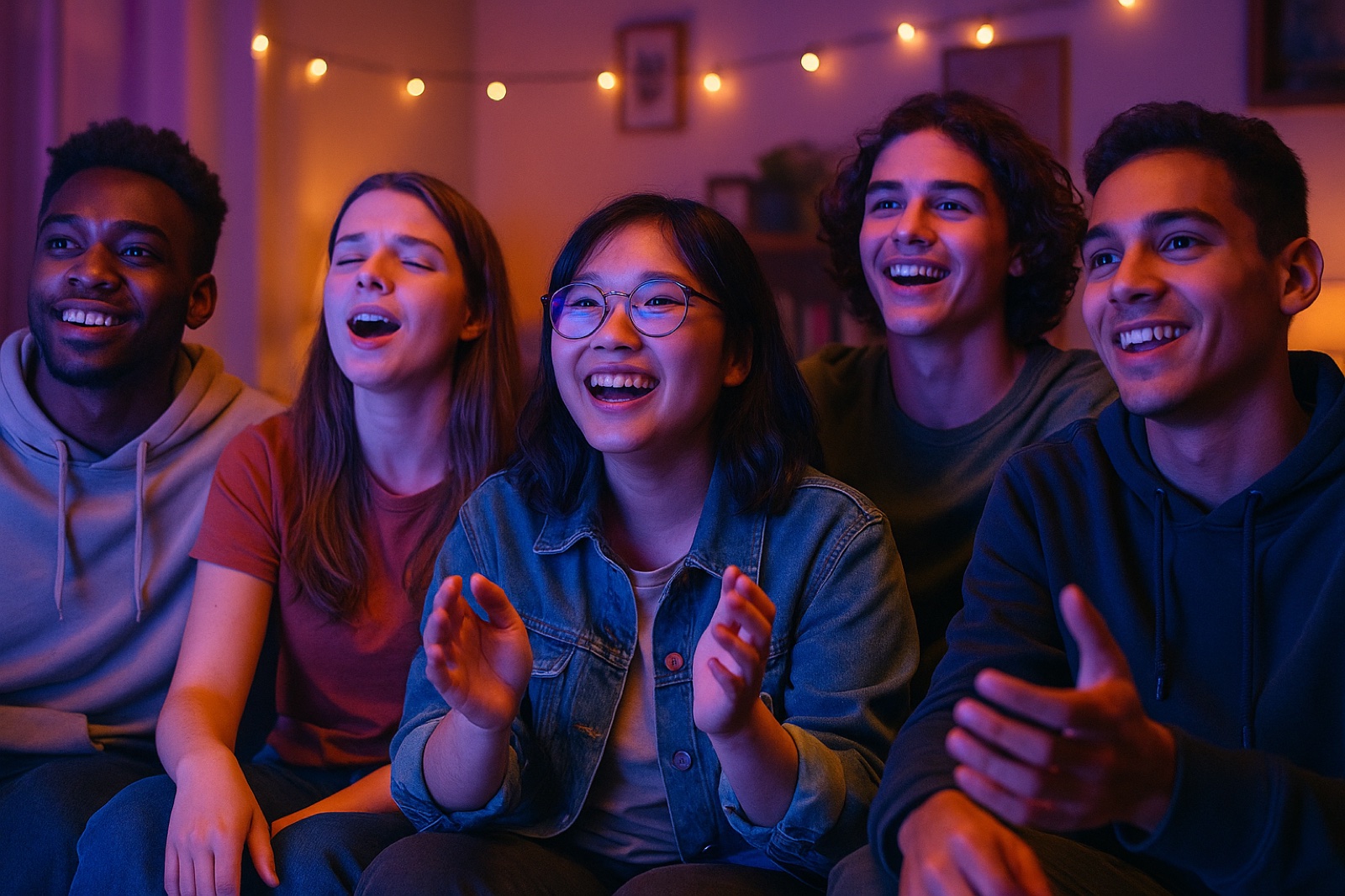
A recent analysis of over a million teen conversations found that loneliness — not grades, not college, not the future — is the number one thing weighing on teenagers right now. Read against that backdrop, the Roblox concert isn’t really a music event. It’s a room built specifically for people who are starving to feel like they belong to something, priced at whatever it costs to buy a digital hoodie for your avatar.
The Real Product Being Sold
Every layer of the experience — the avatar customization, the shared karaoke room, the crowd of other people’s screens lighting up at the same second yours does — is engineered around one thing: making a person feel like they showed up somewhere and weren’t alone when they got there.
That’s not a criticism of Roblox, or of Eilish, or of the ten million dollars. It’s actually a pretty accurate read of what people need right now. Digital-era loneliness is well documented at this point — constant contact, almost no real connection. A platform that figured out how to sell “not being alone” as a product, even a synthetic version of it, was always going to do well. The demand was already there. It just found a new shelf to sit on.
It’s the same ache Paul Simon was trying to name in a Queens bathroom in 1964, sixty years before anyone had a phone, let alone an avatar. People talking without speaking. People hearing without listening. He didn’t have Roblox to blame — he just had the ache itself, and no name for it yet.
What the Ache Is Actually Pointing At
Here’s the part that’s easy to miss in a story about video games and revenue numbers: the ache being monetized here is real, and it’s old — much older than concerts, or screens, or even music. Ancient wisdom got there first, near the very beginning of the story humans have been telling about themselves: it is not good for a person to be alone. Not a warning. Not a rule. Just a fact about how God built us, stated plainly, before technology ever had the chance to try solving it a different way.
Every generation finds its own way of trying to answer that ache — sometimes well, sometimes not. A karaoke room full of strangers’ avatars is one attempt. It’s not a bad one. But it’s worth noticing that the thing everyone in that room actually wanted was never really the concert. It was each other. And underneath even that, God — the one who apparently built us to need exactly that kind of closeness in the first place, and who wants to be near the people God made just as much.
Logging Off
Maybe the next big virtual concert sells out in minutes again. Maybe this becomes how an entire generation experiences music from now on, and the bass-in-your-chest, real-stadium version becomes the nostalgic one. Either way, the ten million dollars wasn’t really a verdict on the music industry. It was a receipt — proof of exactly how much people will pay to feel, even for an hour, like they’re not doing this life by themselves.
That part doesn’t log off when the concert ends. It’s worth carrying with you after you close the app.
What do you think?
Do experiences like this actually make people feel less lonely, even for a little while, or do they just distract from it until the screen goes dark? What’s the difference between the two, if there even is one? Tell us what you think in the comments.
Share This
- “Billie Eilish’s Roblox concert made $10 million. But nobody was really buying tickets to a concert. They were buying a room where they wouldn’t be alone. bgodinspired.com”
- “Wild thought: the $10M Billie Eilish Roblox concert wasn’t a music story. It was a loneliness story wearing a concert’s clothes. bgodinspired.com”
- “A karaoke room full of strangers’ avatars made $10 million in a week. Not because the music was better. Because nobody had to be alone in it. bgodinspired.com”
Frequently Asked Questions
What was Billie Eilish’s Roblox concert?
In May 2026, Billie Eilish and Roblox built an immersive activation inside Roblox’s “The Block” district to promote her 3D concert film, Hit Me Hard and Soft: The Tour (Live in 3D), co-directed by James Cameron. Players could enter a Billie Eilish-themed virtual world, watch a broadcast of her “Birds of a Feather” performance with 3D visuals, customize avatars with limited-edition items, and sing along in a karaoke room.
How much money did the Billie Eilish Roblox concert make?
The activation generated an estimated $10 million in revenue, driven largely by avatar customization items and engagement inside the platform rather than traditional ticket sales.
Why are virtual concerts so popular with Gen Z and Gen Alpha?
Platforms like Roblox have found that younger audiences increasingly prefer “participatory experiences” over passively watching a video. Being able to customize an identity, interact with a shared space, and stand alongside other real people’s avatars in real time creates a sense of belonging that a simple livestream doesn’t.
Can a virtual experience actually cure loneliness?
Not fully, and most researchers who study digital-era loneliness would say a virtual crowd is a real but incomplete substitute for embodied human connection. It can meet part of the need for shared experience and belonging in the moment, but it doesn’t replace the deeper, sustained relationships people are actually built for.
Is the loneliness epidemic really that serious?
Yes. Recent research — including a study of over a million teen conversations and a global analysis of more than 175,000 adults — has repeatedly found loneliness to be one of the most significant, and most underestimated, struggles of this era, with real effects on mental and even physical health.