

There is no evidence Marie Antoinette said “Let them eat cake.” Rousseau wrote the line down around 1765, about an unnamed princess, when she was a child in Vienna.

 0
0
 0
0
“No Man Is an Island”: What John Donne Was Living Through When He Wrote It
“No man is an island” was written by John Donne in 1623, sick with fever and listening to funeral bells next door. What he meant, and the line after it everyone drops.
 0
0
0
0
Is “Idle Hands Are the Devil’s Workshop” in the Bible?
No. “Idle hands are the devil’s workshop” is not in the Bible. It comes from St. Jerome, Chaucer and Isaac Watts; only a 1971 paraphrase puts it in Proverbs.
 0
0
0
0
“Silence in the Face of Evil Is Itself Evil”: Did Bonhoeffer Say It?

There is no evidence Dietrich Bonhoeffer said “silence in the face of evil is itself evil.” Here is where the quote really came from, and what he actually wrote about silence.
 0
0
0
0
“Fall Seven Times, Stand Up Eight”: The Rising That Doesn’t Add Up
“Fall seven times, stand up eight” doesn’t add up – and that’s the point. An early written use of the Japanese proverb, its painful twin phrase, and an ancient Hebrew line that lands in the same place.
 0
0
0
0
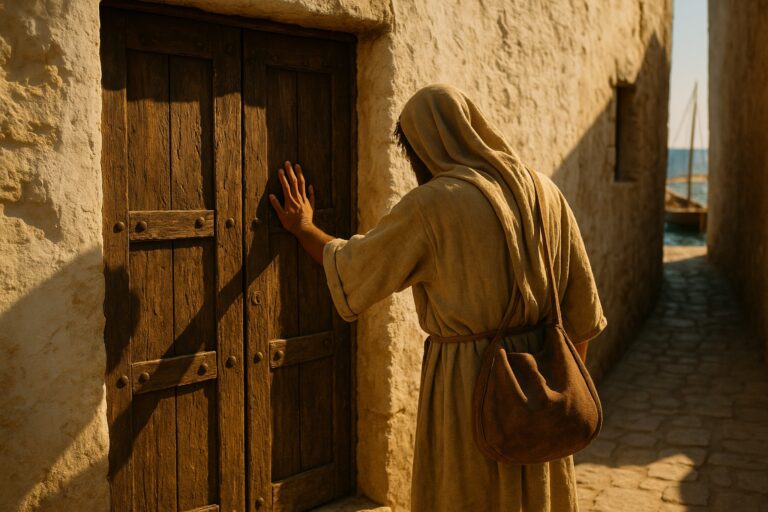
Is “When One Door Closes Another Opens” in the Bible?
Is “when one door closes another opens” in the Bible? No. It is a 1550s Spanish proverb. In Acts 16 God shuts two doors on Paul, and what came next was a call.
 0
0
0
0
Is “Hate the Sin, Love the Sinner” in the Bible? Where It Really Comes From
“Hate the sin, love the sinner” is not in the Bible. The idea goes back to a letter Augustine wrote to a convent around AD 424, and the English wording was already a familiar precept when Gandhi quoted it in the 1920s.
 0
0
0
0
Who Said “Give a Man a Fish”? Not Lao Tzu or the Bible
“Give a man a fish” is not in the Bible, and there is no evidence Lao Tzu said it. The earliest known version is in an 1885 English novel – and it meant something different.
 0
0
0
0
“No Man Ever Steps in the Same River Twice”: The Real Line
No man ever steps in the same river twice — but Heraclitus’s one genuine river fragment says the river stays the same. Plato sharpened it. Plutarch added the man.
 0
0
0
0
Is “Charity Begins at Home” in the Bible? The Answer Changes the Meaning
No, “charity begins at home” is not in the Bible. It is an English proverb from the 1380s. The closest verse, 1 Timothy 5, puts home first – and then says why.