 0
0
 0
0
You have probably had this moment. Someone says something unfair about you. Maybe in a message, maybe to your face, maybe in a comment thread where everyone can see. And you already know the perfect reply. It is sharp. It is true. It would land.
Your thumb is right there.
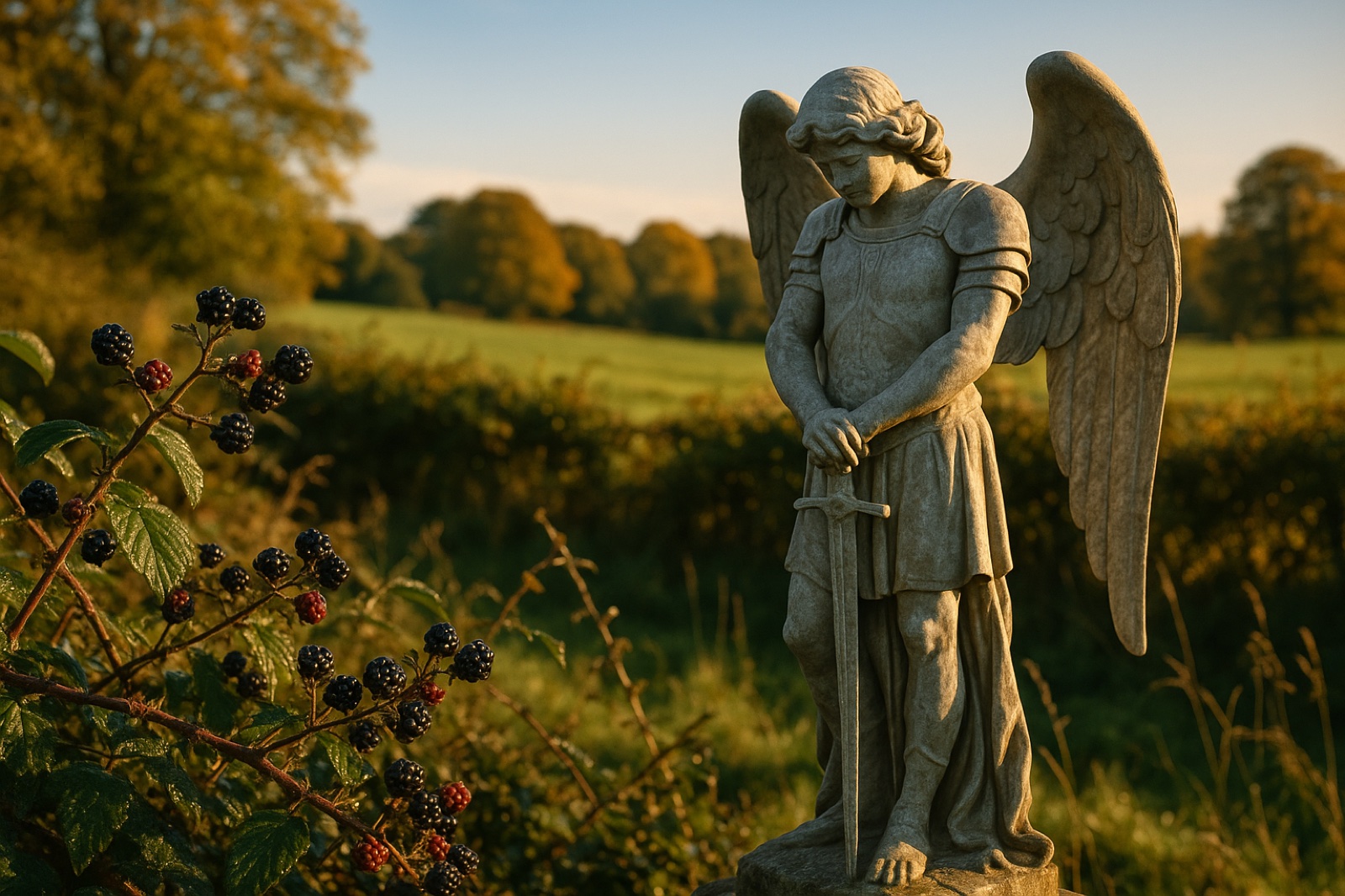
So what is Michaelmas, and why does it matter to that moment? Michaelmas (you say it “MIK-ul-mus”) is the old feast of Michael the archangel, kept every year on September 29. And tucked inside the Bible is the one time this mightiest of angels opens his mouth. He is face to face with the devil himself. He has every reason to hit back.
He doesn’t.
What Is Michaelmas? The Feast of Michael and All Angels
Michaelmas is short for “Michael’s Mass.” Its full name in many churches is the Feast of Saint Michael and All Angels. It falls near the autumn equinox in the northern half of the world, so for centuries it marked the turn of the year from harvest into the darker months.
In England it was one of the four “quarter days,” along with Lady Day, Midsummer and Christmas. These were the days when rents came due, workers were hired and leases began. That is why some old universities in England still call their autumn term the “Michaelmas term.” A goose dinner was a Michaelmas tradition in the British Isles too, fattened on the leftover grain after harvest.
And then there are the blackberries. An old piece of folklore, told in Ireland and Britain, says that when the devil was thrown out of heaven, he landed in a bramble bush. Every year on Michaelmas he takes his revenge by spitting on the blackberries. So the saying goes: do not pick blackberries after Michaelmas. (The practical truth is that late-season berries do get watery and mouldy as the weather turns. The legend just gave that a villain.)
It is a fun story. But notice what the folklore gets right without meaning to. The devil in that tale is spiteful. Petty. Getting even with fruit. Hold that thought, because the Bible’s picture of Michael is the exact opposite.
Who Is Michael the Archangel in the Bible?
For a figure with a whole feast day, Michael shows up very little in scripture. He is named in only five verses: Daniel 10:13, Daniel 10:21, Daniel 12:1, Jude 9 and Revelation 12:7.
In Daniel he is “one of the chief princes” and “the great prince which standeth for the children of thy people” (Daniel 12:1). He is a protector. In Revelation he leads a war: “there was war in heaven: Michael and his angels fought against the dragon” (Revelation 12:7).
The word “archangel” itself appears only twice in the whole Bible. Once in 1 Thessalonians 4:16, which speaks of “the voice of the archangel” without a name. And once in Jude 9, which is the only place the Bible names an archangel.
So this is no timid figure. This is heaven’s warrior. Which makes what he does in Jude 9 all the more surprising.
Jude 9: The Only Words Michael Ever Speaks
Here is the verse, in the King James Version:
“Yet Michael the archangel, when contending with the devil he disputed about the body of Moses, durst not bring against him a railing accusation, but said, The Lord rebuke thee.” (Jude 9)
Read it slowly. Across all five verses that name him, this is the only place Michael actually speaks. Daniel talks about him. Revelation shows him fighting. Only Jude gives us his words. And his one recorded sentence is four words long, and it is not an insult.
A fight over a grave nobody could find
What were they arguing about? “The body of Moses.” Deuteronomy says that when Moses died, God buried him in a valley in Moab, “but no man knoweth of his sepulchre unto this day” (Deuteronomy 34:6).
Jude seems to be drawing on a story that was well known in his day. Early Christian writers, including Origen in the 200s, said the scene came from a Jewish book called the Ascension (or Assumption) of Moses. The copy that survives today breaks off before its ending, so the part about the argument over the body is lost. Jude does this more than once. A few verses later he quotes the Book of Enoch by name, which is why the Book of Enoch still raises questions about what belongs in the Bible.
We do not know every detail of the quarrel. But we know how Michael handled it, and that is what Jude wanted us to see.
“The Lord rebuke thee” were not even his own words
Here is the detail almost everyone reads past. Michael did not make up that line. He borrowed it.
Centuries earlier, the prophet Zechariah saw a vision. Joshua the high priest stood in dirty clothes, “and Satan standing at his right hand to resist him” (Zechariah 3:1). Satan was there to accuse. And the answer came: “The LORD said unto Satan, The LORD rebuke thee, O Satan” (Zechariah 3:2).
So when Michael faced the devil, he reached for words God had already spoken. He did not add his own verdict. He did not sharpen it. He took the argument out of his own hands and put it back in God’s.
You cannot out-accuse the accuser
One more thing. The Greek word behind “devil” is diabolos. It means slanderer, the one who accuses. Revelation calls him “the accuser of our brethren… which accused them before our God day and night” (Revelation 12:10).
Think about what that means. A “railing accusation” is the devil’s own native language. If Michael had answered with one, he would have been fighting on the devil’s ground, with the devil’s weapon. Even if he won the argument, he would have lost something bigger.
Jude makes the contrast plain in the next verse. Some people in the church “speak evil of those things which they know not” (Jude 10). The mightiest angel would not do that. They did it all day long.
Restraint Is Not Weakness
This is where most people land on the easy lesson: “Be humble. Don’t fight.” But that is not quite what the Bible shows.
Remember Revelation 12. Michael does fight. He goes to war against the dragon and wins. So his restraint in Jude is not because he is soft, or scared, or unable to stand up for himself. The same angel who can win a war in heaven chose not to win an argument with an insult.
That changes the question. It is not “should I stand up for what is right?” Sometimes the answer is yes. It is “what weapon am I picking up?” There is a difference between opposing something and slandering someone. Michael did the first. He refused the second.
2 Peter says the same thing in almost the same words: “angels, which are greater in power and might, bring not railing accusation against them before the Lord” (2 Peter 2:11). The stronger one in the room is the one who can hold back.
What Michaelmas Means for Your Next Heated Moment
Here is the turn I never noticed before. We usually think of holding our tongue as losing. We picture the other person walking away thinking they won.
But Michael was not losing. He was handing the case to a better Judge. “The Lord rebuke thee” is not silence. It is a sentence that says: this is not mine to settle, and I trust the One whose it is.
That is a relief, honestly. You do not have to be the final word on everyone who wrongs you. You do not have to win every comment section. You can say what is true, say it plainly, and then stop, and let God handle the rest.
If there is someone you keep replaying arguments with in your head, this simple check might help: Am I Ready to Forgive? It is free and takes a few minutes.
And maybe that is the best way to keep Michaelmas. Not with a goose or a blackberry warning, but with one moment this week where you had the perfect insult ready, and you put it down.
Actions to Take
- Wait before you send. The next time you draft an angry reply, message or comment, save it as a draft instead of sending it. Come back in one hour. Read it again and delete anything that attacks the person rather than the problem.
- Borrow Michael’s four words. When someone comes to mind who has wronged you, say quietly, “The Lord rebuke thee,” or simply, “God, this one is yours.” Then name one thing you are handing over.
- Rewrite one accusation. Think of a complaint you have about someone right now. Write it down as an accusation (“You always…”). Then rewrite it as a plain, honest request (“Could we…”). Use the second one if you speak to them this week.
Journaling Prompts
- Where in your life do you feel you have to “win” every argument, and what are you afraid will happen if you don’t?
- Who is the one person you find it hardest to hand over to God, and what would it feel like to stop carrying that case?
A Prayer
God, I am tired of rehearsing arguments in my head. There are people who hurt me, and part of me wants to have the last word. Help me tell the truth without reaching for the insult. Teach me to say what Michael said and mean it: this is Yours, not mine. Give me the strength to hold back, and the peace to rest once I have. Amen.
Discussion Question
Do you think it takes more strength to hit back or to hold back? Tell us what you think in the comments below.
Share This
- “The mightiest angel in the Bible had the devil in front of him and still wouldn’t trade insults. He just said, ‘The Lord rebuke thee.’ I needed that today.”
- “Happy Michaelmas. Today I’m remembering that holding back isn’t losing. It’s handing the case to a better Judge. (Jude 9)”
- “You can’t out-accuse the accuser. Michael knew that. Starting to think I should learn it too.”
Questions People Ask About Michaelmas
What is Michaelmas?
Michaelmas is the Christian feast of Saint Michael and All Angels, held every year on September 29. The name means “Michael’s Mass.” In England it was also one of the four quarter days, when rents were due and workers were hired, and some English universities still call their autumn term the Michaelmas term.
Why shouldn’t you pick blackberries after Michaelmas?
An old folk legend from Ireland and Britain says the devil fell from heaven into a bramble bush and spits on the blackberries every year on Michaelmas, September 29, spoiling them. The practical reason behind the saying is that late-season blackberries tend to turn watery and mouldy as autumn weather sets in.
How many times is Michael the archangel mentioned in the Bible?
Michael the archangel is named in five verses of the Bible: Daniel 10:13, Daniel 10:21, Daniel 12:1, Jude 9 and Revelation 12:7. Jude 9 is the only verse where Michael speaks, and it is also the only verse in the Bible that names an archangel.
What does “The Lord rebuke thee” mean in Jude 9?
In Jude 9, Michael the archangel disputes with the devil over the body of Moses and refuses to bring a “railing accusation,” meaning a slanderous insult. Instead he says, “The Lord rebuke thee,” words first spoken to Satan in Zechariah 3:2. It means leaving the judgment to God rather than attacking the accuser in the accuser’s own way.
Why were Michael and the devil arguing about the body of Moses?
The Bible does not explain the dispute over Moses’ body in Jude 9. Early Christian writers such as Origen said Jude was referring to a story in a Jewish book called the Ascension or Assumption of Moses, but the surviving copy of that book is incomplete and the part describing the argument has been lost.