 0
0
 0
0
You are probably not asking a Bible question.
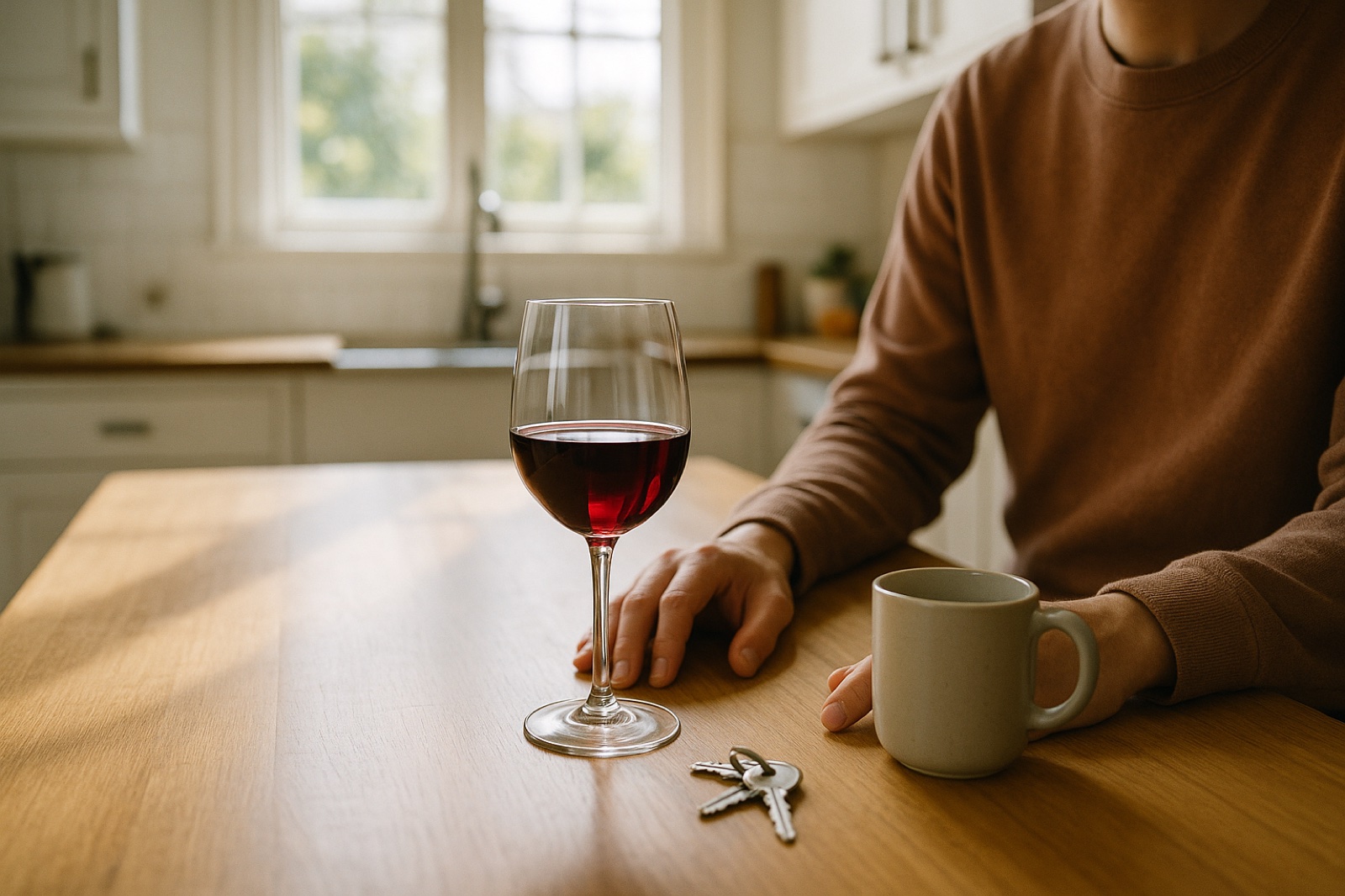
That is the honest place to start. Most people who type what does the Bible say about drinking alcohol into their phone are not settling a debate with a friend. They are alone. It is late. There is a glass on the counter, or an empty one in the sink, and a small worry that has been getting slowly louder for a while now.
You are not looking for a position paper. You want to know if you are in trouble with God.
So let us skip the debate and answer the real question. And here is the good news before we start: Scripture answers this far more gently, and far more honestly, than most people expect.
What Does the Bible Say About Drinking Alcohol? Not What Most People Assume
Here is the first surprise.
The Bible never issues a flat, universal ban on alcohol. Nowhere does it say that no one may ever drink. It says plenty of other things — sharper things, in some places — but it does not say that.
Proverbs 20:1 is blunt: “Wine is a mocker, strong drink is raging: and whosoever is deceived thereby is not wise.” That is a real warning and nothing later softens it. Wine mocks you. It makes promises it does not keep.
But then there is a verse almost nobody quotes.
In Deuteronomy 14, God is telling Israel what to do with money they had set aside for worship. People lived far from the temple, so instead of hauling animals for days, they could sell them, carry the money, and buy what they needed when they arrived. And the instruction is this:
“And thou shalt bestow that money for whatsoever thy soul lusteth after, for oxen, or for sheep, or for wine, or for strong drink, or for whatsoever thy soul desireth: and thou shalt eat there before the LORD thy God, and thou shalt rejoice, thou, and thine household.” — Deuteronomy 14:26
Read that again slowly. Wine. Strong drink. Bought with worship money. Enjoyed as a celebration, in God’s presence, with family.
That is not a loophole someone found. That is an instruction.
Psalm 104 goes the same direction, listing what God provides for people: “And wine that maketh glad the heart of man.” Not tolerated. Provided.
The Bans in Scripture Are Real — But Look at Who They Are For
There are places where the Bible does say do not drink. This matters, because it shows the shape of what God actually cares about.
In Leviticus 10:9, priests are told: “Do not drink wine nor strong drink, thou, nor thy sons with thee, when ye go into the tabernacle of the congregation, lest ye die.” Notice the condition. Not never. When ye go into the tabernacle. It is about being clear-headed while serving.
In Numbers 6, someone taking a Nazarite vow separates from wine and strong drink — and also from grapes, raisins, and vinegar. That is not a health rule. It is a temporary vow with a start and an end, a way of marking a season as set apart.
So the bans are real. They are also specific: tied to a role, or a season, or a promise someone chose to make. None of them are handed to everyone, everywhere, forever.
And then there is the verse that quietly dismantles the idea of a blanket ban altogether. Paul is writing to a young leader he loves, a man who is being careful about everything, and Paul tells him:
“Drink no longer water, but use a little wine for thy stomach’s sake and thine often infirmities.” — 1 Timothy 5:23
Paul told Timothy to stop drinking only water.
That sentence is almost never quoted in the popular answers to this question, and it is easy to see why. It does not fit the shape of a rule. If Scripture’s position were a flat prohibition, this verse could not exist. Paul would be telling his own protégé to sin, in writing, in a letter about church leadership.
It is worth noticing what Paul was actually worried about there. Not that Timothy was drinking too much. That he was so careful, so anxious to be above reproach, that he was making himself unwell.
So Where Is the Line?
If it is not the substance, what is it?
Paul answers this in a letter to Corinth, a city that knew every version of excess there was:
“All things are lawful unto me, but all things are not expedient: all things are lawful for me, but I will not be brought under the power of any.” — 1 Corinthians 6:12
Brought under the power of any.
That is the line. Not the drink. The power. Paul is not asking what is on the approved list. He is asking a different question entirely: what is currently running me?
And that question does not care what the thing is. It can be wine. It can be work, or your phone, or food, or the need to be liked, or scrolling until two in the morning because the quiet feels worse than the tiredness. The test is not the object. The test is the direction of the leash.
This is the same instinct behind why most quotes about self-control quietly miss the point — they treat it as a matter of gritting your teeth harder, when Scripture keeps treating it as a matter of who is holding the reins.
The Verse That Changes the Whole Question
Now we come to the one people expect to be a rule, and it is not a rule at all.
“And be not drunk with wine, wherein is excess; but be filled with the Spirit.” — Ephesians 5:18
Look at the shape of that sentence. It is not “do not drink, go to church instead.” It is a swap. Two ways of being filled, set side by side, in the same breath.
Paul is not comparing a bad habit to a good habit. He is comparing two answers to the same ache.
And there is something in that verse that gets lost in English.
The word translated “excess” is the Greek word asotia. It shows up only three times in the New Testament. But its close relative — the adverb form of the same word — shows up in one very familiar story. Luke 15:13, where the younger son takes his inheritance to a far country and wastes it in what the KJV calls “riotous living.”
Same word family. The word Paul reaches for to describe what is wrong with drunkenness is the prodigal son’s word.
And here is what that word actually means. Lexicons trace it to a negative prefix joined to the verb meaning to save — literally, something that cannot be saved. Waste beyond recovery. Money you will never see again. Spent, and gone.
The Bible never asked how much you drink. It asked what is drinking you.
So Paul’s concern in Ephesians 5:18 is not chemical. It is not about the liquid. It is about a person being spent — poured out on something that gives nothing back, in a way that cannot be recovered.
That is why the alternative he offers is not abstinence. It is being filled.
The prodigal’s problem was never the far country. It was that he was emptying himself into something that would never fill him. That is exactly what Paul is naming here — and it is why the answer to it is not a smaller glass, but a fuller life.
Which means the question you came here with may be the wrong one. Not because you are wrong to ask it, but because it is smaller than what is actually happening to you.
How much am I allowed? is a question about limits.
What is filling me? is a question about your life.
What About Jesus?
Worth answering plainly, because it comes up.
The first miracle recorded in John’s Gospel is Jesus making wine at a wedding — and the steward’s reaction in John 2:10 is that this wine is the good stuff, better than what was served first. Jesus also said, in Matthew 11:19, that critics called Him “a man gluttonous, and a winebibber, a friend of publicans and sinners.”
That accusation only makes sense if He was at the table. He was not standing at a distance from ordinary human life. He was in the middle of it, eating and drinking with the people nobody else would sit with.
The same Jesus who made wine at a wedding also said He came to set captives free. Those are not in tension. He was never against the celebration. He was always against the chains.
If You Are Worried About Your Own Drinking
Let us say the quiet part out loud, because this is who most of you are.
If you have read this far hoping for permission, notice something: permission is not actually what you want. If it were, Deuteronomy 14:26 would have ended your search several minutes ago.
You are still reading because the question underneath is not am I allowed. It is am I still free.
And here is what Scripture will not do to you: it will not shame you for asking. Not once in any of these passages is a person mocked for wondering. The warnings are warnings, not verdicts. Proverbs says wine mocks people — it does not say God does.
This is the same territory as asking whether it is a sin to take medication for anxiety or depression. The fear behind the question is usually heavier than anything Scripture actually says about it. If you want to keep pulling on questions like this one, our free Bible Answers assistant will walk through them with you — it opens in ChatGPT.
And there is one more turn, in Romans 14:21: “It is good neither to eat flesh, nor to drink wine, nor any thing whereby thy brother stumbleth, or is offended, or is made weak.”
That is the one place Scripture does ask someone to put the glass down — and notice the reason. Not for your own righteousness. For someone standing near you who is struggling.
Freedom in the Bible is almost never for yourself alone. It is something you get to spend on other people. Which is the exact opposite of asotia — spending that cannot be recovered — and it may be the truest test of whether you are actually free. A person who is ruled by something cannot set it down for a friend. A free person can.
Actions to Take Today
- Name it before you pour it. Tonight, before you reach for anything, say out loud what you are actually reaching for. One word. Tired. Lonely. Bored. Angry. Numb. Then decide about the drink afterward. This is not a promise or a rule — it takes ten seconds and it simply moves the decision into the light.
- Count honestly, without judging the number. Think back over the past week. How many times did you drink with people, and how many times alone? Just look at the two numbers. Do not attach a verdict to them. Being ruled by something almost always hides in the second column, and most people have genuinely never counted.
- Tell one person the true version. Send a message to someone who knows you and give them the honest answer instead of the easy one. Not a confession — just the real sentence. Whatever has power over you keeps that power by staying unsaid.
Journaling Prompts
- What does a drink do for you that nothing else in your day currently does?
- If alcohol disappeared from your life tomorrow and nothing else changed, what would you have to feel that you are not feeling right now?
- Where else — not only here — are you spending yourself on something you cannot get back?
A Prayer
God, I have been asking how much I am allowed, and I think that was the smaller question. You already know what I reach for and why. I am tired of being filled by things that empty me. Fill me instead — not because I have earned it, but because You said that was the trade. And if something has more of me than it should, help me see it clearly today, without hiding and without hating myself for it.
Discussion Question
Do you think Christians talk about alcohol in a way that actually helps people — or in a way that mostly teaches them to hide? Share your view in the comments; we read them.
Share This
- I always assumed the Bible banned alcohol. It doesn’t. It warns about being ruled by anything — and that turned out to be a much harder question than the one I was actually asking.
- Paul’s word for what’s wrong with drunkenness is the same word behind the prodigal son’s “riotous living.” It means waste you can’t get back. The concern was never the drink. It was the spending of a person.
- The question was never “how much am I allowed?” It was “what is currently steering me?”
Common Questions About the Bible and Alcohol
Does the Bible say drinking alcohol is a sin?
No. The Bible contains no flat, universal ban on alcohol, and it never calls drinking itself a sin. It repeatedly condemns drunkenness — Ephesians 5:18 says “be not drunk with wine, wherein is excess” — and Proverbs 20:1 warns that “wine is a mocker, strong drink is raging.” But Deuteronomy 14:26 explicitly instructs Israelites to buy wine or strong drink for a celebration feast before God, and Psalm 104:15 lists “wine that maketh glad the heart of man” among God’s provisions. The consistent biblical concern is being mastered by something, not the substance itself.
Did Jesus drink wine?
Scripture strongly indicates yes. The first miracle recorded in John’s Gospel is Jesus turning water into wine at a wedding in Cana (John 2), where the steward remarks that the new wine is better than what was served first. In Matthew 11:19, Jesus says that critics described Him as “a man gluttonous, and a winebibber, a friend of publicans and sinners” — an accusation that would make no sense if He had abstained entirely. Scripture never records Jesus being drunk, and never presents drunkenness as acceptable.
Does the Bible ever tell anyone not to drink at all?
Yes, but always in specific circumstances rather than as a universal rule. Leviticus 10:9 forbids priests from drinking wine or strong drink when entering the tabernacle to serve. Numbers 6:3 requires anyone under a Nazarite vow to abstain from wine, strong drink, vinegar, and even grapes for the duration of that vow. Romans 14:21 asks believers to set aside wine when it would cause another person to stumble. Each of these is tied to a role, a chosen vow, or concern for someone else — none is presented as a permanent command for all people.
What does Ephesians 5:18 actually mean?
Ephesians 5:18 reads: “And be not drunk with wine, wherein is excess; but be filled with the Spirit.” The verse is structured as a contrast between two ways of being filled, not simply as a prohibition. The Greek word translated “excess” is asotia, which appears three times in the New Testament; its adverb form describes the prodigal son’s “riotous living” in Luke 15:13. Lexicons connect the word to the idea of waste that cannot be recovered. The concern the verse raises is a person being spent on something that gives nothing back, and the remedy it offers is being filled by God rather than abstinence alone.
What does 1 Corinthians 6:12 mean about being “brought under the power of any”?
In 1 Corinthians 6:12 Paul writes: “All things are lawful unto me, but all things are not expedient: all things are lawful for me, but I will not be brought under the power of any.” Paul shifts the question away from what is permitted and toward what has control. Something can be entirely lawful and still be ruling a person’s life. This principle applies well beyond alcohol — to work, food, money, approval, or any habit that has begun to direct someone’s choices rather than serve them.
What should someone do if they are worried about their own drinking?
Scripture treats that worry as a reasonable question, not a verdict, and never shames a person for asking it. Practical first steps include naming out loud what is being reached for before drinking, honestly comparing how often drinking happens alone versus with other people, and telling one trusted person the truthful version of how things are. Where drinking has become physically dependent, medical support matters — stopping some patterns of heavy drinking without supervision can be genuinely dangerous, and seeking help is not a failure of faith.