 0
0
 0
0
You’ve seen the quotes. “Discipline is choosing between what you want now and what you want most.” “Self-control is strength. Right thought is mastery. Calmness is power.” “Motivation gets you started. Discipline keeps you going.” They show up on gym mirrors, on productivity Instagram accounts, on the whiteboards of people who journal at 5 a.m.
You read one, feel a little surge of resolve, and for about a day you’re a different person. No snoozing the alarm. No doom-scrolling past midnight. No second helping. Then Wednesday happens — a bad night’s sleep, a hard conversation, a stressful inbox — and by 8 p.m. you’re back on the couch with the thing you swore off, feeling less like someone who lacks discipline and more like someone who’s just broken.
That crash isn’t a character flaw. It’s actually the predictable result of believing something about self-control that quotes about self-control almost never question: that it’s a muscle you grind, alone, through sheer force of will. Turns out that idea has a real problem — and one very old list of virtues quietly solved it a long time before “discipline culture” had a hashtag.
The Quotes Everyone Shares (and Why They Stop Working by Thursday)
Search “quotes about self-control” and the results are almost all variations on the same theme: self-control as effort, as grit, as a battle won through willpower. Aristotle’s line about excellence being a habit. The gym-poster version of “discipline equals freedom.” The idea, borrowed loosely from decades-old psychology, that willpower works like a muscle — you can strengthen it, but you can also run it down to nothing by the end of a hard day.
That muscle metaphor became popular for a reason: it matches how self-control actually feels in the moment. But newer research complicates it in an interesting way. Some of the same researchers who studied “willpower depletion” later found that how much your self-control tanks after a hard day depends heavily on what you believe about willpower in the first place. People who think of it as a limited tank that empties tend to run out faster. People who don’t hold that belief as tightly tend to keep going longer under the same stress.
In other words: the grind-it-out quote isn’t just unhelpful. The belief baked into it might be part of what’s draining you.
What Actually Helps When Willpower Runs Out
If gritting your teeth harder isn’t the answer, what is? A few things that hold up better than “just have more discipline”:
- Design your environment before you need willpower at all. The people who seem most “disciplined” usually aren’t resisting temptation more — they’ve just removed more of it from view. Keep the thing out of the kitchen. Log out of the app on your phone. A decision you never have to make is a decision you can’t lose.
- Decide in advance, not in the moment. Psychologists call this an “if-then plan”: deciding ahead of time exactly what you’ll do when the craving hits (“if it’s 9 p.m. and I want to scroll, then I’ll read one page instead”). Deciding once, calmly, beats deciding fresh every single time you’re tired and tempted.
- Protect your sleep before you protect your streak. Almost nothing wrecks self-control faster than a short night. If you’re serious about willpower, the highest-leverage move most people skip is going to bed on time.
- Go easy on yourself after a slip. This one surprises people: research on self-compassion consistently finds that people who forgive themselves quickly after failing a goal actually do better going forward than people who spiral into self-criticism. Shame doesn’t build discipline. It just makes the next slip more likely. If that inner voice after a slip-up sounds familiar, it’s worth reading about why you’re so hard on yourself — it’s not the motivator it feels like.
Every one of those works. None of them is “try harder.” They’re less about gripping tighter and more about setting up conditions where you don’t have to grip as hard in the first place — the same blind spot behind most “letting go” quotes, actually: they sell willpower as a feeling you white-knuckle your way into, and skip the part where it’s mostly built beforehand.
The Line No Self-Control Quote Ever Uses
Here’s what surprised me digging into where this idea actually comes from. One of the oldest lists of character traits in the Bible includes self-control by name — right there next to patience, kindness, and peace. But it doesn’t list it the way a productivity account would. It doesn’t call it a skill to sharpen or a muscle to train. It calls it a fruit.
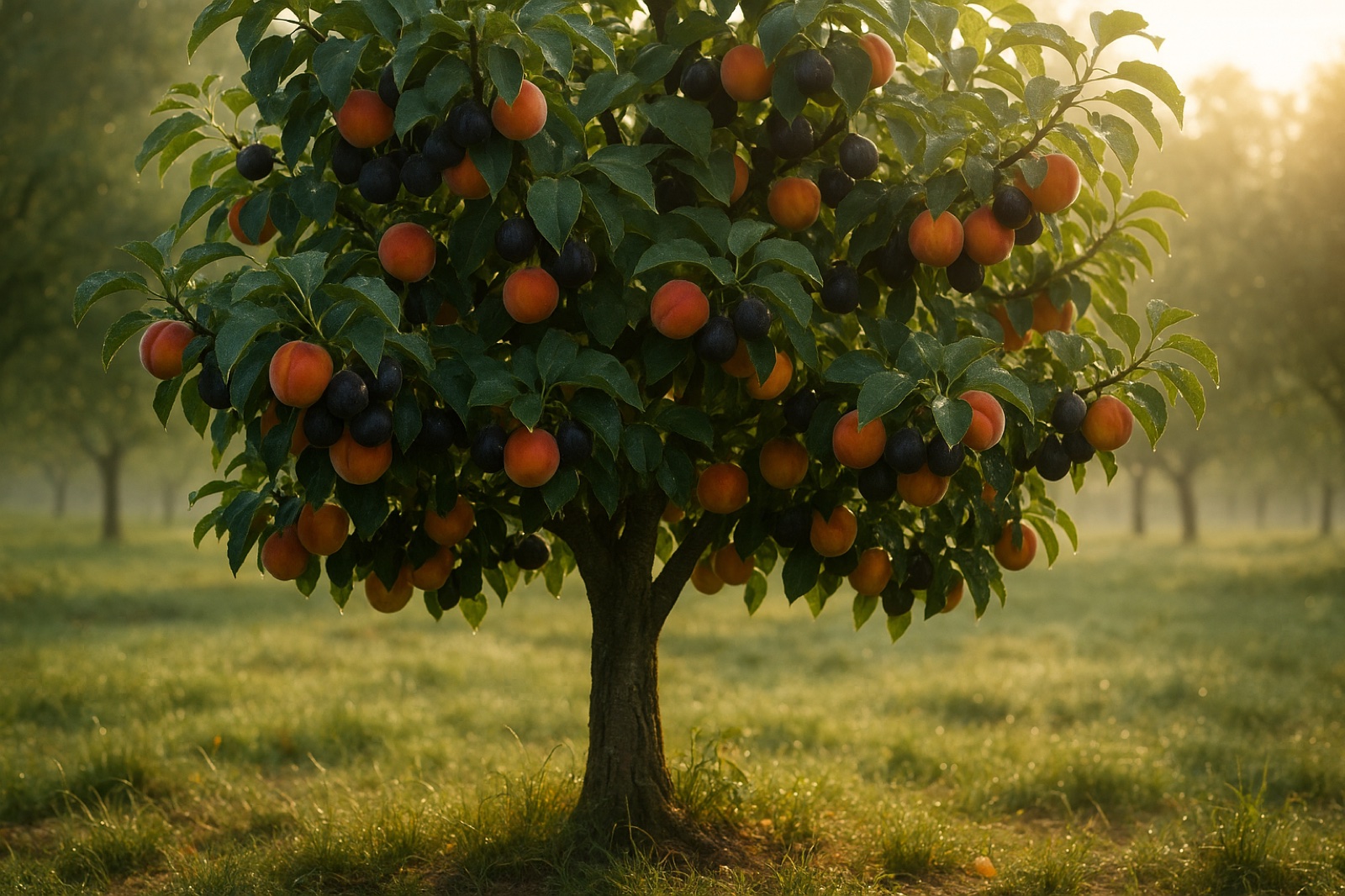
That word choice isn’t decoration. Fruit doesn’t clench its way into existence. A tree doesn’t grit its branches and force an apple out through sheer effort. Fruit grows — slowly, quietly, as the natural result of what’s feeding the roots. Good soil. Water. Light. Time. Take any of those away and no amount of straining at the branch produces anything. Restore them, and the fruit shows up almost on its own.
That’s a genuinely different theory of self-control than the one on every gym wall. Not: grind harder, want it more, white-knuckle the craving. More like: check what’s actually feeding you. Sleep, rest, real connection to something bigger than your own resolve — those aren’t distractions from self-control. According to this list, they’re the roots it grows out of. It’s the same idea behind that “not about trying harder” reframe in John 15’s “abide in me” — the ancient world kept landing on the same counterintuitive point: strain rarely produces what rest and connection produce naturally.
So What Does That Actually Change?
Maybe nothing overnight. You’ll still have a Wednesday where the alarm gets snoozed and the second helping happens anyway. But it might change what you make that mean. A grinding-muscle theory of self-control turns every slip into proof you’re weak. A growing-fruit theory turns it into information: something in the soil is off. You’re depleted, disconnected, running on no rest — not broken, just untended.
You don’t necessarily need a stronger grip. You might just need better roots — more rest, more of whatever actually feeds you, more connection to something bigger than your own resolve, running in the background of an ordinary week. Fruit doesn’t rush. It just grows, quietly, while you’re busy living the rest of your life.
A Question Worth Sitting With
Do you think self-control is mostly something you grind out through willpower — or something that grows more naturally once the right things are in place around you? You don’t have to have it figured out. Drop your honest take in the comments.
Share This
Written to be shared in your own words:
- “Every self-control quote I’ve ever saved treats it like a muscle you grind out alone. Turns out one of the oldest lists of virtues on record calls it fruit instead. Kind of changes how you think about a bad Wednesday.”
- “Willpower isn’t the problem. Roots are. Read something today that flipped how I think about self-control completely.”
- “Self-discipline quotes love the word ‘grind.’ The oldest list of character traits I could find uses the word ‘grow.’ Not the same thing at all.”
Quick Questions About Self-Control
What is the best quote about self-control?
Most popular self-control quotes — from Aristotle’s line about excellence being a habit to gym-wall lines about discipline equaling freedom — frame it as effort and willpower. A less quoted but more useful idea treats self-control less like a muscle you grind and more like fruit that grows out of good conditions: rest, environment, and connection to something bigger than raw resolve.
Why is self-control so hard to maintain?
Self-control is hardest to maintain when you’re tired, stressed, or relying on willpower alone in the moment of temptation. Research suggests people who believe willpower is a limited resource that runs out actually deplete faster than people who don’t hold that belief as strongly — meaning some of the difficulty comes from the theory itself, not just the craving.
Is self-control a skill or a trait you’re born with?
It’s mostly trainable, not fixed. Environment design, advance decision-making (deciding your response before the craving hits), consistent sleep, and self-compassion after setbacks all measurably improve self-control over time — which means it behaves far more like a skill shaped by conditions than a fixed trait you either have or don’t.
What helps build self-control besides willpower?
Removing temptation from your environment before you need willpower, making decisions in advance rather than in the moment, protecting sleep, and responding to slip-ups with self-compassion instead of self-criticism all outperform simply “trying harder” in the moment of temptation.
Is self-control the same thing as self-discipline?
They’re related but not identical. Self-control usually means resisting a specific impulse in a single moment — skipping the extra drink, closing the app. Self-discipline is the longer pattern built from repeated self-control over time, plus the systems and habits that make each individual moment easier.
A Few Things to Try This Week
- Pick one temptation and remove it from view entirely — out of the kitchen, off the home screen, out of reach.
- Write one “if-then” plan for the moment you know is coming: “If it’s 9 p.m. and I want to scroll, then I’ll read one page instead.”
- Protect one night of real sleep this week before you try to protect a streak.
- The next time you slip, try one sentence of self-compassion instead of self-criticism, and notice what happens the next day.