 0
0
 0
0
Think of one meal you remember in vivid detail — not because you wrote it down, but because it’s just there. Maybe it’s your grandmother’s kitchen on a Sunday afternoon. Maybe it’s the sandwich you ate the day everything changed. Maybe it’s a first date, a last conversation with someone you lost, or a birthday dinner from twenty years ago you can still practically smell. Meanwhile, you probably can’t remember what you had for lunch three days ago.
That’s not a coincidence, and it isn’t really about the food. Scientists just found a real biological reason why meals stick in your memory more than almost anything else — and it starts, of all places, in your gut.
The Study That Traced Memory Back to the Stomach
Researchers at the University of Southern California, led by biologist Scott Kanoski, published findings in Nature Communications this July tracing a direct signal that travels from the gut to the brain every time you eat. The pathway runs through the vagus nerve — the long nerve connecting your digestive system to your brain — and it doesn’t stop at digestion. It reaches a part of the brain called the medial septum, which feeds directly into the hippocampus, the brain’s main memory-processing center.
In the study, when rats ate something genuinely nutritious, that vagus signal triggered a jump in acetylcholine, a chemical messenger that helps the brain encode new experiences. The rats with a working signal remembered exactly where they had found food. When researchers interrupted the vagus nerve connection, the acetylcholine surge disappeared — and so did the memory. Those rats performed noticeably worse at recalling where their last meal had come from.
Here’s the key detail: it wasn’t the act of eating, or even taste, that mattered most. It was the calories — genuine nutrition — that set off the strongest memory signal. And there’s a harder edge to the finding, too. The same researchers found that a chronic diet high in fat and sugar, especially early in life, permanently damages this gut-to-brain wiring. The circuit that’s supposed to help you remember can be worn down by exactly what you feed it.
Why This Matters Beyond the Lab
This research was done in rats, and scientists are careful about how far to stretch an animal study toward human behavior. But the mechanism they found — a real, physical wire running from stomach to memory center — offers the first solid biological explanation for something almost everyone already knows from experience: meals don’t just feed you, they anchor you in time. A body that’s genuinely nourished appears to be primed, on a chemical level, to remember the moment it happened in.
It’s a similar story to what researchers found when they tracked 147,000 people over thirty years looking for the exercise habits that actually extend a life — the body keeps remembering, keeps rewarding, the things we assumed were just routine. Researchers are already exploring whether this gut-memory pathway could be used therapeutically, through vagus nerve stimulation, to help people whose memory has been affected by aging or poor diet. But long before any of that reaches a clinic, it’s already showing up in your own life, every time one specific meal refuses to fade the way an ordinary Tuesday does.
An Old Habit That Got There First
Here’s the part that’s harder to explain with a vagus nerve. Long before anyone could measure acetylcholine, people across nearly every culture and era already treated shared meals as something worth protecting — not just as fuel, but as an act of memory. Ancient traditions built entire rituals around eating together for one purpose: so something wouldn’t be forgotten. A specific meal, repeated on purpose, became the vehicle for remembering something bigger than the meal itself — a rescue, a promise, a person, a turning point that mattered too much to let slip away.
Science is only now catching up to something instinct — or maybe something wiser than instinct — seems to have understood a long time ago: if you want a moment to last, you don’t just talk about it. You eat it, together, on purpose. It’s the same quiet thread running through a 180,000-person study across 22 countries looking for the real antidote to loneliness — connection, done on purpose, keeps showing up as the thing that actually works, long after the theories about what should work have moved on.
What This Means for Your Own Table
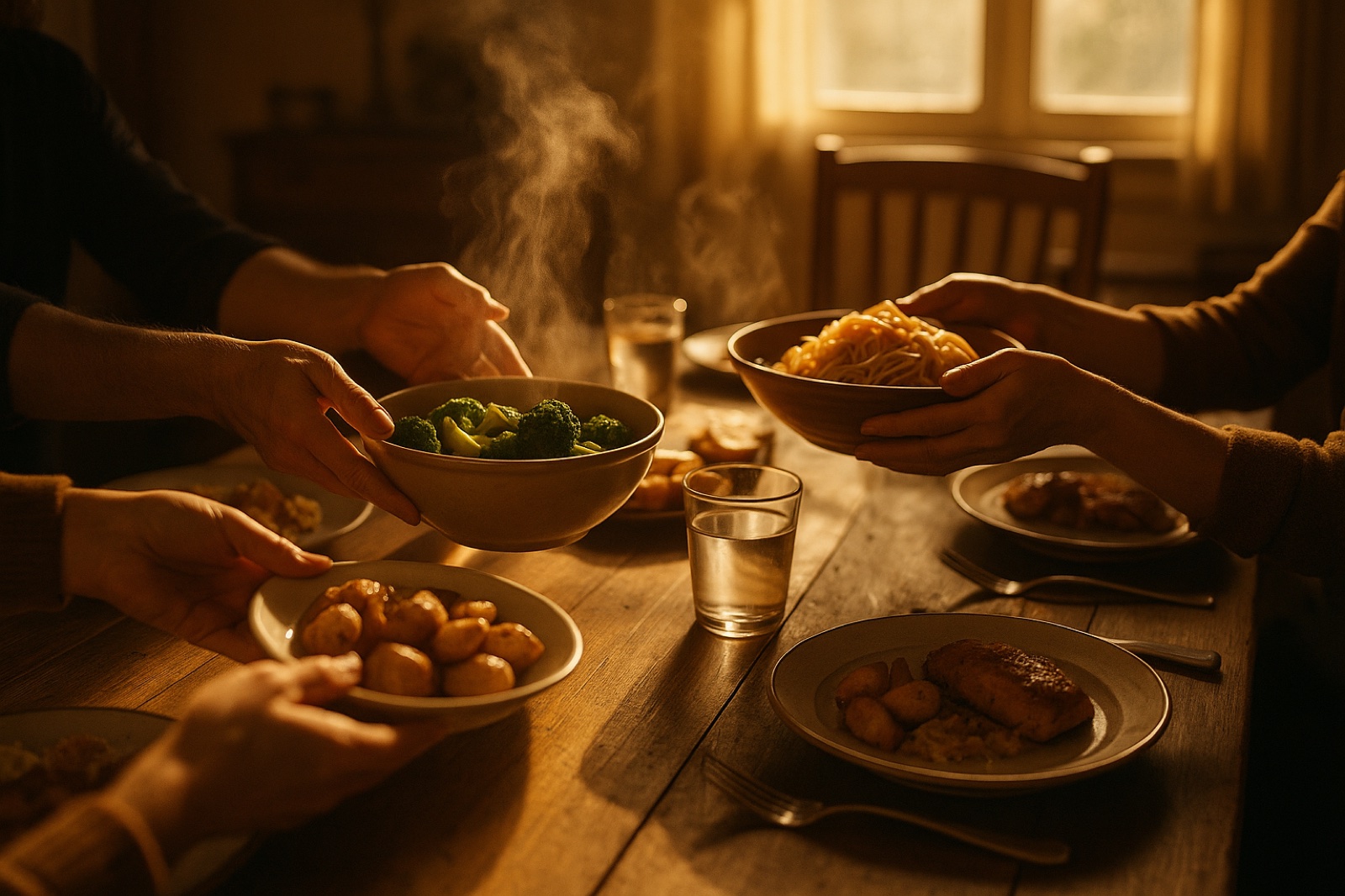
You don’t need a lab to use any of this. If there’s a memory you want to last — a milestone, a reconciliation, a season you don’t want to lose track of — put a meal around it, on purpose, with people you actually want to remember it with later. Put the phone away for that one. Let it run slow. If you’ve ever wondered why it’s possible to feel lonely in a room full of people, this might be part of the answer too — a shared table does something a shared room alone doesn’t. The science now backs up what your grandmother probably could have told you for free: the table remembers what the calendar forgets.
Discussion Question
What’s one meal you still remember in vivid detail years later — and what do you think made it stick? Tell us in the comments below.
Share This
- Scientists just found the reason certain meals stick in your memory for decades while most days disappear completely. It’s not really about the food.
- There’s a nerve that runs straight from your stomach to your memory center. Explains a lot about why I can still taste my grandma’s Sunday kitchen and not what I ate on Tuesday.
- New research traced memory formation back to a signal from the gut. Meanwhile humans have been building entire traditions around shared meals for thousands of years. Maybe we knew something first.
Questions People Are Asking
Why do some meals stick in memory more than others?
Researchers at USC found that eating nutritious food sends a signal through the vagus nerve to a brain region called the medial septum, which triggers a release of acetylcholine in the hippocampus — the brain’s memory center. This chemical response appears to be what helps certain meals get encoded as strong, lasting memories, rather than being forgotten like an ordinary day.
What is the vagus nerve and what does it have to do with memory?
The vagus nerve is the main communication line between the gut and the brain. In a 2026 USC study published in Nature Communications, researchers found that after eating nutritious food, a signal travels up the vagus nerve to a brain area called the medial septum, which feeds into the hippocampus and strengthens memory formation.
Does junk food affect memory the same way healthy food does?
No. The same research found that chronic diets high in fat and sugar, especially earlier in life, can permanently damage the gut-to-brain communication that supports memory. Genuine nutrition — not just calories or taste alone — appeared to be the strongest trigger for the memory-boosting signal.
Was this study done on humans?
The core experiments were done in rats, so the findings can’t be applied to humans automatically. But researchers see it as a strong candidate mechanism for why humans also tend to remember meals so vividly, and they’re already exploring whether the pathway could eventually be used therapeutically, such as through vagus nerve stimulation.
Why have so many cultures built traditions around shared meals?
Long before this science existed, cultures across history already treated meals as more than nutrition — using a shared table as a deliberate way to remember something important: an event, a promise, a person. The new research offers a biological reason why that instinct may have been onto something real all along.