 0
0
 0
0
Last winter, people in places that almost never see the northern lights stepped outside and watched the sky turn green. Wisconsin. Parts of northern England. Stretches of the U.S. that don’t usually make anyone’s aurora bucket list. It happens more often than most people realize — a strong solar storm hits, the sky puts on a show, and almost nobody saw it coming until a few days before.
That’s been the deal with solar storms for as long as scientists have been watching them. Astronomers can track a flare the moment it erupts and count down the hours until it reaches Earth. But knowing, years ahead of time, whether a given stretch of the sun’s cycle is going to be calm or wild? That’s always been mostly a guessing game.
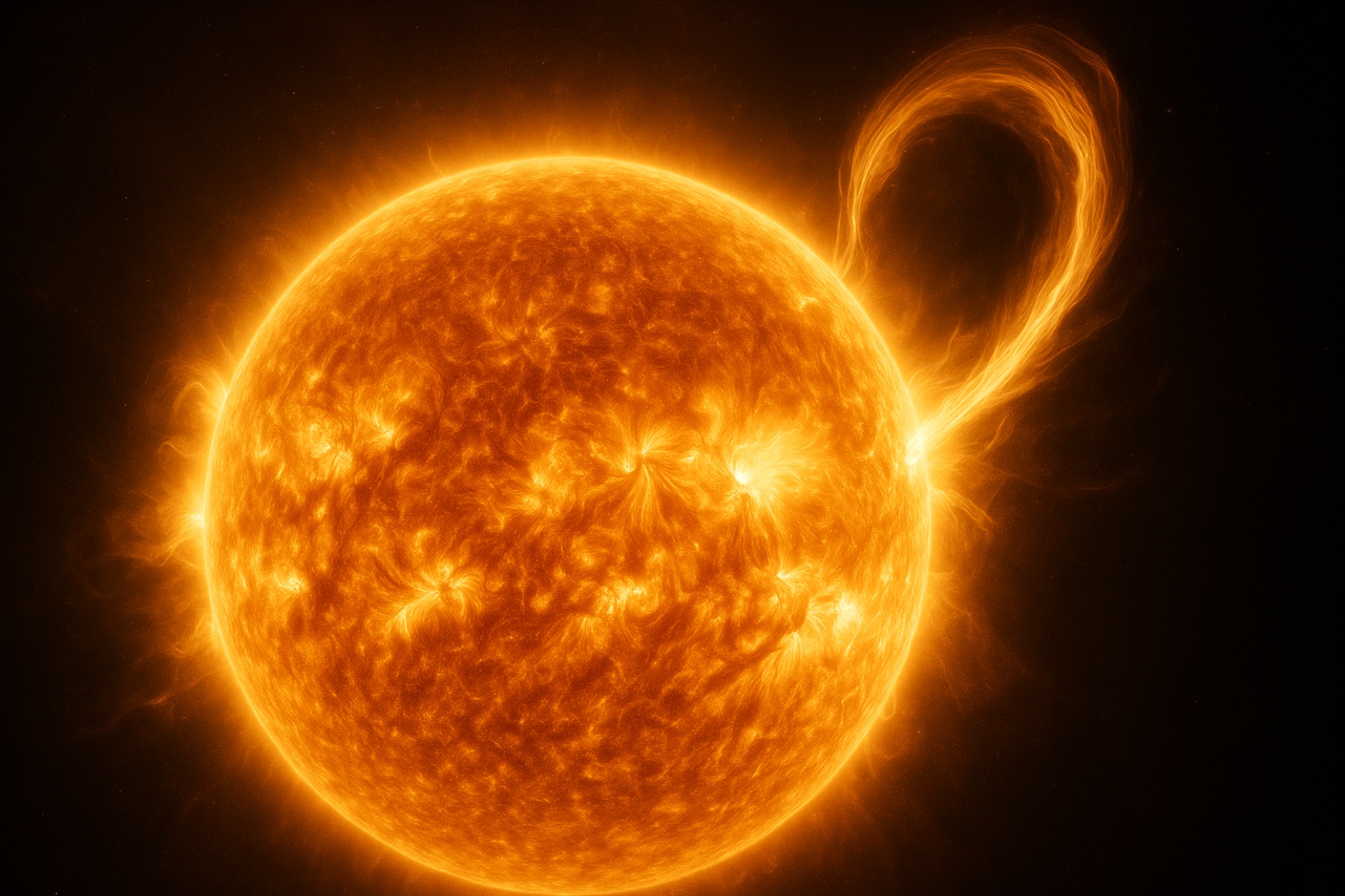
Not anymore. Researchers say they can now predict solar storms up to seven years before they happen — using a signal that’s been sitting in the sun’s own data the entire time. They just didn’t know what they were looking at.
Why It’s Been So Hard to Predict Solar Storms
The sun runs on roughly an 11-year cycle, swinging between a quiet stretch (solar minimum) and a stormy one (solar maximum). During solar maximum, sunspots multiply, flares get bigger, and the odds of a major geomagnetic storm — the kind that can light up the sky or knock out a satellite — go way up.
The problem is that no two cycles look alike. Some peaks are mild. Others are ferocious. And for decades, the honest answer to “how strong will the next one be” was: ask us again once we’re already in it.
The Signal Hiding in the Sun’s Own Rhythm
A team led by Professor Sandra Chapman at the University of Warwick’s Centre for Fusion, Space and Astrophysics thinks they’ve found the shortcut. Presenting at the Royal Astronomical Society’s National Astronomy Meeting in Birmingham this July, Chapman’s team pointed to a specific moment inside every solar cycle — call it the switch-off point — when sunspot activity drifts down below about 15 degrees of solar latitude. Right around that moment, the most severe space weather essentially shuts off.
Here’s the useful part: the number of sunspots visible at that exact switch-off moment closely tracks how strong the next cycle’s peak will be. Count the spots at the switch-off, and you’ve got a real read on a storm season that’s still years away.
The method builds on Chapman’s earlier “sunclock” — a tool that re-maps the sun’s messy, uneven cycles onto a standardized timeline so one cycle can finally be compared fairly against another. Her team cross-checked the pattern against decades of geomagnetic storm records (known as the aa index) and found it held up.
What’s Coming Next
Early estimates for the next cycle, Solar Cycle 26, point to something moderate — somewhere around 100 to 120 sunspots at peak, similar to or slightly weaker than the current cycle. Confidence in that number will sharpen by around 2028, once direct observations start rolling in. But that’s still years further ahead than forecasters have ever had before.
For most of history, storms like the one that lit up the sky over 24 U.S. states in a single weekend, or the 78,000-mile magnetic structure that triggered a major space weather warning, showed up with days of notice at best. Years of lead time changes the entire conversation.
Why Years of Warning Actually Matters
A strong geomagnetic storm isn’t just a pretty light show. It can overload power grids, scramble GPS signals, throw off airline routes near the poles, and put satellites — and the astronauts near them — at real risk. Utility companies and space agencies currently plan around forecasts measured in days. Being able to plan around a forecast measured in years means hardening a grid before a bad cycle arrives, not scrambling once it’s already here.
A Clock That Was Already Running
Here’s the part of this that’s easy to miss because it sounds almost too simple: the sun didn’t just start being predictable this year. It’s been running on this rhythm the entire time — long before satellites, long before Sandra Chapman, long before anyone had a “sunclock” to read it by. All that changed is that someone finally learned how to see the pattern that was already there.
It’s a strange thing to sit with. Long before any of this research, an old idea already existed — that the sun and stars weren’t scattered across the sky at random, but placed there as markers, meant to mark signs and seasons long before anyone had the tools to decode them. Not a coincidence exactly. Just a reminder that order tends to be there whether or not we’ve caught up to it yet.
So the next time an aurora alert pops up on your phone, it might be worth remembering: that storm wasn’t random. It was written into a rhythm that’s been running since long before anyone thought to look for it — and now, for the first time, we’re a few years ahead of it instead of a few days behind.
What Do You Think?
If scientists can now tell us years in advance how active the sun’s going to be, does that change how you think about something as “unpredictable” as space weather — or the universe in general? Tell us in the comments below.
Share This
“Just learned scientists can predict solar storms 7 years before they happen. The sun has been running on a hidden clock this whole time and we are only now learning to read it.”
“Okay this blew my mind: there is a switch-off signal buried in every solar cycle that tells researchers how strong the next one will be, years before it even peaks.”
“The sun has been running on a schedule this whole time. We just finally figured out how to read it seven years ahead.”
Frequently Asked Questions
How can scientists predict solar storms years in advance?
Researchers at the University of Warwick found a “switch-off” point in the sun’s roughly 11-year cycle, where sunspot activity drops below about 15 degrees of solar latitude and severe space weather sharply declines. The number of sunspots visible at that exact moment closely predicts how strong the next solar cycle’s peak will be, giving forecasters up to seven years of advance warning.
Who discovered this solar storm prediction method?
The research was led by Professor Sandra Chapman of the University of Warwick’s Centre for Fusion, Space and Astrophysics, and presented at the Royal Astronomical Society’s National Astronomy Meeting in Birmingham in July 2026.
What is the sun’s “switch-off” signal?
It’s the moment in each solar cycle when sunspot activity migrates below roughly 15 degrees of solar latitude, at which point the most severe space weather essentially stops. The sunspot count at that exact moment correlates strongly with the strength of the next cycle’s peak.
How strong is the next solar cycle expected to be?
Early estimates for Solar Cycle 26 suggest a moderate peak of roughly 100 to 120 sunspots, similar to or slightly weaker than the current cycle. That estimate should sharpen by around 2028, once direct observations become available.
Why does predicting solar storms years in advance matter?
Severe geomagnetic storms can disrupt power grids, GPS systems, airline routes, and satellites. Years of advance notice, instead of days, gives utility companies and space agencies real time to prepare and harden infrastructure before a strong cycle arrives.