 0
0
 0
0
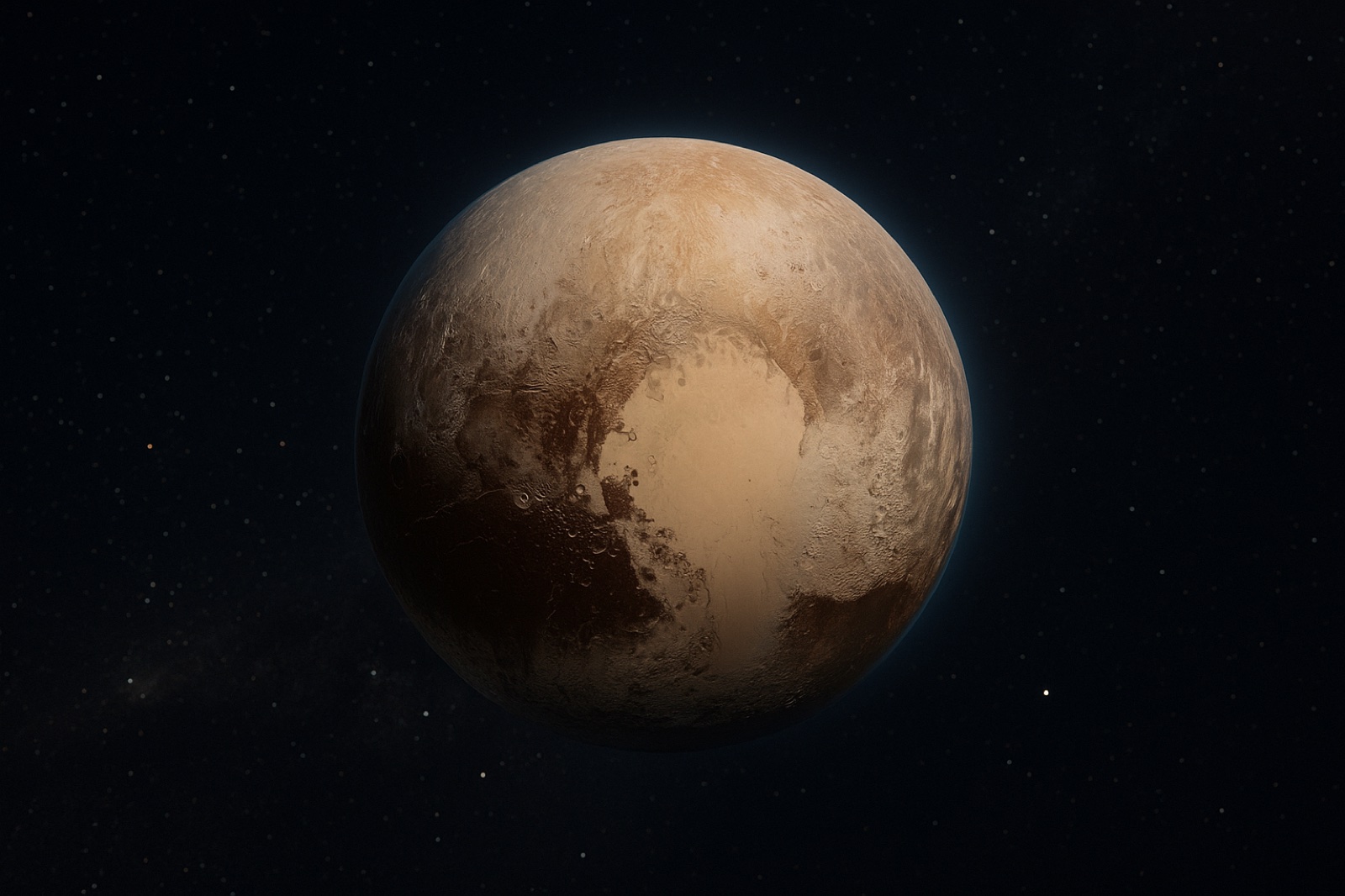
For the first time since a 25-year-old farm kid named Clyde Tombaugh spotted it on a photographic plate in 1930, Pluto is leaving the part of its orbit it’s spent nearly a century circling through. It won’t come back this way again until the year 2114. And as it goes, something is happening that scientists have been waiting more than a decade to actually catch: Pluto is losing its atmosphere.
Not overnight. Not dramatically. But measurably, and for the first time with real numbers behind it.
The Longest Trip Pluto Has Ever Taken
Pluto doesn’t orbit the sun in a neat circle. Its path is a long, stretched-out oval that carries it anywhere from about 30 to 50 times farther from the sun than Earth is. For twenty years, between 1979 and 1999, that odd orbit actually swung Pluto in closer to the sun than Neptune — the only time that happens in its 248-year loop. Pluto reached its closest point, called perihelion, in 1989.
Every year since, it’s been climbing back out. And now it’s crossing into the colder, dimmer stretch of its orbit that it hasn’t touched since Tombaugh found it at Lowell Observatory in February 1930 — the first time in the 96 years of Pluto being a known object in our sky that it’s headed into this deep a freeze. NASA’s own administrator sparked a fresh round of debate over Pluto’s planet status earlier this year — but whatever we call it, Pluto doesn’t care what committee it’s filed under. It just keeps moving, on a clock nobody can pause.
Why Pluto Is Losing Its Atmosphere, Piece by Piece
Pluto has an atmosphere — a real one, just thin. It’s made of nitrogen, methane, and carbon dioxide, and it only exists because sunlight, faint as it is out there, is enough to warm Pluto’s icy surface just enough to turn some of that ice directly into gas. It’s the same principle behind a block of dry ice smoking in a warm room, just running on a much colder budget.
Scientists have a clever way of measuring an atmosphere that thin from billions of miles away: they watch Pluto pass in front of a distant star and time exactly how the starlight dims and fades as it filters through Pluto’s air on the way by. Using this method, a team led by Planetary Science Institute senior scientist Amanda Sickafoose found that Pluto’s atmospheric pressure held roughly steady from NASA’s 2015 New Horizons flyby through part of 2021 — then dropped by about 16% between mid-2021 and July 2023. It’s the first solid evidence that the slow collapse researchers have modeled for years is actually underway.
The cause is almost embarrassingly simple: less sunlight means less warmth, means less of that surface ice turning to gas — and some of what’s already in the atmosphere is now cold enough to frost back onto the ground instead of staying airborne. Pluto’s air is quite literally snowing itself back onto Pluto. It’s a strange bookend to the news, just months earlier, that astronomers had confirmed the first atmosphere ever found on a rocky, habitable-zone exoplanet — one world gaining the very thing another is losing, both stories decided by the same simple variable: distance from the light.
What Happens to a World That Drifts From the Light
Here’s the part that keeps this from being purely bad news: most researchers don’t think Pluto’s atmosphere is going to vanish completely. Buried in a massive, heart-shaped basin called Sputnik Planitia is an enormous reserve of nitrogen ice — enough that even as the visible atmosphere thins dramatically over the coming decades, that reservoir is expected to keep feeding a much thinner version of it rather than letting it disappear for good. The same distance that’s costing Pluto its warmth right now is also, eventually, going to give some of it back — Pluto reaches the far end of its orbit and starts drifting home again in 2114.
It’s a strange thing to sit with: an entire world’s climate, decided almost entirely by how close it happens to be to its source of light and heat at any given moment. Move away, and the atmosphere that made the world feel alive — however thin it always was — starts quietly falling out of the sky. It’s not punishment. It’s not failure. It’s just what distance does, to a planet or a person, when it goes on long enough.
There’s an old idea, older than telescopes, running through nearly every tradition that’s ever tried to make sense of the sky: that what drifts far from the source of its warmth eventually goes cold — but what stays near it keeps being renewed, morning after morning, no matter how far off course the day before ran. It isn’t a rule Pluto had any choice about. It’s just physics, locked in since before there were people around to name it. But most of us know that particular kind of drift, too — a few too-busy weeks, a season of distraction, the quiet worry that we’ve wandered further than we meant to. Whatever holds a life like that together — grace, mercy, or just something bigger than orbital mechanics — it isn’t stingy with second chances, and it isn’t running on a 248-year clock. If you want to put a name to that quieter kind of warmth, our “How Close Am I to God?” reflection is a gentle, two-minute way to notice where you actually stand right now — no wrong answers, just an honest look.
Pluto will keep drifting outward for another 88 years before it ever turns back toward the sun. It has no say in the matter. We’re not locked in quite like that. Wherever the last few weeks left you, the warmth is still there to come back to — same as it’s always been.
Discussion Question
If you found out something you’d depended on for years was quietly running low — not gone, just thinning, the way Pluto’s atmosphere is right now — would you want to know right away, or would you rather not have the warning? Tell us in the comments.
Share This
- Pluto is drifting into the coldest, darkest part of its orbit for the first time since its discovery in 1930 — and scientists just caught its thin atmosphere quietly freezing and falling back to the surface as it goes. Wild to watch a whole world lose its warmth in real time.
- Pluto’s atmosphere just dropped 16% in two years as it drifts farther from the sun than it’s been since 1930. It won’t turn back until 2114. Wild.
- Every 248 years, Pluto drifts far enough from the sun that its own atmosphere starts snowing back onto its surface. We just caught it happening. There’s something oddly comforting about a world whose “winter” runs on a schedule that long.
Questions People Are Asking
Why is Pluto losing its atmosphere?
Pluto’s thin atmosphere of nitrogen, methane, and carbon dioxide only exists because sunlight warms its icy surface enough to turn some of that ice into gas. As Pluto moves farther from the sun along its 248-year orbit, less sunlight reaches it, temperatures drop, and those same gases are freezing and falling back onto the surface as frost — which is why scientists have measured the atmosphere’s pressure dropping.
When did Pluto’s atmosphere start collapsing?
Researchers led by Planetary Science Institute senior scientist Amanda Sickafoose tracked Pluto’s atmospheric pressure using stellar occultations — timing how starlight dims as Pluto passes in front of a distant star — and found it held roughly steady from NASA’s 2015 New Horizons flyby through part of 2021, then dropped by about 16% between mid-2021 and July 2023, the first solid evidence the long-predicted collapse may be underway.
Is this the first time Pluto has left the inner solar system?
Functionally, yes. Pluto’s oval orbit brought it closer to the sun than Neptune between 1979 and 1999, reaching its closest point (perihelion) in 1989. Since then it’s been climbing back outward, and it’s now heading into the colder, more distant part of its orbit for the first time since its 1930 discovery. It won’t turn back toward the sun again until the year 2114.
Will Pluto lose its atmosphere completely?
Most scientists don’t think so, at least not for good. Current models suggest Pluto’s atmosphere will keep thinning significantly as it moves toward the farthest point in its orbit, but a massive reserve of nitrogen ice in the heart-shaped basin called Sputnik Planitia is expected to keep feeding a much thinner atmosphere rather than letting it vanish entirely.
Who discovered Pluto and when?
Clyde Tombaugh, a self-taught American astronomer working at Lowell Observatory, discovered Pluto on February 18, 1930, after comparing photographic plates of the same patch of sky taken days apart and noticing a faint point of light that had moved.