 0
0
 0
0
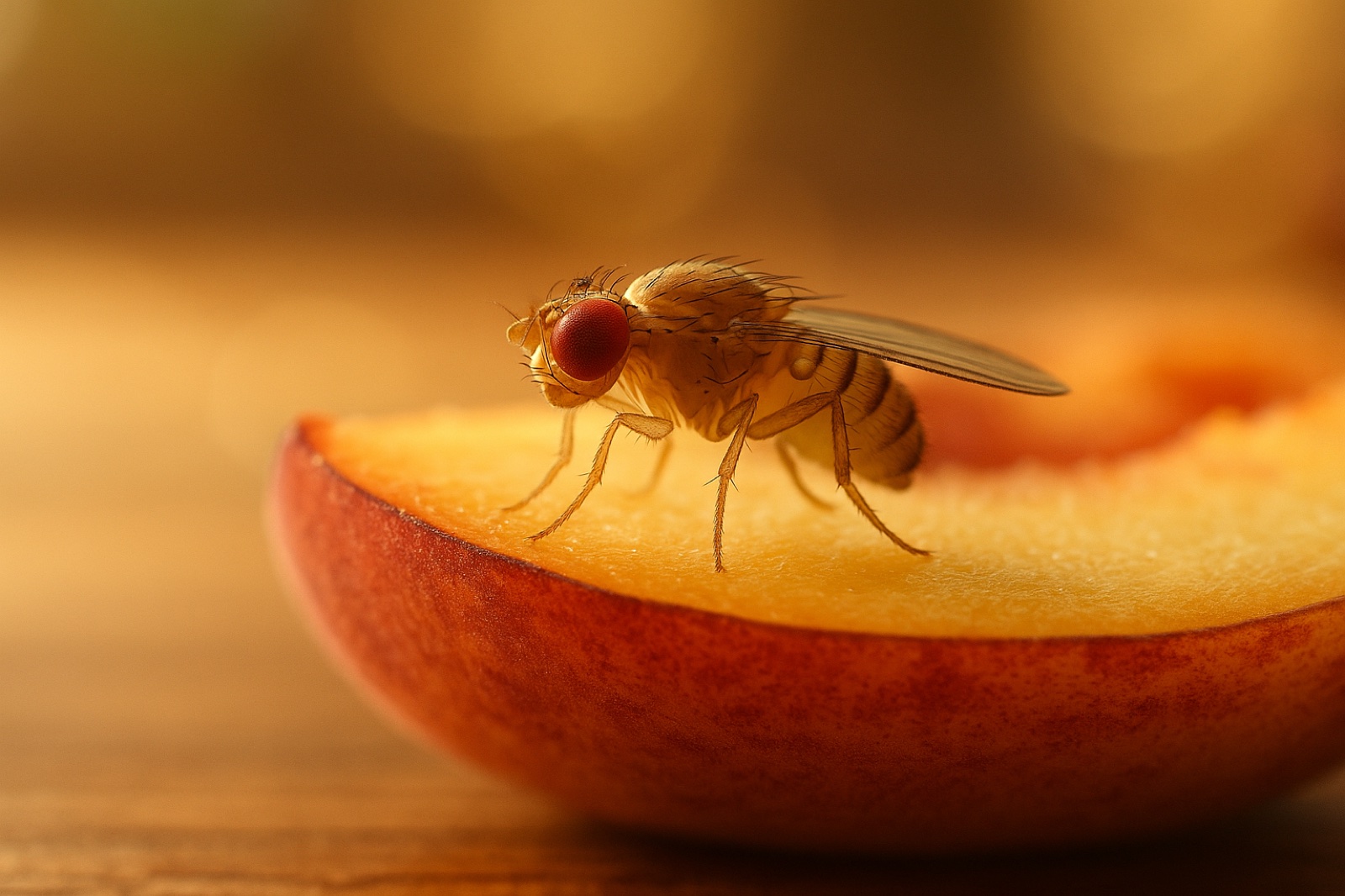
You have probably waved one away from a fruit bowl this week without thinking about it. A fruit fly is barely there. Its whole brain is about the size of a poppy seed.
And yet scientists have now mapped the fruit fly brain, together with its nerve cord, cell by cell, and the result is one of the most detailed things anyone has ever drawn. On 3 September 2026, a team led by HHMI’s Janelia Research Campus, working with Google Research and researchers in Cambridge, published the complete wiring diagram of an adult male fruit fly’s central nervous system in the journal Cell. It holds more than 166,000 neurons and around 125 million connections between them.
Google Research calls it the largest brain map by number of neurons to date. It belongs to a fly.
Most of us carry a quiet rule around with us: small means simple. We use it on insects without thinking. Sometimes, if we are honest, we use it on ourselves. This map is a very good reason to put that rule down.
What the fruit fly brain map actually is
A map like this is called a connectome. It is not a picture of a brain from the outside. It is a record of every nerve cell, and every point where one cell touches another to pass a signal along.
Making one is slow, careful work. The fly’s brain and nerve cord were cut into extremely thin slices, and each slice was photographed with an electron microscope. Computers stitched millions of flat images back into three dimensions, and AI traced each neuron from one slice to the next. Then human experts at Janelia went over the result by hand, checking and correcting. Google’s own write-up admits that verifying a fly brain still takes years of human effort.
The finished map also sorts the neurons into kinds. According to Google Research, it counts 11,691 distinct neuron types. Not 11,691 neurons. More than eleven thousand different kinds of neuron, each with its own shape and wiring, inside one small animal.
If you like noticing the extraordinary hiding inside ordinary things, we made a free short video guide and companion PDF about finding something deeper in the everyday moments of real life. It is yours if you would like it.
Nearly two decades to map something you can barely see
When Janelia’s researchers set out in 2008 to map every neuron in the fly brain, many scientists thought they were out of their minds. That is how the institute’s own account of the project remembers it.
The work arrived in pieces. In 2020 the team released the “hemibrain”, a map of about half the fly brain with 25,000 neurons. At the time it was the biggest, most detailed connectome ever made.
In 2024, a separate project called FlyWire published the first complete map of an adult fly’s brain, taken from a female fly: 139,255 neurons and 54.5 million connections, with roughly 149 metres of neural wiring folded inside that poppy-seed space. Then in June 2026, a team led by Harvard Medical School and Princeton University published a map of a female fly’s brain and nerve cord together, in the journal Nature.
The September map is the first complete one of a male fly’s brain and nerve cord. That matters more than it sounds. “It is the first time we can compare both sexes of an animal with complex social behavior,” said Janelia’s Gerry Rubin when a preprint of the work was released in 2025.
One honest note on the wording you will see in headlines. This is the fly’s central nervous system: its brain, plus the nerve cord that runs down its body. It is not every nerve out in the legs and wings.
What the map found inside the fly
With a male and a female map side by side, the first surprises are already coming in. The researchers report that:
- The differences between the sexes sit high up. Neurons that differ between males and females cluster in the brain’s higher areas, while the circuits for sensing and moving are largely shared.
- Males carry their own network. About 100 male-specific types of connecting neuron form a tightly intertwined network in the central brain that coordinates most male-specific behaviour, such as courtship.
- Seeing reaches most of the brain. Visual processing extends deep into the brain and involves more than half of its neuron types.
- Taste is mapped from end to end. The map follows taste from sensing neurons across the body to the motor neurons that drive feeding, and shows how pleasant and unpleasant signals connect to feeding, walking, hormone release and courtship.
The June paper found something just as striking. Much of a fly’s movement is not run by one command centre in the brain. The neurons that move a body part are mostly shaped by sensing neurons in that same body part, forming small local loops, and those loops are then linked together by longer circuits. A lot of the work is done locally, in cooperation, with no single boss giving every order.
Brains keep doing this to the people who study them. A single cell turns out to do more than anyone gave it credit for, as in the study where a single brain cell out-computed an AI network. Honeybees turn out to run on precise circuits too, like the one scientists found that decides which job a bee does as it ages.
What a wiring map still can’t tell you
It is worth being precise about what this is. A connectome shows which cells connect, and where. It does not, on its own, show how strongly each cell is firing at a given moment, or the chemical signals that wash through a brain and change how it behaves, like those tied to hunger or stress. It is also one fly. Each of these maps comes from a single animal, so how much one fly differs from another is still being worked out.
Rubin once put the map’s role in a telling way. The team felt, he said, that they “wouldn’t be able to understand the brain at a satisfying level without having a wiring diagram.” Notice the shape of that sentence. The map is the thing you cannot do without. It is not the whole understanding.
For scale: the human brain is commonly estimated to hold about 86 billion neurons, more than half a million times the fly’s count. Nobody is close to a full human map. Scientists are still learning to read a fly.
And the fruit fly is about as well studied as small animals get. Most insects have barely been looked at, as we explored in a piece on why so many tropical insects are still unknown to science.
Small is not the same as simple
So here is what the map quietly overturns. Something you could squash with a fingertip needed nearly two decades, an international team, AI tools that did not exist when the work began, and years of hand-checking just to draw. The fly was never simple. We just had not looked closely enough.
One of the oldest books of wisdom got there long before the microscopes. It lists four creatures that are “little upon the earth, but they are exceeding wise”: the ant, the rock badger, the locust and the spider. What stands out is how it describes them. It never pretends they are strong. The ants are “not strong”, yet they store up food in summer. The rock badgers are a “feeble folk”, yet they make their homes in the rocks. The locusts “have no king”, yet they go out together in order, a line that lands a little differently in the same year a fly’s movements were shown to run largely on local teamwork rather than one command centre.
The people who wrote that list believed the wisdom in small things had been put there on purpose, by God, and that it was worth stopping to study. A map of 166,000 neurons in a poppy seed does not prove that. But it does make the old instinct look a lot less naive than our modern habit of swatting and moving on.
The next time one lands on your fruit
A fruit fly will land on something in your kitchen soon enough. It will be carrying more than eleven thousand kinds of neuron, a courtship network scientists have only just started reading, and legs that mostly know what to do on their own.
You can still shoo it away. But let the fact sit for a second, because the rule it breaks is one we use on people too. Small was never the same as simple, and it was never the same as unimportant. That holds for a fly on a peach. It holds for whoever feels like the smallest person in the room this week, too.
Questions people ask about the fruit fly brain
How many neurons are in a fruit fly brain?
The complete map of an adult male fruit fly’s central nervous system, published in the journal Cell on 3 September 2026, contains more than 166,000 neurons across the brain and ventral nerve cord, with around 125 million synaptic connections. An earlier 2024 map of an adult female fruit fly’s brain alone, from the FlyWire project, counted 139,255 neurons and 54.5 million connections.
What is a connectome?
A connectome is a complete wiring diagram of a nervous system: every nerve cell and every connection where one cell passes a signal to another. Scientists build one by slicing tissue extremely thin, imaging each slice with an electron microscope, using AI to trace each neuron through the slices in three dimensions, and then having human experts check and correct the result.
How big is a fruit fly brain?
A fruit fly brain is about the size of a poppy seed. Despite its size, the 2024 FlyWire map of a female fruit fly’s brain measured roughly 149 metres of neural wiring packed inside it, and the 2026 map of a male fruit fly’s brain and nerve cord identified 11,691 distinct types of neuron, according to Google Research.
Does a complete brain map explain how a fruit fly behaves?
Not on its own. A connectome shows which neurons connect and where, but it does not directly record how active each neuron is at a given moment, or the chemical signals, such as those tied to hunger or stress, that change how circuits behave. Scientists treat the fruit fly connectome as a foundation for testing ideas about behaviour, and each map so far comes from a single fly, so differences between individual flies are still being studied.
Why do scientists study fruit fly brains?
Fruit flies have nervous systems complex enough to produce walking, flying, feeding, courtship and learning, yet small enough to map completely. A full map of a fly’s brain and nerve cord lets researchers trace a circuit all the way from a sense, such as taste, to the movement it triggers. That is not yet possible for larger animals, including humans, whose brains are commonly estimated to hold about 86 billion neurons.
What do you think?
Scientists spent nearly two decades drawing the wiring of one fly, and the map is still a starting point rather than a full explanation. Do you think a complete wiring diagram will ever fully explain why a living thing does what it does, or will something always be left over? Tell us what you think in the comments below.
If this left you looking at ordinary things a little differently, our free video guide and PDF are about exactly that: noticing something deeper in the everyday.
Share this
Scientists just finished mapping a fruit fly’s brain and nerve cord. More than 166,000 neurons in something the size of a poppy seed. I am never swatting one the same way again. https://bgodinspired.com/index.php/bible-resources/bible-and-science/fruit-fly-brain-map/
Nearly two decades, AI tools and years of checking by hand, just to draw the wiring of one fruit fly. Small was never simple. Read it here
Turns out a fly’s legs mostly run on local circuits, not orders from the brain. Then there is the old line about locusts that “have no king” yet still move in order. This one got me thinking: https://bgodinspired.com/index.php/bible-resources/bible-and-science/fruit-fly-brain-map/