 0
0
 0
0
G7 Leadership Dynamics: Navigating Strained Relations with Trump
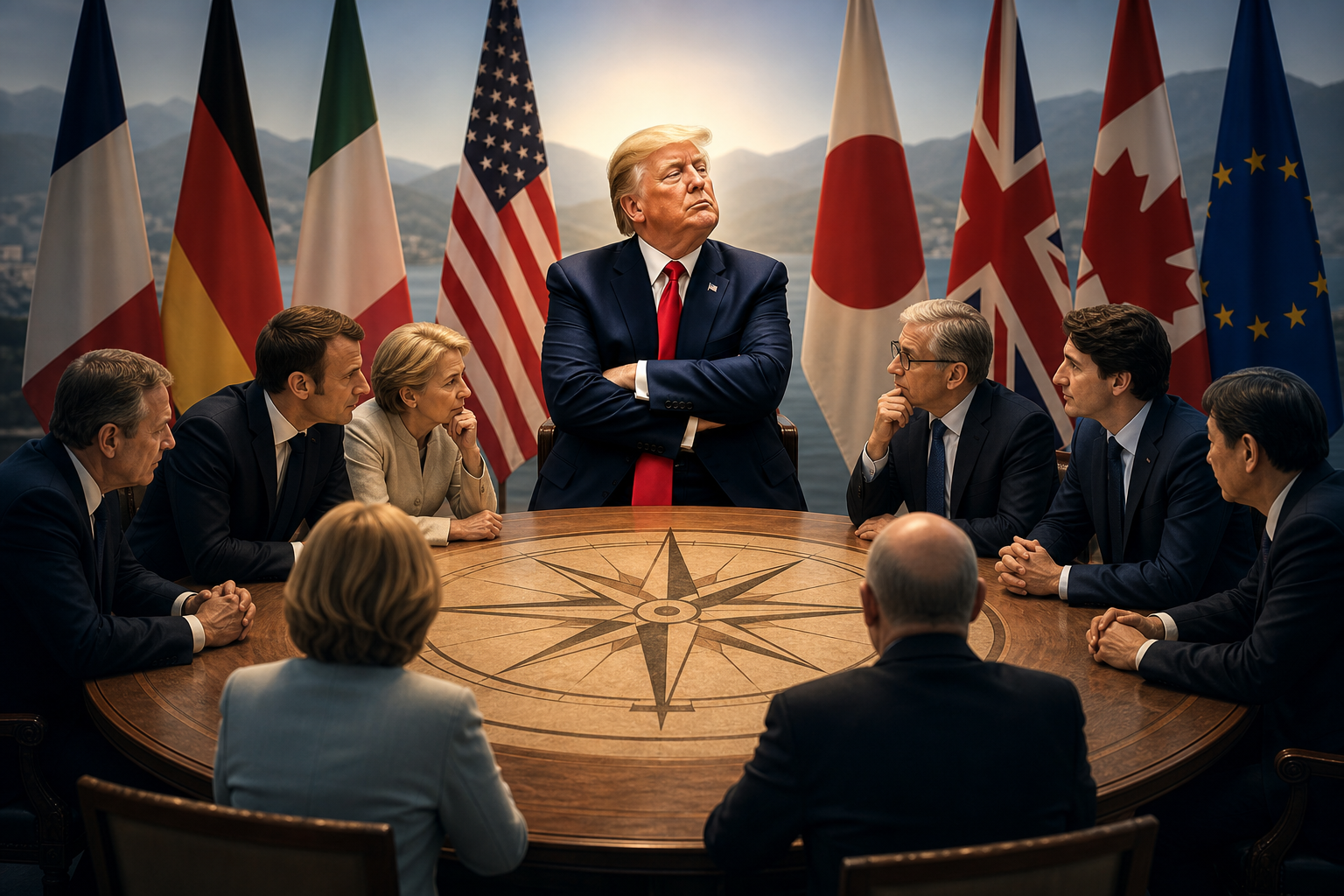
As global leaders convene for the Group of Seven (G7) summit, tensions between U.S. President Donald Trump and his international counterparts are becoming increasingly evident. Recent reports highlight a growing strain in relationships, with insults exchanged and allies expressing a desire to reduce dependency on the U.S.
In an in-depth exploration by Politico, it is revealed how G7 leaders are managing the delicate balancing act of diplomacy with Trump. Known for his unconventional approach, Trump’s recent criticisms of NATO and individual leaders have raised concerns among allies. CNN emphasizes that these insults reflect a significant deterioration in these relationships, suggesting that tensions may overshadow the summit’s agenda.
In light of these challenges, The Washington Post notes that allies are proactively planning a future that relies less on the U.S. This shift indicates a broader trend of nations seeking to establish independent paths in an increasingly multipolar world, a move reminiscent of biblical wisdom that encourages nations to seek their own paths in collaboration rather than dependence.
Meanwhile, as Trump arrives at the summit, The New York Times underscores the urgency for allies to rethink their relationship with the U.S., highlighting the nuances of partnership and the significance of maintaining unity in a fractious global environment.
As discussions unfold, President Trump participated in the leaders’ traditional greeting at the summit, as reported by PBS. This moment, while ceremonial, represents the challenge of constructing a foundation of trust amidst discord.
In navigating these turbulent diplomatic waters, we are reminded of the biblical passage, “A house divided against itself cannot stand” (Mark 3:25). This verse serves as a powerful reminder of the importance of unity, whether among individuals or nations. Just as Christ taught the power of community, so too must leaders seek to build bridges rather than walls.
As we reflect on these dynamics, the takeaway is clear: true leadership requires humility, patience, and a commitment to dialogue. In an era marked by division, we are encouraged to consider how we can foster understanding and unity in our own communities. The actions of leaders ripple through history; may their choices inspire us to embody the principles of peace and cooperation in our everyday interactions.
If you want to want to know more about this topic, check out BGodInspired.com or check out specific products/content we’ve created to answer the question at BGodInspired Solutions
If positive Biblical wisdom matters to you, I’d love your support of the mission
Q&A about
How do G7 leaders navigate their interactions with Trump while staying true to their values?
G7 leaders can find wisdom in Proverbs 15:1, which speaks to the power of gentle words to turn away wrath. By approaching dialogue with humility and respect, they can maintain their values while effectively communicating with someone as polarizing as Trump.
Are there biblical principles for dealing with difficult people like Trump?
Yes, Scripture encourages us to love our enemies and pray for those who persecute us, as stated in Matthew 5:44. This means striving for understanding and compassion, even in tense situations, which can help foster positive outcomes.
What can we learn from Jesus about handling political disagreements?
Jesus taught about peacemaking in Matthew 5:9, emphasizing the importance of being a peacemaker. In the context of global leaders, this means seeking common ground and collaboration rather than allowing differences to breed division.
How can faith influence the way leaders manage international relationships?
Faith encourages leaders to act with integrity and accountability, as seen in Luke 16:10, which highlights the importance of being faithful in small matters. Leaders grounded in their beliefs can approach relationships with genuine intentions and a commitment to justice and mercy.