 0
0
 0
0
Peter Thiel Raises Eyebrows with AI Predictions and Vatican Critique
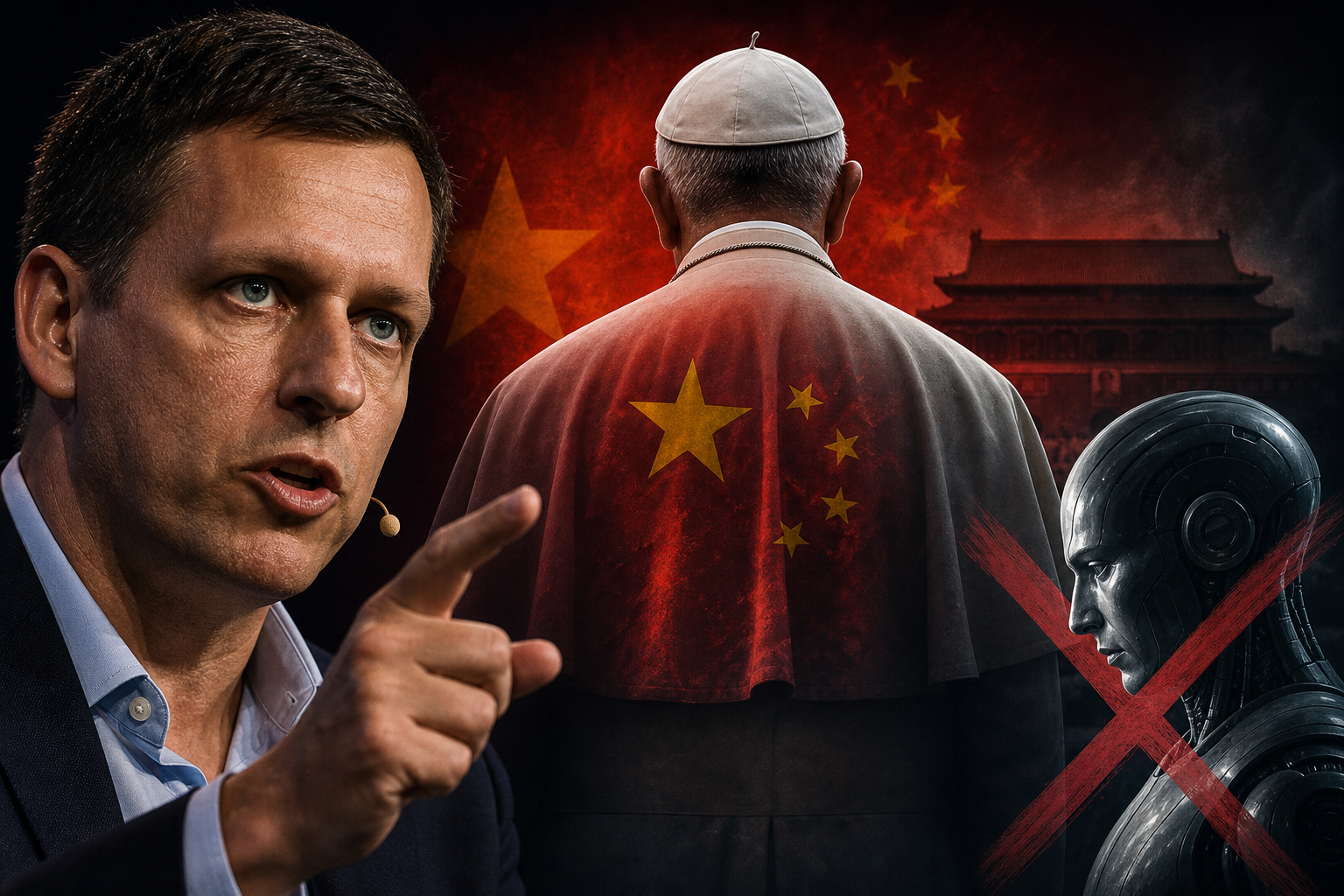
At the recently held Aspen Ideas Festival, billionaire tech investor Peter Thiel sparked controversy by accusing Pope Leo XIV of inadvertently serving as a “Chinese communist agent” due to the pope’s call for stronger regulation of artificial intelligence. Thiel’s remarks highlighted his deep concerns about the trajectory of AI and the direction of politics in the United States.
Thiel, known for co-founding notable companies like Palantir and PayPal, issued a warning about what he perceives as a looming “democratic-socialist takeover” within the Democratic Party. His comments come in a time when self-identified democratic socialists are gaining prominence, exemplified by significant victories in recent elections.
During the panel discussion, Thiel took aim at the Vatican, asserting that Pope Leo XIV’s first encyclical, “Magnifica Humanitas,” can stall advancements in AI for the U.S. while overlooking its influence elsewhere, particularly in China. “The encyclical is a danger because it symbolizes a double standard in the race between the U.S. and China,” he asserted, eliciting laughter from the audience.
Thiel’s critique of the pope reflects a deeper skepticism toward authority and institutions. He contends that the church’s push for oversight could unintentionally favor nations with less regard for ethical considerations. This perspective raises questions about who truly wields power in today’s complex geopolitical landscape.
Interestingly, Thiel’s criticism is not entirely new; tension has simmered between him and the Vatican for some time. Earlier this year, he delivered a lecture series in Rome that reportedly unsettled church officials. His remarks often blur the lines of political and theological critique, reminiscent of biblical themes that warn against false prophets and misplaced allegiances.
As Thiel presents his views on tech and governance, they resonate with the wisdom found in Proverbs 10:9: “Whoever walks in integrity walks securely, but whoever takes crooked paths will be found out.” This verse invites reflection on the importance of transparency and moral fortitude in both individual actions and organizational structures.
In today’s rapidly changing world, Thiel’s critique serves as a cautionary tale about the need for discernment when it comes to the interplay of technology and governance. It challenges us to consider whether our pursuits align with deeper ethical principles that prioritize humanity’s common good.
In closing, Thiel’s comments invite us to reflect on the broader spiritual lesson: the significance of grounding our motivations in integrity and ethical responsibility. As we navigate complex issues like AI and politics, let us remember that true wisdom seeks a path illuminated by compassion and unity, fostering not just technological advancement but a society that honors every individual.
If you want to want to know more about this topic, check out BGodInspired.com or check out specific products/content we’ve created to answer the question at BGodInspired Solutions
If positive Biblical wisdom matters to you, I’d love your support of the mission
Q&A about
Did Peter Thiel really say the pope is working for the Chinese Communists?
Thiel did express concerns about the pope’s stance on AI, suggesting it aligns with ideologies that could benefit authoritarian regimes like China. From a biblical perspective, we can think about Jesus’ warning in Matthew 24:24, where He cautions about deception. It reminds us to seek truth and discern the influences that may lead us away from our faith.
How does AI relate to Christian values and ethics?
AI poses ethical dilemmas that require a strong moral framework, something we find in Scripture. Jesus taught us to love our neighbor as ourselves, which challenges us to consider how AI affects people’s lives and their dignity. It makes us question whether advancements serve humanity or lead us to exploit or dehumanize others.
Is criticizing AI as Thiel does unfaithful or inconsistent with Christian teachings?
Criticism can be a valid expression of discernment when it seeks to uphold the value of human life and integrity, echoing the call in Ephesians 5:11 to expose darkness. Engaging critically with technology reflects a commitment to the stewardship of God’s creation and fosters dialogue about ethical use that aligns with Christian values.
How should Christians respond to concerns about AI and globalization as expressed by Thiel?
Christians can respond by grounding their discourse in love and wisdom, as James 1:5 encourages us to ask for wisdom discernment. Engaging thoughtfully on these topics allows believers to participate in conversations about how technology intersects with our faith, advocating for practices that honor God and promote community well-being.