 0
0
 0
0
NASA’s Voyager 1 Faces a Winding Down After Nearly 50 Years in Space
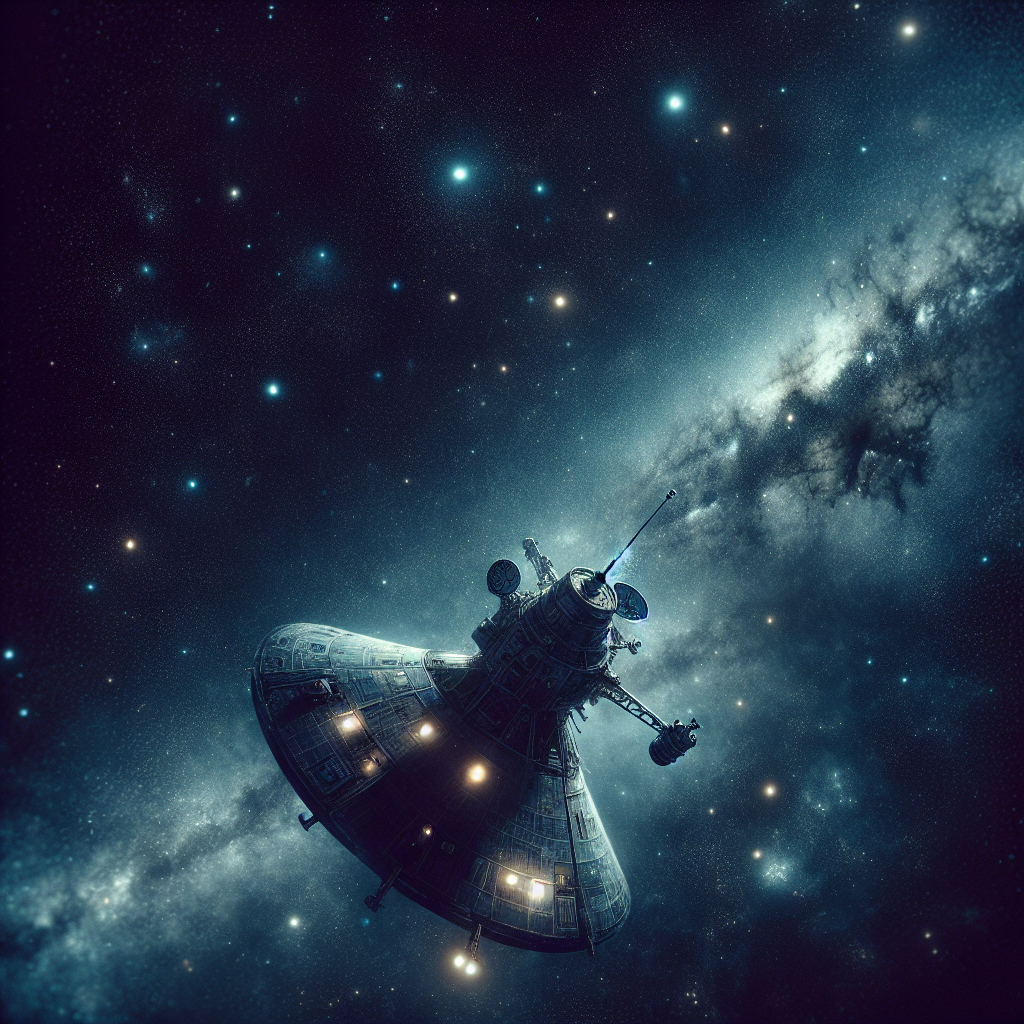
In a remarkable journey spanning nearly five decades and traveling over 15 billion miles from Earth, NASA’s Voyager 1 has become an emblem of human ingenuity and exploration. However, engineers now grapple with the reality that entropy and the limitations of 1970s technology will ultimately lead to the probe’s cessation of operations.
Recently, NASA’s Jet Propulsion Laboratory announced the difficult decision to shut down one of Voyager 1’s key instruments—the Low-energy Charge Particles experiment (LECP). This choice reflects an urgent effort to preserve the remaining functions of the spacecraft, aiming to extend its operational life for at least another year. Kareem Badaruddin, Voyager mission manager at JPL, poignantly noted, “While shutting down a science instrument is not anybody’s preference, it is the best option available.”
Voyager 1, along with its twin Voyager 2, harnesses the power of a radioisotope thermoelectric generator—a type of nuclear battery that provides a steady trickle of electricity. Unfortunately, both spacecraft are losing power at an alarming rate of four watts per year. A recent power drop during a routine maneuver raised concerns that further decreases might prompt an automatic shut-off, jeopardizing the probe’s safety in the vast expanse of interstellar space.
Striking a balance between exploration and preservation, engineers have prepared for this scenario, prioritizing which instruments to shut down first. The LECP has been instrumental for nearly 49 years, gathering data on low-energy particles from beyond our solar system and enlightening us about the cosmos.
While the decision to power down LECP reflects a sobering reality, it also opens the door to new possibilities. A "Big Bang" power-saving plan is in the works, aiming to integrate lower-power devices to prolong the Voyager missions. Interestingly, the plan will first be tested on Voyager 2, which currently has more spare power, before it is implemented on Voyager 1.
This is a moment we can contemplate in light of spiritual reflections, drawing from the biblical principle found in Ecclesiastes 3:1—"To everything, there is a season and a time for every purpose under heaven." Just as Voyager 1 has served its purpose for nearly five decades, so too are there seasons in our own lives. With every challenge we face, there’s room to learn and adapt.
The journey of Voyager 1 encourages us to persist through difficulties, reminding us of the faithfulness and resilience that are hallmarks of a life well-lived. It is an invitation to reflect on our advancements, the necessity of sacrifice for longevity, and the importance of careful stewardship of the resources we’ve been given.
As we watch Voyager 1’s power waning, let us not lose heart; instead, let us embrace transitions as opportunities for renewal. In a world that often feels daunting, remember that perseverance can pave the way toward new beginnings.
Reflective Takeaway
In the grand expedition of life, may we learn to cherish each moment, using our time wisely while preparing ourselves for future possibilities. Just as Voyager 1 continues its journey, so too can we move forward in faith—relentlessly pursuing knowledge and connection, while also nurturing our own inner light.
If you want to want to know more about this topic, check out BGodInspired.com or check out specific products/content we’ve created to answer the question at BGodInspired Solutions