 0
0
 0
0
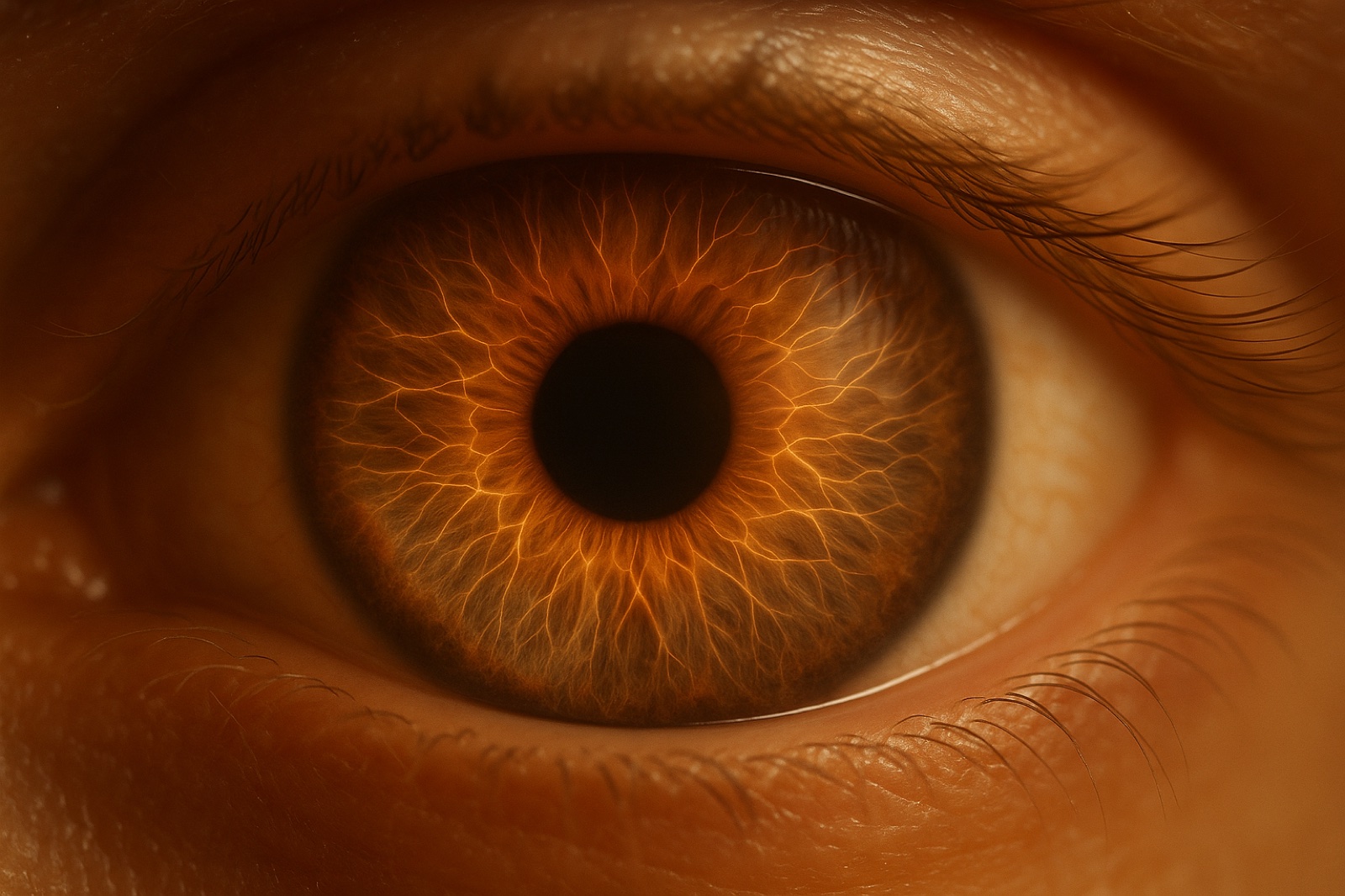
You’ve probably never once thought about your eyes as a communication network. You just look at things, and things appear. Color, motion, shape, the dim outline of a room at night — it all just shows up, instantly, like it’s free.
For decades, the scientific model of how this actually works was built on one core assumption: your eyes are running several separate assembly lines at once. One pathway handles color. Another handles motion. Another handles contrast. Another kicks in when the lights go down. Each one was thought to carry its own signal, independently, from your retina to your brain, like separate wires in a cable never touching each other.
New research out of Yale School of Medicine just found out that assumption was wrong.
What Scientists Actually Found Inside Your Eye
The retina at the back of your eye is packed with a type of cell called a bipolar cell. Their job is to grab the raw signal from your rods and cones — the light-detecting cells right at the surface — and relay it deeper into the visual system, toward the brain.
Researchers assumed these bipolar cells worked like isolated lanes on a highway: one lane for one kind of visual information, staying in its lane the whole way. Using a technically demanding dual patch-clamp recording technique on intact retinal tissue — first in mice, then confirmed in actual human retinas — the Yale team found something different.
The bipolar cells are wired together through an extensive network of electrical synapses, called gap junctions, that let signals leak and spread between pathways that were supposed to be separate. When the researchers stimulated just one bipolar cell, they didn’t see a clean, isolated signal. They saw neurotransmitter release spreading outward in broad, cloud-like patterns, lighting up multiple different cell types at once.
In other words: the “lanes” were never really separate. They were built to talk to each other the entire time.
Why This Changes More Than a Textbook Diagram
This isn’t just a correction to a diagram in a biology textbook. If the individual channels of your vision are constantly cross-talking instead of working in isolation, it reshapes how researchers think about visual processing at the most basic level — and it has real stakes for people with retinal disease.
The Yale team believes this discovery could reshape the understanding of conditions like macular degeneration, glaucoma, and congenital night blindness — diseases where specific visual pathways break down. If those pathways were never truly isolated, treating them as isolated may have been part of the problem all along.
It also raises a bigger question that reaches past the eye entirely. If this is how a system engineers itself at the retinal level — cooperating instead of operating alone — it’s worth asking how much of the rest of the body, and the brain sitting just behind it, was quietly built the same way. Your brain alone runs on more connections than any chip humans have ever built — and apparently, even the smaller systems feeding into it were never designed to run solo.
Built to Need Each Other
Here’s the part that’s easy to miss: none of this cooperation improves efficiency by being separate. It only works because the parts refuse to stay in their lane. The system is stronger, faster, and more resilient precisely because no piece of it insists on going it alone.
That’s not just a fact about retinas. Long before anyone had a microscope fine enough to see a gap junction, there was already a very old idea circulating that no single part of a body — or a person, or a life — was built to function alone. Not the eye, not the hand, not anyone. Ancient wisdom got there first, in its own language: the parts need each other, or nothing works right. Science just found the wiring underneath the idea.
It’s the same conclusion, from an entirely different direction, that researchers found when they studied 180,000 people across 22 countries looking for the actual antidote to loneliness. The pattern shows up at every scale — cellular, personal, social. Isolation isn’t neutral. It isn’t just “less efficient.” It’s a design violation.
Even the astonishing precision behind how a single cell builds 170 billion exactly-placed neurons points the same direction — a body engineered with this much interdependence baked into its smallest parts wasn’t an accident. Something built it to need connection, all the way down to a gap junction most people will never hear about outside of one obscure study.
What You Do With That
You don’t have to do anything dramatic with this. You just have to notice it. The next time you catch yourself thinking you should be able to handle something entirely on your own — a hard week, a hard year, a hard relationship — remember that not even the cells in your own eyes were built to do that. They lean on each other constantly, without complaint, without cost, and it’s the only reason you can see anything at all.
Maybe the parts of your life that feel like they’re supposed to run in isolation were never meant to.
Discussion Question
Where in your life have you been trying to “run in isolation” — handling something entirely on your own that was probably never designed to be handled alone? What would it look like to let one more connection back in?
Tell us in the comments — we’d love to hear your answer.
Share This
- Scientists just found out your eyes don’t run on separate channels — they’re wired to constantly cooperate. Turns out isolation was never the design, not even at the cellular level.
- Wild study: the “lanes” in your eye that were supposed to work independently are actually leaking signals into each other on purpose. Cooperation, not isolation, was the plan all along.
- New Yale research on the retina found something bigger than eye science: not one piece of you was built to function alone. Not even the cells you’ve never thought about.
Common Questions About This Study
What did the Yale study actually discover about the eye?
Researchers at Yale School of Medicine found that bipolar cells in the retina — which relay visual signals from light-detecting rods and cones toward the brain — are connected through electrical synapses called gap junctions. This means the different visual pathways (color, motion, contrast, low-light vision) aren’t isolated channels as previously assumed; they actively share signals with each other.
How did researchers confirm this?
The team used a dual patch-clamp recording technique, a highly precise method for measuring electrical activity in individual cells, on intact retinal tissue. They first observed the effect in mouse retinas, then confirmed the same pattern in human retinal tissue.
Why does it matter that visual pathways cooperate instead of working separately?
For decades, vision science assumed parallel, independent processing channels. Finding that these channels are cross-wired changes the basic model of how vision works and could affect how scientists approach retinal diseases like macular degeneration, glaucoma, and congenital night blindness — conditions where specific pathways break down.
Is there a connection between this study and any spiritual idea?
The finding echoes a much older idea: that no single part of a body — or a person — was designed to function in true isolation. Long before modern neuroscience, this belief showed up in the idea that every part needs the others to work at all. The new science doesn’t prove a spiritual claim, but it does add a fresh, literal layer to an old observation about interdependence.
What could this research lead to in the future?
Researchers believe understanding these gap junctions could open new approaches to treating retinal diseases, and may offer broader insight into how interconnected neural networks function throughout the rest of the brain.