 0
0
 0
0
Louvre’s Apollo Gallery Reopens: Reflecting on Security and Vulnerability
On Wednesday, the iconic Apollo Gallery at the Louvre Museum reopened after a prolonged closure following last year’s unsettling theft, which saw crown jewels valued at around $102 million stolen in a brazen daylight heist. This marked a significant moment for the world’s most-visited museum, as it attempts to reconcile its historical significance with modern security challenges.
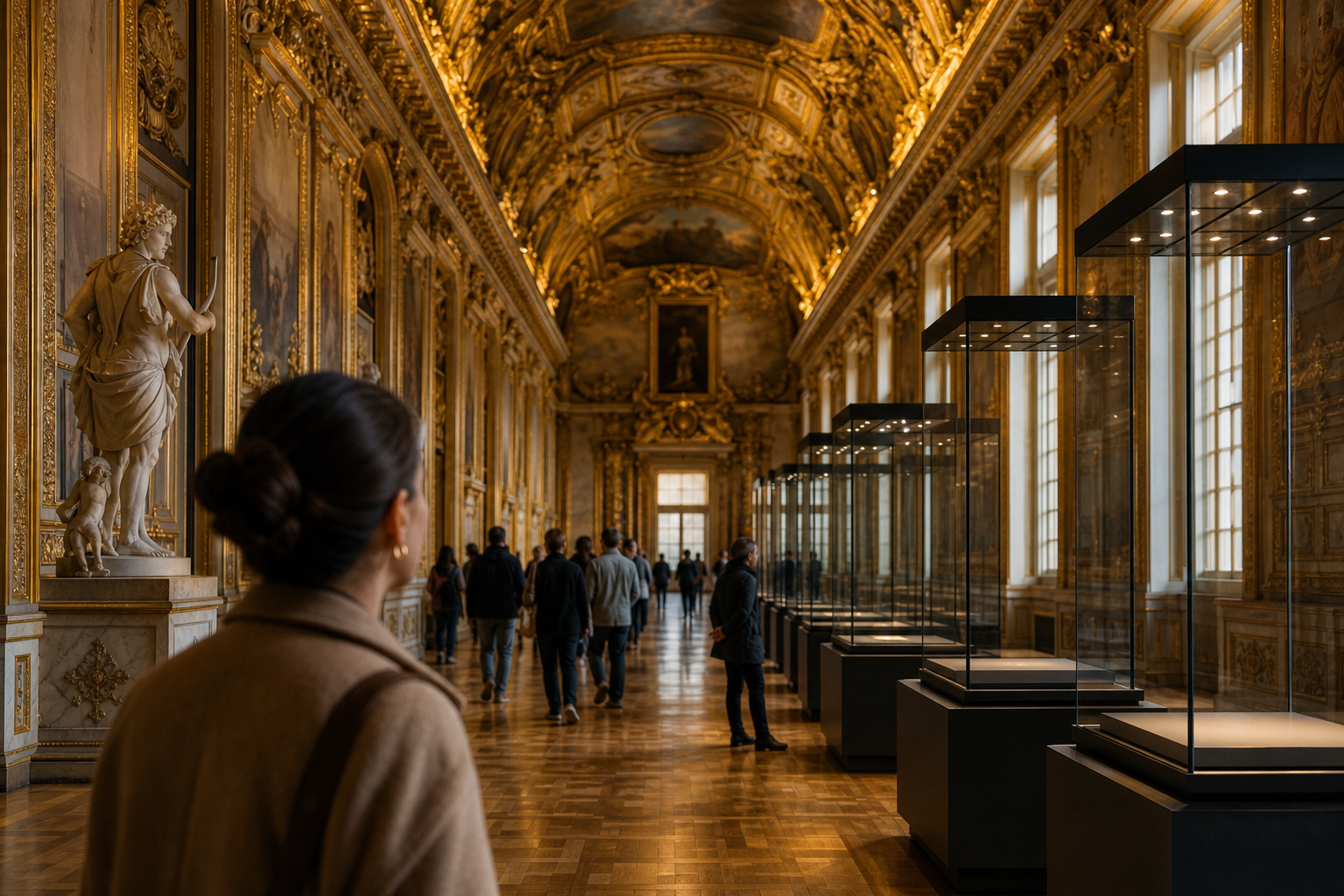
Visitors can now admire the gallery’s splendid architecture, including opulent gilded ceilings and Greek frescoes. However, those hoping to see the previously displayed crown jewels will be disappointed; the precious artifacts have been relocated as the gallery returns to its original 17th-century ceremonial purpose. “It’s also an opportunity to rediscover the splendid architecture and decor of this gallery,” said Christophe Leribault, the Louvre’s director.
Despite the restoration efforts, the theft, which occurred within eight minutes, exposed vulnerabilities not only in the Louvre’s security but in our collective trust in institutions. French Culture Minister Catherine Pegard noted the incident as a “trauma for the entire world,” highlighting a shared concern for preserving cultural heritage in the face of adversity.
This situation calls to mind the biblical principle from Proverbs 22:3: “The prudent sees danger and hides himself, but the simple go on and suffer for it.” Just as wise stewardship applied to our treasures, whether they be historical or personal, is essential to preserving their integrity, so too is it vital for institutions like the Louvre to enhance their security measures and safeguard their collections.
French authorities have since implemented upgraded surveillance systems and anti-intrusion measures, reinforcing their commitment to protection. The Louvre has launched a decade-long renovation plan, envisioned as the “Louvre New Renaissance,” with an investment of up to $933 million to modernize infrastructure and alleviate crowding.
This unsettling episode not only accentuates the importance of vigilance but also serves as a reflective moment for all. Like the treasures of the Apollo Gallery, our own lives hold precious irreplaceable values, whether in relationships, faith, or heritage. In acknowledging vulnerabilities, we can take proactive steps towards safeguarding what matters most.
As we embrace the reopening of the Apollo Gallery, let’s take a moment to reflect on how we prioritize and protect our own treasures. Are we tending to them with care and foresight? The reopening signifies both a return to beauty and a lesson in resilience. May it encourage us to fortify our values, ensuring that they are safeguarded, cherished, and preserved for future generations.
If you want to want to know more about this topic, check out BGodInspired.com or check out specific products/content we’ve created to answer the question at BGodInspired Solutions
If positive Biblical wisdom matters to you, I’d love your support of the mission
Q&A about
Is it safe to visit the Louvre after the heist, especially the Apollo Gallery?
It’s natural to feel concerned after such an event, but safety is often a matter of trust. Jesus reminds us in Matthew 6:34 not to worry about tomorrow, which encourages us to face our daily activities with faith. The museum has likely taken significant measures to ensure visitor safety, allowing you to enjoy your visit without fear.
Why did the Louvre choose not to display any jewels after the reopening?
This decision reflects a deeper understanding of what truly holds value. In Matthew 6:19-21, Jesus teaches us not to store up treasures on earth, as they can be stolen or destroyed. The Louvre might be emphasizing that art and culture have intrinsic worth beyond material valuables, aligning with a perspective that true treasures are found in experiences and relationships.
How can we respond to art theft from a Christian viewpoint?
Responding with grace is essential, as Jesus encourages us to forgive and seek understanding, even in troubling situations (Luke 6:37). Instead of anger, consider advocating for the preservation of culture and the importance of stewardship over God’s creations, reminding us that everything we have is ultimately a gift.
What’s the spiritual significance of reopening cultural spaces like the Louvre?
Reopening places of culture and art can be seen as a renewal of hope and creativity, echoing the new life Christ offers in 2 Corinthians 5:17. Just as Christ brings transformation, these venues can inspire healing and appreciation for beauty, encouraging communities to gather, learn, and grow together in faith and purpose.