 0
0
 0
0
The Story Behind the Iconic Juicy Salif: Design as a Reflection of Life’s Purpose
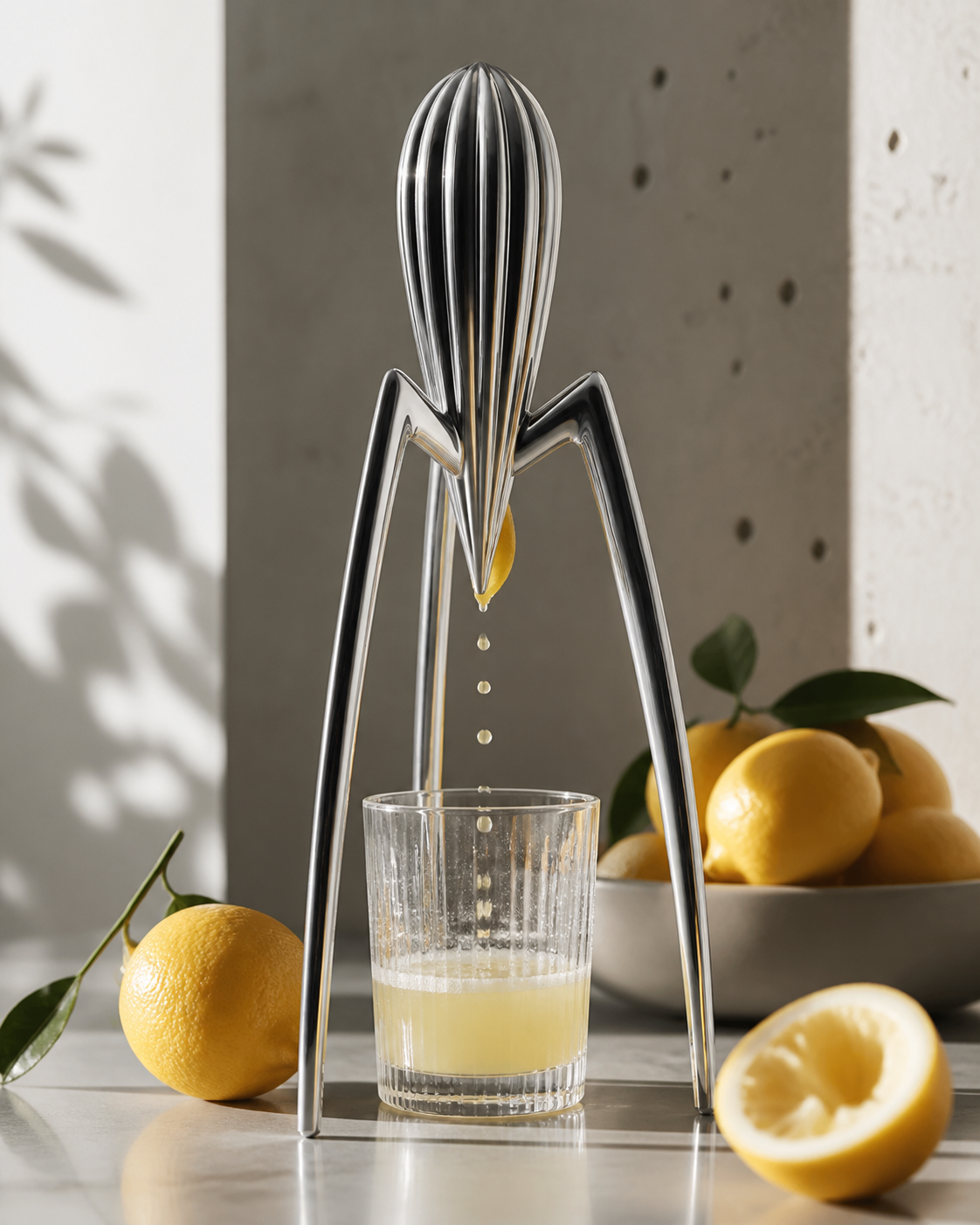
In the realm of industrial design, few objects spark as much debate as Philippe Starck’s Juicy Salif. Since its debut by Alessi in 1990, this aluminum citrus squeezer has captivated and perplexed onlookers alike. Lauded as a design masterpiece yet critiqued for its impracticality, the Juicy Salif invites profound conversations about the intersection of form and function—an exploration that echoes deeper conversations on purpose in life.
An Unlikely Inspiration
The journey of Juicy Salif began in 1988 at a seaside restaurant on the Italian island of Capraia, where Starck doodled on a paper placemat during a meal of fried squid. The resulting sketch, an eccentric figure with elongated legs and a tapered body, marked the inception of a design that would challenge conventional notions of kitchenware. This unexpected genesis reveals a key biblical principle: creativity often emerges in moments of simplicity and reflection.
As Ecclesiastes 3:11 reminds us, “He has made everything beautiful in its time.” Just as Starck’s design invited beauty into the mundane task of squeezing citrus, life’s challenges can be reframed to reveal purpose.
A New Perspective on Design
When Juicy Salif hit the market, it broke away from traditional design standards that prioritized utility above all. Standing nearly thirty centimeters tall on its three slender legs, it resembles an alien artifact rather than a kitchen tool. Starck’s intent was clear: to provoke thought and conversation rather than simply facilitate a task. This creative, almost playful approach challenges the mindset often seen in our daily lives, where efficiency is prized above inspiration.
The notion of form transcending function resonates with the teachings of Jesus, whose parables stirred minds and hearts, prompting listeners to reconsider their views and lifestyles. Just as conversation can lead to deeper understanding, Juicy Salif invites users to reflect on the very nature of the objects we choose to bring into our homes.
A Design Icon with Controversy
Critics often highlight the Juicy Salif’s shortcomings — its instability, the mess it can create, and its maintenance challenges. Yet Starck has consistently asserted that this piece is not merely about squeezing lemons; it’s about igniting dialogue. This mirrors how Jesus, through His interactions and teachings, beckoned individuals to ponder broader spiritual truths rather than fixating on strict rules.
In our lives, we also encounter situations that may seem impractical or even misguided at first glance. Proverbs 16:9 affirms, “In their hearts humans plan their course, but the Lord establishes their steps.” Navigating life’s challenges, much like interpreting design, often requires a willingness to engage with the unexpected and the unconventional.
The Lasting Legacy
More than thirty years since its creation, Juicy Salif occupies a unique space—both as an artistic statement and a topic for discussion. It reminds us that sometimes, the objects we cherish serve a greater purpose beyond their functionality. Many owners opt to display Juicy Salif as an artistic centerpiece rather than a kitchen tool, embracing it as an embodiment of identity, memory, and the stories they wish to convey.
In a world frequently focused on optimization, we are reminded that our lives are enriched not solely by functionality, but by the joy, identity, and conversations that emerge from our choices. As we contemplate our own priorities and pursuits, we can reflect on how beauty and meaning intertwine, urging us to challenge our notions of usefulness.
An Encouraging Takeaway
Ultimately, the story of Juicy Salif serves as an invitation to reconsider the questions we ask ourselves. What if our purpose extends beyond productivity? How might we view challenges as opportunities for creativity and dialogue? Just as design can spark conversations, our lives, too, can inspire others in unexpected ways.
As you reflect on your own objects, relationships, and aspirations, remember that beauty and purpose often exist side by side. Like the intricate design of the Juicy Salif, your life can become a testament to the enduring balance of practicality and inspiration.
“Let your light shine before others, that they may see your good deeds and glorify your Father in heaven.” – Matthew 5:16. May you continue to seek beauty and purpose in all that you do, igniting conversations and reflections that resonate beyond the surface.
If you want to want to know more about this topic, check out BGodInspired.com or check out specific products/content we’ve created to answer the question at BGodInspired Solutions
If positive Biblical wisdom matters to you, I’d love your support of the mission
Q&A about
Does Philippe Starck’s Juicy Salif have any spiritual significance?
The Juicy Salif can remind us of the purposeful design God has for each part of creation, echoing the beauty of His craftsmanship as seen in Ephesians 2:10, where we are described as His handiwork. Just as the unique shape of the Juicy Salif serves a distinct function, we too are created with special roles in His plan.
Is there a biblical perspective on creativity that relates to designed objects like the Juicy Salif?
Absolutely, creativity reflects God’s character, as shown in Genesis 1 with His creation of the world. The thoughtful design of items like the Juicy Salif can inspire us to embrace our own creativity, remembering that whatever we do should be for God’s glory, aligning with Colossians 3:23.
How should a Christian view the importance of aesthetics in everyday items like the Juicy Salif?
Aesthetics in everyday life can elevate our appreciation for God’s creation, as noted in Psalm 104, where the beauty of nature is celebrated. Engaging with beautifully designed objects can lead us to worship, recognizing that all beauty ultimately points back to the Creator.
Does using a designer object like the Juicy Salif align with being a good steward?
Using beautifully crafted items can be compatible with stewardship if we remember our resources ultimately belong to God, as reminded in 1 Peter 4:10. When we enjoy quality design, we should ensure it aligns with our values of serving others and glorifying God, using our treasures wisely.