 0
0
 0
0
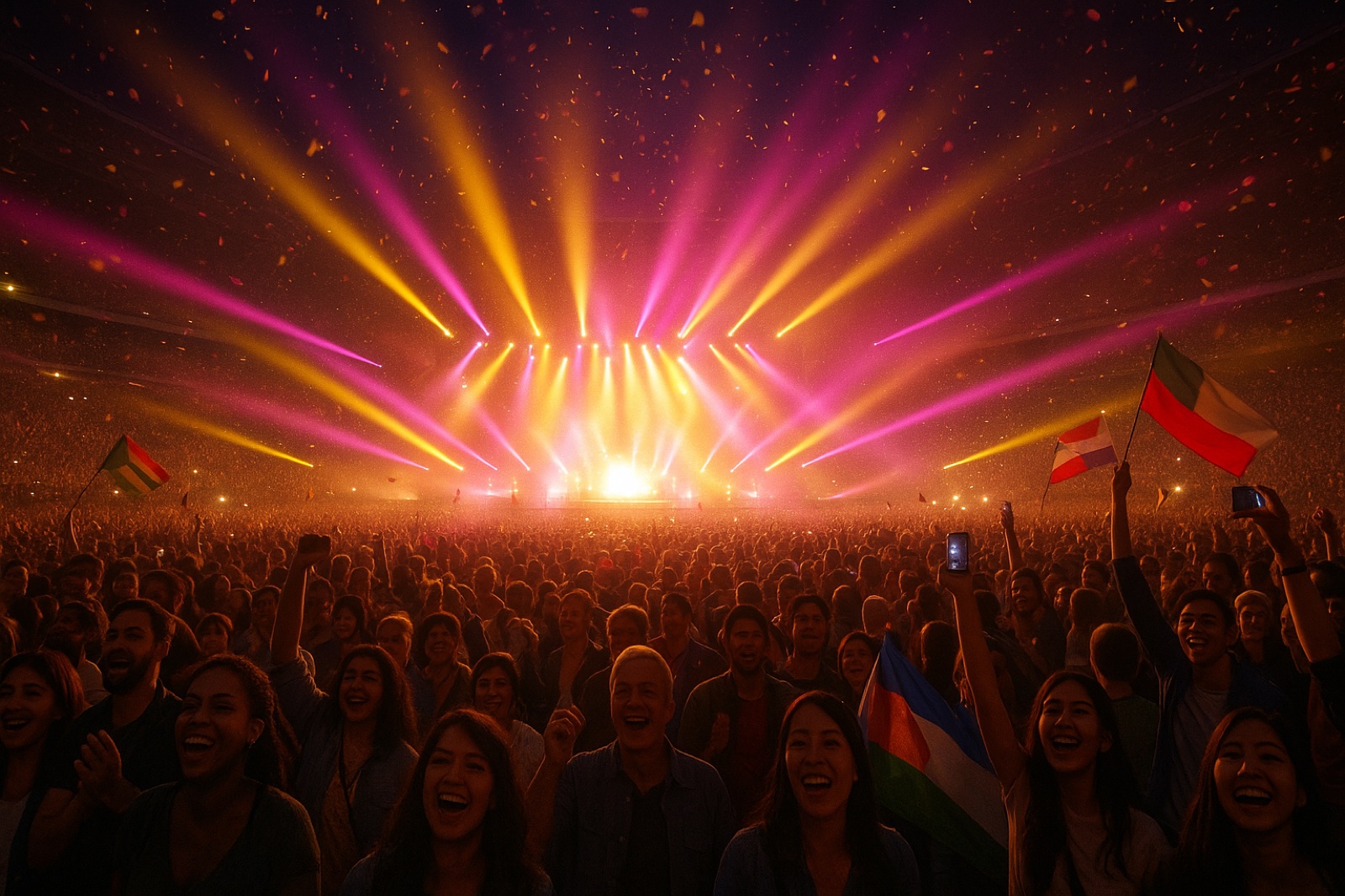
Same week, two very different rooms. One night, Bad Bunny stood under Grammy-stage lighting in front of an industry crowd in suits and gowns. A few days later, he was standing in the middle of a football stadium in front of over 100 million people watching the Super Bowl halftime show. Same artist. Same songs, mostly. Same language — Spanish, almost the entire time, in both rooms.
That last part is the detail that made people stop scrolling. Not because it was unusual for him — it’s what he’s always done. It was unusual for the room. A Super Bowl halftime show, historically one of the most English-language, mass-market, please-everyone stages in American entertainment, just spent its biggest minutes of the year in a language more than half the stadium wasn’t fluent in. And nobody in that crowd needed a subtitle to feel it.
He Didn’t Translate Himself Down for the Room
For decades, the unwritten rule for any artist chasing a truly mainstream American stage was simple: cross over means switch over. Sing the hit in English, or at least release an English version alongside it. Soften the accent. Explain the culture instead of just performing it. Shakira did an English album. Ricky Martin’s biggest US hit was in English. Even artists proud of where they came from usually met the mainstream stage halfway.
Bad Bunny didn’t do that. He built one of the biggest careers in the world — one of the most streamed artists on the planet for several years running — without ever centering his catalog in English. And when he got the two biggest stages American entertainment has to offer in the same week, he didn’t change the formula for either one. He brought the room to him.
What’s easy to miss, if you weren’t paying attention to how it landed, is that this wasn’t really a story about music genres or ratings. It’s the same story underneath a lot of viral cultural moments lately — Billie Eilish’s Roblox concert wasn’t really about the music either. People weren’t just watching a performance. They were watching to see if a room built for one kind of person could actually hold a different kind of person without asking them to shrink first.
What the Reaction Actually Revealed
The clips that spread fastest afterward weren’t the ones critics wrote up. They were the ones filmed on phones inside the stadium and living rooms — people who don’t speak Spanish singing along phonetically anyway, older Latino viewers crying because a stage that size had never fully belonged to someone who sounded like their family before, kids translating lyrics for their non-Spanish-speaking friends mid-broadcast because they wanted them to feel what the song meant, not just hear it.
None of that is really about talent, and it’s not really about representation as a checkbox either. It’s about something more basic: the ache of needing to be understood in your own voice, not a translated, tidied-up version of it. Psychologists have a name for a version of this — the fear that you have to earn your place at the table by becoming someone easier to digest. It shows up everywhere, not just on award-show stages. It’s the same root feeling behind why the fear of rejection is rarely really about being disliked — it’s about belonging, and belonging on your own terms.
That ache is old. It’s the same reason a 12-year-old spent a summer building a robot just to keep his grandmother’s language from disappearing — because losing a language means losing a way of being fully known. Being asked to translate yourself, over and over, to be let into the room — it costs something. Getting to just be there, fully yourself, costs nothing but makes everything different.
An Old Longing, Showing Up in a New Room
Here’s the part that’s easy to miss under the headlines and highlight reels: this longing — to be fully known, fully yourself, and still fully welcome — isn’t new, and it isn’t really about music at all. Long before stadiums or awards shows existed, people were telling stories about a gathering where every language, every background, every accent showed up in the same room at once, and nobody was asked to translate themselves first to belong there. It’s one of the oldest pictures of what “welcome” was ever supposed to look like — not sameness, but every voice still sounding like itself, together.
Two nights of television didn’t invent that idea. They just gave a few hundred million people a small, unscripted preview of it.
The Room Is Bigger Than It Used to Be
Whatever you think of the performances themselves, something real happened in how people responded to them. A stage that used to require blending in became, for one week, a stage where standing out — fully, unapologetically, in your own language — was the thing that moved people most. That’s not a small shift. Rooms like that don’t get bigger by accident. They get bigger because someone stood in the middle of one and refused to become smaller to fit it.
Maybe that’s the part worth carrying past the highlight clips: the room you’re in might be bigger than you think — and the version of you that gets to belong there might not need to be a translated one.
Join the Conversation
Do you think mainstream stages like the Grammys and the Super Bowl are actually catching up to how diverse their audiences already are — or still just having a moment before things go back to normal? Tell us in the comments about a time you felt like you finally belonged in a room without having to change who you were to get there.
Share This
- I didn’t expect a football halftime show to make me think about belonging, but here we are. Bad Bunny didn’t translate himself down for the room — he just brought the room to him. 🎤
- The clips that went viral after Bad Bunny’s Grammys-to-Super Bowl week weren’t the flashy ones. They were people crying because a stage that size finally sounded like their family. That’s the whole story.
- Same artist, same language, two of the biggest stages in America in one week. Turns out the room gets bigger when someone refuses to shrink to fit it.
Quick Questions, Real Answers
Did Bad Bunny really perform at the Grammys and the Super Bowl in the same week?
Yes — he took two of the biggest stages in American entertainment within the same stretch of days, performing largely in Spanish at both, including the Super Bowl halftime show in front of one of the largest television audiences of the year.
Why did Bad Bunny perform in Spanish at the Super Bowl instead of switching to English?
He’s built his entire career without centering English in his music, and he didn’t change that approach for the Super Bowl stage. That choice — performing exactly as himself rather than adapting for a “crossover” audience — is a big part of why the moment resonated so widely.
Is this the first time a primarily Spanish-language artist has headlined the Super Bowl halftime show?
It’s part of a broader shift in recent years toward Super Bowl halftime shows reflecting a wider range of artists and languages, rather than a single all-English format. Bad Bunny’s set was one of the most visible examples of that shift to date.
Why did so many non-Spanish-speaking viewers react so strongly to the performance?
Viewers described feeling the emotion and energy of the performance even without understanding every lyric — a reminder that connection doesn’t always require translation, and that a performer being fully, unapologetically themselves often communicates more than a “safer,” more universal version would.
What does this moment say about belonging beyond just music?
It touches something bigger than an award show: the difference between being tolerated in a room and actually belonging in it. People noticed the difference immediately, which is part of why the moment spread so far beyond music fans.