 0
0
 0
0
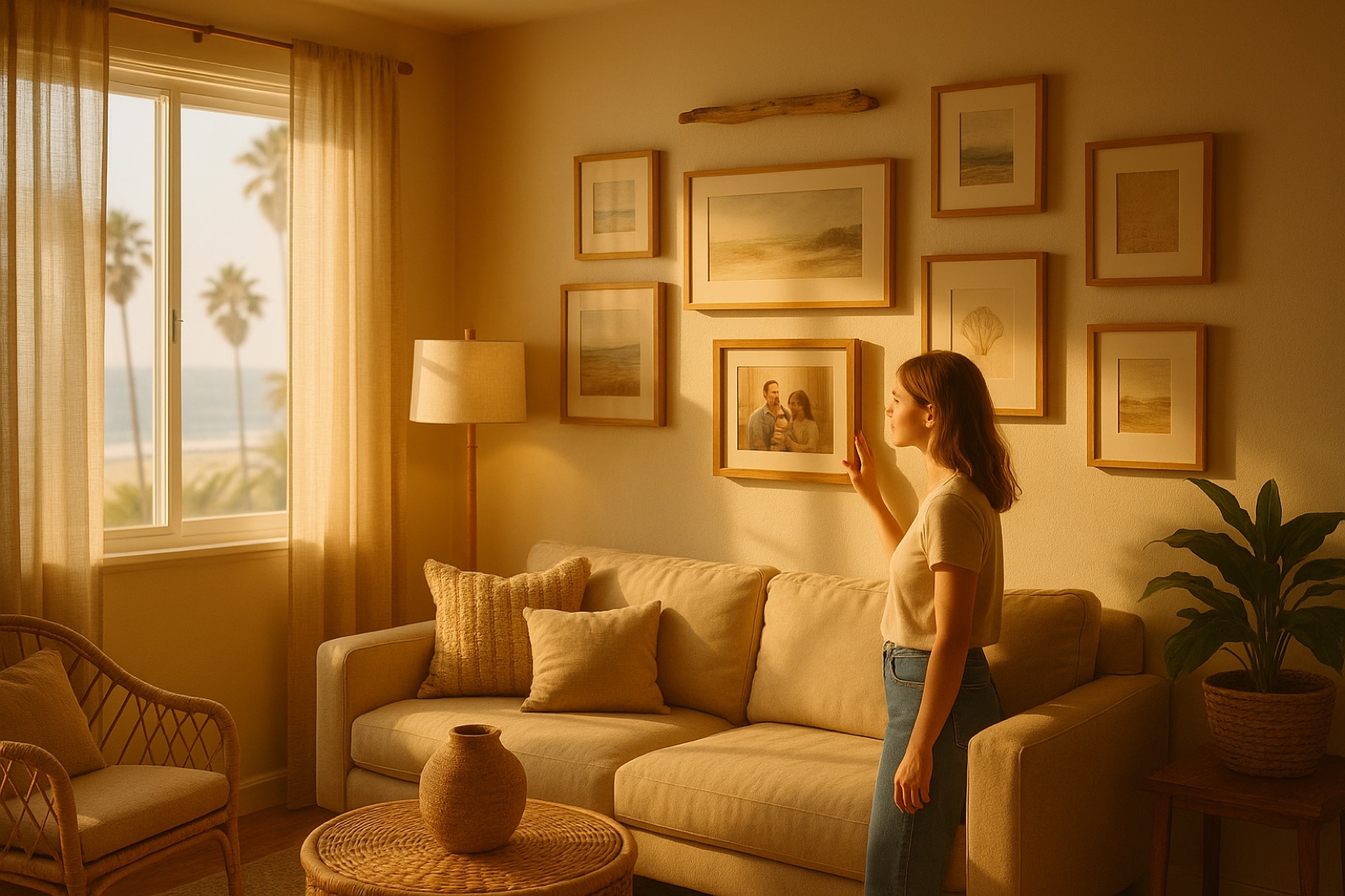
Libby and Aubrey Birrell walked into a vacation rental in Oceanside, California expecting the usual: beach-themed throw pillows, a driftwood coffee table, maybe a “Live Laugh Love” sign somewhere on the wall. What they didn’t expect was to see their own faces staring back at them from a framed photo in a vacation rental they had never once set foot in before — a photo of themselves and family members, hanging in a house neither of them had ever booked, visited, or even heard of.
At first, they figured it had to be one of those “everyone has a lookalike” coincidences. Then they looked closer. It wasn’t a resemblance. It was them.
They posted about it — the way you do when something makes zero sense and you need someone else to confirm you’re not losing your mind. That’s when it got stranger. Other people started replying with photos of their own: the same framed picture, hanging in completely unrelated rentals, in other cities, owned by hosts who had never met the Birrells and had no idea whose family was smiling back at their guests every night.
How Does a Family’s Own Photo End Up in a Vacation Rental?
The internet’s first instinct with a story like this is “haunted.” The more boring, more likely answer has to do with how vacation rentals actually get decorated.
Most short-term rental hosts don’t hand-pick every piece of art in the house. They buy in bulk — from big-box frame sets, discount decor wholesalers, or “instant home” staging kits that ship a house’s worth of coordinated art, frames, and knickknacks in one box, built to make a rental look lived-in without anyone actually living in it. Somewhere in that supply chain, ordinary candid photos — sourced as generic stock filler, never meant to be recognized by anyone — get printed, framed, and shipped out by the pallet. The same handful of “everyday family” images can end up in a beach house in California, a cabin in Tennessee, and a condo in Florida, all at once, with zero connection to each other except the same overseas print run.
If that’s what happened here, it means the Birrells weren’t hand-picked. They were anonymous — a face pulled from a stock image library at some point, probably for a modest licensing fee, never expecting to end up hanging in a stranger’s guest room three thousand miles away. Which almost makes it stranger: not a targeted mystery, but a genuinely random collision between two totally separate corners of their own lives.
Why Our Brains Refuse to Call It “Just a Coincidence”
Here’s the part that’s actually interesting, whether or not the stock-photo theory turns out to be right: humans are terrible at accepting coincidence at face value. Psychologists call it apophenia — the tendency to see meaningful patterns in random or unconnected data. It’s the same wiring that makes you notice the clock says 11:11 more than any other combination of numbers, or that makes a song “always” seem to come on right when you’re thinking about someone.
It’s not really a flaw. It’s a survival trait. A brain quick to spot patterns — even false ones — was more likely to survive a world full of real, dangerous patterns: a rustle in the grass, a face in a crowd that didn’t belong. We’re descended from the ones who paid attention. The cost of that wiring is that we sometimes see design in things that are actually just noise. And sometimes — this is the part that keeps stories like this alive — we’re right to wonder.
That’s the real reason a story about a photo in a vacation rental spreads the way it does. It’s not really about interior decorating. It’s about the moment your brain refuses to file something under “random” and insists, instead, on asking what are the odds.
The Question Underneath the Photo
That tension — is this random, or does it mean something — isn’t new, and it isn’t really about photos on walls. It’s one of the oldest questions people have asked: whether the details of an ordinary day are ever actually just random, or whether something bigger is quietly arranging things long before anyone notices. Some of the oldest stories we have describe a person noticing something so specific it couldn’t be nothing — a detail lined up before they even realized they needed it, the kind of moment that changes how you read the rest of your own life once you actually notice it. Other old stories describe someone realizing, only in hindsight, that they had been placed exactly where they were for a reason they couldn’t see yet. The people living those stories usually couldn’t prove it in the moment either. They just noticed, sat with it, and let it change how they walked through the rest of the day.
You don’t have to land anywhere specific with that to feel the pull of it. A framed photo showing up somewhere it has no business being is a small, strange thing. But it’s small and strange in exactly the shape of a much older question: how much of what looks random is actually connected in ways we just can’t see yet.
What This Story Is Really Worth Keeping
The Birrells still don’t know, definitively, how their photo ended up on that wall — or on the others. Maybe someday a decor company quietly confirms the boring explanation and the mystery closes for good. Or maybe it never gets fully explained, and it just becomes one of those stories a family tells for the next thirty years.
Either way, there’s something worth keeping from it that has nothing to do with ever solving the mystery: the next time something lines up in a way that feels a little too specific to be nothing, you don’t have to immediately explain it away. You’re allowed to just notice it. Some of the more interesting moments in life start exactly there — not with an answer, but with a “wait, what are the odds of that?” If a moment like that has you wondering whether you’re actually paying attention to what’s around you, this quick check-in is a good place to start — no framed photo required.
Discussion Question
When something lines up in a way that feels too specific to be nothing — a photo, a name, a date — do you file it under “coincidence” and move on, or does it make you wonder if something bigger is at work? Tell us where you land in the comments.
Share This
- Two sisters walked into a vacation rental they’d never stayed in before and found THEIR OWN framed photo hanging on the wall. Then other guests started finding it in other rentals too. Nobody can fully explain it.
- This “photo in a stranger’s rental” story is either the most boring stock-photo supply chain mix-up ever, or proof that “random” isn’t as random as it looks. Read it and decide for yourself.
- The most unsettling part of this viral photo story isn’t the mystery. It’s how fast your brain refuses to just call it a coincidence.
Common Questions About the Vacation Rental Photo Story
What is the vacation rental photo story about?
Two sisters, Libby and Aubrey Birrell, found a framed photo of themselves and family members hanging on the wall of a vacation rental in Oceanside, California — a property they had never stayed in or visited before. After they shared it online, other people reported finding the exact same framed photo in unrelated vacation rentals in other locations.
How did a family’s private photo end up in a stranger’s vacation rental?
The most likely explanation is that the image was part of a generic “stock family” photo package sold in bulk to vacation rental decor and staging companies. These bundled art kits are shipped out widely, so the same handful of images can end up framed in unrelated rentals across the country with no direct connection between the properties.
Is the vacation rental photo story confirmed to be real?
The story has spread widely as a viral human-interest post, with multiple people independently reporting the same framed photo showing up in their own separate rentals. No decor company or stock photo agency has issued an official statement confirming exactly how the image entered the supply chain.
Why do people call coincidences like this “too specific to be random”?
Psychologists point to apophenia — the human tendency to notice and assign meaning to patterns, even when the underlying cause is mundane. It’s the same instinct behind noticing repeating numbers or “meaningful” song timing. The wiring exists because pattern-recognition was historically a survival advantage, even though it sometimes flags real coincidence as something more.
What can a story like this teach us about noticing “coincidences” in everyday life?
It’s a reminder that not every strange alignment needs an immediate explanation. Sitting with a moment that feels too specific to be nothing — rather than rushing to label it “random” or “meaningful” — is often where genuine reflection and wonder actually start.