 0
0
 0
0
Opponents Challenge Plan to Paint Eisenhower Executive Office Building Near the White House
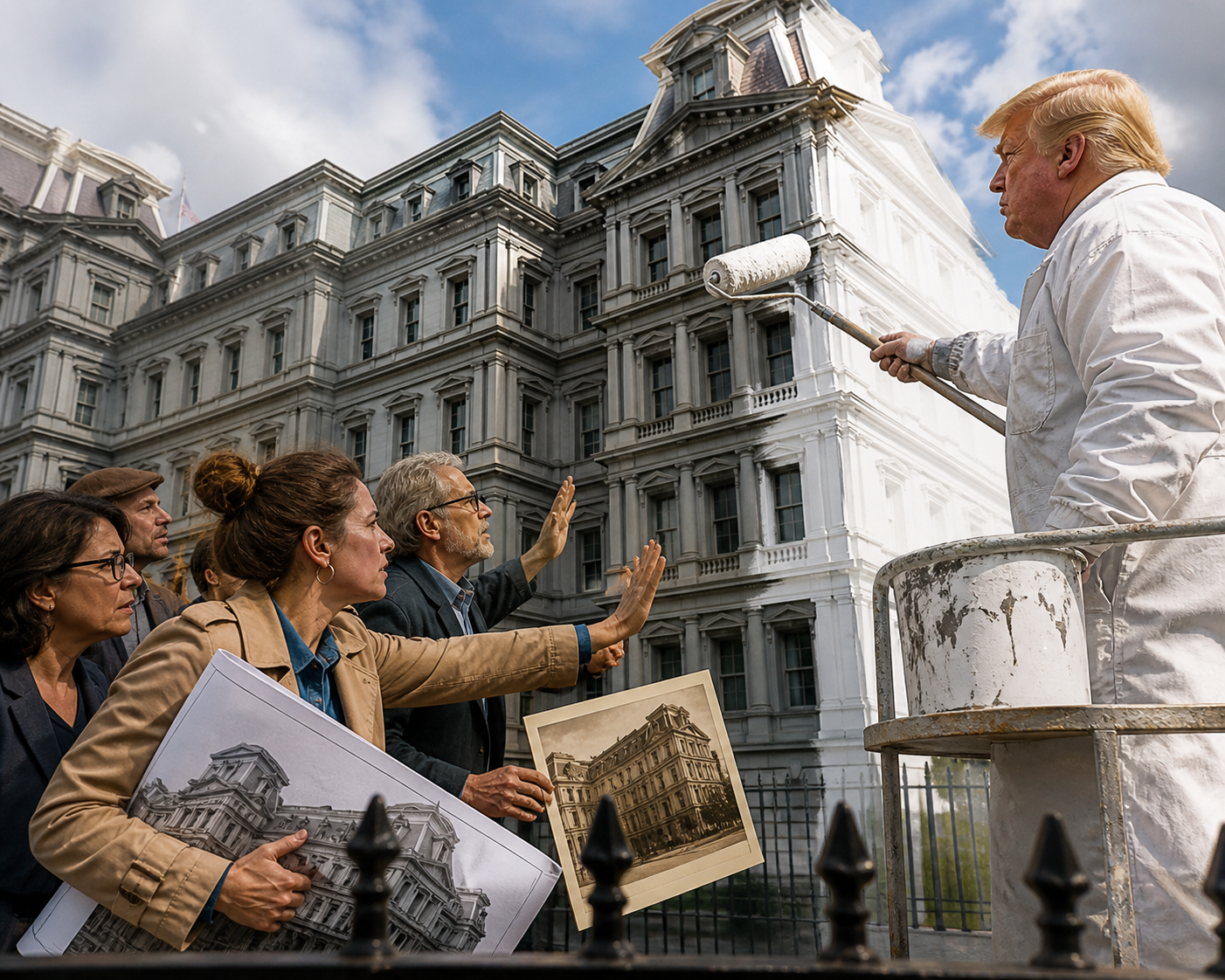
WASHINGTON — A proposed plan by the Trump administration to repaint the Eisenhower Executive Office Building, located adjacent to the White House, is facing legal hurdles as opponents prepare to seek an injunction in federal court. This significant structure, known for its striking gray granite facade, has become a focal point of contention as some citizens express concern over potential changes to its aesthetic and historical integrity.
At the heart of this dispute are deeper considerations about preservation and respect for heritage. Opponents argue that altering such a historic landmark might symbolize a broader movement away from tradition and permanence—principles many hold dear. Just as Jesus taught about the importance of maintaining a solid foundation (Matthew 7:24-27), there is wisdom in honoring structures that represent our shared history and collective journeys.
Advocates for preserving the building’s current appearance cite the need for unity and consistency in government representation. Reflecting biblical tenets about stewardship and care, they view the preservation of such monuments as a responsibility, akin to how communities are called to nurture and respect their shared environments and histories.
As this legal battle unfolds, it invites a deeper reflection on the significance of our communal spaces and the heritage they embody. The challenge is not merely about the color of a building but about how we collectively honor history while navigating our present realities.
In light of this situation, one can recall Proverbs 22:28: "Do not move an ancient boundary stone set up by your ancestors." This highlights the importance of preserving what has been established and cherishing continuity in our shared legacies.
Ultimately, this case serves as a reminder for all of us to engage in thoughtful dialogue and to weigh our choices carefully, reflecting on how they honor or disrupt the narratives that connect us. It encourages us to think of the broader spiritual lesson: fostering respect and care for what has come before can guide current and future generations toward a more harmonious existence.
As we navigate our individual and collective journeys, let us remember the biblical principle of love and respect for one another’s values and traditions, fostering a sense of community and connection that uplifts us all.
If you want to want to know more about this topic, check out BGodInspired.com or check out specific products/content we’ve created to answer the question at BGodInspired Solutions
If positive Biblical wisdom matters to you, I’d love your support of the mission
Q&A about
Are preservationists’ concerns about Trump painting the Eisenhower Executive Office Building white justified?
Preservationists often emphasize the importance of maintaining historical integrity, which aligns with God’s call for stewardship in Matthew 25:14-30, where we are entrusted with what we have. Taking care of our cultural heritage reflects a responsibility to honor the past and the lessons it teaches us.
How does the color change of a historical building relate to biblical values?
The Bible teaches us to be mindful of our actions and their impact on the community, as seen in Philippians 2:4, which urges us to look out for the interests of others. Changing the appearance of a historical building can alter public perception and connection, affecting how the community feels regarded and respected.
Why do some believe painting this building white could be problematic?
Changing such a landmark can symbolize a shift in identity, reminiscent of how Jesus warned us in Matthew 7:24-27 about the importance of building on a solid foundation. Preserving the original character of the building fosters stability and community, much like building on faith offers a firm foundation.
What can Christians learn from the debate over the building’s color?
This debate can serve as a reminder of unity and purpose, as expressed in Ephesians 4:3, which encourages us to maintain the unity of the Spirit. Addressing differing viewpoints with respect can strengthen our community and demonstrate Christ-like love in action, regardless of our opinions on aesthetics.