 0
0
 0
0
For most of history, “terraforming Mars” was a phrase you’d only hear in a science fiction novel — right up there with warp drives and time machines. Interesting to think about, not something anyone expected to see a real engineering plan for.
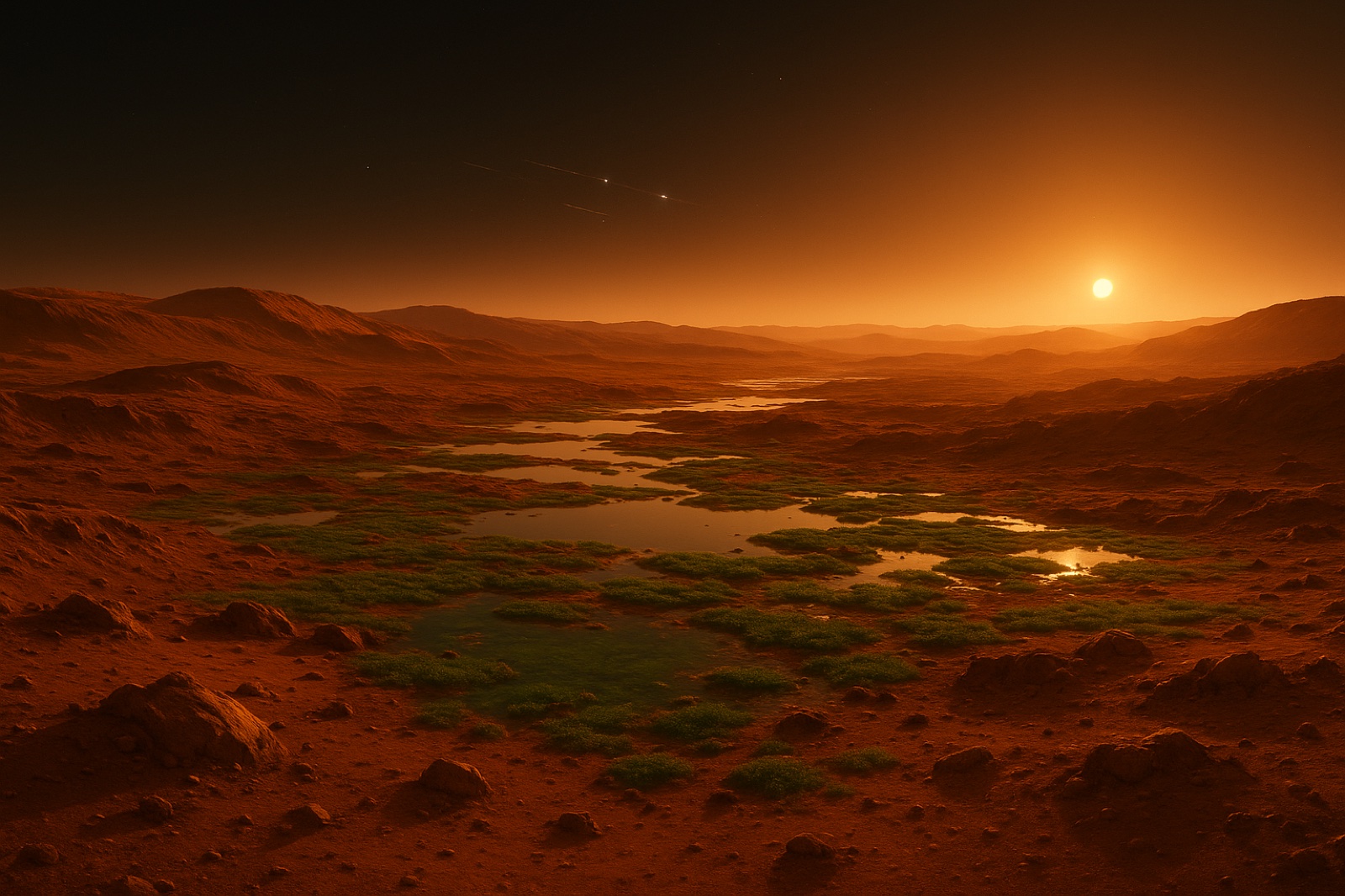
That changed this year. Scientists have published what’s being called the first serious scientific roadmap for actually doing it — not a thought experiment, but a staged, physics-based plan for turning a frozen, radiation-blasted rock into a world that could support life.
It’s still, by every honest account, a very long way off. But for the first time, the people doing the math are saying it might actually be possible.
Why This Suddenly Feels Real
Terraforming Mars used to run into a simple wall: the energy and technology required were so far beyond anything humans could build that the conversation stayed theoretical. That wall is starting to crack, for a few concrete reasons.
Launch costs are falling fast, largely because reusable rockets have made getting mass into space dramatically cheaper than it was even a decade ago. Synthetic biology has advanced to the point where scientists can seriously discuss engineering organisms tough enough to survive and even thrive in Martian soil and atmosphere. And climate modeling — the same science used to track warming here on Earth — can now be pointed at Mars to simulate, with real precision, what it would take to warm the planet up.
One detail from the new research stands out: engineered metal nanoparticles, released into the thin Martian atmosphere, could trap heat up to 5,000 times more efficiently than the greenhouse gases warming Earth. That single number is a big part of why “impossible” quietly became “worth studying.”
The Actual Plan, Step by Step
The roadmap isn’t “wave a machine at Mars and wait.” It’s staged, the way any project this size would have to be:
- Start small. Build advanced greenhouses that create localized habitable pockets — proof of concept before anything planet-wide.
- Warm the whole planet. Deploy lightweight orbital mirrors to increase surface temperature and atmospheric pressure, paired with those engineered aerosols to trap heat at scale.
- Let it breathe. Once conditions allow it, introduce a photosynthetic biosphere — organisms that could, over time, start producing a real atmosphere the way early life did here on Earth.
Researchers who worked through this at a recent workshop generally agreed that the warming and greening stages are technically feasible, and could plausibly happen on a timescale of less than a century — fast, on a planetary scale. That’s the part that turned a fantasy into a research agenda.
Why It’s Not That Simple
Feasible is not the same as easy. The scale of energy, material, and industrial capacity this would require is still far beyond what humanity can currently produce. Nobody credible is claiming Mars will be green in our lifetimes.
There’s also a harder question sitting underneath the engineering: what if Mars already has its own life, in some form we haven’t detected yet? Several researchers involved in this new roadmap have been explicit that any real terraforming effort has to reckon with that possibility first — that “we can” isn’t the same question as “we should,” at least not until we actually know what’s there.
That tension — between what we’re capable of building and what we’re responsible for when we build it — isn’t new. It’s the same tension anyone wrestles with when they’re handed something powerful and asked to use it well, whether that’s a new job, a family, or, as it happens, an entire planet.
A Very Old Job Description
Here’s the part that’s easy to miss in all the talk of orbital mirrors and engineered atmospheres: humanity has technically been handed this exact assignment once before.
Long before anyone imagined greening another planet, the opening chapters of the Bible describe the first humans being placed in a garden and given a job — not to exploit it, but to tend it, cultivate it, and have responsible dominion over it. Take a raw, unfinished world and make it flourish. Care for what you’ve been given rather than just extracting from it.
That’s a strikingly precise description of what a Mars terraforming roadmap is actually proposing to do to an entirely different planet. The debate over Martian life the researchers are wrestling with — the instinct to ask “what are we responsible for here?” before “what can we get away with?” — is the same instinct built into that original assignment. We didn’t invent the idea of stewardship when we started dreaming about Mars. We just found a much bigger canvas to apply it to.
What We’re Really Building Toward
Whether or not anyone alive today ever sees a green patch on Mars, the fact that we keep dreaming this particular dream says something about what humans are actually built for. Not just to explore. Not just to consume. Somewhere underneath the rocket science is an old, quiet instinct to take something barren and make it capable of holding life.
Maybe that instinct is the whole point — on Mars, or right here, on the one planet we already have.
A Question Worth Sitting With
If humanity ever actually succeeds in making another planet livable, do you think we’d take better care of it than we’ve taken of this one — or would we just repeat the same mistakes somewhere new? Tell us what you think in the comments.
Share This
- Scientists just published the first real, physics-based plan to terraform Mars. And buried in the roadmap is a question about responsibility that’s a lot older than the space program. Worth a read.
- Turns out “take a barren world and make it flourish” isn’t a new assignment. We’ve just found a second planet to try it on. Scientists’ new Mars terraforming roadmap made me think about this differently. Article here.
- The new Mars terraforming roadmap is wild — orbital mirrors, engineered nanoparticles, a whole staged plan. But the part that stuck with me wasn’t the tech. Read why.
Quick Questions People Are Asking
Is it actually possible to terraform Mars?
According to a new scientific roadmap published in 2026, warming Mars and eventually greening it with a photosynthetic biosphere are considered technically feasible using a staged approach — though full, planet-wide terraforming remains far beyond current industrial capability.
How would scientists actually warm up Mars?
The leading proposal combines lightweight orbital mirrors that increase surface temperature and atmospheric pressure with engineered metal nanoparticles released into the atmosphere, which researchers say could trap heat thousands of times more efficiently than the greenhouse gases warming Earth.
How long would it take to terraform Mars?
Researchers at a recent workshop suggested the warming and greening stages could plausibly happen in under a century once the effort truly began — though getting the resources and technology in place to start remains a far bigger hurdle than the timeline itself.
What’s stopping scientists from terraforming Mars right now?
Mainly scale: the energy, materials, and industrial capacity required are still well beyond what humanity currently produces. There are also unresolved ethical questions, including whether Mars might already host its own life that any terraforming effort would need to account for first.
Does the Bible say anything about taking care of other planets?
Not specifically — but the Bible’s opening chapters describe humanity being given a job over this world: to tend it, cultivate it, and exercise responsible care over it rather than simply using it up. Many people find it striking that a modern plan to transform an entirely different planet echoes that same basic idea of stewardship over dominion.