 0
0
 0
0
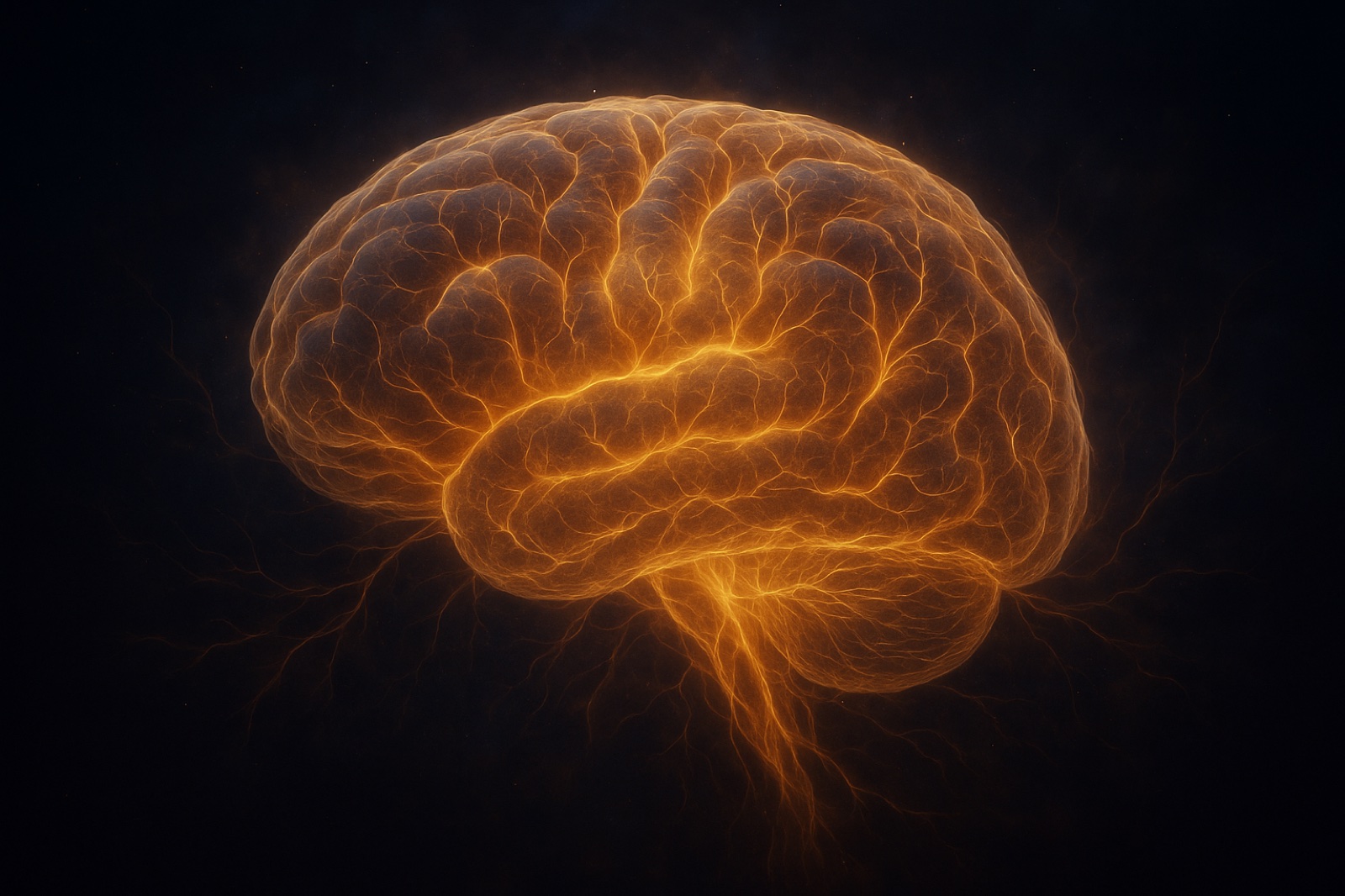
You’ve probably never questioned it. The thoughts running through your head right now, the sense that you’re “in there” reading this sentence — that all comes from your brain. Neurons fire, chemicals cross synapses, and somehow, out of all that wiring, you experience being you. Simple. Settled science.
Except it isn’t settled at all. This summer, one of the most respected neuroscientists alive stood in front of an audience and said the honest answer is: nobody actually knows if the brain creates consciousness, or just carries it.
The Neuroscientist Who’s Not So Sure Anymore
Christof Koch has spent more than three decades trying to answer one question: what is consciousness, and where does it come from? He’s a meritorious investigator at the Allen Institute in Seattle, chief scientist of the Tiny Blue Dot Foundation, and one of the original architects of Integrated Information Theory — a serious, mathematically rigorous framework for measuring how “conscious” a system is.
He is not, in other words, a fringe figure. He built his career on the assumption that consciousness is a physical, measurable phenomenon that science would eventually pin down. That’s what makes his recent public position so striking: he now argues that materialism — the idea that only physical matter is real, and that mind is simply what a sufficiently complex brain does — hasn’t actually solved the problem it claims to have solved.
Does the Brain Create Consciousness? The Question Science Still Can’t Answer
Here’s the distinction that matters. Scientists can absolutely show that brain activity and conscious experience happen together. Damage a certain region, and a specific kind of awareness disappears. Stimulate another, and a memory or sensation appears. That correlation is real, well-documented, and not in dispute.
What hasn’t been shown is causation — proof that the physical activity itself produces the felt, subjective experience, rather than simply accompanying it. Philosophers call this the “hard problem of consciousness”: even a complete map of every neuron firing in your brain wouldn’t, by itself, explain why any of it feels like something from the inside. You could know everything about the wiring and still not know why the lights are on.
For most of Koch’s career, he assumed this was a gap in current knowledge — a puzzle waiting for better tools. Lately, he’s floated a harder possibility: that it might not be a gap at all, but a sign that the whole framework is missing something. It’s not the first time researchers have hit a wall exactly where they expected an answer — a team that recently built a living cell from scratch ran into the same shape of problem, on a smaller scale.
The Clue Nobody Expected
Two real, documented phenomena are pushing Koch to take that possibility seriously.
The first is near-death experience — the vivid, often strangely coherent perceptions reported by people whose brains, by every available measurement, were shutting down. The second, even stranger, is “terminal lucidity”: cases where people with advanced dementia, whose brain tissue has been visibly and irreversibly damaged for years, suddenly become clear-headed, articulate, and fully present, often in the hours or days before they die.
Neither phenomenon fits neatly into a model where mind is simply what damaged tissue does. If the hardware is gone, standard theory says the output should degrade with it — not sharpen. Koch isn’t claiming these cases prove anything supernatural. He’s saying, as a scientist, that they’re strange enough to deserve serious study rather than a shrug.
What If the Wiring Isn’t the Whole Story?
It’s a strange place for hard science to land: back at a question people have been asking for as long as anyone’s been asking questions, just dressed in newer language.
Long before neuroscience existed, people described something in themselves that felt like more than matter arranged by matter — a kind of inner spark that watches, that notices, that is undeniably present even though no one can point to exactly where. Ancient wisdom didn’t need a brain scanner to land on that idea. It simply called it a soul — something given, not manufactured; something breathed into a body rather than assembled by one. People have been reaching for that exact word, “soul,” in their hardest moments, long before anyone could explain why it felt true.
Koch isn’t using that word, and he’d likely bristle at having it put in his mouth. But the door his research has quietly opened, using the most rigorous tools science has, ends up surprisingly close to a very old intuition: that you are not only the sum of your synapses.
Where This Leaves You
Maybe tomorrow you’ll get up, make coffee, and think about none of this. That’s fine. Most people who read about the hard problem of consciousness go right back to their Monday without a second thought — and that’s not a failure of the idea, it’s just how minds work, whatever they turn out to be.
But the question is out now, asked seriously by people with decades of research behind them, not just in a late-night dorm-room conversation. What are you, actually? For once, science doesn’t have a tidy answer. And that might be the most interesting part of the whole story — worth sitting with the same way people sit with the idea that who you are was never just an accident of parts.
Join the Conversation
If scientists eventually confirmed that consciousness isn’t something the brain alone produces — would that change how you think about what happens when the brain stops working? Tell us what you think in the comments.
Share This
- A leading neuroscientist just said the brain might not create consciousness after all. This one messed with my head in the best way.
- Scientists still can’t fully explain why you’re actually “in there” experiencing anything at all. Here’s why one of the top minds in the field thinks materialism might be missing something big.
- Ok, this article about whether your brain actually makes your mind or just carries it is wild. Anyone else think about this stuff at 2am?
Frequently Asked Questions
Does the brain create consciousness?
Neuroscientists don’t fully know yet. While the brain is clearly involved in producing conscious experience, leading researchers like Christof Koch argue that current science hasn’t actually proven the brain generates consciousness — it has only shown that the two are correlated. This is known as the “hard problem of consciousness”: explaining how physical processes in the brain produce subjective experience at all.
What is the “hard problem of consciousness”?
The hard problem of consciousness is the question of why and how physical processes in the brain give rise to subjective experience — the felt sense of “what it’s like” to see red, feel pain, or think a thought. Scientists can map which brain regions activate during an experience, but they can’t yet explain why that activity is accompanied by inner experience at all, rather than simply happening with no one “there.”
What is terminal lucidity?
Terminal lucidity is a real, documented phenomenon in which people with severe dementia or other conditions that have damaged their ability to think clearly suddenly become mentally clear, sometimes hours or days before death. Because the underlying brain tissue hasn’t repaired itself, researchers like Christof Koch find this puzzling for purely brain-based theories of consciousness and are studying it as a possible clue.
Who is Christof Koch?
Christof Koch is a neuroscientist and meritorious investigator at the Allen Institute in Seattle, and chief scientist of the Tiny Blue Dot Foundation. He has spent decades researching consciousness, including co-developing Integrated Information Theory (IIT), and has recently argued that materialism — the idea that only physical matter is real — hasn’t yet solved how or why consciousness exists.
Is there scientific proof of the soul?
No — there is no scientific proof of a soul as most religious traditions describe it. But some leading consciousness researchers, including Christof Koch, are now taking seriously the possibility that consciousness isn’t simply manufactured by brain matter, which leaves real room for questions science alone can’t yet answer.