 0
0
 0
0
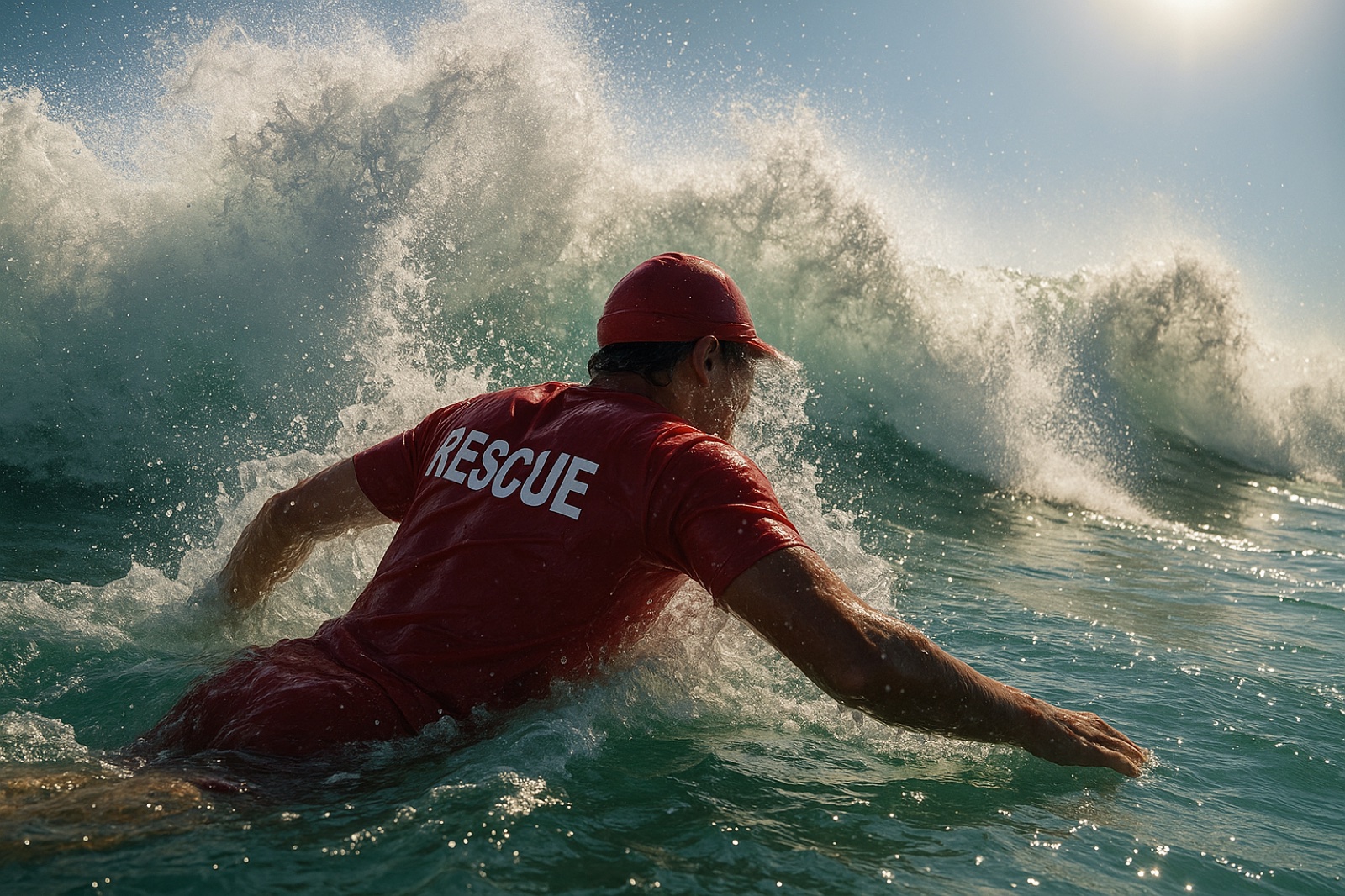
The video is nineteen seconds long, and by the time it’s over, you’ve forgotten to breathe. A wall of white water swallows two people whole. A second later, a hand breaks the surface. Then nothing again. Then, finally, two heads — one small, one not much bigger — coming up together, gasping, still fifty feet from anything solid to stand on.
That’s the footage that made a 16-year-old named Ryder Williams one of the most talked-about people on the internet this week. And once you know what actually happened in those nineteen seconds — and in the minutes before the camera started rolling — it’s easy to see why nobody can stop watching it.
What Happened at Seabright State Beach
On Saturday, July 25, Santa Cruz’s coastline was under a high surf advisory. A swell event was pushing in consistent four-to-six-foot waves, with some sets estimated at ten feet — the kind of conditions that turn a normal afternoon at the beach into something else entirely. A 10-year-old boy named Nathaniel lost his footing in water that was supposed to be shallow enough to stand in.
Ryder Williams was on duty. He saw it happen and went in immediately.
What the video shows next is the part people can’t stop replaying: Williams reaching Nathaniel, getting a grip on him — and then losing solid footing himself as another wave broke directly on top of both of them. They went under. They surfaced. Another wave hit before they could get their bearings, and they went under again. According to people who watched the full sequence unfold, this happened four separate times. Four times the ocean tried to pull them apart, and four times Williams came back up still holding on.
Nathaniel lost consciousness at some point during the struggle. By the time Williams got him to shore, medical responders were already moving. The boy was evaluated and released to his family with no serious injuries. His father put it plainly afterward: “Another two or three seconds, I don’t think my son would have made it.”
The Part of the Story Most People Missed
Here’s a detail that didn’t make most of the headlines: according to Ryder’s grandfather, George Williams, the widely shared rescue wasn’t even the most dangerous thing that happened that day. Ryder performed two additional rescues in the same shift — ones his grandfather described as “more gnarly” than the one caught on camera.
There was no viral video for those. No millions of views, no news trucks. Just a teenager doing the job he’d trained for, over and over, on a day when the ocean wasn’t cooperating with anyone.
That detail matters, because it reframes what people are actually reacting to. This wasn’t a once-in-a-lifetime fluke where an untrained bystander got lucky. It was trained readiness meeting a genuinely dangerous moment — and then choosing, four times in a row, not to let go.
Why This Video Hit Different
Rescue footage isn’t rare. Beach cameras and bystander phones capture close calls every summer. So why did this particular clip stop an entire internet scroll?
Watch it again and you’ll notice it isn’t really a video about swimming ability. It’s a video about a decision, made and remade in real time, under conditions where letting go would have been the easier — maybe even the more survivable — option for Williams himself. Every time that wave buried them, there was a split second where he could have surfaced alone. He didn’t.
People don’t cry at competence. They cry at commitment under pressure — the sight of someone’s grip getting tighter, not looser, exactly when it would have made sense to loosen it. It’s the same instinct that made headlines earlier this year when a soldier jumped into open water off Morocco trying to save another service member — the specific detail that stops people isn’t the risk itself, it’s watching someone choose it on purpose, for somebody else.
A Quick, Real Reason to Know This: Rip Currents and Shore Break
If this story makes you want to do one useful thing today, let it be this: understand what actually happened, oceanographically, because it’s more common than most families realize. A high surf advisory doesn’t just mean “bigger waves” — it means the shallow water near shore, the part that looks safest, can generate powerful shore break and localized rip currents strong enough to sweep a grown adult off their feet, let alone a child. Most drownings near shore happen in water people assumed was shallow enough to stand in, exactly like Nathaniel’s did. If a beach is flying a red or double-red flag, or lifeguards are posting high surf warnings, “ankle deep” isn’t a safety guarantee that day.
The Thread Underneath the Footage
There’s a reason the detail that grabbed people wasn’t the danger itself — it was the refusal to let go. Long before anyone had a term like “trauma response” or a rescue-swimmer training manual, water was one of the oldest images people reached for to describe what it actually costs to save someone. Not a gentle lift to safety. A grip that gets tighter the more the current tries to break it. Ancient writers, across cultures and long before modern lifeguarding existed, kept returning to the same picture when they tried to describe love under real pressure: someone going under themselves rather than come up alone. It’s an old idea showing up in a very new video — something bigger than technique, holding on when letting go would have been so much easier.
You don’t need to believe in anything in particular to notice that the moment everyone is replaying isn’t the danger. It’s the grip.
What Happens Now
Nathaniel is home, unharmed. Ryder Williams is back on the stand, still working the same beach, mostly uninterested in the attention beyond being glad the day ended the way it did. The video keeps circulating, and every new person who watches it seems to land on the same detail — not the waves, not the danger, but the part where he could have surfaced without the boy, and didn’t.
Not every hard moment in your own life will have a camera on it. Most won’t. But the same question the video keeps asking — what do you do in the exact second it would be easier to let go? — doesn’t need footage to matter. It shows up in smaller versions constantly: the friend you almost stopped checking on, the hard conversation you almost avoided, the person you almost let handle it alone. There’s actually a whole growing trend of people deliberately choosing the harder, more inconvenient option on purpose — this rescue is just the highest-stakes version of the same instinct.
Ryder Williams answered that question four times in one afternoon, in front of a camera he didn’t know was rolling. Most of us will get to answer it too, just usually with nobody watching.
Two Small Things Worth Doing Today
- Check your family’s next beach trip against the flag system, not just the forecast. If you’re heading to any ocean beach this summer, look up that specific beach’s current surf and rip current advisory before you go — conditions can be dangerous even on a sunny, calm-looking day.
- Send this story to one person you know who’s “holding on” to something hard right now. Not as a lecture — just as a reminder that the grip mattering more than the ease of letting go isn’t only true in the ocean. If the story left you wondering whether one person’s effort can actually change anything, that specific doubt has an honest answer worth reading, too.
A Question Worth Sitting With
What do you think it was about this specific video — the age of the rescuer, the repeated waves, the father’s words afterward — that made it hit people harder than a typical rescue story? Tell us what stood out to you.
Share This
- He went under four times. He never let go. Watch what actually happened in Santa Cruz this week.
- Not gently lifted — drawn out, and refused to be let go of. That’s the image I can’t shake from this rescue video.
- The scariest part of this video isn’t the waves. It’s the second where letting go would’ve been easier, and he didn’t. #SantaCruz #Lifeguard
Questions People Ask About This Story
Who is Ryder Williams?
Ryder Williams is a 16-year-old lifeguard at Seabright State Beach in Santa Cruz, California, who rescued a 10-year-old boy named Nathaniel from dangerous surf on July 25, 2026, in a rescue caught on video that went viral.
What happened in the Santa Cruz lifeguard rescue video?
Williams swam out to reach Nathaniel after the boy lost his footing during a high surf advisory. As Williams held onto him, a series of large waves repeatedly pulled them both underwater — four times, according to witnesses — before Williams got the boy safely to shore.
Was the boy who was rescued okay?
Yes. Nathaniel lost consciousness briefly during the incident but was evaluated by medical responders and released to his family with no serious injuries.
Why did this rescue video go viral?
The footage shows Williams repeatedly resurfacing while still holding onto the boy despite being hit by wave after wave, a level of sustained commitment under danger that resonated far beyond typical rescue footage.
What should I know about ocean safety and rip currents?
Most near-shore drownings happen in water that looks shallow enough to stand in. During a high surf advisory or when a beach is flying a red or double-red warning flag, shore break and rip currents can be strong enough to sweep away even a confident swimmer — check a beach’s specific conditions before letting kids play in the shallows.