 0
0
 0
0
If you or someone you love has type 2 diabetes, there’s a good chance metformin is already sitting in the medicine cabinet. It’s one of the most prescribed drugs on earth — cheap, boring, and so familiar that most people who take it every morning have never once wondered how it actually works.
That’s the strange part. Doctors have been prescribing metformin for close to seventy years, and for most of that time, the honest answer to “how does it work?” has been: mostly, but not fully. This week, a new metformin brain discovery closed that gap a little — and made the whole thing a lot stranger.
A Drug Older Than the Space Program, Still Surprising Scientists
Metformin’s story starts long before it was ever a pill. It comes from a plant called French lilac, used in folk medicine for centuries to ease the symptoms of what we now call diabetes. Chemists isolated its active compound in the 1920s, doctors in France started prescribing it in the 1950s, and it finally reached pharmacy shelves in the United States in the mid-1990s. Today it’s the first drug most people with type 2 diabetes are ever given.
For decades, the textbook explanation was that metformin works mainly on the liver — telling it to stop overproducing glucose — while also making the body’s cells more sensitive to insulin. That explanation wasn’t wrong. It just wasn’t the whole picture.
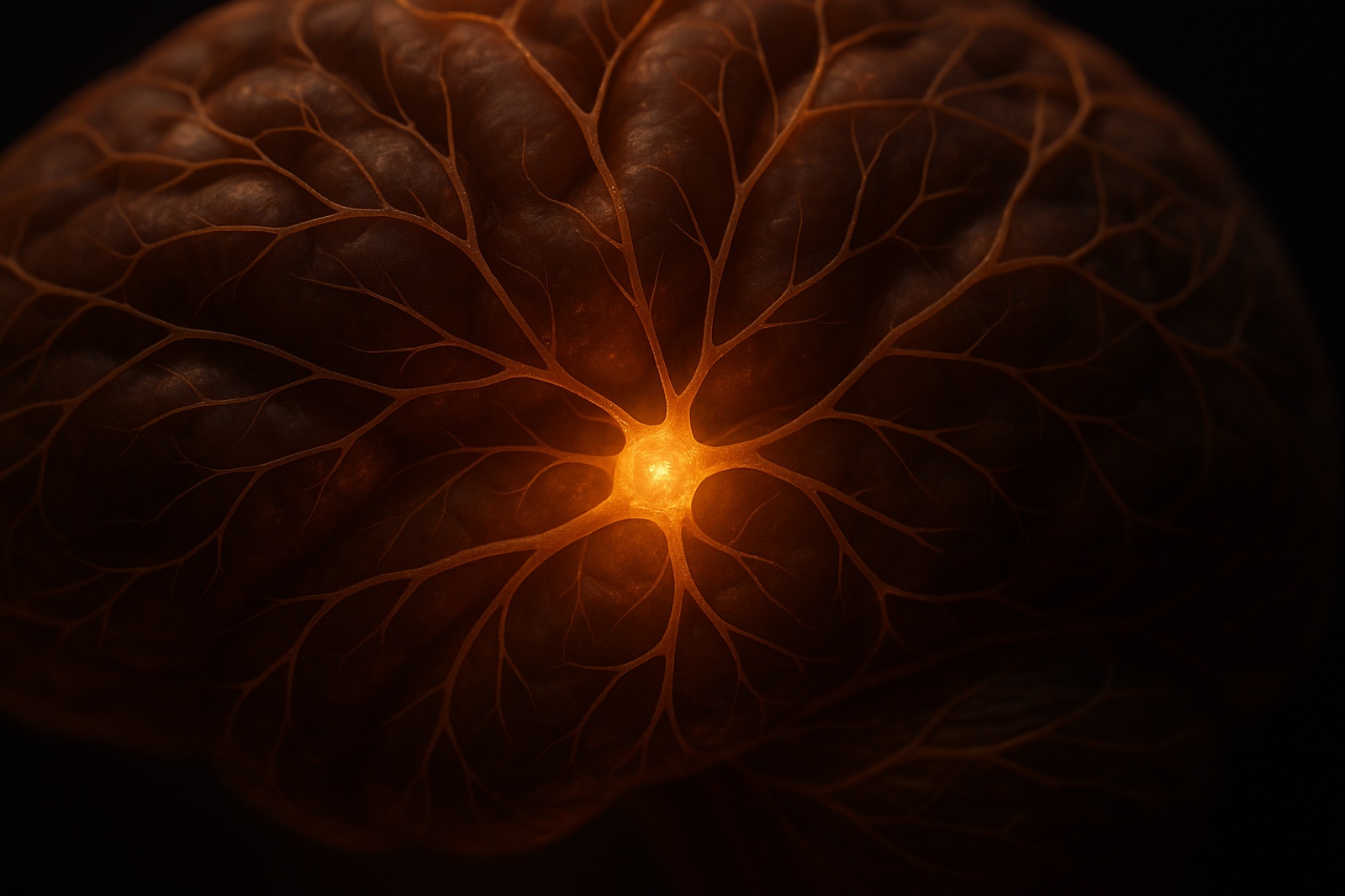
Researchers reported this week that metformin also acts directly inside the brain, tapping into a control center in the hypothalamus that nobody realized was involved in regulating blood sugar at all. Scientists have been studying this drug since before the moon landing, and it just revealed a room in the house nobody knew was there.
The Metformin Brain Discovery, Explained
The hypothalamus is a small structure buried deep in the brain, and it already has a well-known job description: it manages hunger, body temperature, sleep cycles, and stress hormones. Think of it as one of the body’s master thermostats, quietly adjusting things you never consciously think about.
What researchers now believe is that metformin reaches into this same region and influences it in a way that helps regulate blood sugar — not just as a side effect of what it does in the liver, but as a direct pathway of its own. In other words, part of what makes this drug effective may have been happening in the brain the entire time, hiding in plain sight underneath a much simpler explanation everyone had already settled on.
That matters beyond just satisfying curiosity. When scientists actually understand how a drug works, they can often make it work better — fewer side effects, more targeted doses, or new treatments built on the same pathway for conditions far beyond diabetes. A control center this well hidden, in a drug this well studied, suggests there may be other quiet systems in the body still waiting to be found — not unlike the microscopic gatekeeper researchers recently discovered inside every neuron, another piece of hidden brain machinery that had been running the whole time without anyone noticing.
Why It Took Seventy Years to Notice
It’s worth sitting with that timeline for a second. Metformin isn’t an obscure or experimental drug. It’s been swallowed by hundreds of millions of people, studied in thousands of trials, and manufactured by the ton. And it still had a mechanism operating in plain sight that nobody had mapped.
Part of the reason is that the brain is enormously difficult to study in a living person. You can’t easily watch a hypothalamus at work the way you can track a blood sugar number on a monitor. It took better imaging, better molecular tools, and researchers willing to ask “what if the story we’ve been telling is incomplete?” to even go looking for something this well concealed.
That question — what if there’s more going on underneath the explanation we already accepted — turns out to apply to more than just one drug.
A Body Built With More Going On Than We Notice
There’s something worth pausing on here that has nothing to do with pharmacology. A structure inside your own skull has been quietly running a system this whole time, and it took seventy years of dedicated science just to notice one piece of it. Not because the system wasn’t working — it was working perfectly the entire time — but because it was never designed to announce itself.
People who’ve thought seriously about the human body for a long time, long before brain scans existed, have talked about this same idea in different words: that we are held together by more than we can see or explain, and that the parts of us we never think about are often the parts doing the most important work. Call it ancient wisdom, call it something bigger than coincidence — either way, the pattern keeps showing up. The hidden systems are usually the load-bearing ones.
It’s a strange kind of comfort, actually. You don’t have to understand your own hypothalamus for it to be doing its job flawlessly right now, the same way you didn’t have to understand it yesterday, or the day metformin was first approved, or any day before that. Whatever built a system this quietly reliable clearly wasn’t leaving things to chance. It’s the same reason so many people who feel anxious for no clear reason find relief just in learning that their body isn’t malfunctioning — it’s often just running a process too quiet to notice.
What Comes Next
Scientists will spend the next several years figuring out exactly how significant this brain pathway is — whether it explains a small slice of metformin’s effect or a much bigger one, and whether it points toward new treatments for blood sugar problems that don’t respond well to current drugs. That’s the slow, careful work of real science, and it’s just getting started.
But the bigger takeaway might be simpler than any of that. A drug nearly everyone assumed we already understood just showed us we didn’t — not because anything was broken, but because there was more going on than met the eye. That’s worth remembering next time your own body feels confusing, unpredictable, or like it’s working against you. Odds are, it’s running a system you simply can’t see yet — which is really the same question people have been chasing for as long as anyone’s asked what it actually means to be made the way we are.
Discussion Question
Do you think the human body still has major secrets left to discover, or are we close to understanding how all of it really works? Drop your take in the comments — we’d love to hear where you land.
Share This
- A drug we’ve used for 60+ years just revealed it’s been working through a hidden brain control center nobody knew existed. Wild how much is still quietly running underneath the surface.
- Metformin has been prescribed since before the moon landing. Scientists just found it’s been talking to a “master thermostat” deep in the brain the whole time. Makes you wonder what else the body has been hiding in plain sight.
- Turns out one of the most common medications on earth still had a secret mechanism nobody had mapped. If a 70-year-old drug can surprise us this much, imagine what the rest of the body is still keeping quiet about.
Questions People Are Asking
What is metformin used for?
Metformin is the most commonly prescribed medication for type 2 diabetes. It helps lower blood sugar, primarily by reducing how much glucose the liver produces and by making the body’s cells more responsive to insulin.
What did scientists just discover about how metformin works?
Researchers reported that metformin also acts directly on a control center in the hypothalamus, a region deep in the brain, influencing blood sugar regulation through a brain pathway that hadn’t previously been identified.
What does the hypothalamus normally control?
The hypothalamus regulates several core body functions, including hunger, body temperature, sleep-wake cycles, and the release of stress hormones. It functions like one of the body’s central control panels.
Why did it take so long to find this brain pathway?
The brain is difficult to study in living patients compared to something like blood sugar, which can be measured directly. It took advances in imaging and molecular research, along with scientists questioning the existing explanation, to uncover this additional mechanism.
Does this discovery change how diabetes will be treated?
Not immediately. Researchers will need years of further study to determine how significant this brain pathway is and whether it can be used to develop more targeted treatments. But it does open a new direction for future research.