 0
0
 0
0
You know the feeling. You show up early to set up chairs nobody notices. You pack an extra snack for the kid who never seems to have one. You mend the same torn hem for the third time this month, and nobody says thank you — because nobody even knows you did it. And somewhere in the back of your mind, a quiet question shows up: Does any of this actually matter?
The Bible has an answer to that question, and it’s buried in a story most Christians have never heard a sermon on. It doesn’t involve a famous speech, a miracle the person performed themselves, or a single quotable line. It’s a story about a woman named Tabitha — and the only thing anyone remembered about her was that she made clothes for people who couldn’t afford them. Then she died. And something happened to her that happened to almost no one else by name in the entire book of Acts.
Who Was Tabitha, the Disciple Known as Dorcas?
The Tabitha Dorcas Bible story opens simply, in Acts 9:36: “Now there was at Joppa a certain disciple named Tabitha, which by interpretation is called Dorcas: this woman was full of good works and almsdeeds which she did.”
Joppa was a busy port town on the Mediterranean coast, the kind of place where ships came and went and life moved fast. Tabitha’s Aramaic name meant “gazelle” — grace and gentleness — and Dorcas was the Greek version of the same name, used for the wider Greek-speaking community in the city. What’s easy to miss is a small grammar detail: the Greek word for “disciple” used to describe her, mathetria, is the feminine form of the word — and this is the only place in the entire New Testament it’s used. Luke, writing Acts, went out of his way to make sure we knew: this woman was not just a good person who happened to believe in Jesus. She was a disciple, full stop, with a title all her own.
And yet nothing else about her made it into the record. No sermon. No leadership title. No dramatic conversion story. Just one line: she was full of good works and acts of charity.
The Coats She Made and the Widows Who Wept
Acts 9:37 tells us she got sick and died. Her body was washed and laid in an upstairs room, the way the custom went. Nearby, in the town of Lydda, the disciples had heard that Peter was staying close by. So they sent two men to find him, urging him not to delay — come now, they said, before it’s too late for whatever hope they still had.
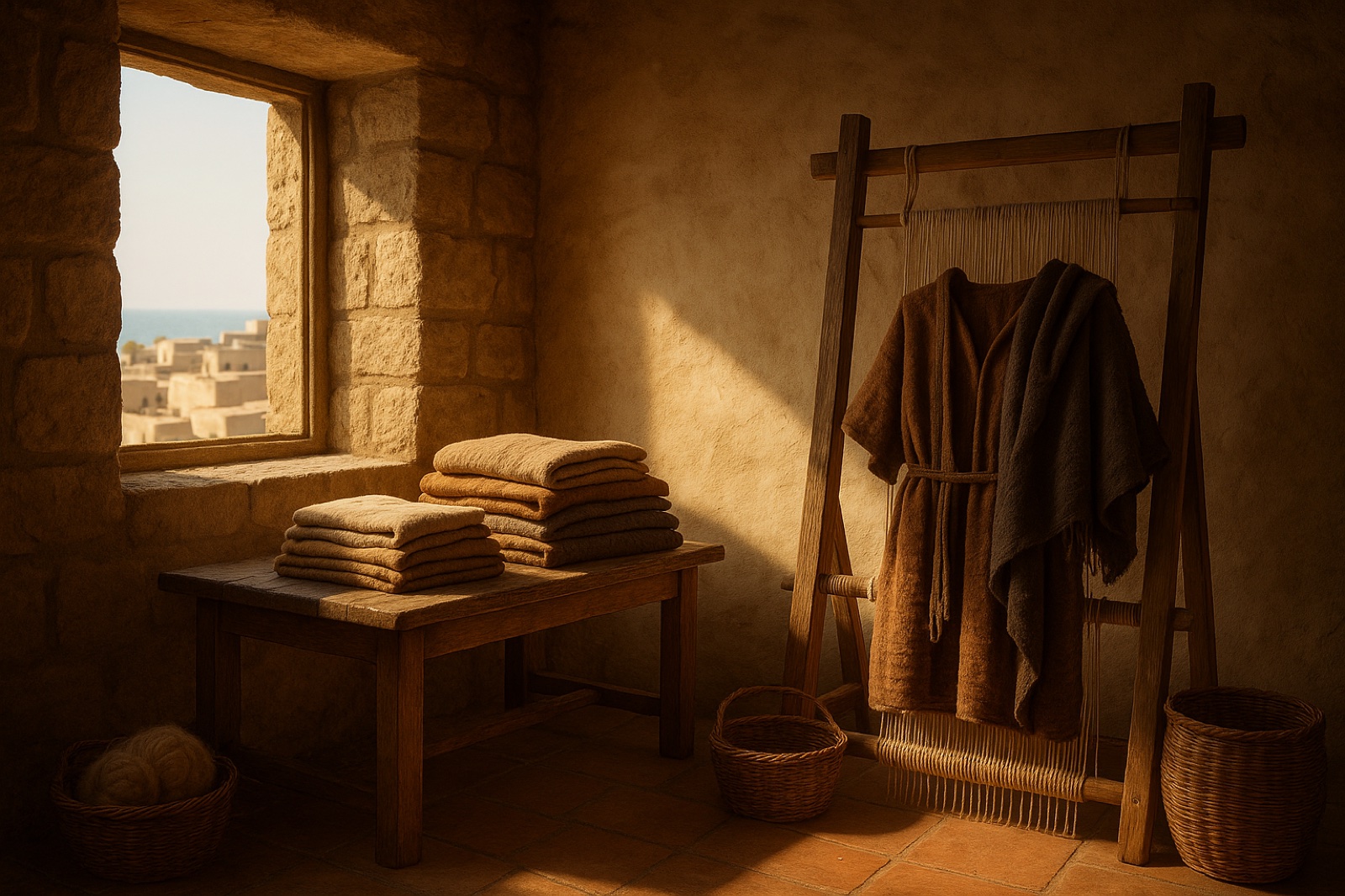
When Peter arrived, Acts 9:39 describes the scene: “Then Peter arose and went with them. When he was come, they brought him into the upper chamber: and all the widows stood by him weeping, and shewing the coats and garments which Dorcas made, while she was with them.”
Picture that room. It’s not full of people praising Tabitha’s faith, her wisdom, or her words. It’s full of widows — the most economically vulnerable people in that entire society, with no husband, no inheritance rights, and no safety net beyond whatever the community chose to give them — holding up the actual coats she had sewn for them with her own hands. They weren’t grieving an idea. They were grieving the person who had kept them warm.
Why Peter Raised Tabitha — and Why That’s Not the Whole Point
Peter put everyone out of the room, knelt down, and prayed. Then, turning to the body, he said the words that echo Jesus’s own words to a dead girl in Mark 5: “Tabitha, arise.” Acts 9:40 says, “And she opened her eyes: and when she saw Peter, she sat up.” He took her by the hand, lifted her up, and called in the believers and widows to present her to them, alive. It’s not the only resurrection tucked into the Gospels and Acts — Jesus does the same for a grieving family in the story of Lazarus — but Tabitha’s is the one that happens through an apostle’s hands, for a woman nobody expected to make the record at all.
Word spread through Joppa, and Acts 9:42 tells us many believed in the Lord because of it.
Here’s what’s easy to rush past: Tabitha is the only named disciple in the book of Acts that the text explicitly says was raised bodily from death. Not Peter, who prayed the prayer. Not Stephen, whose martyrdom opens the book. Not any of the apostles whose sermons and letters shaped the entire New Testament. A woman known for nothing but a needle, thread, and a habit of showing up for people who had nothing to offer her in return.
The Turn: What God Counts as Enough
If you’ve ever quietly wondered whether the small, unglamorous, unnoticed things you do actually count for anything in the eyes of God — Tabitha’s story is a direct answer. Her resurrection wasn’t a reward for a platform, a title, or a single dramatic act of faith. It came in response to grief over what she did with her hands, again and again, for people who could never pay her back.
That says something about how heaven tallies significance that’s very different from how we tend to tally it. We assume the things that matter are the ones that get seen — the ones with an audience, applause, or a receipt. Tabitha’s story suggests otherwise: the coat nobody photographed, the meal nobody thanked you for, the ride you gave, the bill you quietly covered — these might be exactly the kind of faithfulness a life gets built on. Not despite being small. Because they were consistent. It’s the same quiet math behind a goalkeeper’s 16 years of faithfulness that never earned him a trophy — the years nobody applauds are usually the ones that end up mattering most.
You see it, too, in Scripture’s other overlooked names. John Mark gets written off once by Paul and restored twice by the text anyway — proof that the Bible keeps circling back to people it would’ve been easy to leave out of the story. Tabitha never even got a second chance at being noticed. She just kept sewing, and God noticed the whole time.
3 Ways to Live Like Tabitha This Week
- Do one “Tabitha-sized” thing today. Pack an extra lunch for someone who might not have one, mend something you’ve been putting off giving away, or drop off one bag of clean coats or blankets at a shelter or church clothing closet near you. Ten minutes, no announcement.
- Write down three unnoticed things you did this past week. No audience, no thanks required, nothing that made it onto anyone’s radar but yours. Let the list prove to you that the pattern is already there.
- Pick one recurring quiet skill you have — cooking, mending, fixing, driving, listening — and commit it, on a set day each month, to one specific person you already know is struggling right now. Put the date on your calendar before you close this tab.
Journaling Prompts
- What’s one task you do often that nobody applauds — and what would change if you believed God was keeping count of it?
- When was the last time you assumed something you did didn’t matter because it wasn’t big enough to be seen?
- If the only thing people remembered about you was the thing you do most quietly, what would that be — and are you proud of it?
A Prayer for the Unseen Faithful
God, I don’t always feel like the small things I do matter. Most days feel unnoticed, and it’s easy to forget You’re paying attention to any of it. Help me see the quiet, ordinary things I already do as an offering, not an afterthought. Give me the faith to keep doing them even when no one is watching or saying thank you. Amen.
Let’s Talk About It
Do you think God measures a good deed by its size, or by the faithfulness behind it? Tell us what you think in the comments below.
Share This
- “The only disciple in the book of Acts the Bible says was raised from the dead wasn’t a preacher. She was known for one thing: quietly making clothes for widows nobody else was looking out for.”
- “She never gave a sermon. She just kept making coats for people who couldn’t afford them. And God raised her from the dead for it. Maybe the quiet thing you keep doing matters more than you think.”
- “I used to think the small, unnoticed things I do don’t count for much. Then I read about Tabitha in Acts 9 — and I’m not so sure anymore.”
Frequently Asked Questions About Tabitha (Dorcas)
Who was Tabitha in the Bible?
Tabitha, also called Dorcas, was a disciple in the coastal city of Joppa, mentioned in Acts 9:36-42. She was known for making clothes for widows and the poor, and she’s the only woman in the New Testament directly called a “disciple” using that specific feminine term.
Why did Peter raise Tabitha from the dead?
When Tabitha died, the believers in Joppa sent for Peter, who was nearby in Lydda. When he arrived, the widows showed him the clothing she had made for them, grieving what her death meant for their community. Peter knelt, prayed, then told her, “Tabitha, arise” — and she opened her eyes and sat up (Acts 9:40).
What does the name “Dorcas” mean?
Dorcas is the Greek translation of the Aramaic name Tabitha, and both names mean “gazelle” — an image associated with grace and gentleness in the ancient world.
Where is the story of Tabitha found in the Bible?
Her story appears in Acts 9:36-42, immediately before Peter’s vision in Joppa that leads to Cornelius’s conversion in Acts 10.
What does Tabitha’s story teach about small acts of faith?
Tabitha wasn’t known for preaching, leading, or performing a miracle herself. She was known for one repeated, practical act of charity — and the Bible ties her resurrection directly to that quiet faithfulness, suggesting God takes ordinary, consistent kindness seriously.