 0
0
 0
0
Astronomers May Have Discovered Elusive “Dark Stars” Thanks to James Webb Space Telescope
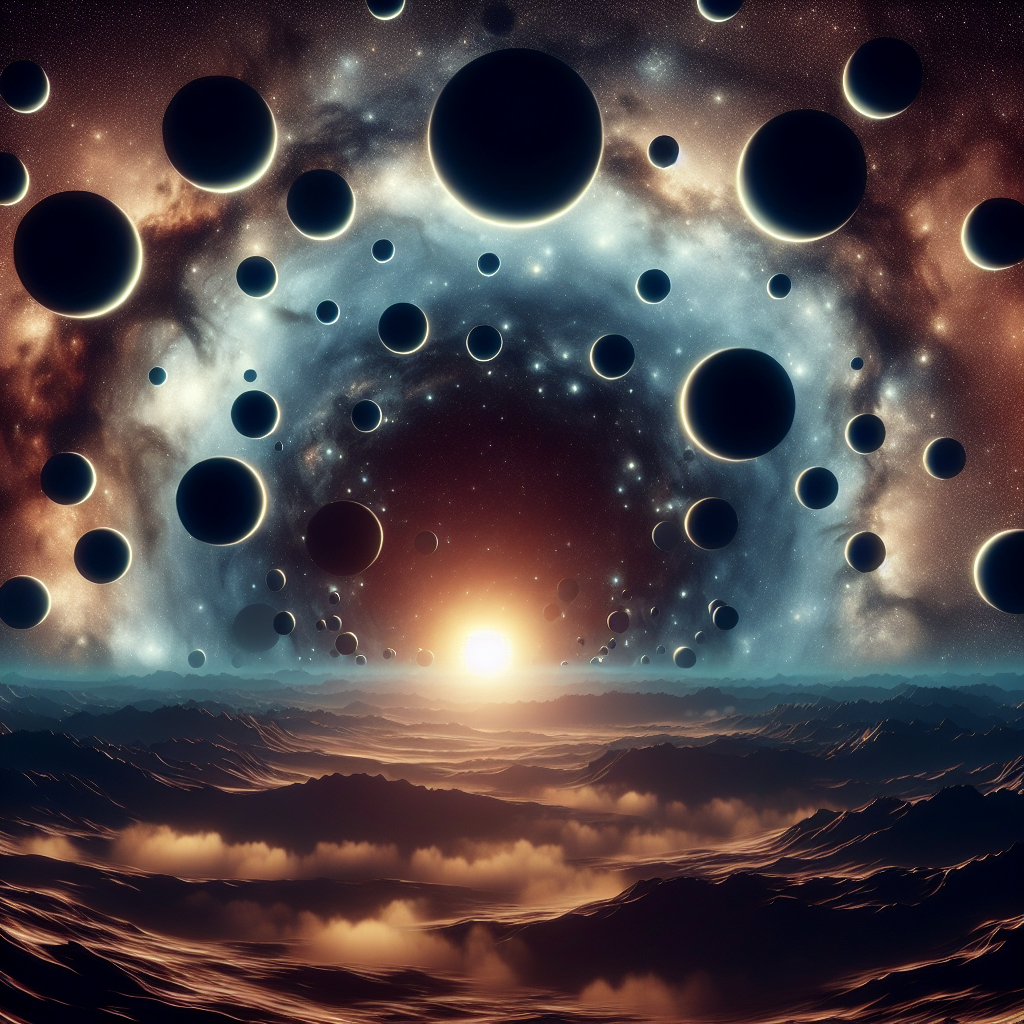
Astrophysicists are abuzz with the recent findings from the James Webb Space Telescope (JWST), which may have unveiled evidence of dark stars—massive celestial objects thought to be powered not by nuclear fusion, but by the mysterious energy of dark matter. These stars, potentially shining billions of times brighter than our sun, could significantly alter our understanding of the universe’s earliest moments.
Unraveling Cosmic Secrets: The Mystery of Dark Stars
Unlike traditional stars, which rely on nuclear fusion for energy, dark stars are theorized to generate their immense brightness through the self-annihilation of dark matter particles. This process warms surrounding hydrogen and helium, leading to the formation of primordial clouds that shine luminously. Hypothetically, these stars could have formed in minihaloes, dense regions rich with dark matter, allowing them to grow to extraordinary masses over time, sometimes reaching scales up to a million times that of our sun.
Though captivating, dark stars have remained a speculative concept until now. New observations from JWST have classified three promising candidates—JADES-GS-z13-0, JADES-GS-z12-0, and JADES-GS-z11-0. Initially identified as galaxies, these objects display characteristics more aligned with solitary supermassive stars rather than conventional stellar clusters.
Astrophysicist Katherine Freese, a strong advocate for the dark star theory, noted that if these objects are confirmed as dark stars, it could be transformative. “We may finally have a direct way to observe dark matter dynamics,” she stated, hinting at the profound consequences for cosmology and our understanding of the universe.
A New Frontier in Dark Matter Research
Dark stars could not only validate a novel category of celestial bodies but also reshape our understanding of dark matter, which constitutes about 85% of the universe’s total mass. Traditionally elusive due to its inability to emit, absorb, or reflect light, dark matter has posed one of the most significant enigmas in physics. The capacity to directly observe dark matter via dark stars could provide unprecedented insights into particle behavior and interactions.
Moreover, the potential link between dark stars and supermassive black holes offers a compelling avenue for research into the early universe. Current theories struggle to explain how such colossal structures emerged shortly after the Big Bang. If dark stars eventually collapse into black holes, they may help demystify the origins of these ancient giants.
Bridging Science and Spiritual Reflection
As we explore these cosmic mysteries, it’s intriguing to reflect on the biblical principle found in Genesis 1:16, which tells us that God made two great lights—the greater light to govern the day and the lesser light to govern the night. The ongoing journey of discovery through the cosmos mirrors humanity’s quest for understanding, prompting us to consider the vastness of creation and the divine order within it.
In both science and faith, there exists a call to seek knowledge and understanding. The possibility of dark stars serves as a reminder of the greater mysteries of existence, urging us on a path of curiosity and inquiry.
Encouragement for the Journey Ahead
While further observations and confirmations of dark stars are necessary, the implications of these discoveries could be profound. As we ponder the potential existence of dark stars and their role in the universe, let us also reflect on our own lives. Just as astrophysicists are driven by a desire to illuminate the unknown, we too are invited to explore our faith and understanding of God’s creation.
In a world filled with mysteries and questions, may we approach our journey—both earthly and cosmic—with wonder, seeking to uncover truth and meaning in the intricate tapestry of life. As Revelation 21:25 reminds us, "There will be no night there," suggesting a future where all mysteries are revealed in the light of divine truth.
Explore and dig up answers yourself with our BGodInspired Bible Tools! Be careful – each interaction is like a new treasure hunt… you can get lost for hours 🙂