 0
0
 0
0
Stars die. We all know that. What nobody had ever seen, until now, is what might come after.
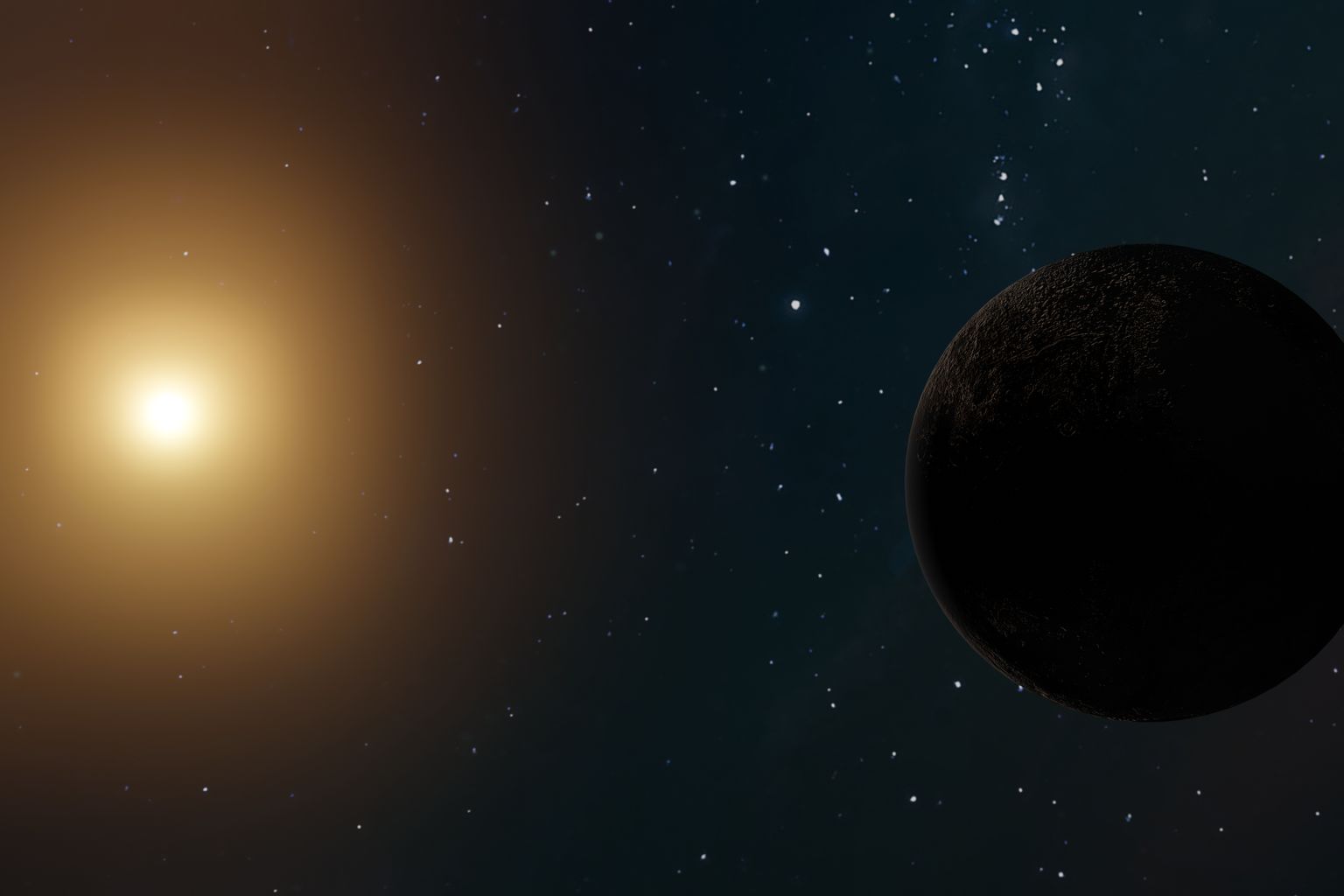
Astronomers think they may have found a planet born from a dead star. Not a planet that survived its star’s death. A brand-new planet, built out of the very stuff the star threw away as it died.
And the strangest part? The first clue was sitting in a Hubble file from 1999. Nobody could read it for more than twenty-five years.
What Hubble Saw in 1999 That Nobody Could Explain
The star is called HS 0209+0832. It is a white dwarf, which is what is left when a star like our Sun runs out of fuel. The big glowing outer layers are gone. What remains is a small, hot, very dense core, slowly cooling in the dark.
In 1999, the Hubble Space Telescope looked at this little star and split its light into a rainbow, the way astronomers read what a star is made of. Each chemical leaves its own pattern of lines in that rainbow, a bit like a fingerprint.
The trouble was, around 100 of the lines did not match anything the researchers could name at the time. So the data went into the archive and waited.
Years later, Jamie Williams, a PhD researcher at the University of Warwick in the UK, went back to that old data with a newer, better chemical reference list. Many of the mystery lines turned out to belong to one element: niobium.
Niobium had never been reported in any white dwarf before. And this star did not have a little of it. According to the Warwick team, it has well over 1,000 times the Sun’s level.
Data from an older, now-retired NASA space telescope called FUSE showed the same strong niobium signal, which helped confirm the Hubble reading was real and not a glitch.
Why Niobium Points to a Planet Born From a Dead Star
Here is why that one metal matters so much.
Most of the elements in the universe are made in the hot centres of living stars. Niobium is different. Heavy elements like it are built mostly in a star’s last stage of life, when it swells into a red giant and starts throwing off its outer layers. Astronomers call this slow building process the s-process.
Dr Nicholas Stone of the University of Wisconsin-Madison, one of the researchers, called the niobium “a signpost of these ‘death’ throes.” In other words, this is the chemical signature of a dying star.
But here is the puzzle. White dwarfs are normally “polluted” by rocky leftovers: crumbs of old asteroids or broken planets falling onto them. That rocky material is full of silicon and iron. This star had only a trace of silicon and almost no iron. The team compared its chemistry with known rocky debris around other white dwarfs, and with meteorites from our own solar system, and found no match.
So whatever is falling onto this star is not an old rock. It seems to be made from the dead star’s own ashes.
The Planet Itself: What the Brightness Dips Show
The second clue came from NASA’s TESS telescope, which watched the star for about four months. It found a tiny, regular flicker in the star’s brightness, repeating roughly every four and a half days.
That is too slow to be the star spinning. The team’s best explanation is a gas giant about the size of Jupiter, orbiting very close, about 6 million kilometres out. That is much closer than Mercury is to our Sun.
At that distance, the dead star’s heat is likely boiling the planet’s outer air away. That escaping gas may stream off like a comet tail and fall onto the star, carrying the niobium with it. That would explain why the star’s surface looks the way it does.
Williams described it in a way that is hard to forget: “A phoenix is reborn from the ashes of its predecessor, and this planet is formed from the ashes of the star.”
What Scientists Are Still Careful About
This is the part that matters most for getting the story right. The study, published this month in Nature Astronomy, calls it a planet candidate. Nobody has seen the planet directly.
Williams has been honest about that. “A planet is the most reasonable explanation,” he said. But he also admitted, “We’re not really sure, if it’s not a planet, what it is.”
Still, outside experts are paying attention. Zifan Lin, an astronomer at Washington University in St. Louis who was not part of the study, said that before this, second-generation planets were “more like a hypothesis, more like speculation.” Now, in his words, “this is the first time we’ve seen evidence for that process.”
The team plans to keep watching the star with Hubble for several more years, and to search other white dwarfs for the same chemical fingerprint.
If you love stories like this, where the answer was hiding in old data all along, you might also enjoy how astronomers found a stellar stream that reveals dark matter, a clue that had also been sitting in Hubble’s archive, and the story of four stars that were hiding in plain sight beside brighter neighbours.
The Detail Almost Everyone Skipped
Most headlines stopped at “planet rises from the ashes.” But there is a quieter detail in the Warwick team’s explanation that is worth slowing down for.
A single, lonely dying star, Williams explained, sheds its outer layers in a roughly even way, in every direction. That material just drifts off into space. It never gathers. It never becomes anything.
To build a planet, something had to catch it. The team thinks a companion star was probably nearby, and its pull gathered some of the thrown-off material back into a disc. Only then could the pieces come together into a new world. That, they say, may be why planets like this are so rare.
So the dying alone was not enough. The ending needed something close by to gather up what was let go.
What a Dead Star Teaches About Endings
There is a very old piece of wisdom that says a seed has to fall into the ground and die before it can bear anything. On its own, it stays just one seed. Let go, it becomes the start of something new.
It is a strange thing to see that same pattern written in starlight, around a star most of us will never see. An ending that turns out to be raw material. Something lost that becomes the beginning of something else.
Maybe that is just how the universe was made. Or maybe it is a hint that endings were never meant to have the last word, and that God has been gathering up what gets let go for a very long time.
Either way, if you are living through an ending right now, a job, a season, a person, a version of yourself, it is worth remembering what this little star shows. What you are losing may not just drift away. It may be gathered up and become something you cannot yet picture.
A good place to start:
The Beginner’s Guide to Feeling God’s Presence Every Day
A short video guide and companion PDF to help you notice God in the ordinary moments of real life, including the hard ones.
Get the free guide
Free.
The star HS 0209+0832 is still out there, small and hot and quiet. And if the astronomers are right, it is not alone. Circling close beside it is a world made from everything it gave away.
Q&A: The Planet Born From a Dead Star
What is a second-generation planet?
A second-generation planet is a planet that forms from material a star throws off as it dies, rather than forming at the same time as the star. Astronomers had long suggested these planets could exist, but the white dwarf HS 0209+0832, studied by a University of Warwick-led team, is the first case with real evidence pointing to one.
Why is niobium important in the HS 0209+0832 discovery?
Niobium is a heavy element made mostly by dying stars in their red giant stage. It had never been found in any white dwarf before. Its very high level in the white dwarf HS 0209+0832, combined with almost no iron and only traces of silicon, suggests the material falling onto the star came from the dead star’s own ejected layers rather than from old rocky asteroids.
Has the planet born from a dead star been confirmed?
No. The planet orbiting the white dwarf HS 0209+0832 is a candidate, not a confirmed planet. Its existence is inferred from a regular brightness change seen by NASA’s TESS telescope, repeating about every four and a half days. Lead researcher Jamie Williams has said a planet is the most reasonable explanation, but the team plans years of further observation.
How did Hubble data from 1999 lead to a 2026 discovery?
The Hubble Space Telescope recorded the light of the white dwarf HS 0209+0832 in 1999, but around 100 features in that light could not be identified at the time. Researcher Jamie Williams later re-examined the archived data using an updated chemical reference list and found that many of the features came from niobium. Data from NASA’s retired FUSE telescope supported the finding.
Could our Sun form a new planet after it dies?
Nobody knows yet. The Warwick team thinks the second-generation planet around HS 0209+0832 probably needed a companion star to gather the dying star’s ejected material into a disc. Our Sun has no companion star, so whether it could build a new planet when it dies is an open question that the researchers say they want to study.
Discussion Question
Scientists say this planet probably only formed because a nearby companion star caught what the dying star let go. Do you think the endings in our own lives work the same way, that what comes next depends on who is close by? Share your thoughts in the comments below.
Share This
“A star died and threw off its outer layers… and astronomers think a brand-new planet formed from the leftovers. The clue sat unread in a Hubble file since 1999.”
“The part of the ‘phoenix planet’ story nobody’s talking about: a dying star on its own just scatters into space. It took a nearby companion to gather what it let go into a new world. That one stuck with me.”
“Endings aren’t always the end. Apparently even stars know it.”