 0
0
 0
0
Quick answer: The Hebrew word for shepherd is ro’eh (רֹעֶה, pronounced ro-EH). It is the active participle of the verb ra’ah (Strong’s H7462), which means “to pasture, to feed, to tend a flock.” So in Hebrew a shepherd is not mainly a job title – it is literally “the one who is feeding.” That is why the same word shows up in the King James Bible as both “shepherd” and “feed.”
Word Study: Where It Comes From
In English, “shepherd” is a compound noun: a sheep-herd, a person defined by the animals they watch. Hebrew builds the word from the other direction. Ro’eh is formed from the verb ra’ah, “to graze” or “to pasture,” and it is grammatically a participle – an action word frozen into a description. A ro’eh is someone who is, right now, leading animals to food and water.
That root sense never fully disappears. Watch how the KJV translators handled it. When Jacob blesses Joseph’s sons near the end of his life, he describes God as “the God which fed me all my life long unto this day” (Genesis 48:15). The Hebrew there is ha-ro’eh oti – literally “the one shepherding me.” The translators chose “fed,” and they were not wrong. In Hebrew, feeding and shepherding are the same act.
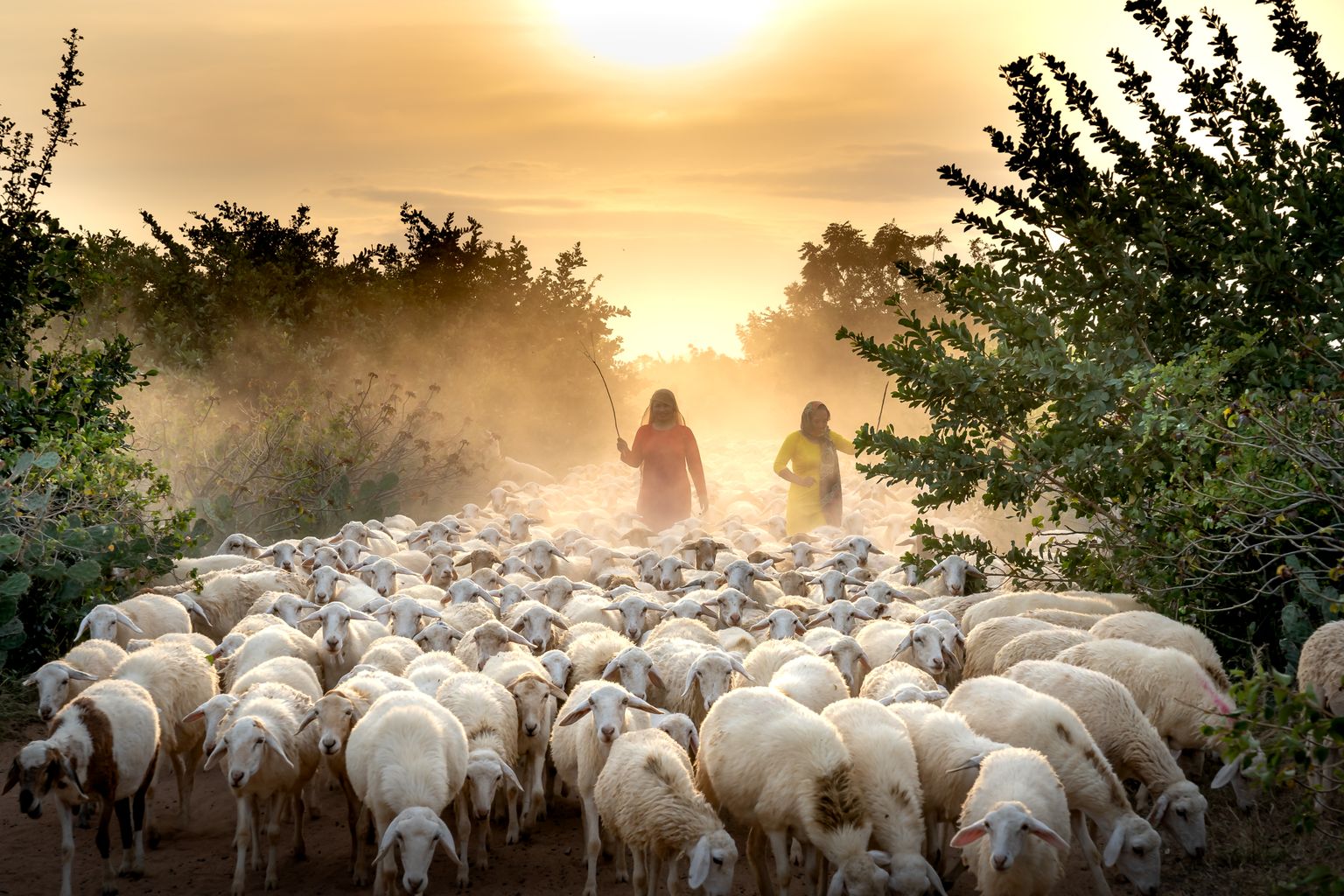
The word was also never limited to men or to adults. Abel is the first ro’eh in the Bible: “Abel was a keeper of sheep” (Genesis 4:2). Rachel is introduced the same way: “Rachel came with her father’s sheep: for she kept them” (Genesis 29:9) – “kept” is the feminine form of the very same participle. And David is first described to Samuel not by his looks or his lineage but by this word: “behold, he keepeth the sheep” (1 Samuel 16:11).
Over time, ra’ah stretched to cover any kind of care-taking leadership. Kings, priests and prophets were all called shepherds, and the measure of a good one was simple: were the people fed? That expectation is what makes the word land so hard when it is finally applied to God.
Where This Word Appears in the Bible
| Reference | KJV Text | What the word is doing |
|---|---|---|
| Genesis 4:2 | “And Abel was a keeper of sheep, but Cain was a tiller of the ground.” | The first ro’eh in Scripture |
| Genesis 48:15 | “…God, before whom my fathers Abraham and Isaac did walk, the God which fed me all my life long unto this day,” | Translated “fed” – God as Jacob’s lifelong shepherd |
| Psalm 23:1 | “The LORD is my shepherd; I shall not want.” | Ro’i – “my shepherd,” “the one shepherding me” |
| Psalm 80:1 | “Give ear, O Shepherd of Israel, thou that leadest Joseph like a flock; thou that dwellest between the cherubims, shine forth.” | Shepherd used as a direct name in prayer |
| Ezekiel 34:2 | “…Woe be to the shepherds of Israel that do feed themselves! should not the shepherds feed the flocks?” | “Shepherds” and “feed” are the same root, used as wordplay |
Verse Deep Dive: Psalm 23:1
“The LORD is my shepherd; I shall not want.” In Hebrew the line is just four words: Yahweh ro’i, lo echsar. There is no verb “is” at all. The sentence simply sets God’s covenant name next to ro’i – “my shepherding one” – and lets them stand together.
Because ro’eh is a participle, it carries a sense of ongoing action. David is not handing God an honorary title, the way we might call someone “the Shepherd” on a plaque. He is describing what God is doing: leading, feeding, watching, right now and continually. That is why the second half of the verse follows so naturally. Lo echsar – “I will not lack.” If the one shepherding me is actively feeding me, then lack is not the end of my story.
Remember who wrote it. The boy who was out “keeping the sheep” while his brothers were paraded before Samuel knew exactly what a ro’eh did all day: walking ahead to find grass, checking water before the flock drank, sleeping across the gap in the fold. When David says “the LORD is my shepherd,” he is not reaching for a pleasant metaphor. He is saying, “God does for me everything I used to do for them – and does it better.” Read that way, Psalm 23 is less a poem about calm and more a confident report from someone who had done the job.
Ezekiel 34 is the dark mirror of this psalm. God rebukes Israel’s leaders for “shepherding themselves” – feeding on the flock rather than feeding it – and then promises: “I will feed my flock, and I will cause them to lie down, saith the Lord GOD” (Ezekiel 34:15). The failure of human shepherds is answered not with a better job description, but with God taking up the staff personally.
Not All “Shepherd” Words Are the Same
A few nearby words are easy to blur together, and the differences are worth knowing:
- Ro’eh (רֹעֶה) – shepherd, “the one who feeds.” The everyday word for anyone tending a flock, and the word used of God in Psalm 23 and Psalm 80.
- Noqed (נֹקֵד, H5349) – sheep-breeder. Amos is introduced as one “among the herdmen of Tekoa” (Amos 1:1), and the word there is noqed, which seems to describe a keeper or owner of a specialised breed of sheep. It is the same world, but a different emphasis – closer to stockman than caretaker.
- Ra’ah (רָאָה, H7200) – “to see.” In English these look identical, but in Hebrew they are spelled differently (one with the letter ayin, one with aleph). The name Jehovah-jireh in Genesis 22:14 comes from “to see/provide,” not from “to shepherd.” So “Jehovah Ra’ah” (the LORD my shepherd) and “Jehovah Jireh” (the LORD will provide) are two separate names from two separate roots.
- Re’a (רֵעַ, H7453) – friend, neighbour. Strong’s links this word to ra’ah through a related sense of “keeping company with.” Scholars debate whether that is the same root or a look-alike, so it is best held loosely – but it is a lovely echo that the Hebrew for “shepherd” and the Hebrew for “friend” sound so close.
- Poimen (ποιμήν) – the Greek New Testament word. When Jesus says, “I am the good shepherd: the good shepherd giveth his life for the sheep” (John 10:11), He is stepping straight into Ezekiel 34. The God who promised “I will feed my flock” shows up as the shepherd in person.
Why the Original Word Changes the Meaning
In English, “shepherd” can feel soft and distant – a stained-glass figure holding a lamb. The Hebrew word is far more practical. A ro’eh is defined by what they provide. That means calling God “my shepherd” is not mainly a statement about how gentle God is; it is a statement about where your provision comes from. Jacob, who spent decades as a shepherd for Laban, could look back over a messy life of running, scheming and grieving and still say, “the God which fed me all my life long.”
It also sets the standard for every human shepherd. Parents, pastors, managers, mentors – Ezekiel 34 asks the same question of all of them: are you feeding the flock, or feeding yourself? The word itself carries the answer.
Living It Out
Try praying Psalm 23:1 slowly this week with the participle in mind: “The LORD is shepherding me.” Then ask a concrete question: where have I been fed lately that I did not notice? A conversation, an answered need, a moment of rest you did not plan. Jacob only saw the pattern looking back. You can start seeing it now.
And if someone has been placed in your care, take Ezekiel’s question personally. Is there one person this week you could actively “feed” – with time, encouragement, a meal, or simply your attention?
Journal Prompts
- Jacob called God “the God which fed me all my life long” (Genesis 48:15). Write out three seasons of your own life, and next to each, note one way you were fed – even if you only recognise it now.
- Psalm 23:1 links God’s shepherding directly to “I shall not want.” Where are you most afraid of lacking right now, and what would it look like to trust the one who is shepherding you in that specific area?
- Ezekiel 34 contrasts shepherds who feed the flock with shepherds who feed themselves. Who are you shepherding in some way, and which description fits your care for them this month?
Prayer
Lord, You are my ro’eh – the one who has been feeding me all my life, even on days I didn’t notice. Thank You for leading me to grass I could not find and water I could not reach. When I feel afraid of lacking, remind me who is shepherding me. Make me a faithful shepherd to the people You have placed in my care, so that I feed them rather than myself. Teach me to say with David, and to mean it, “The LORD is my shepherd; I shall not want.” Amen.
Share This
- The Hebrew word for “shepherd” (ro’eh) literally means “the one who feeds.” Psalm 23:1 isn’t a title – it’s a promise about what God is doing right now. [Post URL]
- Did you know the KJV translates the same Hebrew word as both “shepherd” and “fed”? Jacob called God “the God which fed me all my life long.” This word study changed how I read Psalm 23. [Post URL]
FAQ
What is the Hebrew word for shepherd in Psalm 23?
Psalm 23:1 uses ro’i, meaning “my shepherd.” It is the word ro’eh (רֹעֶה) with the suffix “my,” from the verb ra’ah (Strong’s H7462), “to pasture or feed.”
Is Jehovah Raah the same as Jehovah Jireh?
No. “Jehovah Ra’ah” (the LORD my shepherd) comes from ra’ah spelled with an ayin, meaning “to pasture.” “Jehovah Jireh” (Genesis 22:14) comes from ra’ah spelled with an aleph, meaning “to see” or “to provide.” They look alike in English but are different Hebrew roots.
Why does the KJV sometimes translate the shepherd word as “feed”?
Because the root meaning of ra’ah is “to graze” or “to feed a flock.” Translators chose “feed” when the verb is in focus (Genesis 48:15, Ezekiel 34:2) and “shepherd” when the person is in focus (Psalm 23:1). In Hebrew both are the same word.
Did the word shepherd only apply to men in the Bible?
No. Rachel is described with the feminine form of the same word: “Rachel came with her father’s sheep: for she kept them” (Genesis 29:9). Zipporah and her sisters also watered their father’s flock in Exodus 2.