 0
0
 0
0
You stand in the toothpaste aisle. Whitening, sensitive, charcoal, gum care, kids, travel size. Forty tubes. You came in for one.
Or it is late. You open a streaming app to relax. Twenty minutes of scrolling later, you have watched nothing, and you are more tired than when you sat down.
That tired, stuck, slightly annoyed feeling has a name: the paradox of choice. Thousands of people search that exact phrase every month. Most of them are trying to understand one odd thing. We asked for more options, and more options made us feel worse.
The story everyone tells about it involves a table of jam. The story is true. But the lesson most people take from it is only half right, and the other half is far more useful.
What Is the Paradox of Choice?
The paradox of choice is the idea that having more options can make us less happy, not more. Past a certain point, extra choices do not add freedom. They add work, worry and regret.
The phrase comes from the American psychologist Barry Schwartz. In 2004 he published a book called The Paradox of Choice: Why More Is Less. His starting point was simple. Choice is good. So a world with more choice should be a happier world. Yet by most measures, people in choice-rich countries were not getting happier. Something did not add up.
Schwartz opens with a small, personal story. He went to buy a pair of jeans. The shop assistant asked him a string of questions. Slim fit or relaxed? Stonewashed or regular? Button fly or zip? He left with jeans that fit better than any pair he had ever owned, and he felt worse about the whole thing. Before all those options, he had never expected jeans to be perfect. Now he did. And they were not.
That is the paradox in one shopping trip. More options raised the bar for what “good” meant, and made the gap between what he got and what he could have had feel like his own fault.
The Jam Table: 24 Flavours vs 6
The study behind all of this is almost twenty-six years old now, and it is still the one people quote.
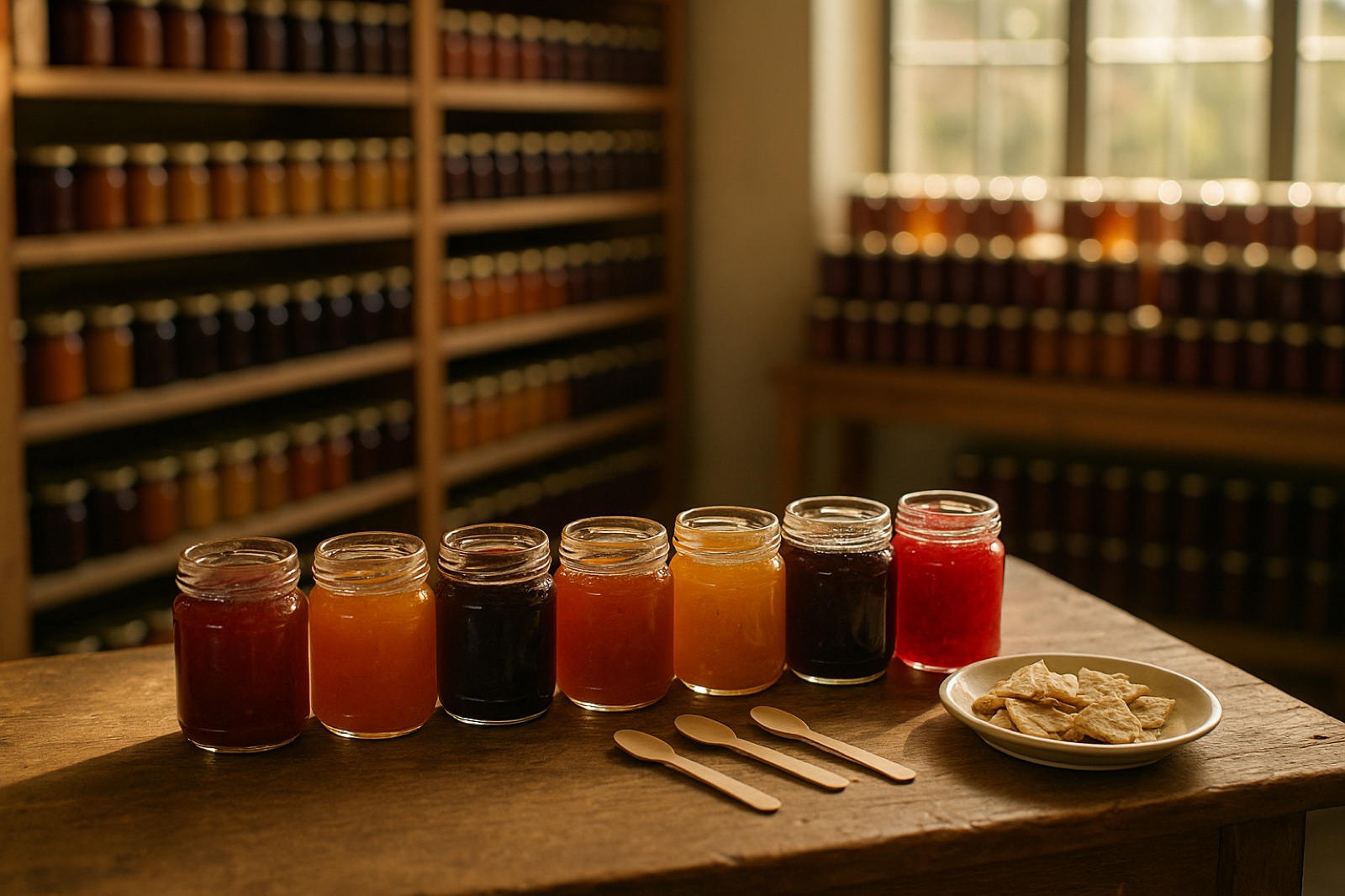
In 2000, psychologists Sheena Iyengar and Mark Lepper set up a tasting table inside Draeger’s, an upmarket grocery store in Menlo Park, California. On one Saturday, the table held 24 flavours of jam. On another, it held just 6.
Here is what happened:
- The big table drew more people. About 60% of shoppers who walked past the 24-jam table stopped. Only about 40% stopped at the 6-jam table.
- The small table sold far more. Around 30% of the people who tasted at the 6-jam table went on to buy a jar. At the 24-jam table, about 3% did.
Ten times the sales from a quarter of the choice. That is the headline, and it is a fair one.
But there is a detail in the study that almost nobody repeats. People at both tables tasted about the same amount: roughly one and a half jams each. The 24-jam shoppers did not taste more. They did not explore the bigger table. They looked at it, tried one or two, and walked away empty-handed.
That matters. The big table did not overload people with tasting. It overloaded them with deciding. Faced with 22 flavours they had not tried, the easiest answer was no jam at all.
Does the Paradox of Choice Hold Up?
Here is where honest writing has to slow down, because the research did not stop in 2000.
In 2010, three researchers, Benjamin Scheibehenne, Rainer Greifeneder and Peter Todd, gathered 50 experiments on “choice overload,” covering just over 5,000 people, and pooled the results. The average effect was close to zero. Some studies found more options made things worse. Some found more options helped. Many found nothing at all. The jam table, it seemed, might have been a one-off.
If that were the end of the story, you could stop reading. It is not.
In 2015, a second team, Alexander Chernev, Ulf Böckenholt and Joseph Goodman, went back over the same field, this time with 53 studies and around 7,200 people. Instead of asking “is choice overload real?”, they asked a better question: “when is it real?” And a clear pattern came out.
Too many options hurt in four situations:
- When the options are hard to compare. Lots of features, no clear way to line them up.
- When the decision itself is hard. Time pressure, many steps, or a lot riding on it.
- When you just want it over with. You are not enjoying the browse; you want to be done.
- When you do not know what you want. The researchers call this preference uncertainty. It is the big one.
Read that last one again. The paradox of choice is not really about how many jars are on the table. It is about whether you walked up to the table already knowing which jar you came for.
A person who loves apricot jam is not overloaded by 24 flavours. They scan, spot the apricot, and go. The person who gets stuck is the one who thinks, “I should pick the best one,” and has no idea what best means to them. That is why the effect is so uneven across studies. It was never the shelf doing the damage. It was the empty space where a preference should have been.
Schwartz, to be fair, said something close to this himself. His book is less about shelves than about a kind of person he calls a “maximizer,” someone who has to find the best option every time. If you want the research on that, and why “good enough” often wins, we unpacked it in what analysis paralysis really is.
Why More Choice Can Make You Less Happy
So when the paradox does bite, what exactly is it doing to us? Schwartz lays out several reasons, and most of us will recognise all of them.
- Regret before you even choose. With 24 jars, you can already picture the 23 you are about to give up. That anticipated regret makes you hesitate, and sometimes freeze.
- Every option costs you the others. Economists call this opportunity cost. Each attractive jar you do not pick quietly subtracts from the one you do.
- Expectations climb. If there are 40 toothpastes, surely one of them is perfect. So anything short of perfect feels like a let-down.
- You blame yourself. With two options, a bad result is bad luck. With forty, it is your fault. You had every chance to get it right.
There is one more finding that makes this worse, and it is strange. In 2002, researchers Daniel Gilbert and Jane Ebert ran a study with students in a photography course. Each student printed two favourite photos and had to keep one. Some were told the choice was final. Others were told they could swap in the next few days. The students who could change their minds ended up liking their photo less, and the gap was still there well after the swap window had closed.
Keeping your options open feels like safety. It usually works like a slow leak. The mind only settles behind a choice once it believes the choice is done.
How to Beat the Paradox of Choice
None of this needs money, an app, or a quieter life. It needs a change in order: decide what you want before you look.
- Write the three things it must do before you open a single tab. Comfortable, under budget, arrives this week. That is your apricot. The first option that ticks all three wins. Everything else is noise. If you are not even sure what matters to you anymore, our free What Are My Core Values? quiz is a gentle five-minute way to find out.
- Shrink the shelf on purpose. Pick a default toothpaste, a default breakfast, a default route, a default “night in” show, and stop re-deciding them. You are not missing out. You are saving your deciding for things that deserve it.
- Treat the choice as final. Once you have chosen, stop comparing. Do not read the reviews of the thing you did not buy. Gilbert and Ebert’s students were happier because the door was shut.
- Choose in one sitting. Spread a choice over a week and you will revisit it a dozen times. Give it one honest hour, then decide.
- Let good enough be good. Nobody has ever been made happy by the single best jam in the world. Plenty of people are happy with the one on their toast.
If you notice your choices get harder as the day wears on, that is a slightly different problem with its own fix, and we covered it in what decision fatigue really is.
The Hostess Who Was Troubled About Many Things
The idea that overload comes from not knowing what you want is newer than the jam study. The cure for it is very old.
There is a story in the Gospels about a woman named Martha who had an important guest in her home, and the guest was Jesus. She did what good hosts do. She cooked, she served, she ran. Her sister Mary did something that looked almost rude by comparison. She sat down at the guest’s feet and listened.
Martha, understandably, complained. And the answer she got is the part worth noticing. She was not told to work faster. She was not given a shorter to-do list. She was told, gently, that she was “troubled about many things,” and that “one thing is needful.” Her sister had simply chosen it.
That is the preference uncertainty finding, two thousand years early. Martha was not overloaded because her kitchen had too many tasks. She was overloaded because, in that moment, she had not settled what the evening was for. Mary had. Once you know the one thing, the other twenty-three jars stop shouting.
The oldest idea underneath all of this is quietly comforting: peace does not come from a bigger table, and it does not come from a smaller one either. It comes from already knowing what, and who, you came for. For a lot of people through history, that one thing has been God, and everything else found its place around it.
A good place to start: if the idea of choosing one thing and letting the rest go quiet landed somewhere in you, we made a short free guide called The Beginner’s Guide to Feeling God’s Presence Every Day. It is a simple video and companion PDF for noticing God in ordinary moments, including the ones in a crowded kitchen or a crowded aisle. Get the free guide. Free.
Pick Your Jar
Next time you are stuck in front of forty tubes of toothpaste, or forty thumbnails, or forty open tabs, try to notice what is really happening. The shelf is not the problem. You just have not told yourself what you want yet.
So tell yourself. Three things it must do. The first one that fits. Door shut.
Then go home and put the jam on your toast, and let it be the best jam in the world, because you chose it.
Discussion Question
Do you think shops and apps should offer fewer options, or is it up to each of us to learn how to choose? Tell us what you think in the comments.
Share This
The famous jam study: 24 flavours drew more shoppers, but 6 flavours sold ten times as much. Turns out the real problem isn’t too many options. It’s not knowing what you want. https://bgodinspired.com/?p=117715
A 2015 review of 7,200 people found “choice overload” is only real in a few situations, and the biggest one is not knowing what you want before you look. Explains my whole streaming habit. https://bgodinspired.com/?p=117715
“Decide what you want BEFORE you look at the options.” Simple, and I have been doing it backwards my whole life. Good read on the paradox of choice: https://bgodinspired.com/?p=117715
Questions People Ask About the Paradox of Choice
What is the paradox of choice in simple terms?
The paradox of choice is the idea that having more options can make people less satisfied rather than more. Beyond a certain point, extra choices add effort, worry about picking wrong, and regret over the options not taken. The term was popularised by psychologist Barry Schwartz in his 2004 book The Paradox of Choice: Why More Is Less.
What was the jam study about the paradox of choice?
In 2000, psychologists Sheena Iyengar and Mark Lepper set up a jam tasting table in Draeger’s grocery store in Menlo Park, California. When the table offered 24 flavours, about 60% of passing shoppers stopped, but only about 3% of tasters bought jam. When it offered 6 flavours, about 40% stopped, but around 30% of tasters bought. Shoppers at both tables tasted a similar number of jams, roughly one and a half each.
Is the paradox of choice real?
The paradox of choice is real in some situations but not all. A 2010 meta-analysis of 50 experiments by Scheibehenne, Greifeneder and Todd found an average effect close to zero. A 2015 meta-analysis of 53 studies by Chernev, Böckenholt and Goodman found that more options do cause choice overload when the options are hard to compare, the decision is difficult, the person wants to finish quickly, or the person does not know what they want. That last condition, preference uncertainty, is one of the strongest.
Why does having too many choices make us unhappy?
Barry Schwartz lists several reasons too many choices can make people unhappy: anticipated regret about the options being given up, the opportunity cost of every option not chosen, rising expectations that the perfect option must exist, and self-blame when the result falls short. Separate research by Daniel Gilbert and Jane Ebert in 2002 found that people who could change their minds later liked their choice less than people whose choice was final.
How do you overcome the paradox of choice?
To overcome the paradox of choice, decide what you want before looking at the options. Write down two or three things the choice must do, then pick the first option that meets them. Set defaults for small repeated choices such as food, routes and routines, make decisions in one sitting, treat the choice as final once made, and stop comparing it to the options you passed over.