 0
0
 0
0
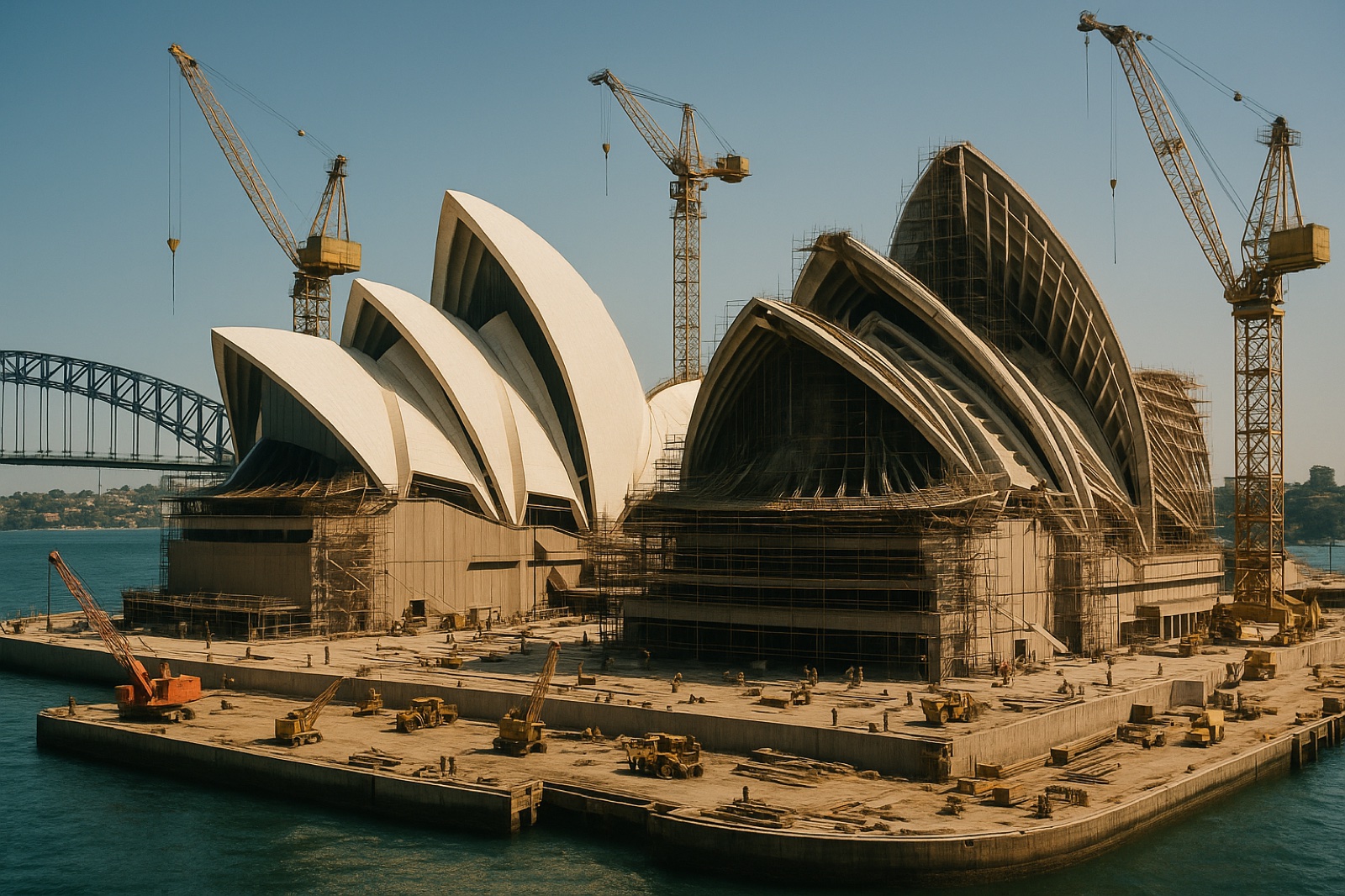
In 1957, a Danish architect named Jørn Utzon won a competition to design an opera house on the edge of Sydney Harbour. The idea was bold: a set of white sails rising out of the water. The budget was seven million Australian dollars. The doors were due to open in January 1963.
They opened in October 1973. The final bill was 102 million dollars. Fourteen years instead of four. More than fourteen times the money.
If you have ever said “this will take me an hour” and looked up three hours later, you already know what the planning fallacy is. You have just never seen it at that size.
What Is the Planning Fallacy?
The planning fallacy is our habit of guessing that a task will take less time, less money and less effort than it really will, even when we have watched the same kind of task run late before.
The name comes from two psychologists, Daniel Kahneman and Amos Tversky, who used it in a 1979 paper. Their point was not that people are lazy or bad at maths. It was about where we look when we make the guess.
When we plan, we look inward. We picture the steps of this one job, the way we hope it will go, with no sick days and no surprises. Kahneman and Tversky called that the inside view. What we almost never do is look outward and ask the plain question: how did the last ten jobs like this actually turn out? That is the outside view. It is nearly always less flattering, and nearly always closer to the truth.
Kahneman and Tversky named the pattern. The Opera House had already proved it. By the time their paper came out, the building had been open for six years.
The Study That Measured It
In 1994, three researchers, Roger Buehler, Dale Griffin and Michael Ross, published a set of studies in the Journal of Personality and Social Psychology. The best-known one followed 37 psychology students finishing their honours theses.
Each student was asked to guess when they would hand in. On average they said 33.9 days. The real average was 55.5 days. Only about three in ten finished by the date they had named.
Here is the part that stings. The researchers also asked for a worst-case guess: if everything goes as badly as it possibly could, when will you finish? The average worst case was 48.6 days. Even that gloomy guess came in about a week before the real finish line.
And one more thing from the same work. When people were asked how long someone else’s task would take, they were much closer to right. We can see the delays coming for other people. We just cannot see them coming for ourselves.
The Man Who Named It Fell for It
This is the best part of the story, because it shows how deep the fallacy goes.
Years before the 1979 paper, Kahneman was part of a team in Israel writing a new school textbook on judgement and decision-making. After about a year of work, he asked everyone in the room to write down how long they thought the whole project would take. The guesses were tightly bunched: a year and a half to two and a half years.
Then he turned to the one person on the team who had watched other groups write curriculums from scratch, a dean named Seymour Fox, and asked a different question. Not “how long will ours take?” but “how long did the others take?” Fox thought about it. He could not recall a single team that had finished in under seven years. A good share of them had never finished at all.
The outside view was sitting in the room the whole time. Nobody had asked it.
And here is the twist Kahneman himself later admitted. Even after hearing that, the team carried on. The book took eight years. By the time it was done, it was hardly used. Knowing about the planning fallacy, it turns out, is not the same as being cured of it. The man who named it kept building his own tower.
Why We Keep Doing It
The planning fallacy is not a character flaw. It is a side effect of how a plan gets made.
- A plan is a story, and a story has one path. When you picture the job, you picture the version where each step leads to the next. You do not picture the week the car breaks down, because that is not part of the story. But something always is.
- We remember the finish, not the slog. Ask yourself how long the last big project took and you will likely recall it a little shorter than it was. The hard middle fades. The clean ending stays.
- Hopeful guesses get the yes. Bent Flyvbjerg, an Oxford researcher who has spent decades studying big projects, argues that the ones that get approved are often the ones with the most hopeful estimates. The same thing happens in a kitchen. We say yes to the version that sounds doable.
- Half-done things pull at us. Once the foundation is poured, quitting feels worse than overspending. That tug has a name of its own, the Zeigarnik effect, and it is part of why overruns grow so large. The further in you are, the harder it is to stop.
How to Beat the Planning Fallacy
The fix Kahneman and Tversky suggested in 1979 is still the best one, and it costs nothing. Take the outside view on purpose. Here is how to do it at a kitchen table.
- Ask what the last one took. Before you guess, dig up the real numbers from the last job like this one. Not how long you planned. How long it actually took. Start from that, not from your hopeful picture of this one.
- Look at other people’s projects, not just yours. Flyvbjerg turned this into a method he calls reference-class forecasting: gather a list of similar projects, see how far over they ran, and plan for that. When he checked the Opera House against hundreds of other big builds, nothing else had a bigger overrun by proportion. It now sits in the record books for it.
- Make the buffer a rule, not a feeling. The students’ worst-case guess was still a week short. So do not add padding “if it feels needed.” Decide up front, before you are in love with the plan, to add a fixed share to the time and the money. Then do not negotiate with yourself about it.
- Ask someone else to guess for you. People were far better at predicting other people’s delays than their own. Hand your plan to a friend, a sibling, a co-worker, and ask when they think it will be done. Trust their number more than yours.
- Run the numbers on paper, not in your head. For a money goal, a fixed amount each week against a fixed target gives a date you cannot wish shorter. Our free How Long Will It Take Me to Save? calculator does that in a minute, and the honest date is usually the most useful thing it shows you.
None of this makes you slower. It makes your yes mean something. A plan you can actually keep is the first step to trusting yourself again, which is the whole idea behind starting with smaller promises.
A Much Older Story About a Half-Built Tower
Long before anyone measured the planning fallacy, a teacher described it in a single sentence.
Jesus once asked a crowd a question. Which of you, wanting to build a tower, does not first sit down and count the cost, to see whether you have enough to finish it? Because if you lay the foundation and then run out, everyone walking past will laugh and say: “This man began to build, and was not able to finish.”
That is the Opera House. That is the eight-year textbook. That is the 37 students. Sit down first. Count what finishing actually takes, not what you hope it takes.
The surprising part is what he was talking about. He was not giving building advice. He was speaking to people who were excited to follow him, and he was telling them, in effect: slow down and count what this will cost you before you say yes. He would rather have a few people who had counted honestly than a crowd who said yes fast and quit at the foundation.
There is something freeing in that. A lot of the overwhelm in a life comes from yeses that were never counted. Jobs, favours, projects, promises, all begun on the inside view. The oldest advice on the subject is not “do less.” It is “sit down first.” Which is also, oddly enough, exactly what the psychologists said.
A good place to start: The Beginner’s Guide to Feeling God’s Presence Every Day. A simple way to notice something steady underneath the plans that run late. Get the free guide. Free.
The Building Got Finished. Its Builder Never Saw It.
Utzon resigned in 1966, worn down by fights over money and time, and left Australia. He never went back. When the Queen opened the Opera House in 1973, he was at home in Denmark and, reportedly, did not even watch it on television. Other architects finished the inside, and it was not the inside he had drawn.
Today the building is one of the most loved on earth. The overrun did not stop that. But it cost the man who imagined it the chance to finish his own work.
That is the quiet lesson of the planning fallacy. An honest count at the start rarely kills a good idea. It just gives you a real chance of being there at the end.
So the next time you are about to say “this will take an hour,” try one more sentence first. “What did it take last time?” Then plan from that.
Discussion Question
Would big projects like the Opera House ever get started if planners told the truth about time and cost up front, or does a little optimism get good things built that honesty would have killed? Tell us what you think in the comments.
Share This
The Sydney Opera House was supposed to take 4 years and cost $7M. It took 14 and cost $102M. There’s a name for why we all do this: the planning fallacy. https://bgodinspired.com/?p=117673
Students guessed 33.9 days to finish their thesis. Reality: 55.5. Even their WORST-case guess was a week short. I feel seen. https://bgodinspired.com/?p=117673
The psychologist who named the planning fallacy fell for it himself: estimated 2 years, took 8. Knowing about it doesn’t cure it. Here’s what does: https://bgodinspired.com/?p=117673
Questions People Ask About the Planning Fallacy
What is the planning fallacy in simple terms?
The planning fallacy is the common tendency to underestimate how much time, money and effort a task will take, even when past tasks of the same kind ran late or over budget. The term was coined by psychologists Daniel Kahneman and Amos Tversky in a 1979 paper. It happens because people plan by imagining the steps of their own project going smoothly, instead of looking at how similar projects actually turned out.
What is a famous example of the planning fallacy?
The Sydney Opera House is the most famous example of the planning fallacy. When construction began in 1959 it was budgeted at 7 million Australian dollars and scheduled to open in January 1963. It opened in October 1973 at a cost of about 102 million Australian dollars, roughly ten years late and more than 14 times the original estimate. Researcher Bent Flyvbjerg found it had the largest proportional cost overrun of any building project he studied.
Who discovered the planning fallacy?
Daniel Kahneman and Amos Tversky named the planning fallacy in 1979 in a paper called “Intuitive prediction: biases and corrective procedures.” They described the “inside view,” where a planner focuses on the details of one project, and contrasted it with the “outside view,” which looks at the outcomes of many similar projects. In 1994, Roger Buehler, Dale Griffin and Michael Ross tested the idea directly and found that students finishing a thesis predicted 33.9 days on average but actually took 55.5 days.
How do you overcome the planning fallacy?
The best-supported way to overcome the planning fallacy is to take the outside view: base an estimate on how long similar past projects actually took rather than on how this one is imagined going. Practical steps include checking the real time and cost of the last comparable task, asking another person to estimate the project because people predict others’ delays more accurately than their own, and adding a fixed buffer to time and budget that is decided in advance rather than when it feels necessary. Bent Flyvbjerg’s reference-class forecasting applies the same idea to large projects.
Is the planning fallacy the same as optimism bias?
The planning fallacy is a specific form of optimism bias. Optimism bias is the general tendency to expect better outcomes than the evidence supports. The planning fallacy applies that tendency to plans and estimates, producing forecasts for time and cost that sit unrealistically close to the best-case scenario. One feature that sets it apart is that it persists even in people who know their own past projects ran late.