 0
0
 0
0
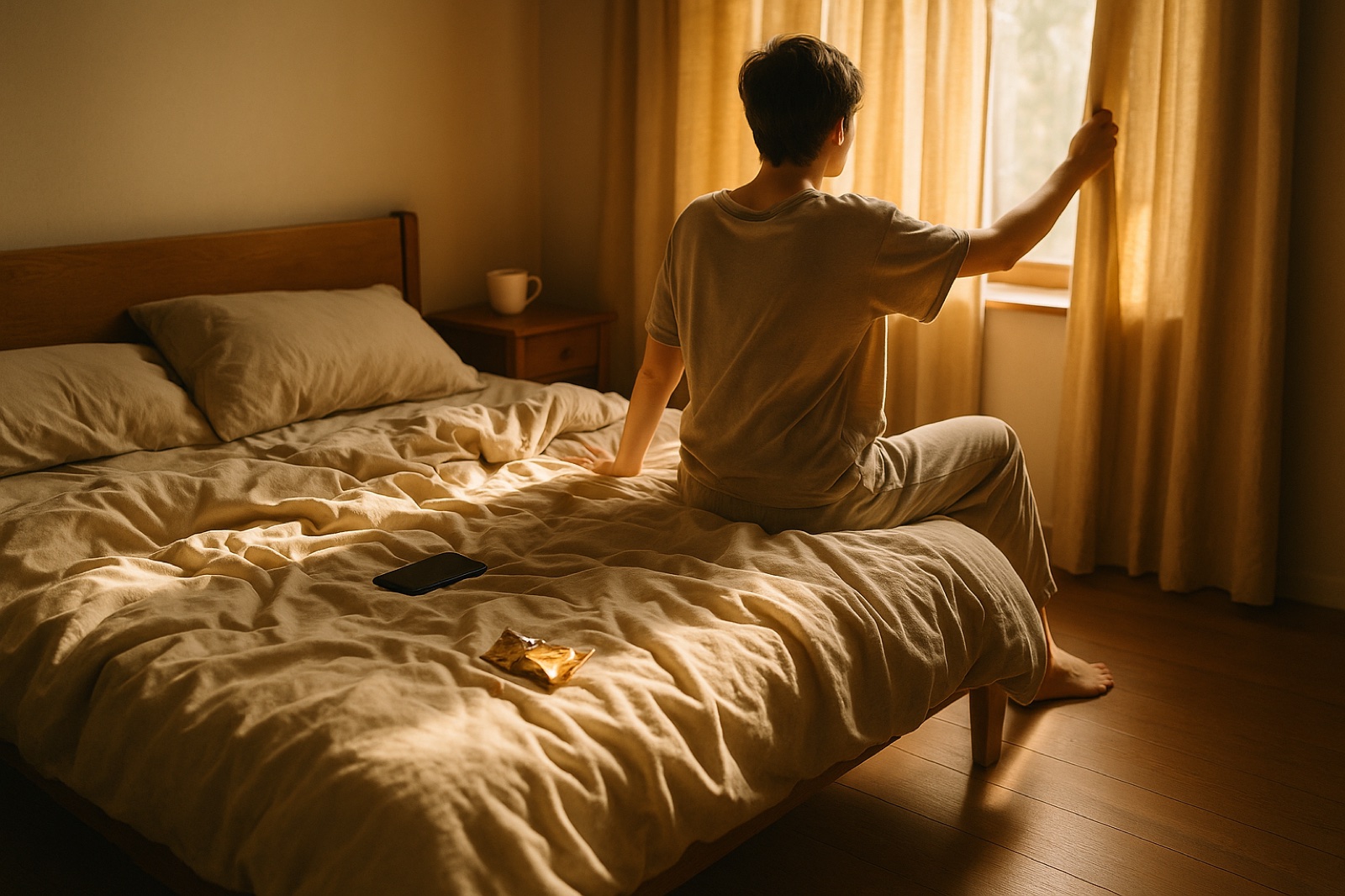
You know the day. The alarm goes off, and you just… don’t. You pull the covers up. You grab your phone. Snacks appear. Hours pass. The light moves across the wall, and you are still there.
The internet has a name for it now: bed rotting. And a lot of people are looking it up. Some want permission. Some want to know if something is wrong with them. Maybe you are a bit of both.
Here is the honest answer. A day in bed can be real rest. It can also be a quiet way of hiding. The bed is the same. What happens inside you is not. Let’s look at how to tell the difference.
What Is Bed Rotting?
Bed rotting means spending a long stretch of time in bed on purpose, while you are awake. Not sick. Not sleeping. Just staying there. Most people fill the time with their phone, a show, or snacks. Some just lie still.
The name started as a joke on TikTok. “Rotting” sounds lazy and a little gross, and that is part of the point. People use it to laugh at themselves while admitting something real: I am worn out, and I need to stop.
It is not a small trend. In a 2024 survey of about 2,000 American adults, the American Academy of Sleep Medicine found that nearly 1 in 4 people in Gen Z said they bed rot. And the feeling behind it is the same everywhere: school, work, family, the news, the endless noise of a phone. People are tired in a way that one night of sleep does not fix.
If that is you, you are not strange. You are human.
When Bed Rotting Actually Helps
Let’s be fair to the bed. Therapists who write about this trend say a day in bed is not a problem by itself. Sometimes it is exactly what your body is asking for.
Bed rotting tends to help when:
- You chose it. You decided, “Today I rest.” It did not just happen to you.
- It has an end. An afternoon. A day. Not a week that blurs together.
- It is rare. A reset after a hard stretch, not the way every day off goes.
- You get up lighter. You feel more like yourself when it is over.
That last one matters most. Hold on to it.
When a Day in Bed Is Really Hiding
Here is the part the jokes skip. Clinicians who write about bed rotting keep coming back to one question: When you get up, do you feel restored, or do you feel the same, or worse?
Rest fills you up. Hiding just passes the time.
Some signs a day in bed has turned into hiding:
- You feel heavier, not lighter, when you finally get up.
- Your mind keeps looping on worries while your body lies still.
- You are skipping people, meals, or things you used to enjoy to stay there.
- It keeps happening, and it does not feel like a choice anymore.
- You feel empty or numb while you are there, not calm.
If several of those fit, that is not a character flaw. It can be a sign of depression, anxiety, or deep burnout. Those are real and common, and they can get better. Talking to a doctor, a counselor, or even one trusted person is a strong move, not a weak one. If you ever feel unsafe or have thoughts of ending your life, please reach out to a local crisis line or emergency service right now.
There is also a middle place, where you are not depressed but not okay either. Many people call it languishing, the “blah” feeling that makes bed look like the only reasonable plan.
The Part Sleep Doctors Worry About
Here is something most bed rotting videos never mention. Sleep doctors have a different worry than therapists do. It is not about your mood. It is about your brain’s habits.
Dr. Anne Marie Morse, a sleep medicine doctor who spoke for the American Academy of Sleep Medicine, put it simply: “The bed’s primary purpose is for sleep.” Your brain learns by linking places to what happens in them. Spend hours awake in bed, scrolling and snacking and worrying, and your brain starts to file the bed under “awake.”
That can come back to bite you at night. You lie down tired, and your mind switches on. Morse warned that for people who already struggle to sleep, trends like bed rotting “may actually worsen the sleep problem.”
So here is a small, free fix: if you need a lazy day, try moving it. The couch. A chair by a window. A blanket on the floor. Same rest, but your bed stays a place for sleep. And if the scrolling is the real reason the hours vanish, this free screen time calculator can show you how much of your week the phone is really taking.
What Real Rest Usually Looks Like
If bed rotting is often not quite rest, what is? Most real rest shares three things.
It is chosen. You step away on purpose, instead of collapsing.
It is bounded. It has a shape and an end, so you come back.
It is not totally alone. This one surprises people. We think rest means shutting everyone out. But the kind of tired that sends us to bed for a whole day is often the kind that needs to be said out loud to someone. One honest text, “I’m really worn out,” can do more than six hours under a duvet. If you are carrying the deep kind of tired, this piece on emotional exhaustion explains why one day off rarely refills it.
There is an old story about exactly this. Jesus’s closest friends came back from a long stretch of work, so busy that they had not even had time to eat. The first thing they did was sit with Him and tell Him everything that had happened. Only then did He say to them, come away to a quiet place, “and rest a while.” And they went together.
Chosen. Bounded. Not alone. It turns out the line between resting and hiding was drawn a long time ago. Rest was never meant to be something you disappear into. It was meant to be something you are invited into.
Small Steps If You Keep Ending Up in Bed
None of these cost money. None need a therapist or spare time.
- Name it before you start. Say, “I’m resting until 2pm.” A rest with a name has an edge.
- Open the curtains. Morning daylight helps set your body clock. Even ten minutes by a window counts.
- Do one tiny thing. Drink a glass of water. Wash your face. Small actions often come before motivation, not after it.
- Tell one person. Not a big speech. Just “Rough week. Staying in today.”
- Check in after. Ask: Do I feel restored, or worse? Let the answer guide the next day off.
- Watch for patterns. If “worse” keeps winning for two weeks or more, that is your sign to reach out for help.
A Better Kind of Day Off
You do not need to feel guilty for being tired. Tired is information. It is your body and mind telling you the truth about how much you have been carrying.
The question is just what you do with that truth. Hide from it under the covers? Or step away on purpose, for a while, maybe with someone beside you, and come back a little more yourself?
Next time the alarm goes off and the bed pulls you back, you do not have to fight it. Just ask it one question: Is this rest, or am I hiding? Then open the curtains, and let the light answer too.
Discussion Question
Where do you think the line is between a healthy lazy day and hiding from life? Is it how long you stay, how you feel after, or something else? Share your take in the comments. We read every one.
Share This
Post 1: Bed rotting test: when you finally get up, do you feel restored or worse? Rest fills you up. Hiding just passes the time. https://bgodinspired.com/index.php/health-and-wellness/what-is-bed-rotting/
Post 2: I did not know sleep doctors worry that lying awake in bed all day can train your brain to see your bed as a place to be awake. Might explain some of my bad nights. https://bgodinspired.com/index.php/health-and-wellness/what-is-bed-rotting/
Post 3: Real rest is chosen, has an end, and is not totally alone. Sending this to anyone who has spent a whole Saturday under the duvet lately (hi, it me). https://bgodinspired.com/index.php/health-and-wellness/what-is-bed-rotting/
Questions People Ask About Bed Rotting
What does bed rotting mean?
Bed rotting means spending a long stretch of time in bed on purpose while awake, usually scrolling a phone, watching shows, or snacking. The term became popular on TikTok, mostly among Gen Z, as a half-joking name for taking a full day in bed to recover from stress or exhaustion.
Is bed rotting bad for you?
Bed rotting is not bad by itself. An occasional, chosen day in bed can help a tired person recharge. It becomes a concern when it happens often, stops feeling like a choice, or leaves a person feeling worse instead of rested. Sleep doctors also warn that spending many waking hours in bed can make it harder to fall asleep at night.
Is bed rotting a sign of depression?
Bed rotting can be a sign of depression when it comes with low mood, numbness, looping worries, losing interest in things once enjoyed, or pulling away from people. A simple test is how a person feels afterward: restored suggests rest, while the same or worse, again and again for two weeks or more, is a good reason to talk to a doctor or counselor.
How many people bed rot?
In a 2024 survey of about 2,000 American adults, the American Academy of Sleep Medicine found that nearly 24 percent of Gen Z respondents said they practice bed rotting. The trend is also widely discussed by young people in many other countries.
How can I rest without bed rotting?
To rest without bed rotting, choose the rest on purpose, give it a clear end time, and take it somewhere other than the bed, such as a couch or a chair by a window. Opening the curtains, drinking water, and telling one person that you are worn out can also make a day off feel more restoring.