 0
0
 0
0
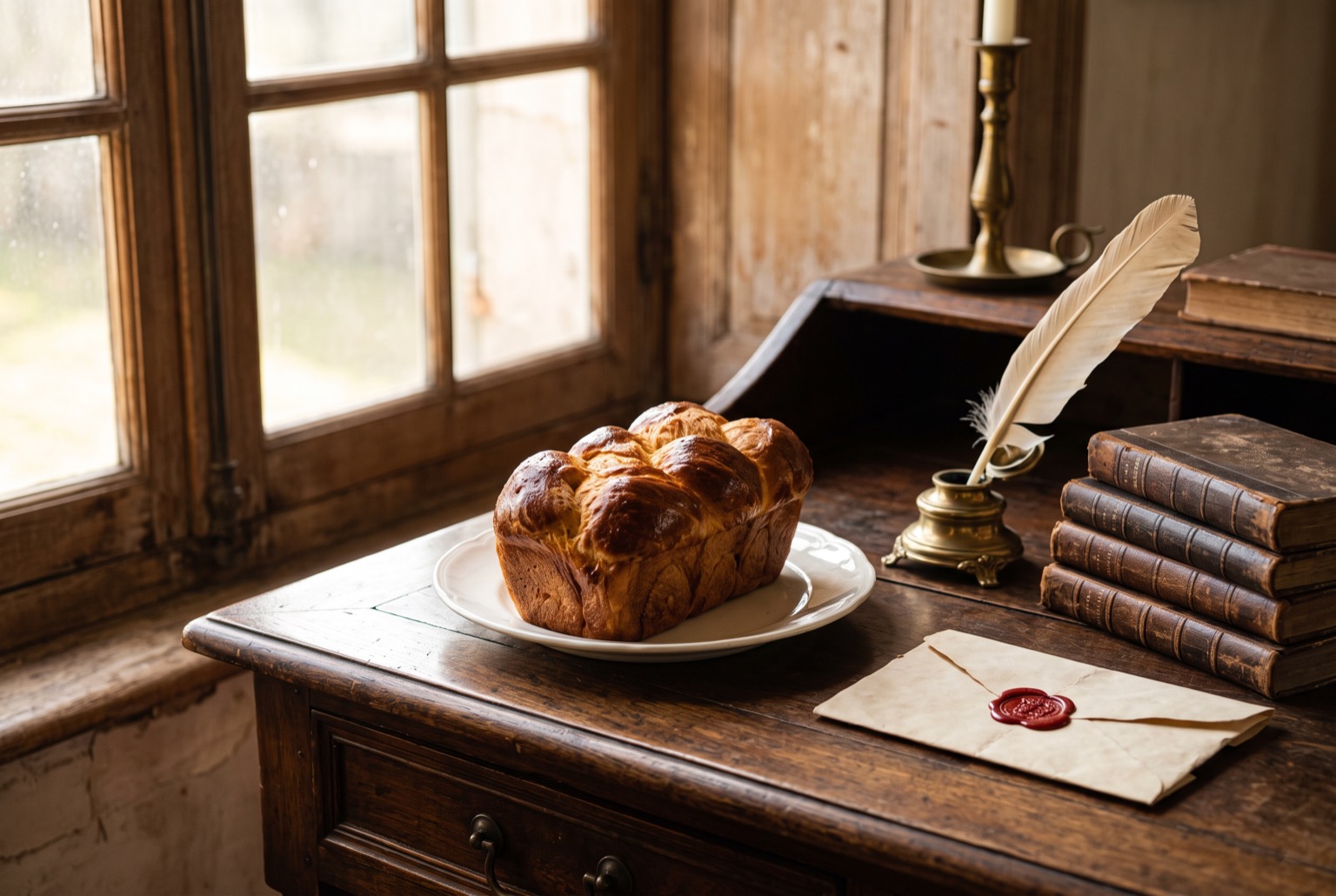
Did Marie Antoinette say “Let them eat cake”? There is no evidence she ever did. The line first shows up in the Confessions of the philosopher Jean-Jacques Rousseau. He wrote it down around 1765, when Marie Antoinette was a little girl of about nine, living in Vienna. She would not arrive in France until 1770. Rousseau never named the speaker. He only called her “a great princess.” And the words were not even about cake. In French, the line is “Qu’ils mangent de la brioche” – “Let them eat brioche.”
Almost everyone has heard this one pinned on her. It is in school lessons, films and cartoons. It is easy to see why it stuck. But the real story is stranger, and it says something about all of us.
Where “Let Them Eat Cake” Really Comes From
The oldest source anyone has found is Book Six of Rousseau’s Confessions, his life story. He wrote the first six books around 1765. They were not printed until 1782, after he died.
In that part of the book, Rousseau is a young man working as a tutor. He is teaching the sons of Monsieur de Mably in Lyon, France. That job lasted from 1740 to 1741. Rousseau admits something a bit funny about himself there. He has been sneaking bottles of the family’s white wine up to his room. But he cannot drink wine without something to eat. And he is too proud to walk into a bakery and buy a plain loaf of bread. A fine gentleman with a sword at his side, buying bread? He could not face it.
Then, he says, he remembered a saying. In a classic English translation of the Confessions, it reads:
“At length I recollected the thoughtless saying of a great princess, who, on being informed that the country people had no bread, replied, ‘Then let them eat pastry!'”
So he went and bought pastry instead. He tells us he walked past thirty pastry shops before he was brave enough to go into one.
Look at the timeline closely. Rousseau says he remembered the saying during his time in Lyon, around 1740. That means, in his telling, it was already an old story then. Marie Antoinette was born in November 1755, fifteen years later. Whoever Rousseau’s “great princess” was, the story as he tells it cannot be about her.
Some historians go further. They think Rousseau may have made the princess up, or dressed up a joke he had heard. His Confessions is a memoir, not a court record. We simply do not know who, if anyone, first said it.
How It Got Pinned on Marie Antoinette
Here is the surprising part. The earliest known link between the saying and Marie Antoinette that researchers point to comes long after her death in 1793. It turns up in the 1840s, in a French satire magazine called Les Guêpes (“The Wasps”), written by Alphonse Karr. And in 1843, Karr himself reported finding the same story in a book dated 1760 – told about a Duchess of Tuscany. In other words, one of the first writers to connect it to her also noticed that the story was older than she was.
Over the years the line has been hung on other royal women too, including daughters of King Louis XV. There is even a very similar tale from ancient China. A chronicle says that when Emperor Hui of Jin, who ruled around 290 to 307 AD, heard his people had no grain, he asked why they did not eat meat porridge. The story shape is old. It gets told about whichever ruler people want to blame.
And “cake” is itself a slip. Brioche is a soft bread made rich with butter and eggs. In Rousseau’s day it cost more than ordinary bread, so the point of the joke still stands. But the English word “cake” came later, through translation.
If finding out what a famous line really said makes you curious about the words people quote most of all, you can read one whole gospel the way it was written. The complete Book of Matthew is free as an immersive PDF and a 28-chapter audiobook – including the trial scene we come to below.
What Marie Antoinette Actually Wrote About Hungry People
We do have Marie Antoinette’s own words from a real bread crisis. In the spring of 1775, bread prices jumped and riots broke out across northern France. Historians call it the Flour War. If she was ever going to say something cold about hungry people, this was the moment.
Instead, in a letter to her mother, she wrote this (as quoted by historian Antonia Fraser in her 2002 biography Marie Antoinette: The Journey):
“It is quite certain that in seeing the people who treat us so well despite their own misfortune, we are more obliged than ever to work hard for their happiness.”
Fraser describes her as a generous giver to charity, who was moved by the poor when their need was put in front of her. None of that makes her a saint. She lived in huge luxury while many people went hungry, and that was real. But the one sentence everyone remembers her for is the one sentence we have no evidence she said.
Why a Borrowed Sentence Matters
This is more than a trivia fix. Think about what happened. A line about an unnamed princess, possibly invented, got attached to a real young woman decades after she was dead. Now it is the first thing most people on earth know about her. She cannot answer back.
The Bible takes this kind of thing very seriously. One of the Ten Commandments is about exactly this. Exodus 20:16 says: “Thou shalt not bear false witness against thy neighbour.” That is not only about lying in court. It is about putting words on someone that are not theirs.
It happened to Jesus, too. Early in John’s gospel, Jesus said, “Destroy this temple, and in three days I will raise it up” (John 2:19). John tells us “he spake of the temple of his body” (John 2:21). Later, at his trial, Matthew records that the council “sought false witness against Jesus, to put him to death” (Matthew 26:59). The witnesses who finally stood up said: “This fellow said, I am able to destroy the temple of God, and to build it in three days” (Matthew 26:61).
Look at how small the change is. “Destroy this temple” became “I am able to destroy the temple.” A few words shifted, and a promise turned into a threat. That is exactly how a misquote works. It does not need a big lie. It only needs a small drift that fits what people already want to believe.
None of us passed on the cake line to hurt anyone. We heard it from teachers, books and films who heard it from someone else. That is how nearly everyone learned it, and that is the point. Sayings travel. They pick up names along the way. The honest thing – the loving thing – is to check the name before we pass it on. You can see the same pattern in the “definition of insanity” line there is no evidence Einstein ever said, and the Bible’s own warning about how fast words travel is in what the Bible says about gossip.
The Short Version
There is no evidence that Marie Antoinette ever said “Let them eat cake.” The line comes from Rousseau’s Confessions, written when she was a child in Austria, about a princess he did not name. The link to her appears in print only decades after she died. The story is older than she was. And the next time a famous line shows up with a famous name attached, it is worth one quiet question: who actually said this?
Q&A: “Let Them Eat Cake”
Did Marie Antoinette really say “Let them eat cake”?
There is no evidence Marie Antoinette ever said “Let them eat cake.” The line first appears in Jean-Jacques Rousseau’s Confessions, written around 1765, when she was about nine years old and living in Vienna. Rousseau credits it only to “a great princess” and never names her.
Who actually said “Let them eat cake”?
Nobody knows who first said “Let them eat cake.” The earliest known written version is in Rousseau’s Confessions, where he says he remembered it while working as a tutor in Lyon around 1740. He does not name the princess, and some historians think he may have invented the story.
What is the original French of “Let them eat cake”?
The original French is “Qu’ils mangent de la brioche,” which means “Let them eat brioche.” Brioche is a rich bread made with butter and eggs, more expensive than plain bread in the 1700s. The word “cake” came in later through English translation.
When was “Let them eat cake” first linked to Marie Antoinette?
The earliest known link between “Let them eat cake” and Marie Antoinette appears in the 1840s, about fifty years after her death, in Alphonse Karr’s French satire magazine Les Guêpes. In 1843, Karr also reported finding the same story told about a Duchess of Tuscany in a book dated 1760.
What did Marie Antoinette say about hungry people?
During the 1775 bread riots known as the Flour War, Marie Antoinette wrote to her mother that seeing people treat the royal family so well despite their own hardship meant “we are more obliged than ever to work hard for their happiness.” The letter is quoted in Antonia Fraser’s 2002 biography, Marie Antoinette: The Journey.
Let’s Talk
What is a famous quote you grew up hearing with a name attached, that you now wonder about? Share it in the comments – it might be the next one we dig into.
Social Share Posts
I had no idea “Let them eat cake” was written down by Rousseau when Marie Antoinette was a 9-year-old girl in Vienna. There is no evidence she ever said it.
The famous “Let them eat cake” line was never about cake – it was brioche. And the earliest known link to Marie Antoinette shows up about 50 years after she died.
Jesus had words put in his mouth too. “Destroy this temple” became “I am able to destroy the temple” at his trial. A misquote only needs a small drift. Worth checking before we pass one on.