 0
0
 0
0
Here is something you did a dozen or more times in the last minute without being asked: you breathed.
You didn’t plan it. You didn’t worry about it. It just happened, the same way your heart kept beating while you slept last night and the night before that.
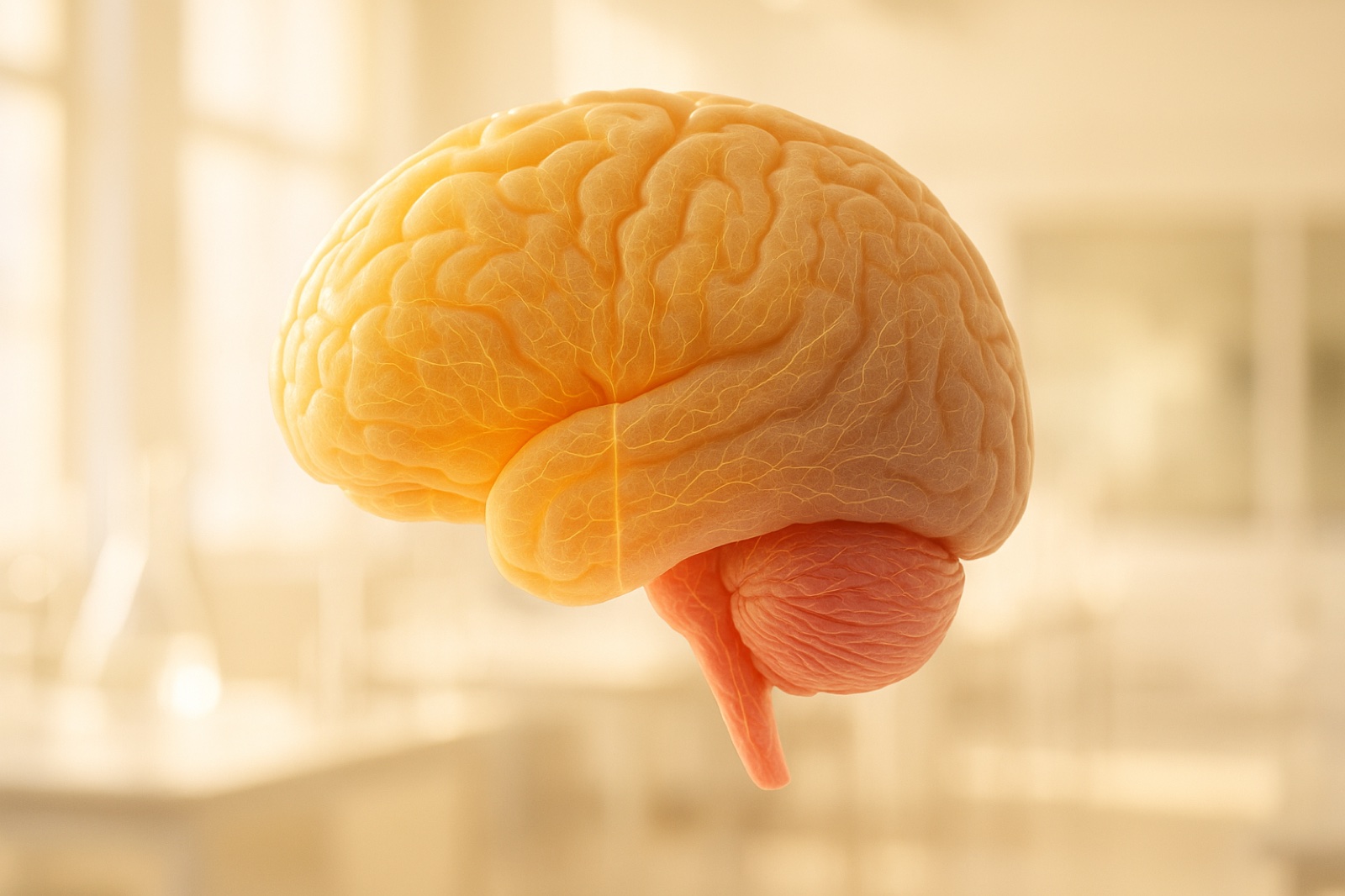
Now a team at Stanford Medicine has found something strange about the part of you that does that work. Your brain grows from two separate cells, not one. The front of your brain, the part that thinks, plans, talks and yes, worries, comes from one family of starter cells. The back of your brain, the part that keeps you breathing, comes from a different family. And the two never mix.
The study was published on September 18, 2026, in the journal Nature Neuroscience, from the lab of developmental biologist Kyle Loh. Stanford’s own write-up is here. Here is what they found, what the headlines got a little wrong, and why it might be the most calming piece of brain science you read this year.
Your Brain Grows From Two Separate Cells: What Stanford Found
Very early in life, before you had a brain at all, you had a thin sheet of cells that would one day become one. Scientists have long pictured that sheet as a single starting point, slowly sorting itself into front and back.
The Stanford team found it doesn’t work that way. From the earliest stages they could see, there were two separate groups of starter cells:
- The front group switches on a gene called Otx2. These cells build the forebrain and midbrain. That is where language, thinking, planning and reflecting on yourself live.
- The back group switches on a gene called Gbx2. These cells build the hindbrain, including the brainstem. That is the part that runs breathing, heartbeat, sleep and hunger, plus the muscles in your face and throat you use to swallow and speak.
The two groups don’t overlap. A cell is one or the other. “We’ve shown for the first time that the front of the brain arises from a totally different progenitor cell than the back,” Loh said in Stanford’s announcement. (A progenitor cell is just a starter cell, one that can still become several kinds of cell.)
So the part of you that lies awake at 3am running through everything that could go wrong, and the part of you that kept you breathing through all of it, were never built from the same material.
The Part the Headlines Got Wrong
Some headlines ran this as “you have two brains” or “the brain is two separate organs.” That’s a stretch, and it’s worth saying plainly.
Your brain works as one thing. The front and back are wired together, talk to each other constantly, and share a skull, a blood supply and a job. What the study found is that they have two different starting points, not that they are two different machines.
Rayyan Jokhai, a Stanford graduate student on the team, put it more carefully than the headlines did. Even 500 million years ago, in Jokhai’s words, there were separate neural systems, “which now almost operate as one.”
Almost as one. Two beginnings, one working life. That is the accurate version, and honestly, it’s the more interesting one.
The Detail Most Stories Skipped: The Cells Refuse to Switch
Here is the part I found most surprising.
For years, scientists have struggled to grow human hindbrain nerve cells in a dish. They could grow front-of-brain cells fairly well. Back-of-brain cells kept failing.
The Stanford team thinks they now know why. Earlier attempts had likely started with front-brain starter cells and tried to push them into becoming back-brain cells. The new work suggests that simply can’t be done.
They tested it. According to a detailed report on the study, when the researchers tried to turn front-brain starter cells into back-brain ones, 82% held on to their midbrain identity and fewer than 1% took on hindbrain features. It worked the other way too: 97% of the back-brain cells kept their own identity.
Think about what that means. The thinking part of your brain cannot be turned into the breathing part. Not with coaxing, not with the right chemicals in a lab dish. It is not built for that job.
Once the team started from the right cells, the back-brain group, they did something no one had managed before. They grew working human hindbrain motor neurons in a dish. The cells fired electrical signals and carried the markers you’d expect from real hindbrain cells.
That matters far beyond curiosity. Diseases like ALS and spinal muscular atrophy (SMA) damage these exact kinds of cells. SMA is one of the leading genetic causes of death in babies. Being able to grow these cells means scientists can finally study those diseases up close.
This Split Is Older Than Almost Anything Alive
The team didn’t just look at mice and human stem cells. They found the same two-origin pattern in chickens, in zebrafish, and in acorn worms, small creatures that live on the sea floor and share a very distant ancestor with us.
That points to a split more than 550 million years old.
It may go back further still. Jellyfish, whose line split off from ours even earlier, have two separate nerve rings at opposite ends of their bodies. The Stanford team suggests that over deep time, two nervous systems were slowly pushed together into one head.
If you like this kind of hidden-in-plain-sight biology, we looked at what neurons actually look like when you stop drying them out, and it isn’t the smooth tube in the textbook either.
What the Scientists Say We Still Don’t Know
Good science tells you where its edges are. This study has a few:
- Dish versus body. Much of the work was done with cells in a lab. Whether the cells stay this locked-in inside a growing embryo still needs checking.
- The cerebellum is a question mark. The cerebellum, the part at the lower back of your brain that helps with balance and movement, isn’t fully explained yet. There could be a third kind of starter cell.
- Which cells come from where. Exactly which hindbrain nerve cells grow from the back-brain group still has to be mapped out.
So this is an early and important finding, not the final word. But the core of it, two separate starting points that don’t swap, is clear enough that it changes how scientists will try to study brainstem diseases from now on.
Your Worry Can Talk to Your Breathing. It Can’t Run It.
Here’s where this lands in ordinary life.
The thinking brain and the breathing brain do talk. That’s why worry makes your chest tight and your breath fast and shallow. It’s why you can choose to hold your breath.
But try holding it for as long as you can. At some point, the choice gets taken away from you. The back of your brain notices the carbon dioxide building up and simply takes over. You breathe whether your thinking mind agrees or not. Even if someone held their breath until they fainted, breathing starts again on its own.
Your worrying mind can nudge the breathing system. It can speed it up. It can make it feel awful. What it can’t do is keep you alive. That job was handed to a different set of cells, built from a different beginning, long before you had a single worried thought.
Which is a strange kind of relief, isn’t it? All those nights you lay awake as if everything depended on you thinking it through, your body was quietly proving otherwise. The most important work was already being done. By a part of you that never once asked your permission.
There’s an old question, asked on a hillside a very long time ago: which of us, by worrying, has ever added a single hour to our life? It turns out the answer was built into us before we were born. The breath that carried you through last night was never your worry’s job. It was a gift, given by God before you ever knew to ask for it, and kept going on all the nights you forgot about it.
Try This Tonight
None of this needs money, an app or a quiet house. Just a minute.
- Notice one breath you didn’t choose. Don’t change anything yet. Just catch your body breathing on its own, and let yourself notice that it was already happening.
- Make the out-breath a little longer than the in-breath. Breathe in gently, then breathe out slowly, a bit longer. Many people find this helps a racing body settle. Do it five or six times.
- Hand one worry back. Pick the thing your mind keeps circling. Say, even silently, “That one isn’t mine to hold all night.”
- Let the back of your brain do its job. Stop steering your breath. Let it run itself, the way it has every night of your life.
If your breathing tends to catch or sigh on its own when you’re stressed, that’s normal too. We wrote about why your lungs need a deep sigh every few minutes. And if you’d like a clearer picture of where your worry sits right now, our free How Anxious Am I? assessment takes a couple of minutes.
Tonight, when your mind starts running, you might remember this: the part of you that keeps you alive was never waiting on the part of you that worries. It came from a different beginning. And it has never missed a night.
Questions People Ask
Does the human brain really grow from two separate cells?
Yes, in the sense a September 2026 Stanford Medicine study in Nature Neuroscience describes. The forebrain and midbrain grow from starter cells that switch on a gene called Otx2, while the hindbrain, including the brainstem, grows from a separate group of starter cells that switch on a gene called Gbx2. The two groups did not overlap in the study, and the researchers could not turn one kind into the other.
Do humans have two brains?
No. Headlines saying humans have two brains overstate the Stanford finding. The human brain works as one connected organ. What the 2026 Stanford study found is that the front and the back of the brain have two different developmental starting points, even though they are wired together and work almost as one in an adult.
What part of the brain controls breathing and heartbeat?
The hindbrain, especially the brainstem at the base of the skull, controls breathing, heartbeat, sleep and hunger, along with the face and throat muscles used for swallowing and speaking. A 2026 Stanford study found that the hindbrain grows from a different family of starter cells than the forebrain, which handles thinking, language and planning.
Can anxiety stop you from breathing?
Anxiety can make breathing feel fast, shallow or tight, because the thinking parts of the brain can influence the breathing system. But anxiety cannot take over breathing completely. The brainstem responds to rising carbon dioxide and restarts breathing automatically, which is why a person cannot hold their breath indefinitely. Anyone with chest pain or breathing trouble that does not ease should see a medical professional.
Why does the Stanford two-origin brain study matter for ALS and SMA?
ALS and spinal muscular atrophy damage motor neurons, including ones in the hindbrain. Scientists had struggled to grow human hindbrain motor neurons in a lab. The 2026 Stanford study found that these cells must come from hindbrain starter cells rather than forebrain ones, and the team used that to grow working human hindbrain motor neurons in a dish for the first time, opening a new way to study these diseases.
What Do You Think?
Does it change anything for you to know that the part of your brain that worries and the part that keeps you breathing came from two different beginnings? Or is it just a neat fact? Tell us in the comments. We read every one.
Share This
“Your brain grows from two separate cells that never mix. The part that keeps you breathing was never built by the part that worries. Weirdly comforting at 3am.” https://bgodinspired.com/index.php/bible-resources/bible-and-science/brain-grows-from-two-separate-cells/
“Stanford found the thinking part of your brain literally can’t be turned into the breathing part. They tried. Fewer than 1% switched. My worry was never keeping me alive after all.” https://bgodinspired.com/index.php/bible-resources/bible-and-science/brain-grows-from-two-separate-cells/
“Didn’t expect a brain study to calm me down, but here we are. The part of you that breathes and the part that overthinks start from different cells. That split is over 550 million years old.” https://bgodinspired.com/index.php/bible-resources/bible-and-science/brain-grows-from-two-separate-cells/