 0
0
 0
0
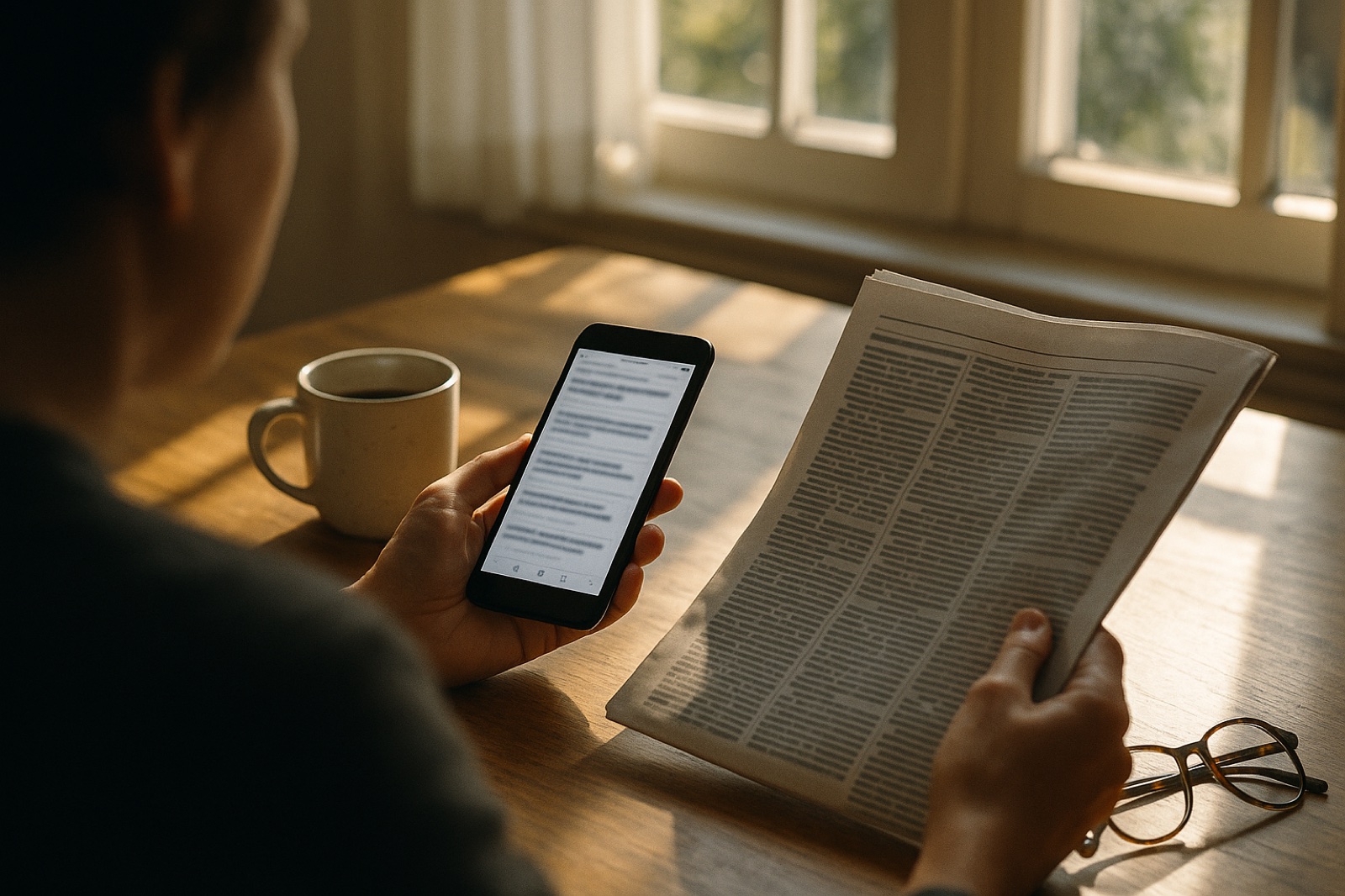
You read something on your phone. It sounds right. Then someone forwards you the opposite story, and that sounds right too.
If that feels familiar, you are far from alone. A national poll released on 9 September 2026 found that 37% of American adults say it is difficult to know whether the information they come across is true. That is more than a third of people who aren’t sure what to believe.
So how do you know what is true when everything sounds convincing? There are simple checks that cost nothing. But there is also a surprising twist, and it comes from one of the most famous questions ever asked.
What the New Poll Actually Found
The survey is called State of the Facts 2026. It was run by the AP-NORC Center for Public Affairs Research together with USAFacts. They asked 1,036 adults between 29 July and 10 August 2026, with a margin of error of about 4 points either way.
Here is what stood out:
- 37% say it is difficult to know if the information they encounter is true.
- Only 20% say it is easy to check whether information made by AI is accurate.
- Just 9% are extremely or very confident that AI-generated information is reliable.
- 47% feel more concerned than excited about what AI is doing to information. Only 11% feel more excited.
- Trust in government information on the cost of living fell from 26% in 2024 to 18%. On health care it fell from 26% to 16%.
Now here is the detail that is easy to read past. 37% is a big number, but it is not most people. Plenty of people don’t say it’s hard to tell what’s true.
The sharper change in the poll is trust. Across topic after topic, fewer people trust the sources they used to rely on. That matters, because the problem isn’t only “I can’t find the facts.” It’s “I don’t know who to believe anymore.” Those are two different problems, and they need two different fixes.
This was a US poll. But that feeling of being flooded with claims and not knowing which ones to trust shows up wherever people have a phone in their pocket.
How to Know What Is True: Six Checks Anyone Can Use
You don’t need special training, money, or a paid app. You need a few habits and a little patience.
1. Notice the feeling first
If a story makes you instantly furious, scared, or thrilled, pause. Strong feelings are exactly what makes people share things before they check them. The feeling isn’t proof that a story is false. It’s just a signal to slow down.
2. Find who actually said it
Ask: who first said this, measured this, or saw this? A screenshot of a headline isn’t a source. A post saying “studies show” isn’t a study. Try to find the original: the report, the full video, the person’s own words. You’ll often find it says something smaller or different from what’s being passed around.
3. Hear the second side before you decide
The first version of any story always sounds right, because nobody has questioned it yet. Before you settle on a view, look up what the other side says, in their own words, not how their opponents describe them. You may not change your mind. But you will know what you actually think.
4. Look for two or three independent witnesses
One source is a claim. Two or three sources that found it separately start to be evidence. Be careful here: ten websites repeating the same original article is still just one source, copied ten times.
5. Check the date
Old stories get shared again as if they happened today. A quick look at when something was published can save you a lot of worry, and save your friends from it too.
6. Treat AI answers as a lead, not a verdict
AI tools can be useful for finding where to look. But they can also sound completely confident while being wrong. Only 1 in 5 people in the poll said AI information is easy to verify. Use an AI answer as a starting point, then go and find the real source behind it.
And one more habit worth keeping: it is okay to say “I don’t know yet.” That short sentence protects you from a lot of mistakes.
The Hardest Part Isn’t Finding the Truth
Here’s the twist. About two thousand years ago, a Roman governor named Pontius Pilate asked one of the most famous questions in history. (Pilate was a real historical figure. A stone carved with his name and title was dug up in Israel in 1961.)
Pilate was questioning a prisoner, Jesus of Nazareth. Jesus told him that he had come into the world to bear witness to the truth. Pilate answered with three words: “What is truth?”
Then he walked straight back outside. No answer is recorded, because he didn’t wait for one.
It’s easy to stop there and say Pilate just didn’t care. But read on, and something more uncomfortable shows up. The moment he got outside, he told the crowd, “I find in him no fault at all.”
He had figured it out. He knew the man was innocent. And he didn’t say it once. He said it again when he brought the prisoner back out, and a third time when the crowd shouted him down. He even tried to set the prisoner free.
Then the crowd found the pressure point. If you let this man go, they said, you are not Caesar’s friend. In other words: your job is on the line.
So Pilate handed him over anyway. Another account says he washed his hands in front of everyone and declared himself innocent of it.
Pilate didn’t fail because the facts were hard to find. He had the facts. He failed because standing by the truth was going to cost him something.
That’s worth sitting with, because it’s still how it usually goes. Many of us know more than we act on. We know the rumour about a coworker isn’t fair. We know the post we’re about to share is probably twisted. The checking is the easy part. Saying so, when everyone around you believes the opposite, is the hard part.
And there’s one more detail in that scene that’s hard to shake. Pilate treated truth like a puzzle to toss over his shoulder on the way out of the room. But the man standing in front of him had just said he came to bear witness to it. Whatever you make of that claim, people have long believed that truth isn’t only a set of correct facts. It’s something closer to a person you stay with, long enough to actually hear. Even the old Greek word for truth points that way: it means something like “not hidden,” what you can finally see once you stop looking away.
What This Means for Your Phone Tomorrow Morning
You’ll still get the forwarded message. You’ll still see the headline that makes your stomach drop. Nothing about that is going away.
But you have more power here than a poll number suggests. Slow down at the feeling. Find the first source. Hear the other side. Check the date. Say “I don’t know yet” when you don’t.
And when you do find what’s true, don’t walk out of the room. Stay with it, even when it costs a little. That’s where most of us, like Pilate, actually get tested.
Questions People Ask About Knowing What Is True
What did the State of the Facts 2026 poll find?
The State of the Facts 2026 poll, run by the AP-NORC Center for Public Affairs Research with USAFacts, surveyed 1,036 US adults from 29 July to 10 August 2026. It found that 37% say it is difficult to know whether the information they encounter is true, only 20% say AI-generated information is easy to verify, and trust in federal government information on the cost of living fell from 26% in 2024 to 18%.
How can I tell if something I read online is true?
To tell if something online is true, pause if it triggers a strong emotion, find the original source rather than a screenshot or summary, read what the other side says in its own words, look for two or three sources that confirmed it independently, and check the publication date. None of these steps cost money, and together they catch most misleading stories.
Can I trust information from AI chatbots?
Information from AI chatbots should be treated as a starting point, not a final answer. AI tools can state wrong information with complete confidence. In the State of the Facts 2026 poll, only 9% of US adults said they were extremely or very confident that AI-generated information is reliable. The safest approach is to use an AI answer to find where to look, then verify it against the original source.
Who asked “What is truth?”
“What is truth?” was asked by Pontius Pilate, the Roman governor of Judaea, during the trial of Jesus of Nazareth, as recorded in the Gospel of John. Pilate asked the question and went back outside without waiting for an answer, then told the crowd he found no fault in Jesus. He repeated that verdict three times but still handed Jesus over to be crucified under pressure from the crowd.
Why is it so hard to act on the truth even when you know it?
Acting on the truth is often harder than finding it because the truth can carry a cost, such as disagreement with friends, pressure at work, or losing standing in a group. Knowing a fact and standing by it are two separate steps. The second step usually takes courage rather than more information.
Let’s Talk
What do you think is harder today: figuring out what’s true, or standing by it once you know? Share your answer in the comments. We’d love to hear it.
Share This
Post 1:
More than a third of adults in a new poll say it’s hard to tell what’s true. This piece gave me 6 free checks, and a twist about Pilate I’d never noticed. https://bgodinspired.com/index.php/bgodinspired-news/how-to-know-what-is-true/
Post 2:
Pilate asked “What is truth?” and walked out. But then he said “I find no fault in him” three times and gave in anyway. The hard part was never finding the truth. It was standing by it. https://bgodinspired.com/index.php/bgodinspired-news/how-to-know-what-is-true/
Post 3:
Before you forward that message: notice the feeling, find the first source, hear the other side, check the date. Simple, free, and it works. https://bgodinspired.com/index.php/bgodinspired-news/how-to-know-what-is-true/