 0
0
 0
0
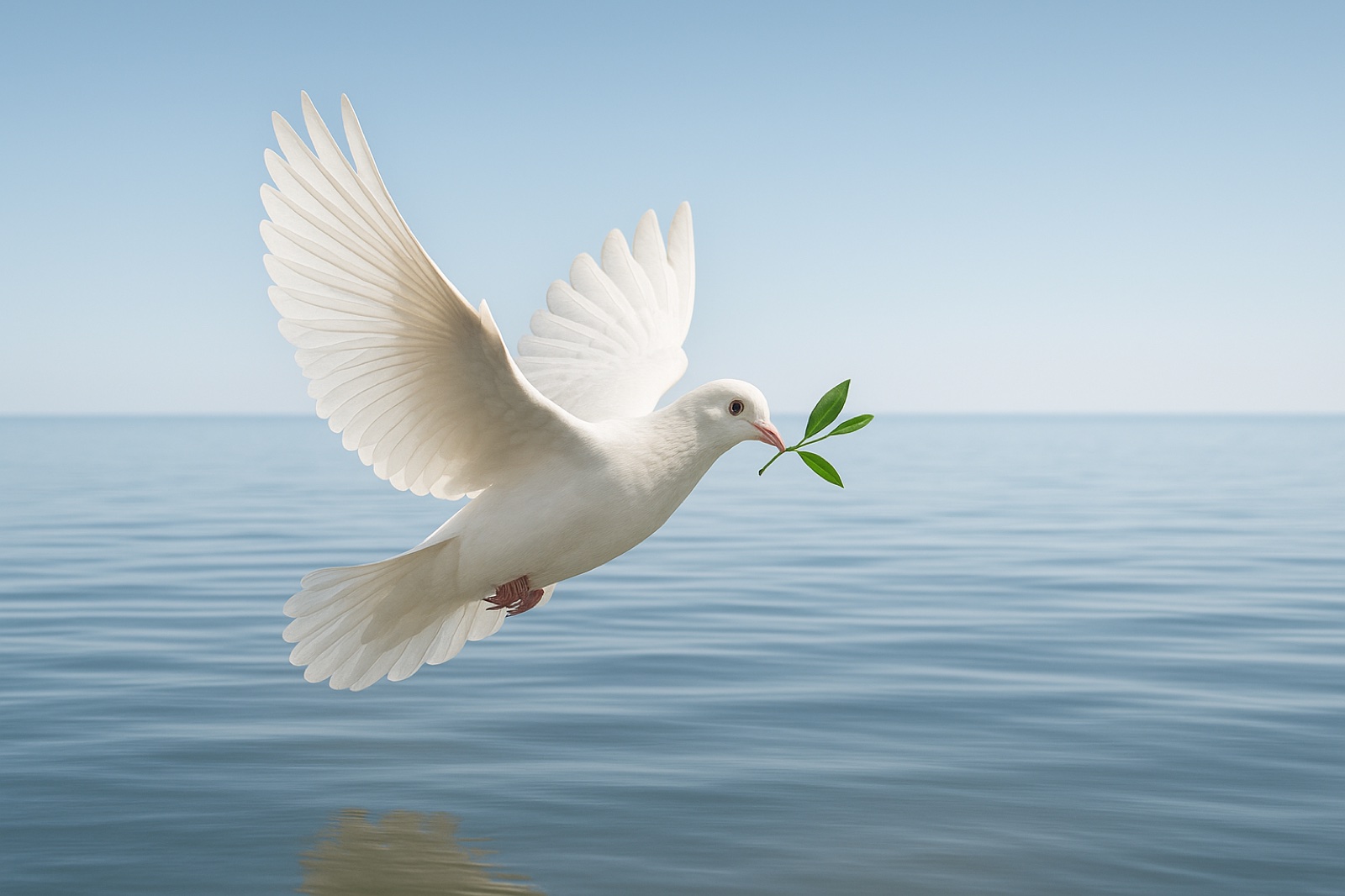
You have seen the picture a hundred times. A white bird, wings spread, a green sprig in its beak. It turns up on greeting cards and charity logos and the wall of a doctor’s waiting room. Somewhere along the way you learned it means peace, and you have never had a reason to question it since.
So when someone asks what does the dove symbolize in the Bible, the answer feels settled. Peace. The Holy Spirit. Purity, if you grew up in church.
All of that is genuinely in there. But it is not where the Bible starts with this bird, and it is not the thread that runs through the passages. Read them in order and something stranger shows up. For most of Scripture, the dove is not the bird that brings peace. It is the bird that cannot find anywhere to land.
What Does the Dove Symbolize in the Bible? Start With the Verse Nobody Quotes
Everyone knows the dove came back to Noah with a leaf. Almost nobody knows about the trip before that one.
Noah sends the dove out the first time and it comes home with nothing. Genesis 8:9 puts it like this: “But the dove found no rest for the sole of her foot, and she returned unto him into the ark.”
Read that slowly. Not “she found no food.” Not “she found no land.” She found nowhere to put her foot down. The whole world was still under water, and a small bird flew out over all of it looking for one dry thing to stand on and came back empty.
Then the verse does something tender. Noah “put forth his hand, and took her, and pulled her in unto him.” She did not land. She was caught.
If you have ever had a week where you kept going out and kept coming back with nothing, you have already met this bird.
It Was a Leaf, Not a Branch
Seven days later Noah tries again. This time the dove comes back in the evening, and Genesis 8:11 says “in her mouth was an olive leaf.”
A leaf. Not the branch every picture puts in her beak. That difference is small and it is worth sitting with, because a branch is a bouquet and a leaf is evidence. A single leaf meant the tops of the trees were finally above water. It was not a gift. It was a report.
And notice what Noah does not do. He does not open the door. He waits another seven days and sends her out a third time, and Genesis 8:12 says she “returned not again unto him any more.”
That silence is the happy ending. The dove does not come back because the dove finally has somewhere to be. Three flights: nowhere to land, one leaf, gone for good. If you want to know what the dove means in the Bible, that sequence is the whole grammar of it.
The Bird Poor People Could Afford
The dove shows up next in a place most articles about dove symbolism skip entirely: the price list.
The law of offerings assumed not everyone could bring a lamb. Leviticus 12:8 says plainly, “And if she be not able to bring a lamb, then she shall bring two turtles, or two young pigeons.” Turtledoves. The small, cheap, everywhere bird. It was the offering for people whose faith was not in question but whose money was.
Which is why one line in Luke lands so hard once you know it. When Mary and Joseph bring the infant Jesus to the temple, Luke 2:24 records what they offered: “A pair of turtledoves, or two young pigeons.”
They brought the poor person’s offering. The family God chose could not afford a lamb.
And years later, when Jesus turns over tables in that same temple, Matthew 21:12 lists exactly whose seats He overthrew — “the seats of them that sold doves.” Of all the stalls in the courtyard, the ones He went after were the ones marking up the sacrifice that poor families had no choice but to buy. The dove is not a decorative bird in Scripture. It has a price tag, and Jesus noticed who was paying it.
The Dove Is Not Always a Compliment
Here is the part that gets left out of every list of dove meanings, and it is the reason the symbol is worth taking seriously rather than sentimentally.
Hosea uses the dove as an insult. Hosea 7:11 says, “Ephraim also is like a silly dove without heart: they call to Egypt, they go to Assyria.” The picture is a bird flapping between two places, committing to neither, and calling it strategy. Not peaceful. Not pure. Just aimless.
David reaches for the same bird from the other direction. In Psalm 55:6 he says, “Oh that I had wings like a dove! for then would I fly away, and be at rest.” That is not a man admiring peace. That is a man who wants out.
So even the two extra passages point the same way as Genesis. In Hosea the dove is restless movement. In Psalms it is the wish for rest. The bird keeps showing up wherever somebody has not landed yet.
Harmless as Doves Does Not Mean Weak
One more, because it is almost always read wrong. In Matthew 10:16 Jesus sends His disciples out and says, “be ye therefore wise as serpents, and harmless as doves.”
“Harmless” in English sounds like “no threat, no spine, no use.” The Greek word behind it, akeraios, carries the sense of unmixed — nothing stirred into it, no second ingredient. Jesus is not telling them to be pushovers. He is telling them to be undiluted: sharp about the world, and with nothing sly mixed into their own motives. Read that way, the dove is not the soft half of the sentence. It is the harder half.
The Turn: A Dove Finally Lands
Now go to the Jordan River, and read the baptism of Jesus with Genesis still in your ear.
Matthew 3:16 says “he saw the Spirit of God descending like a dove, and lighting upon him.” Luke 3:22 adds that “the Holy Ghost descended in a bodily shape like a dove upon him.”
Both accounts say like a dove. The text is careful. It is describing how the Spirit came down, not claiming God has feathers.
But look at the verb the King James translators chose: lighting upon him. Alighting. Coming to rest. Landing.
That is the answer to Genesis 8:9. The first dove flew out over a drowned world, found no rest for the sole of her foot, and had to be pulled back in by a hand. Generations later a dove comes down out of an open sky and settles — and the place it lands is not a mountain, not a temple, not a nation. It is a person, standing in a river, soaking wet.
The dove does not symbolize peace that has already arrived. It symbolizes the search for solid ground, and the moment God provides it. Which means that when you ask what the dove means, you are really asking a question about yourself: where does the Spirit of God actually come to rest?
The answer the Gospels give is not a place. It is a life. Yours included.
What This Changes About Your Week
Most of us are not waiting for a flood to go down. We are circling one thing. A conversation we keep rehearsing. A decision we go out to and come back from, go out to and come back from. A worry that has us flapping between Egypt and Assyria, as Hosea would say, and calling it thinking it through.
The Genesis account does not shame the dove for coming back empty. It records that Noah reached out and pulled her in, and then sent her again when the time was right. Rest was not something she achieved on flight one. It was something that showed up on flight three, after two returns that looked like failure.
If you have come back empty twice, you are not off the story. You are in the middle of it. This is the same shape you will find in the Hebrew word for rest, menuchah, which is not a break from work but a place settled enough to stay. And if you like following a symbol all the way through Scripture, the number eight does the same thing — including the eight people who were on that ark.
Actions to Take Today
- Name the circle. In one sentence, write down the one thing you have been going out to and coming back from all week. One sentence, not a page. Naming it stops it flying.
- Ask for a leaf, not the whole flood. Say it out loud: ask God for one piece of solid ground in that one thing today. Not the resolution. A leaf. Something small and real enough to prove the water is going down.
- Be the hand. Think of one person you know who is circling something right now, and give them somewhere to land before tonight — a reply to the message you left sitting, a five-minute call, a chair next to you. Costs nothing. Changes their day.
Journaling Prompts
- Where are you still in flight — going out, coming back, going out again? What would “somewhere to land” actually look like there, in plain detail?
- The dove did not land on flight one. She was caught by a hand that reached out. Whose reaching hand have you been flying past?
A Prayer for the Circling
God, I am tired of going out and coming back with nothing. I have been over the same water so many times I have stopped expecting to find anything. I am not asking for the whole flood to go down today — just one leaf, one piece of ground I can actually stand on. And when I come back empty again, be the hand that reaches out and pulls me in. Give my heart somewhere to rest, the way the Spirit rested on Jesus in that river. Amen.
One Question Worth Talking About
Why do you think the dove became the world’s symbol for peace already achieved, when the Bible almost always uses it for the search that comes before peace? Tell us what you think in the comments — we read every one.
Share This
- The dove in Genesis did not bring peace. She flew out over a drowned world, found no rest for the sole of her foot, and came back empty. If you have come back empty twice this week, you are not off the story. You are in the middle of it.
- Everyone pictures an olive branch. Genesis says an olive leaf. A branch is a bouquet. A leaf is evidence.
- Mary and Joseph brought two turtledoves to the temple. That was the offering for people who could not afford a lamb. The family God chose was poor, and Scripture just says it, plainly, in one line.
Questions People Ask About the Dove in the Bible
What does the dove symbolize in the Bible?
In the Bible the dove carries several linked meanings: the search for solid ground after judgment (Genesis 8), the Holy Spirit coming to rest on Jesus at His baptism (Matthew 3:16), the affordable sacrifice brought by poor families (Leviticus 12:8), an undivided or unmixed character (Matthew 10:16), and, in Hosea 7:11, aimless indecision. The common thread across most of these passages is not peace already achieved but the search for a place to land — and the moment God provides one.
Did the dove bring Noah an olive branch or an olive leaf?
Genesis 8:11 in the King James Version says the dove returned with an olive leaf in her mouth, not a branch. The olive branch is how the scene entered popular art and greeting-card imagery. The single leaf mattered in the story because it was proof that the tops of the olive trees were finally clear of the floodwater.
Is the Holy Spirit a dove?
No. Both Gospel accounts of Jesus’ baptism use a comparison rather than an identification. Matthew 3:16 says the Spirit of God descended “like a dove,” and Luke 3:22 says the Holy Ghost descended “in a bodily shape like a dove.” The text is describing the manner of the descent — gentle, visible, coming to rest — not stating that the Holy Spirit is a bird.
Why did Mary and Joseph offer two turtledoves?
Leviticus 12:8 allowed a mother who could not afford a lamb to bring two turtledoves or two young pigeons instead. Luke 2:24 records that Mary and Joseph brought exactly that offering when they presented the infant Jesus at the temple, which tells the reader plainly that the family Jesus was born into was poor. It is one line, easy to read past, and it sets the economic world Jesus grew up in.
What does “harmless as doves” actually mean?
In Matthew 10:16 Jesus tells His disciples to be “wise as serpents, and harmless as doves.” The Greek word translated “harmless,” akeraios, carries the sense of unmixed or unadulterated — nothing stirred into it. The instruction is not to be naive or passive, but to be clear-eyed about the world while keeping one’s own motives undiluted. Related reading: what baptism actually is and is not.