 0
0
 0
0
There is a specific kind of tired that comes from asking for the same thing more than once.
Not the first time. The first time you ask, there is still hope inside the asking. It is the third time, or the thirtieth, when you notice you have started to lower your voice. You are still praying about it. You just no longer expect anything to be different when you finish.
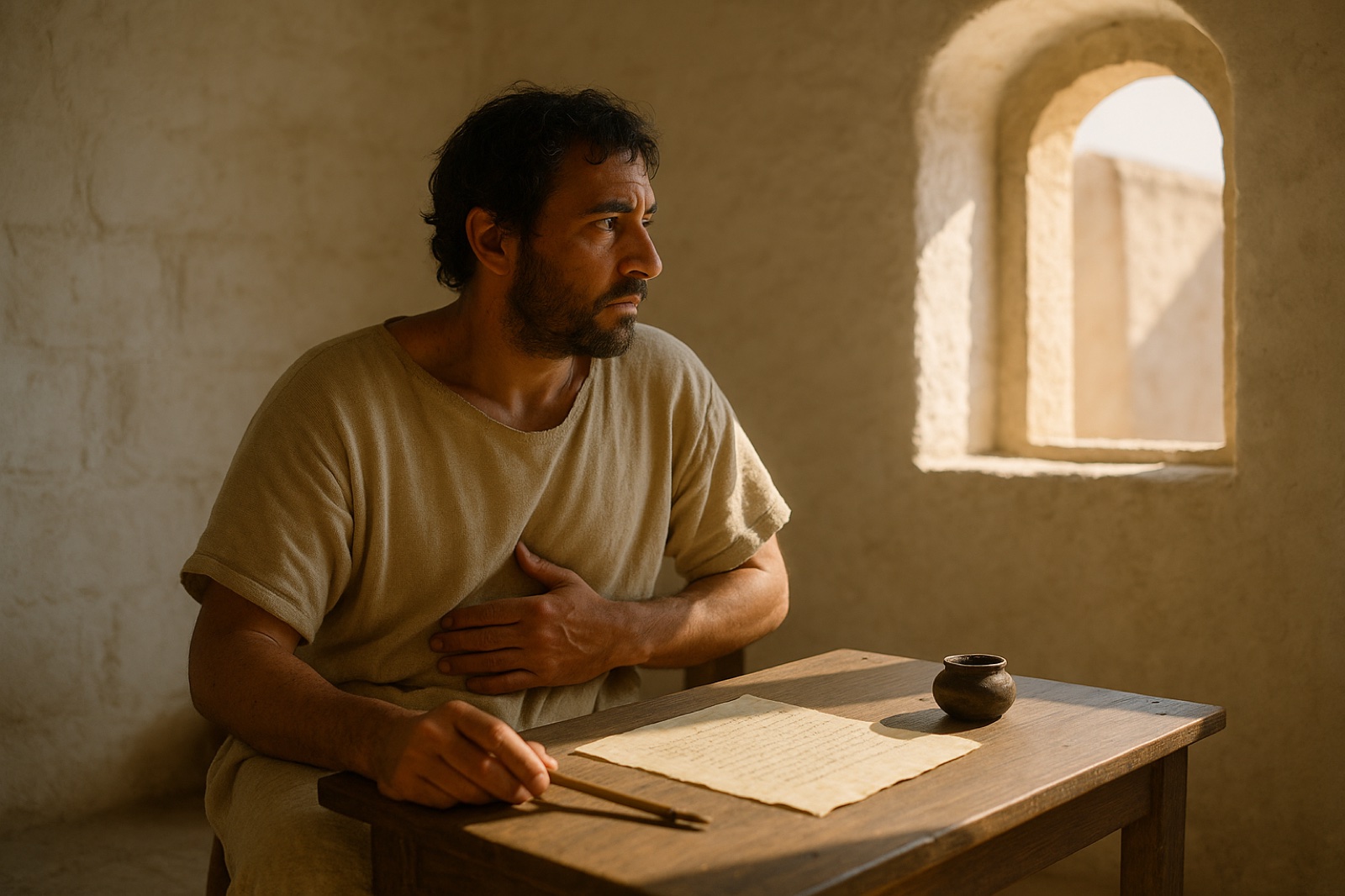
So it makes sense that you would go looking for the one man in the Bible whose unanswered prayer we actually have on record. And it makes sense that the question you typed was what was Paul’s thorn in the flesh — because if you knew what his was, you would know whether yours counts.
Here is the honest answer, before anything else: nobody knows. Not the scholars. Not the commentaries. Not the person who told you confidently after church. Two thousand years of people reading this passage very closely, and the text has never given it up.
That sounds like a dead end. Stay a minute. It turns out to be the most useful thing in the whole passage.
What Was Paul’s Thorn in the Flesh? Everything the Bible Actually Says
All of it fits inside three verses.
Paul is writing to a church in Corinth that has started to doubt he is who he says he is. In the middle of defending himself, he mentions an overwhelming spiritual experience — and then, in almost the same breath, what it cost him.
“And lest I should be exalted above measure through the abundance of the revelations, there was given to me a thorn in the flesh, the messenger of Satan to buffet me, lest I should be exalted above measure. For this thing I besought the Lord thrice, that it might depart from me. And he said unto me, My grace is sufficient for thee: for my strength is made perfect in weakness.” — 2 Corinthians 12:7-9 (KJV)
Now read it again and notice what is missing.
No name. No diagnosis. No description. Not even a “you all know the one.” Paul is writing to people who had met him, travelled with him, watched him work. And he still does not say.
What he gives instead is four small pieces. It was given to him. It is called a messenger of Satan. It buffets him. And twice in a single sentence, it is tied to keeping him from being lifted up too high.
Those four pieces do not sit comfortably together. Hold onto that — we come back to it.
The Three Answers People Give — and Where Each One Runs Out
Every theory anyone has ever offered lands in one of three groups. Walking through them is worth your time, because watching each one run out of road is how you get to the real thing.
1. Something Wrong With His Body
This is the most popular answer, and it has the most going for it.
Paul told the Galatians, “Ye know how through infirmity of the flesh I preached the gospel unto you at the first” (Galatians 4:13). A few lines later he says something striking — that they cared for him so much that “if it had been possible, ye would have plucked out your own eyes, and have given them to me” (Galatians 4:15). And at the close of that same letter: “Ye see how large a letter I have written unto you with mine own hand” (Galatians 6:11).
Eyes. Large handwriting. Sick while preaching. You can see how people arrived at an eye disease.
Here is where it runs out. Paul never once connects any of that to the thorn. Not in Galatians, not in Corinthians, not anywhere. And “plucked out your own eyes” reads just as naturally as a figure of speech — giving up the most precious thing you own — the way someone today might say they would give an arm for a friend. Large handwriting has plenty of ordinary explanations too, including simply wanting a line to land hard.
It is a reasonable guess. It is not evidence. Those are different things, and most articles on this quietly blur them.
2. A Person
This one is stronger than most people realise, and it comes straight out of Paul’s own wording.
“The messenger of Satan” — the word behind “messenger” is the ordinary Greek word for a messenger or an angel, and it almost always means a being, not a condition. And the word behind “buffet” means to strike someone with a fist. Paul did not reach for the language of aching or wearing down. He reached for the language of being punched.
Paul had no shortage of candidates. His letters are full of people who followed him from city to city undoing his work.
Where it runs out: he says thorn in the flesh, and he asks for it to “depart from me,” which sounds more like something lodged in him than someone standing across the room.
3. A Recurring Temptation
Often suggested, and the weakest of the three. Nothing in the passage points at sin. And it sits very badly with “there was given to me” — the idea that God handed a person a temptation to keep them humble does not survive contact with the rest of what scripture says about God.
What the Text Refuses to Resolve
Now back to those four pieces that will not sit together.
“There was given to me.” Given by whom? Paul does not say. The sentence is built so that the giver stays offstage. And sitting right beside it, in the very same sentence, is “the messenger of Satan.”
So which is it? Something handed to him for a protective purpose, or something hostile attacking him?
The text says both. It puts them side by side and then walks away without smoothing it over.
That is worth noticing, because almost everyone who explains this passage picks one and quietly drops the other. Either it was all God’s loving plan, or it was all the enemy. Paul does neither. He leaves the tension standing. If you have ever been unable to decide whether the thing you are carrying is being done to you or being used somehow, you are not confused. You are reading it the way it was written.
The word “thorn” itself is also carrying more than the English lets on — the Greek word Paul chose was closer to a stake than a splinter, which changes what “sufficient” has to be big enough to cover.
The Turn: Someone Else Prayed Three Times and Got the Same Answer
Here is the part that almost never comes up, and it changed how I read this passage.
Paul is not the only person in scripture recorded praying three times about one thing and not getting it removed.
In a garden, the night before he died, Jesus “fell on his face, and prayed, saying, O my Father, if it be possible, let this cup pass from me: nevertheless not as I will, but as thou wilt” (Matthew 26:39). Then, “He went away again the second time, and prayed” (26:42). Then the detail that stops you: “And he left them, and went away again, and prayed the third time, saying the same words” (Matthew 26:44).
The same words. Three times. Asking for the thing to be taken away.
The cup was not taken away.
And there is one more thread here that is easy to miss. Remember that Paul chose a word for what his thorn does to him that means being struck with a fist. That same word shows up a handful of times in the New Testament — and one of them is Matthew 26:67, a few hours after that garden: “Then did they spit in his face, and buffeted him.”
The word Paul used for what his unnamed suffering was doing to him is the word the Gospel uses for what was done to Jesus’s face.
Whatever Paul’s thorn was, he described it with the vocabulary of the trial of Jesus. He was not comparing notes with someone who had never been where he was.
Why the Blank Might Be the Most Useful Part
We cannot know for certain why Paul left it out. He never explains the omission, and anyone who tells you they know his reason is filling in a blank the text left open.
But we can say exactly what the blank does.
If Paul had named it — if the verse read “there was given to me a disease of the eyes” — then this passage would belong to people with bad eyes. Everyone else would be borrowing it. You would read it and do the small, tiring calculation you have probably already done a hundred times: does my thing count as much as their thing?
Because he did not name it, there is a space in the middle of the most famous unanswered prayer in scripture, and it is exactly the size of whatever you are carrying.
The chronic pain that no one can find a cause for. The marriage. The child who will not speak to you. The thing about yourself you have begged God to change since you were nineteen. The diagnosis. The empty side of the bed.
None of them are too small to go in the blank. That is the whole point of a blank.
And look carefully at what Paul actually received, because it is not what he gets credited with. He did not get an explanation. God never told him what it was, or why it was allowed, or when it would end. He got one sentence about sufficiency, and that was all.
Then Paul does something genuinely strange. He does not say I accepted it. He says, “Most gladly therefore will I rather glory in my infirmities.” Rather glory. That is not a man shrugging and getting on with it. Something shifted in how he saw the thing he had begged to lose — and the text does not fully explain that either.
This is not the tidy version you have been handed before, where God says no because there is a better plan coming. Paul was never shown a better plan. He was shown that he would not be carrying it alone. Those are very different comforts, and only one of them is actually in the text.
Something You Can Do in the Next 10 Minutes
Open your notes app or take a scrap of paper. Write out 2 Corinthians 12:7 by hand, but leave a real gap where the words “a thorn in the flesh” belong — a blank line, wide enough to see.
Then write your own thing into the gap. Not a category. Not “my health” or “my family.” The specific one. The one that came to mind while you were reading the last section and that you immediately moved past.
Read the whole sentence back with your words in it, out loud if you can. That gap has been in the text for two thousand years, waiting for somebody to do exactly that with it.
Actions to Take
1. Fill in the blank, in writing. The exercise above, right now. Naming the thing specifically is most of the work, and it takes about two minutes.
2. Pray the third prayer honestly, without softening it. If you have been asking politely because you are tired of asking, ask plainly this time. Jesus prayed the third time saying the same words. Repeating yourself to God is not a lack of faith — there is a record of it in the garden.
3. Write down one thing you have been able to do while carrying it. Not something you did before it started, and not something you hope to do when it lifts. One thing from inside it. That is the thing Paul says the strength shows up in, and most of us have never once stopped to count it.
Journaling Prompts
— When you read that Paul asked three times, what number are you on? Sit with the actual figure instead of moving past it.
— What have you quietly decided your suffering does not qualify for — which prayers, which promises, which verses you skip because you assume they are meant for someone with a heavier thing?
— If God never explains this to you, but never leaves you alone in it either, what would you need to stop waiting for?
If the thing in your blank is a body that will not get better, what scripture actually says when illness does not lift is worth reading next. And on the days you cannot find words at all, the free Bible Verse for How I Feel tool will meet you where you actually are rather than where you think you should be.
A Prayer
God, I have asked about this more times than I can count, and I have started to go quiet about it. I do not need the explanation as much as I thought I did. I need to know I am not carrying this by myself. Let what You gave Paul be enough for me too, on a day I do not feel strong enough to receive it. And if this does not lift, meet me inside it. Amen.
Discussion Question
Do you think Paul left his thorn unnamed on purpose — or is the silence simply an accident of a personal letter we happen to be reading two thousand years later? Share your honest take in the comments.
Share This
Paul never named his thorn. That blank in the text is exactly the size of whatever you are carrying.
Paul prayed three times and it was not removed. So did Jesus, in a garden, “saying the same words.” Repeating yourself to God is not weak faith.
Paul did not get an explanation. He got one sentence about sufficiency. We keep promising people the explanation.
Common Questions
What was Paul’s thorn in the flesh?
Scripture never says. Paul describes it in 2 Corinthians 12:7-9 as “a thorn in the flesh, the messenger of Satan to buffet me,” but he gives no name, diagnosis, or description — even though he was writing to people who knew him personally. Theories fall into three groups: a physical illness, a hostile person, or a recurring temptation. None can be confirmed from the text, and after two thousand years of study the question remains genuinely unresolved.
Why do people think Paul’s thorn was an eye problem?
The theory draws on Galatians, where Paul says he first preached to them “through infirmity of the flesh” (Galatians 4:13), tells them they would have “plucked out your own eyes, and have given them to me” (4:15), and notes the “large letter” he wrote by hand (6:11). It is a reasonable inference, but Paul never links any of it to the thorn, and “plucked out your own eyes” reads just as naturally as a figure of speech for giving up something precious.
How many times did Paul ask God to remove the thorn?
Three. “For this thing I besought the Lord thrice, that it might depart from me” (2 Corinthians 12:8). Notably, Jesus also prayed three times in Gethsemane for the cup to pass from him — Matthew 26:44 records that he “prayed the third time, saying the same words” — and that request was not granted either.
What answer did Paul get?
Not an explanation and not a yes. God’s reply, recorded in 2 Corinthians 12:9, was “My grace is sufficient for thee: for my strength is made perfect in weakness.” Paul was never told what the thorn was, why it was permitted, or when it would end. He was told he would have what he needed to carry it.
Does the Bible say God gave Paul the thorn, or Satan?
Both descriptions sit in the same sentence and the text does not resolve the tension. Paul writes “there was given to me” — a phrasing that leaves the giver unnamed — and in the same breath calls it “the messenger of Satan to buffet me,” while twice tying it to keeping him from being exalted above measure. Scripture holds the hostile source and the protective purpose together without explaining how, and readers are not obligated to pick one.