 0
0
 0
0
There’s a particular kind of quiet that shows up when you feel like you’ve wandered too far from everyone else — not dramatic, not a crisis, just a low hum of I don’t quite belong here anymore. Maybe it’s a friend group that moved on without you noticing. Maybe it’s church, and you haven’t been in months and the thought of walking back in feels heavier than it should. Maybe it’s just a Tuesday, and you can’t explain why you feel so far from everyone.
Archaeologists recently uncovered a painting of Jesus inside a tomb near Nicaea — the ancient city in modern-day Turkey best known for the church council held there in 325 AD — dated to roughly 1,700 years old, making it one of the earliest surviving images of Jesus in existence. And the choice the original artist made is the whole story.
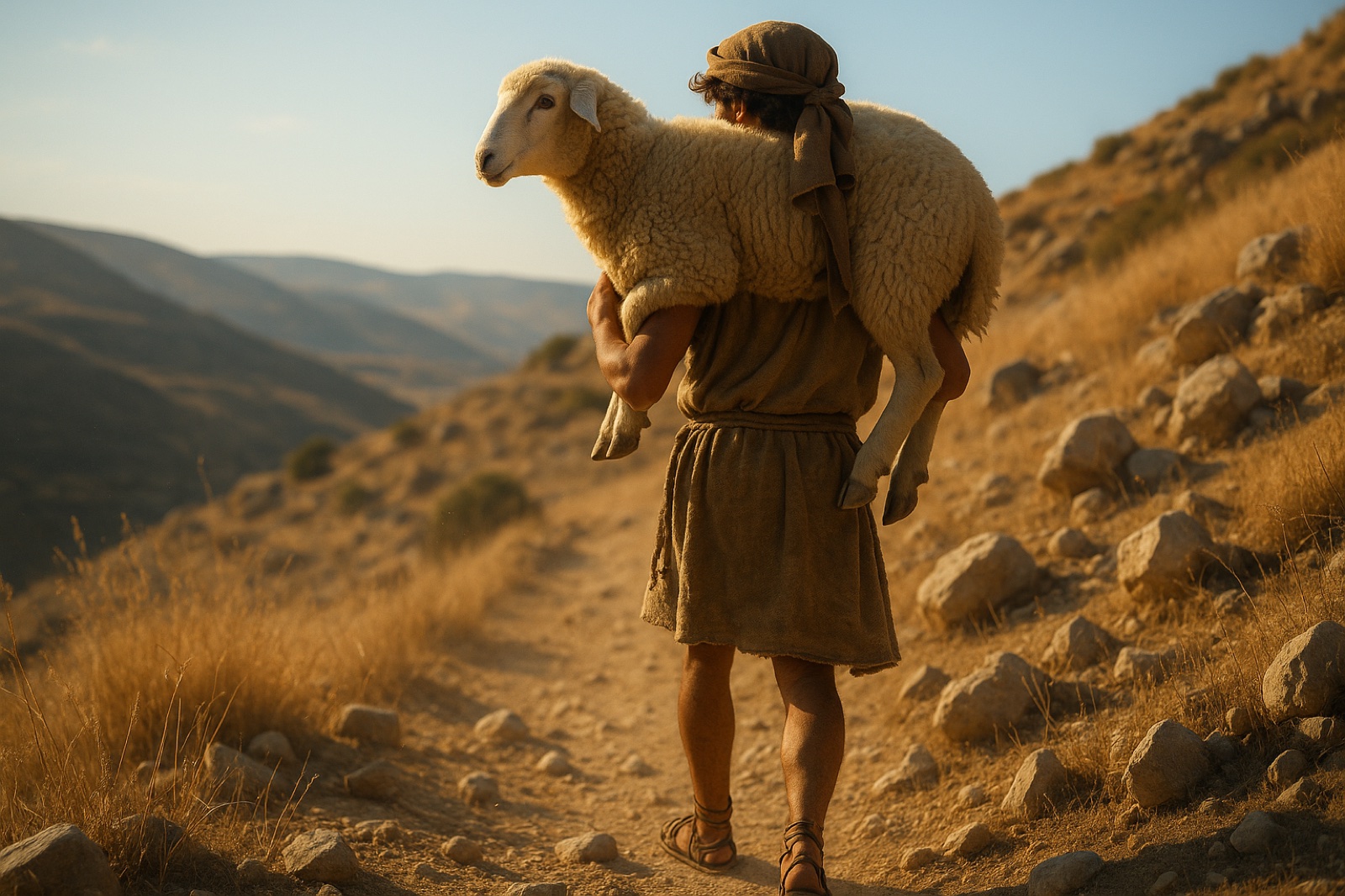
He’s not on a throne. He’s not wearing a crown. There’s no halo of judgment, no raised hand of authority. He’s a young man with a sheep draped across his shoulders, carrying it home.
Why the Earliest Christians Painted the Good Shepherd, Not a King
This wasn’t a one-off artistic choice. Long before the cross became the universal symbol of Christianity, the Good Shepherd was the image early believers reached for. In the catacombs beneath Rome — burial tunnels where persecuted Christians gathered to worship in secret — the most common image painted on the walls, carved into sarcophagi, and etched into burial niches wasn’t a crucifixion scene. It was a shepherd carrying a sheep.
Think about what that means. These were people who could be arrested, tortured, or killed for their faith. When they had to choose one image of Jesus to hide in the dark — the image they wanted etched into the last thing they’d see before this life ended — they didn’t reach for power. They reached for rescue.
That wasn’t a random preference. It came straight from Jesus’s own words.
In John 10:11, Jesus says plainly: “I am the good shepherd: the good shepherd giveth his life for the sheep.” Not a hired hand. Not someone managing the flock from a safe distance. A shepherd who stays when it costs him something.
But the image on that fresco near Nicaea — a sheep carried on the shoulders — points to something even more specific. It’s lifted almost exactly from Luke 15, the parable Jesus told when the religious leaders of His day were grumbling that He kept spending time with “sinners.” His answer wasn’t a defense. It was a story.
“What man of you, having an hundred sheep, if he lose one of them, doth not leave the ninety and nine in the wilderness, and go after that which is lost, until he find it?” Jesus asked in Luke 15:4. Then the detail that the Nicaea fresco captures almost frame for frame: “And when he hath found it, he layeth it on his shoulders, rejoicing” (Luke 15:5).
Not dragged. Not scolded into walking home on its own. Carried — because a sheep that’s been lost long enough to need finding is usually too exhausted, too disoriented, or too tangled in briars to walk anywhere on its own power. The shepherd doesn’t wait for the sheep to find its own way back. He goes out, finds it exactly where it is, and puts the whole weight of getting home on himself.
The Turn: You’re Not the One Who Has to Find Your Way Back
Here’s what tends to get missed when this story gets repeated so often it goes flat: most of us quietly assume we’re supposed to be the ninety-nine — the ones who never wandered, who stayed close, who didn’t need rescuing. And when we’re honest that we’re actually the one sheep out in the wilderness, we assume the next move is ours. Get back. Clean up. Prove you’re worth finding. Then maybe Someone will come looking.
That’s exactly backward from what the earliest Christians chose to paint on their tomb walls.
The shepherd in the parable doesn’t send a message telling the sheep to find its own way home. He doesn’t wait at the gate with his arms crossed. He leaves the ninety-nine — the safe, accounted-for majority — and goes into the wilderness himself, on the sheep’s timeline, to the sheep’s actual location. The finding happens before the sheep does anything to deserve it. The carrying happens because the sheep can’t do the last leg alone.
If persecuted believers facing real danger chose that image over a triumphant king on a throne, it wasn’t because it was comforting in an abstract, greeting-card way. It was because it was true in the way that mattered most to them right then: God does the pursuing. You don’t have to do the finding.
Whatever has made you feel like you wandered too far this year — a season of doubt, a habit you can’t shake, a relationship you let go quiet, a faith you used to have and don’t quite feel anymore — the earliest image of Jesus that’s survived to us isn’t a judge waiting for you to explain yourself. It’s someone already out in the field, already moving in your direction, already planning to carry the part you can’t walk on your own.
What This Actually Changes Today
It’s easy to read a parable and file it under “nice thought” without letting it touch anything real. So here’s the difference it’s meant to make by tonight.
You don’t need a clean starting point to reach out to God today. Peter didn’t get one either — his story of starting over after denying Jesus three times didn’t begin with him fixing himself first. It began with Jesus finding him exactly where he was. The same is true for anyone who’s felt too far gone, too behind, or too messy to come back the “right” way — Luke 5:32 makes it explicit that Jesus came specifically for the people who know they need finding, not the ones who’ve already got it together.
3 Things to Do in the Next 10 Minutes
- Name the “wilderness.” Take 60 seconds and finish this sentence honestly, even just in your head: “The place I feel most far from God right now is ___.” Naming it is the first thing the sheep in the story never had to do alone — the shepherd already knew where to look.
- Send one text. Message one person — a friend, a pastor, a parent — just to say “I’ve felt distant lately.” You don’t need a plan for what happens next. You’re just letting one other person know you’re in the field, not pretending you’re fine in the flock.
- Pray the sentence, not the paragraph. Instead of a long prayer you’re not sure how to start, pray this exact line out loud: “I’m not going to try to find my own way back today — I’m asking You to come get me.” That’s the whole prayer. Let it be enough.
Sit With It
- Where in your life have you been quietly waiting to “clean up” before you feel like you can come close to God again?
- If Jesus went looking for you exactly where you are right now — not where you wish you were — what would He find?
- What would change this week if you actually believed you were being carried, not just tolerated?
He didn’t wait for the sheep to find its way home. He carried it.
A Prayer for When You Feel Too Far Gone
God, I don’t fully know how far I’ve wandered, but I know I feel it. I’m tired of trying to find my own way back to You on my own strength. Thank You that You didn’t wait for me to get it together first — that You came looking. Pick me up where I actually am today, not where I wish I was. I want to stop pretending I’m fine in the flock and just let You carry the part I can’t walk alone. Amen.
One Question Worth Sitting With
If the earliest Christians, facing real danger, chose “a shepherd carrying a lost sheep” as the one image of Jesus worth risking their lives to paint — what does it say that the Church eventually moved on to other images instead? Which one do you think tells the truer story of who God actually is?
Share This
- “The oldest known painting of Jesus isn’t a king on a throne. It’s a shepherd carrying a lost sheep home. That’s the God we actually have.” #GoodShepherd
- “1,700 years ago, Christians facing real persecution chose one image of Jesus to hide in a tomb: Him carrying a lost sheep on His shoulders. Not a crown. A rescue.”
- “You don’t have to find your own way back to God. Luke 15:5 says He carries the part you can’t walk alone.”
Questions People Ask About This
Is the “Good Shepherd” really the oldest image of Jesus?
It’s among the oldest and most common. Long before crucifixion scenes became widespread in Christian art, the Good Shepherd — a young man carrying a sheep — was the dominant image used in early Christian burial art, appearing throughout the Roman catacombs and on early sarcophagi.
Why didn’t early Christians paint the crucifixion instead?
Historians believe it’s partly because crucifixion was still an active, shameful form of Roman execution at the time — not yet the triumphant symbol it later became — and partly because the Good Shepherd communicated something early believers needed most under persecution: that God pursues and rescues, rather than abandons.
What’s the difference between John 10:11 and Luke 15:4-6?
John 10:11 is Jesus directly describing Himself as “the good shepherd” who lays down His life for the sheep. Luke 15:4-6 is a parable Jesus told about a shepherd who leaves ninety-nine sheep to search for one lost one and carries it home rejoicing. Together, they’re Jesus’s own explanation of both who He is and how He treats the lost.
What does it mean that the shepherd “carried” the sheep instead of leading it?
In the original story, carrying suggests the sheep was too exhausted, hurt, or disoriented to walk home on its own. It’s a picture of rescue that doesn’t require the lost person to have the strength to fix their own situation first — God does the part they can’t.
What should I do if I feel too far from God to come back?
Start smaller than you think you need to. Name where you actually are, tell one person, and pray honestly instead of “correctly.” The Bible’s consistent pattern — from this parable to Peter’s restoration after denying Jesus — is that God moves toward people before they’ve finished cleaning themselves up, not after.