 0
0
 0
0
You already know the feeling. Maybe it’s a work project you refuse to lose, a pickup game you play too hard for a Tuesday night, or an argument with your spouse that suddenly matters way more than it should. Something in you locks in, sharpens, and refuses to settle for second. And somewhere along the way, church culture may have quietly told you that’s a problem — that wanting to win is the “flesh” you’re supposed to crucify, that ambition and humility can’t share the same body.
So you learn to apologize for your own drive. You downplay the trophy on the shelf, the promotion, the personal record. You treat your competitive fire like a character flaw you’re managing instead of raw material God might actually want to use.
Paul had a different take. And he wrote it to a city that understood competitive fire better than almost anywhere else in the ancient world.
The Games Every Corinthian Already Knew By Heart
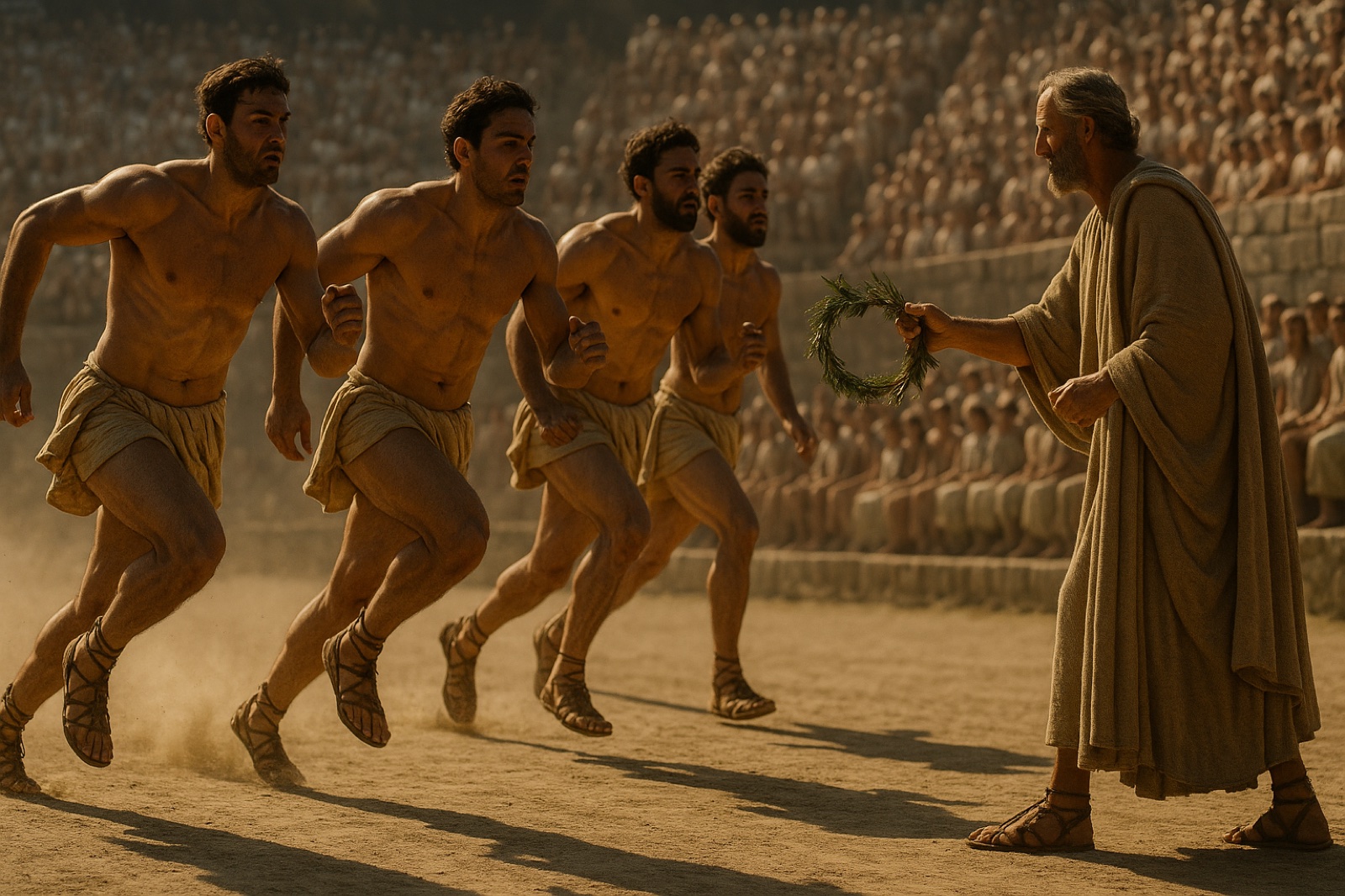
When Paul wrote his first letter to the church in Corinth, he wasn’t reaching for a random metaphor. Corinth sat a few miles from the Isthmian Games — one of the four great Panhellenic athletic festivals of the ancient world, held every two years just outside the city. Long before Paul’s letter arrived, Corinthians had watched runners train for months, box in front of packed crowds, and receive a wreath of pine or wild celery for a victory that lasted exactly as long as the leaves stayed green.
That’s the picture behind 1 Corinthians 9:24-27:
“Know ye not that they which run in a race run all, but one receiveth the prize? So run, that ye may obtain. And every man that striveth for the mastery is temperate in all things. Now they do it to obtain a corruptible crown; but we an incorruptible. I therefore so run, not as uncertainly; so fight I, not as one that beateth the air: But I keep under my body, and bring it into subjection: lest that by any means, when I have preached to others, I myself should be a castaway.” (1 Corinthians 9:24-27, KJV)
Notice what Paul doesn’t say. He doesn’t say stop running. He doesn’t say competition is beneath a mature believer, or that wanting to win is something to repent of. He says the opposite — he holds up the most disciplined, driven people in Corinthian culture as the standard. Athletes who trained year-round, who cut food and comfort and sleep out of their lives, all chasing a crown of leaves that would wilt in a season.
Then he says: I run like that too. Not aimlessly. Not swinging at air. On purpose, on target, every single day.
An Ex-Boxer’s Language for an Undefeated Fight
The phrase “keep under my body” is boxing language — Paul pictures landing a blow that brings an opponent under control. He isn’t talking about self-hatred or punishing his body for existing. He’s talking about the same discipline a fighter uses on an opponent, turned inward on his own impulses, appetites, and shortcuts.
And the reason he’s this intense about it isn’t fear of losing his salvation over a technicality. It’s integrity. He’d spent years telling other people how to run their race — through beatings, shipwrecks, prison, hunger, rejection from the very churches he planted. The idea of standing on the sidelines himself, disqualified by his own inconsistency, mattered to him more than any physical suffering already on his record. He wasn’t worried about earning a reward through works. He was worried about living a life that contradicted what he’d spent his life preaching.
The Cristiano Ronaldo Problem
Watch how this plays out with elite athletes today and the pattern gets obvious fast. Take Cristiano Ronaldo, who just made World Cup history and still hasn’t won the one trophy he’s chased for twenty years. Ronaldo has broken nearly every scoring record a human body can break. And by his own admission, the thing he wants most has kept slipping through his hands for two decades. That’s not a knock on Ronaldo — it’s the corruptible crown doing exactly what corruptible crowns do. It rewards discipline with something that can always be taken by the next competitor, the next season, the next injury.
It’s the same instinct behind athletes who kneel together in prayer after a World Cup final whistle — a flash of recognition, even at the peak of competition, that something bigger than the scoreboard is actually in play.
Paul isn’t telling Ronaldo, or you, to stop training that hard. He’s asking a sharper question: what happens when you finally win the corruptible crown and it still isn’t enough?
The Turn: Your Competitive Drive Was Never the Problem
Here’s what changes when you actually sit with this passage: the hunger to win isn’t the sin. The target is. Paul spent his ministry watching people white-knuckle their way toward crowns that couldn’t hold up under weight — status, reputation, being right, being first. Solomon wrote about the same trap three thousand years earlier, after he’d already won every version of winning available to a king and found it hollow at the bottom.
God didn’t build competitive people to feel guilty about their drive. He built them to eventually ask the only question that actually matters: what am I temperate for? What am I in training for? A trophy that tarnishes, or the kind of character, integrity, and love that Paul calls “incorruptible” — the kind that’s still standing when the leaves on every other crown have gone brown.
That’s not a smaller ambition. It’s the same intensity, redirected at a target big enough to deserve it.
Three Ways to Run This Race Today
- Name your current race. Take sixty seconds right now and write down the one place your competitive fire burns hottest — work, a sport, an old rivalry, a sibling comparison. Naming it is the first step to redirecting it.
- Ask what crown you’re actually chasing. Next time that hunger to win kicks in today, pause and ask: is this for applause, or for something that will still matter in ten years? Let the answer, not the hunger, decide your next move.
- Run one “temperate” rep today. Paul says athletes are “temperate in all things” — pick one small thing you’re willing to say no to today for the sake of the long race: the extra scroll, the snide reply, the shortcut. Treat it like a single training rep for a much longer race.
Questions Worth Sitting With
- Where have I assumed my competitive drive was something to be ashamed of instead of something to redirect?
- If Paul looked at what I’m actually disciplined about right now, what would he say I’m in training for?
- What’s one “corruptible crown” I’ve been chasing that I’m ready to stop treating like the finish line?
A Prayer for the Competitor in You
God, I don’t want to apologize anymore for the fire in me that wants to win. Show me where I’ve been running hard after something that can’t hold the weight I keep putting on it. Help me bring the same discipline to my character that I bring to the thing I’m best at. I want to run like Paul ran — on purpose, toward something that lasts. Amen.
Let’s Talk About It
Do you think competitiveness is something Christians should feel guilty about, or something God can actually redeem for a bigger purpose? Tell us in the comments.
Share This
- “I used to think wanting to win was the problem. Turns out it was never the problem — it was the target. 1 Corinthians 9:24-27 changed how I see my own drive.”
- “Paul trained like a boxer chasing a crown that never fades. Not because winning is wrong — because most of us are winning the wrong thing.”
- “Your competitive fire isn’t a flaw to manage. It might be raw material God wants to redirect. (1 Corinthians 9:24-27)”
Common Questions
Does the Bible say wanting to win is a sin?
No. In 1 Corinthians 9:24-27, Paul doesn’t condemn competitive drive — he holds athletes up as a model of the discipline believers should bring to their own lives. The problem isn’t wanting to win; it’s what you’re actually competing for.
What does 1 Corinthians 9:24-27 mean?
Paul compares the Christian life to a footrace and a boxing match at the ancient Isthmian Games near Corinth. Just as athletes trained intensely for a wreath that would wilt within weeks, Paul says believers should train with even more discipline for an “incorruptible” reward — one that doesn’t fade, tarnish, or get replaced by next season’s champion.
What does “keep under my body” mean in this passage?
It’s boxing language — Paul pictures bringing an opponent under control with a well-placed blow. He’s describing the discipline he applies to his own impulses and appetites, not self-punishment or hatred of his body.
Why did Paul care so much about not being “a castaway”?
Paul had spent years telling others how to run their race of faith. He didn’t want his own inconsistency to disqualify him from the same integrity he preached — the fear wasn’t losing salvation through a technicality, it was living a life that contradicted what he taught.
How can I apply this passage practically today?
Start by naming the one place your competitive drive shows up strongest, then ask what “crown” you’re actually chasing there. Redirect that same intensity toward something that lasts — character, integrity, the people you’re becoming — rather than something that expires the moment a new competitor shows up.